REVIEW · LONDON
National Gallery with Art Historian Guided Tour in London
Book on Viator →Bookable on Viator
Two hours, and your brain flips through centuries. This National Gallery tour is built for people who want the art, the context, and the big-name paintings without getting lost in the museum. It also celebrates the gallery’s 200th anniversary, with a newly rehung collection and 400 additional paintings on view.
I especially like the way the art historian keeps the focus on what changed in art and why it mattered. You get a guided path through artists like Claude Monet and Paul Cézanne, plus the bridge back to the Old Masters who shaped the next wave.
One possible drawback to plan around: there’s at least one real-world example of a guide cancellation close to departure because of train problems. If your schedule is tight, have a backup plan for a self-guided highlights loop so your afternoon still works.
In This Review
- Key Highlights to Know Before You Go
- First Stop at Trafalgar Square: Getting Oriented Fast
- Your Art Historian Guide and the Small-Group Advantage
- How the 200th Anniversary Rehang Shapes Your Route
- The Core Story: From the Old Masters to the Impressionists
- Must-See Moments: The “Jewel” Stops You’ll Get to Admire
- Women Artists: What You Can See and Why It’s Limited
- What Included Admission Means for Your Wallet
- Photography Rules: How to Plan Your Picture-Taking
- Comfort, Pace, and Getting the Most From the Two Hours
- Price and Value: Is $125.01 Worth It?
- A Real-World Caution: Transport Problems Can Affect Plans
- Who This Tour Is Best For (and Who Might Skip)
- Should You Book This National Gallery Art Historian Tour?
- FAQ
- How long is the National Gallery guided tour?
- What language is the tour offered in?
- Is a mobile ticket used?
- Is photography allowed inside the gallery?
- Are temporary exhibitions included in the tour price?
- Where does the tour start and end?
- Is there free cancellation, and how far in advance can I cancel?
Key Highlights to Know Before You Go
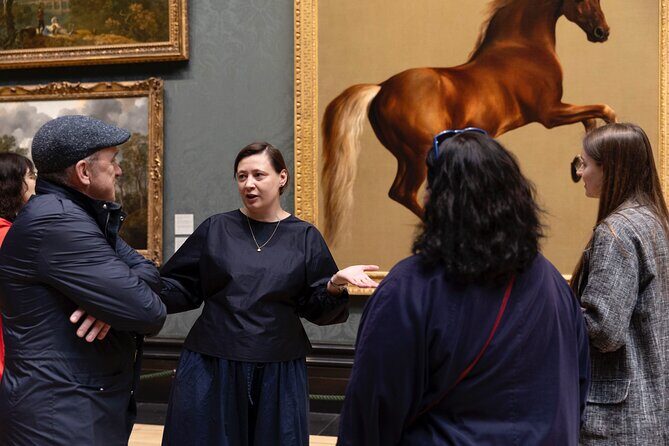
- A true small-group format (max 10), which makes it easier to ask questions and get personal guidance.
- 2 hours of structured seeing, designed to give you a museum “map” in one afternoon.
- Old Masters to Impressionists in one story, including the links to Turner, Rembrandt, Caravaggio, and 17th-century Dutch art.
- Women artists get real attention, even though only four pieces by women are currently on display in this setup.
- The tour centers on newly rehung displays, tied to the National Gallery’s 200th anniversary celebration.
- Photography is allowed without flash, so you can build your own souvenir set.
First Stop at Trafalgar Square: Getting Oriented Fast
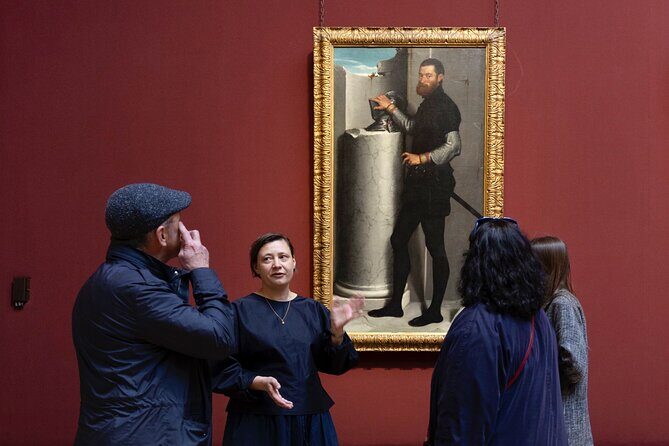
The tour starts at the National Gallery on Trafalgar Square (WC2N 5DN). That’s a handy choice because you’re in the middle of the action, with plenty of public transport options nearby, and you can roll in with an easy game plan.
Once you’re inside, the big value is speed-with-meaning. The National Gallery can be a little overwhelming if you walk in cold. This kind of guided format helps you get your bearings fast, then lets you slow down once you know what you’re looking at.
The meeting point is also convenient because the tour ends back where it starts. So you’re not stuck hunting across London when you’re ready to move on.
You can also read our reviews of more guided tours in London


Your Art Historian Guide and the Small-Group Advantage
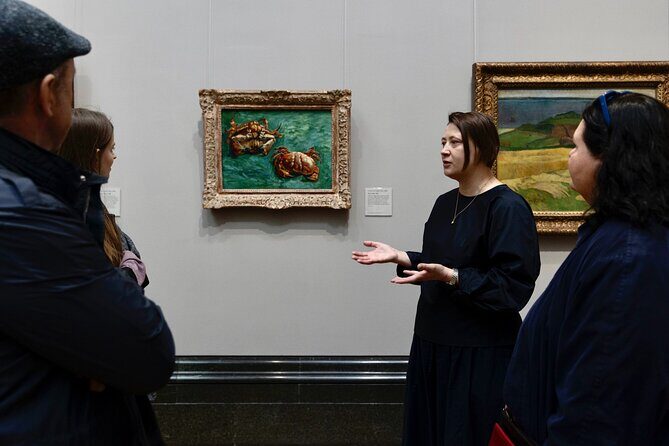
This is offered in English, and it’s capped at 10 travelers. That matters more than you might think. With a smaller group, the guide can adjust pace if people want more time at a specific work, and you’re more likely to hear answers to your questions right away.
One thing I found especially encouraging is the tone: no prior art history knowledge is required. The guide’s job isn’t to sound smart. It’s to help you understand what you’re seeing—light, form, subject, and the cultural pushback that made certain paintings controversial when they first appeared.
In one standout case, the guide was named Julia, and her approach is described as giving meaningful insight into key artworks tied to their time, values, and feelings. That’s the right goal for a museum tour: you leave with a way to look at the paintings, not just a list of names.
How the 200th Anniversary Rehang Shapes Your Route
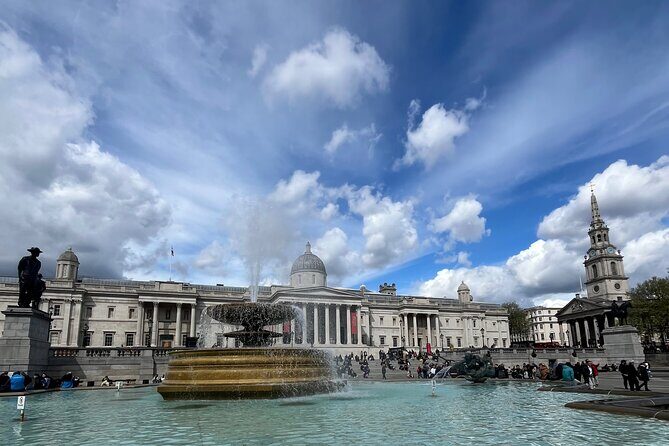
The National Gallery has just rehung its entire collection and added 400 paintings to display for its 200th anniversary. That’s not just a marketing line. A rehung museum changes what you notice first and how rooms connect visually and thematically.
You’ll get a sense of the gallery as it’s meant to be experienced now, not as a museum you’re guessing through room by room. That’s particularly helpful here because the tour is about fitting a broad sweep into about two hours.
Also, a rehung collection often means the gallery is actively telling a story with its layout. On this tour, that story is organized around major shifts in art—how the future-looking artists didn’t appear out of nowhere, and how they still depended on looking back.
The Core Story: From the Old Masters to the Impressionists
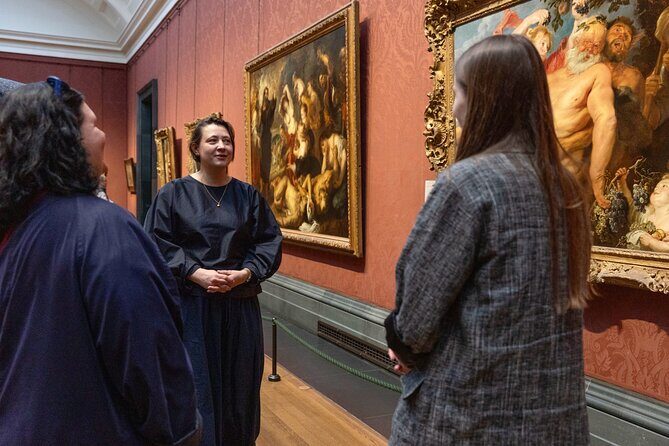
This tour’s strongest thread is the cause-and-effect link between generations. You don’t just see famous names. You learn how artists built new methods by studying the past.
You’ll look at major works associated with the shift away from traditional styles. Expect attention on artists including Monet, Renoir, Degas, Berthe Morisot, Camille Pissarro, Alfred Sisley, and Paul Cézanne. These names show up because they helped push how light and form were depicted, and because their work was considered controversial at the time.
Then the tour deliberately ties the modern changes back to earlier masters. You’ll cover influence from painters like J.M.W. Turner, Rembrandt, and Caravaggio, plus the importance of 17th-century Dutch art. This is where the tour turns from sightseeing into understanding. Instead of treating Impressionism as a total revolution, you see it as a series of decisions shaped by earlier techniques and subjects.
If you like art that makes you ask why something looks the way it does, this structure is a good match. If you only want the most obvious crowd-pleasers, you’ll still enjoy it—but you’ll get the most from it by paying attention to the connections.
Must-See Moments: The “Jewel” Stops You’ll Get to Admire
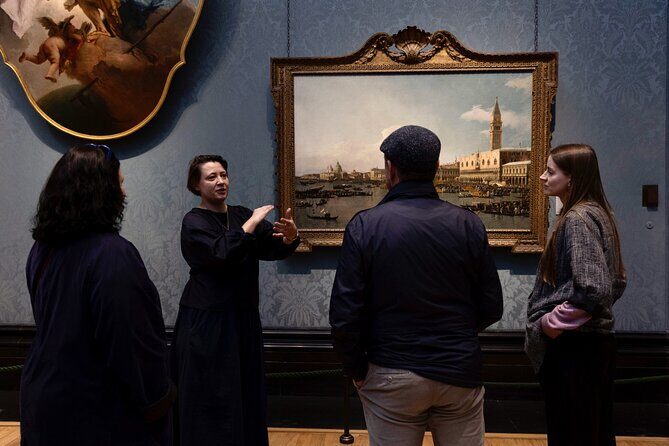
The National Gallery has a lot of famous works, so part of the tour value is prioritization. You’ll spend time on notable pieces often highlighted as jewels of the collection, including works by Holbein, Michelangelo, Canaletto, and Moroni.
The advantage of having a guide point these out is practical: it gives you an anchor. You can still wander your eyes afterward, but you’ll already know what to look for and why each piece has earned its reputation.
One more benefit: you’ll hear enough context to make the paintings feel connected, not random. The guide ties artists and periods together, so even if a work isn’t your personal style, you understand its purpose in the bigger art conversation.
You can also read our reviews of more museum experiences in London




Women Artists: What You Can See and Why It’s Limited
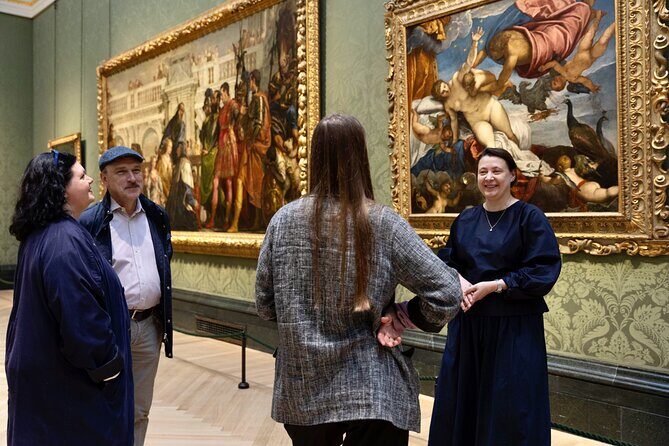
Here’s one part you should know clearly before you go. Women artists are represented in this tour by only four pieces currently on display, and the guide addresses the wider history of female painters.
That setup can be both motivating and frustrating, depending on what you want. If you’re hoping for a long, balanced survey of women across styles and centuries, this won’t be that tour. But if you want context for what’s shown here—and what’s missing—you’ll likely appreciate how the guide frames it.
You’re also welcome to ask questions, which matters because the “only four pieces” detail opens the door to discussion. The tour gives you a starting point to understand the story behind the numbers, not just the numbers themselves.
What Included Admission Means for Your Wallet
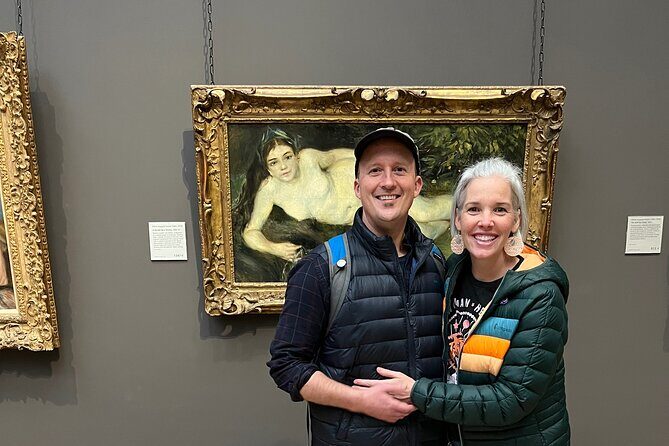
The tour includes free admission to the National Gallery’s permanent collection, plus the guided experience with an expert guide. That’s valuable because you’re paying for the interpretation and time-saving structure, not for entry.
What’s not included are tickets to paid temporary exhibitions, plus the cloakroom fee and refreshments. So if you plan on hopping into temporary shows afterward, you’ll need to budget separately.
Also, keep this in mind: this tour is designed to cover the permanent collection in about two hours. If you try to do a temporary exhibition right after, you’ll feel rushed. Better plan for a self-guided add-on on another day, or keep your afternoon focused on what the guide helps you see.
Photography Rules: How to Plan Your Picture-Taking
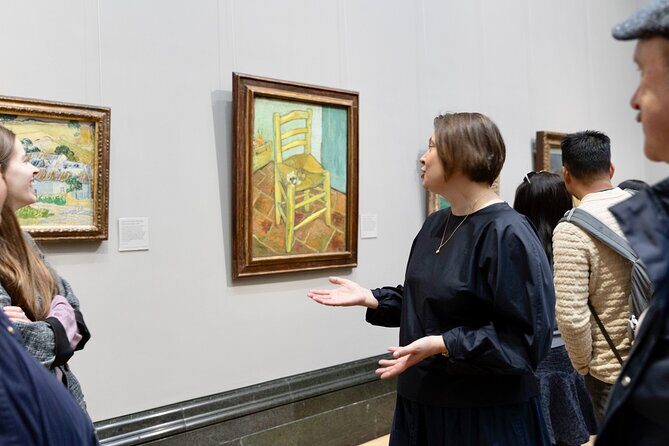
Photography is permitted, but no flash is allowed. That’s normal for many museums, but it’s still worth planning around if you’re hoping to capture specific details.
My practical advice: take photos as you’re instructed to look closely, not just while you’re walking. The biggest payoff comes when you photograph the moments where you learned something—composition choices, contrasts in light, and how the subject is framed.
And because the group is small, you can usually keep up without blocking other people if you move thoughtfully.
Comfort, Pace, and Getting the Most From the Two Hours
This tour requires moderate physical fitness. That doesn’t usually mean anything extreme, but it does mean you should expect walking inside the museum and time standing in galleries.
Bring comfortable shoes. You’re likely to move through several rooms and pause often. If you’re someone who likes to linger, the guide’s structure helps you choose where to spend those minutes.
Also, the tour starts and ends at the same point. That helps you build your schedule with confidence. You can pair it with a nearby meal or another nearby London stop without crossing the city.
Price and Value: Is $125.01 Worth It?
At $125.01 per person, this isn’t a bargain. But it isn’t priced like a “cheap museum hack” either.
Here’s the value logic: the permanent collection entry is included, and you’re buying a guided route with an art historian plus a small-group setting (max 10). The tour is roughly two hours, which is a short window, but it’s exactly where expert guidance pays off.
If you plan to visit the National Gallery anyway, this price can make sense because it helps you avoid the common problem of seeing a lot without learning how to see. You don’t just get famous works. You get the reasoning behind the shifts—from traditional approaches to the controversial new ways painters handled light, form, and subject.
If you’re an experienced museum visitor who already knows the artists and periods, you might find self-guided works best for your budget. But if you want a clean, guided “storyline” that helps you leave feeling more literate, the cost is easier to justify.
A Real-World Caution: Transport Problems Can Affect Plans
One review account includes a painful scenario: the guide canceled about an hour before the scheduled tour because trains weren’t running, and the person used headphones for a self-guided highlights circuit instead. That doesn’t mean it always happens, but it does point to a reality you should plan for in London—transport can mess with timing.
If your schedule is tight, keep a nearby backup idea. The National Gallery itself is free for the permanent collection, so having a short self-guided plan can save your day if something changes last minute.
Who This Tour Is Best For (and Who Might Skip)
This tour fits best if you want:
- A guided overview in a short time
- Connections across periods, not just isolated paintings
- Small-group interaction where questions are welcome
- A path that covers major artists from both the Impressionist shift and the Old Master influences
It might be less ideal if you already have a deep art history background and want to customize your own route without any timing or guide structure. It also may not satisfy someone who specifically wants a larger number of women artists than the four pieces currently highlighted.
Should You Book This National Gallery Art Historian Tour?
If you’re visiting London with limited time and you want your National Gallery stop to feel meaningful, I’d lean toward booking. The format is built for fast orientation, and the focus on how artists influenced each other gives you more than just a checklist.
The biggest decision point is risk tolerance on timing. Since at least one cancellation case happened due to train issues, I suggest you pair this tour with flexible plans afterward, or keep a self-guided backup in your pocket.
If you want help turning the National Gallery into a story you understand, this is the kind of tour that makes the museum click.
FAQ
How long is the National Gallery guided tour?
It lasts about 2 hours.
What language is the tour offered in?
The tour is offered in English.
Is a mobile ticket used?
Yes, the experience includes a mobile ticket.
Is photography allowed inside the gallery?
Yes, photography is permitted, but without flash.
Are temporary exhibitions included in the tour price?
No. Tickets to paid temporary exhibitions are not included.
Where does the tour start and end?
It starts at the National Gallery, Trafalgar Square, London WC2N 5DN, UK, and it ends back at the same meeting point.
Is there free cancellation, and how far in advance can I cancel?
Yes. Free cancellation is available, and you can cancel up to 24 hours in advance for a full refund.