Greenwich gives you big maritime drama in plain sight. This private tour pairs Nelson, Trafalgar, and the museum’s toughest stories with a guided walk that keeps pace with your group. You start at the Ship in a Bottle and move through major galleries at the National Maritime Museum, then finish at the Queen’s House for the famous Armada Portrait of Queen Elizabeth.
Two things I really like: you get a limited-to-your-group experience with live narration, and the itinerary targets the exact galleries that make Greenwich matter. There’s also a built-in coffee or tea break at the museum café, which helps when you’re moving through lots of rooms.
One possible drawback: if you mainly want flashy, high-tech exhibits, the museum can feel more like display cases and gallery walking than a nonstop show. The good news is your guide can explain what you’re looking at, which is often where the spark comes from.
In This Review
- Key things to know before you go
- Greenwich Private Tour, 3.5 Hours: What the Experience Is Like
- Finding the Tour Start: Nelson’s Ship in a Bottle Herbaceous Border
- National Maritime Museum Stop 1: Turner to Nelson’s Jacket
- The pace and what to expect in each gallery
- The Trade Gallery and the East India Company Story You’ll Actually Remember
- Atlantic Slavery and Lighthouses: Hard History Without the Hand-Waving
- A quick preparation tip
- Queen’s House: The Armada Portrait Stop (About 45 Minutes)
- Who This Tour Works Best For (Families, History Buffs, and First-Timers)
- Price and Value: Is $237.59 per Person Fair for a Private Tour?
- What Might Disappoint You (And How to Decide Fast)
- Practical Tips for Your Visit to Greenwich’s Maritime Core
- Should You Book This Private Maritime Museum Tour?
- FAQ
- Is this tour private?
- How long is the National Maritime Museum Private Tour?
- Where do I meet the tour guide?
- What time does the tour start?
- Is the tour offered in English?
- What stops are included in the itinerary?
- Is Queen’s House admission included?
- Are food and drinks included?
- Is there a minimum number of people to book?
- What is the cancellation window?
Key things to know before you go
- Private group format: only your party joins in, so questions and timing work better than with large tours
- Ship in a Bottle start point: you begin right at the southern entrance side, with an easy Greenwich landmark to find
- Nelson and Trafalgar focus: the Nelson, Navy, Nation gallery includes Nelson’s mortally wounded jacket from HMS Victory
- Trade and empire connections: the Trade Gallery traces links to the East India Company and routes tied to the Far East
- Atlantic Slavery gallery plus lighthouses: serious history and practical maritime tech sit side by side
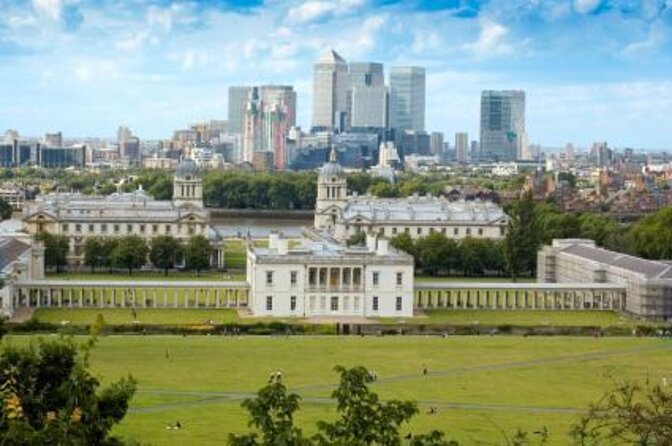
- Queen’s House included: about 45 minutes to see the Armada Portrait of Queen Elizabeth
Greenwich Private Tour, 3.5 Hours: What the Experience Is Like
This is a 3 hours 30 minutes private outing in Greenwich, built around a clear flow: museums first, portrait stop last. You’re given a local guide, and the whole point is to turn a big site into something you can actually follow.
The format matters. Because it’s private, you’re not stuck watching a guide vanish ahead of the crowd. You can ask questions, get context, and pause if you want a closer look at a painting or a key artifact.
The route also makes a lot of sense for first-timers. You’re not trying to “cover everything” across dozens of galleries. Instead, the tour points you toward the most meaningful stops and a couple of the most memorable objects, so you leave with the story line.
You can also read our reviews of more tours and experiences in London.


Finding the Tour Start: Nelson’s Ship in a Bottle Herbaceous Border
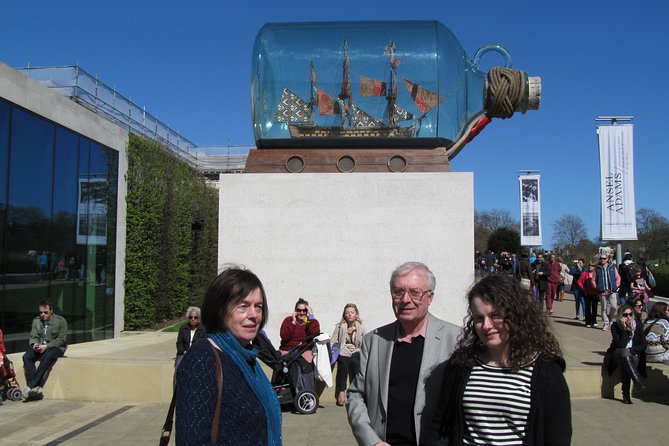
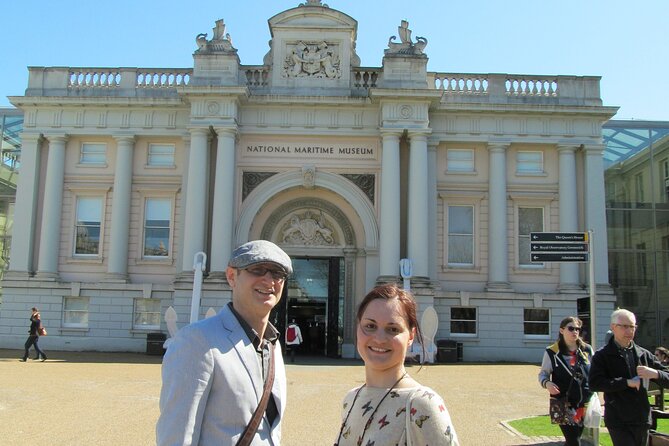
Your meeting point is Nelson’s Ship in a Bottle Herbaceous Border, London SE10 8QY. The tour starts at the southern entrance side of the National Maritime Museum—the observatory side.
That detail sounds small, but it helps. Greenwich can be confusing if you’re jumping around on your own. Starting from a named landmark inside the area means less hunting and more time with exhibits.
The tour also ends back at the same meeting point. So you don’t need to worry about finishing somewhere random and then backtracking across the waterfront.
National Maritime Museum Stop 1: Turner to Nelson’s Jacket
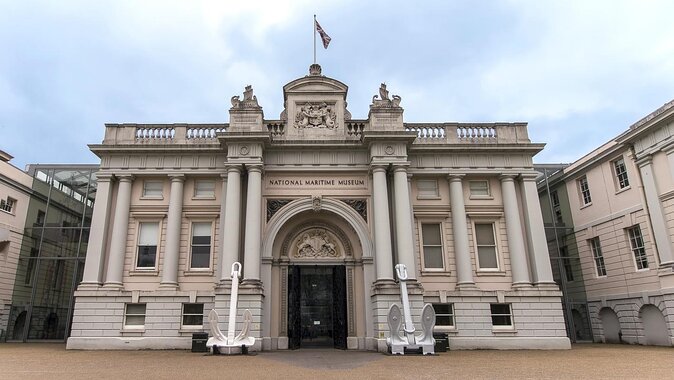
You begin at the Ship in a Bottle statue and then step into the galleries that set the tone for British naval power and exploration.
One of the first standout moments is J. M. W. Turner’s Battle of Trafalgar. This painting dates to the early 1820s, and it’s the kind of artwork that gives you mood and movement before you even get to artifacts. It also helps you understand why Trafalgar is treated like a turning point.
From there, you continue to the Nelson, Navy, Nation gallery. The highlight here is the jacket Nelson was wearing when he was mortally wounded aboard HMS Victory. Even if you’ve read the story before, seeing clothing used in a moment like that shifts it from facts on a page into something more human and immediate.
The pace and what to expect in each gallery
The tour is built around walking through major themed spaces rather than rapid-fire points. You’ll also get directed time at:
- the Trade Gallery, tied to Far East trade and the East India Company
- the Atlantic Slavery gallery, focused on England’s role in the slave trade
- a section on lighthouses and their history in the UK
There’s also a mid-tour chance to grab a coffee or tea break at the museum café. Since food and drinks are not included, this is one of those moments where planning matters: go in ready to pay for what you want, but don’t feel like you have to skip a break.
The Trade Gallery and the East India Company Story You’ll Actually Remember
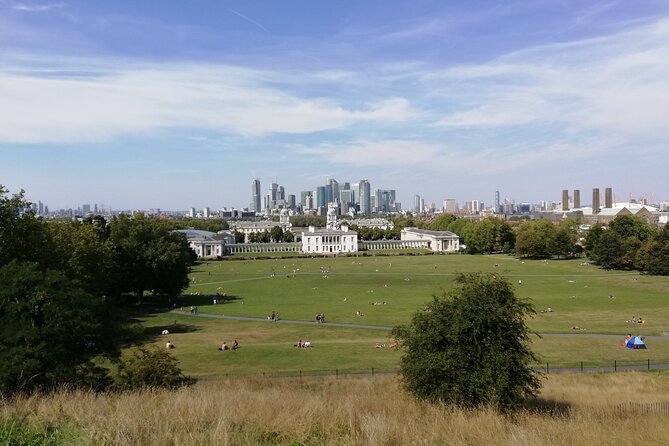
The Trade Gallery is where maritime history turns into economic history. You’re not just looking at ships—you’re following the logic of routes, goods, and power.
The tour’s framing connects Far East trade with the origins and influence of the East India Company. That’s a helpful way to understand why naval power, commerce, and politics show up together in Greenwich. Even if you’re not a “trade nerd,” the guided approach helps you connect what you see on the wall with what it meant beyond Britain’s shores.
If you’re visiting with kids or a mixed-age group, this is also a good stop. Trade stories tend to land because they connect to everyday objects: where products came from, how journeys worked, and why governments cared.





Atlantic Slavery and Lighthouses: Hard History Without the Hand-Waving
The Atlantic Slavery gallery is described as brutally honest about the slave trade and England’s role in it. That matters because this is not a tour that treats the subject like a footnote.
What you can expect from the way the tour is structured is direct narration that explains the connections between maritime activity and forced human suffering. You’ll also move from that heavy topic into information about lighthouses—UK history and why navigation aids mattered.
That pairing is powerful, even though it can feel emotionally intense. Ships and navigation are both tools. In the wrong hands and systems, they enabled exploitation. In the right context, lighthouses are about safety and orientation at sea. Seeing them in sequence helps you notice how the same world—oceans, routes, systems—can produce very different outcomes.
A quick preparation tip
If your group needs gentler pacing, tell your guide at the start. A private format is made for this. You might take extra time at one stop and move quickly through another.
Queen’s House: The Armada Portrait Stop (About 45 Minutes)
After the museum galleries, the tour includes the Queen’s House visit. Time allotment here is about 45 minutes, and the admission ticket is included.
This is where your tour shifts from naval artifacts and trade systems to portraiture and royal symbolism. The headline attraction is the world-famous Armada Portrait of Queen Elizabeth.
Even if you’re not usually into paintings, this stop works because it ties into the bigger Greenwich story. Elizabeth’s image isn’t just art—it’s political messaging, tied to power at sea and national identity. A guide can point out what you’re seeing so the portrait doesn’t feel like just another room.
Who This Tour Works Best For (Families, History Buffs, and First-Timers)
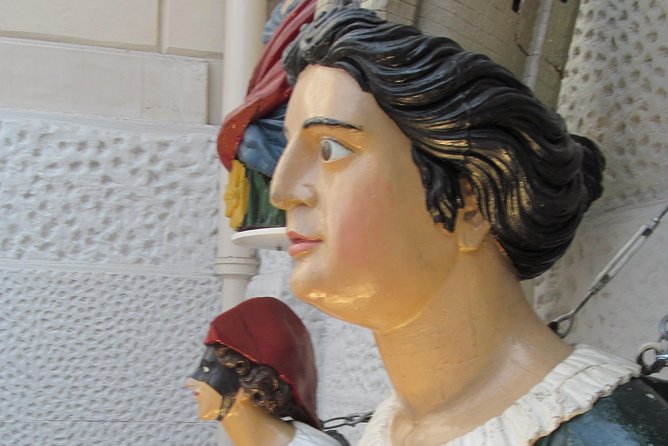
This is marketed as a fit for families and history buffs, and the structure supports that.
For families:
- You’re moving between clear themed stops, not random gallery wandering
- The guide narration helps kids and teens follow the “why” behind objects
- There’s a café break option midway
For history fans:
- You get key anchors like Turner’s Trafalgar and Nelson’s HMS Victory jacket
- The tour connects navies to trade routes and the East India Company
- It does not dodge the Atlantic slavery story
For first-timers:
- You see the highlights that people talk about for a reason
- You learn how the pieces fit together: art, artifacts, commerce, and state power
Price and Value: Is $237.59 per Person Fair for a Private Tour?
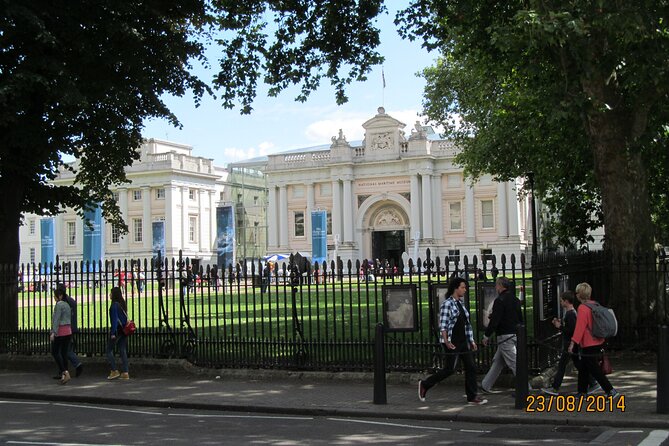
At $237.59 per person, you’re paying for three things: a private group experience, a local guide, and museum-centered route planning.
That price can feel steep if you’re comparing it to a standard entry ticket. But it changes if you’re thinking in terms of time and “how much you get from the place.” The museum is big, and most people miss the connections unless someone points them out.
This tour also includes a part of the admission cost: Queen’s House admission is included. And the National Maritime Museum itself is listed as having free admission ticket for this experience. So you’re mainly paying for the guide time and curated stops rather than entrance fees stacking up.
The private format is where the value becomes real. If you’re traveling with kids, older relatives, or people who like to ask questions, the ability to slow down and get clear explanations can justify the cost quickly.
What Might Disappoint You (And How to Decide Fast)
Not every museum experience hits the same way for everyone. One negative take focuses on the presentation style—rooms that feel glass-cabinet heavy and less visually dramatic than other maritime sites.
If you’re the kind of visitor who wants lots of audio-visuals, interactive tech, and flashy staging, the National Maritime Museum might feel more like a traditional museum walk than a show.
Still, there’s a practical solution: lean on the guide. When your guide explains what you’re looking at—why an artifact exists, what a painting signals, how trade and empire tie together—you get something you can’t easily replicate with a printed map.
Also consider your timing. The tour is designed around a finite block of about 3.5 hours, so you’re choosing focus over wandering indefinitely.
Practical Tips for Your Visit to Greenwich’s Maritime Core
A few smart choices can make the day go smoother:
- Use the mobile ticket: you’ll have it on your phone, which is helpful at busy times
- Wear shoes you can walk in comfortably: the tour calls for moderate physical fitness
- Plan your café budget: coffee/tea is offered as an opportunity, but food and drinks are not included
- Arrive ready for serious topics: the Atlantic Slavery gallery is described as brutally honest, so don’t schedule this when your group is already tired or stressed
- Bring questions: the private format is for back-and-forth, not just passive listening
If you want a guide with a storytelling style, the guide names Graham and Wendy have come up in accounts of helpful narration and strong “make-it-make-sense” explanations. That’s a clue that your experience can go beyond dates and labels.
Should You Book This Private Maritime Museum Tour?
Book it if:
- You want a private, limited-to-your-group approach in one of London’s most iconic maritime zones
- You care about Nelson, Trafalgar, and the objects that anchor the story
- You want the Trade Gallery and Atlantic Slavery gallery covered with guided context
- You like the idea of ending at Queen’s House for the Armada Portrait of Queen Elizabeth
Consider skipping or adjusting expectations if:
- You’re hoping for a highly interactive, high-tech museum experience
- Your group only wants light topics and quick wins, since the slavery gallery is heavy by design
FAQ
Is this tour private?
Yes. It’s a private tour/activity, and only your group participates.
How long is the National Maritime Museum Private Tour?
It lasts about 3 hours 30 minutes.
Where do I meet the tour guide?
You start at Nelson’s Ship in a Bottle Herbaceous Border, London SE10 8QY, UK.
What time does the tour start?
The start time listed is 12:30 pm.
Is the tour offered in English?
Yes, it’s offered in English.
What stops are included in the itinerary?
The tour includes the National Maritime Museum and a visit to Queen’s House.
Is Queen’s House admission included?
Yes. The Queen’s House stop includes admission ticket coverage, listed as included.
Are food and drinks included?
No. Food and drinks are not included, though you’ll have the opportunity to enjoy a coffee or tea break at the museum café.
Is there a minimum number of people to book?
Yes. There is a minimum of 2 people per booking.
What is the cancellation window?
You can cancel for a full refund up to 24 hours in advance of the experience’s start time.