REVIEW · LONDON
Natural History Museum London Guided Tour Semi-Private 8ppl Max
Book on Viator →Operated by Babylon Tours London · Bookable on Viator
Two hours in London’s Natural History Museum, guided well. I like the semi-private pace with just a handful of people, and I love how the guide makes show-stoppers like the Archaeopteryx feel personal instead of just displayed. The one catch is time: in two hours you’ll skim the surface of a giant museum, and you may not reach every wing the way you’d hope, especially if lines are heavy.
This tour is built for focus. With a maximum of 8 people, you get the benefits of a guided route without the chaos of a huge crowd, and you’ll usually find yourself at the key exhibits with less wandering. If you’re coming with kids or you’re short on time, that small group size matters more than you’d think.
I found the best value in the direction: the guide doesn’t just read labels. You get a plan, real context, and the kind of details you’d miss when you’re left to your own devices in a hall the size of a small planet—plus you’re done in about 2 hours.
In This Review
- Key things to know before you go
- Why a semi-private Natural History Museum tour works
- Meeting at Cromwell Road Stop H and getting in without stress
- Stop 1: Earth’s history through fossils, disasters, and early humans
- The stars you’ll remember: Archaeopteryx, Sophie the Stegosaurus, and the dodo
- Pompeii casts, skull-cup trivia, and why the museum is bigger than fossils
- Giant Sequoia, gems, and minerals: how the route stays coherent
- Crowds, quiet rooms, and why small groups help your attention
- Price, value, and what this $108-ish tour buys you
- Who should book this tour (and who might prefer DIY)
- Should you book? A simple decision guide
- FAQ
- How long is the Natural History Museum London guided semi-private tour?
- What’s the maximum group size?
- Where does the tour start?
- Is the tour in English?
- Does the price include admission to temporary exhibitions?
- Is hotel pickup or drop-off included?
- What do I need to provide before the tour?
- Can I cancel for a full refund?
Key things to know before you go
- Max 8 people, less museum wrestling: You’ll follow your guide through crowds and toward highlights instead of fighting your way across galleries.
- Science stories, not just signage: Expect explanations that connect geology, fossils, extinction, and early human history.
- Meet the “missing link” and other iconic specimens: You’ll focus on Archaeopteryx, plus well-known characters like Sophie the Stegosaurus and the skeleton of the dodo.
- You’ll also see the weird stuff: Pompeii casts, and surprising cultural uses of human skulls are part of the route.
- Minerals and gems get their moment: You’ll spend time on world-class specimens, including an enormous slice of a Giant Sequoia and gems/mining highlights.
- Skip-the-line help can still face security lines: Even with streamlined access, museum security and some queues can still happen.
Why a semi-private Natural History Museum tour works
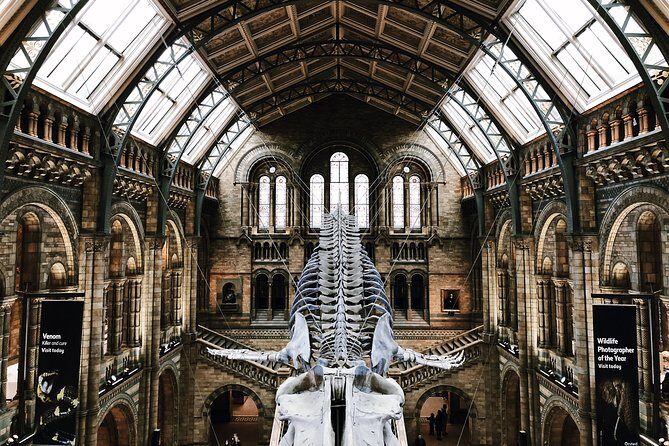
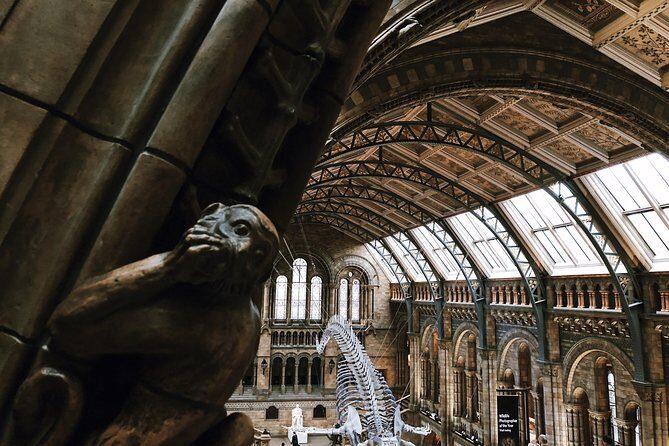
The Natural History Museum in South Kensington is a dream—until you’re standing there with a map and realizing you’ve got about 14,000 directions to choose from. A guided semi-private tour solves the biggest problem: deciding what matters and then finding it quickly.
What I like most is the “story first” approach. Your guide connects fossils, minerals, and dramatic moments of Earth history into a path you can actually remember. And because the group is small (up to 8), you’re not trapped behind a busload of people while you try to read the good labels.
There’s also a practical bonus: you spend less time crossing the museum and more time looking closely. That’s where the exhibits start to feel less like objects behind glass and more like evidence of real worlds—volcanoes, extinctions, deep time, and how people have interpreted all of it.
You can also read our reviews of more guided tours in London



Meeting at Cromwell Road Stop H and getting in without stress
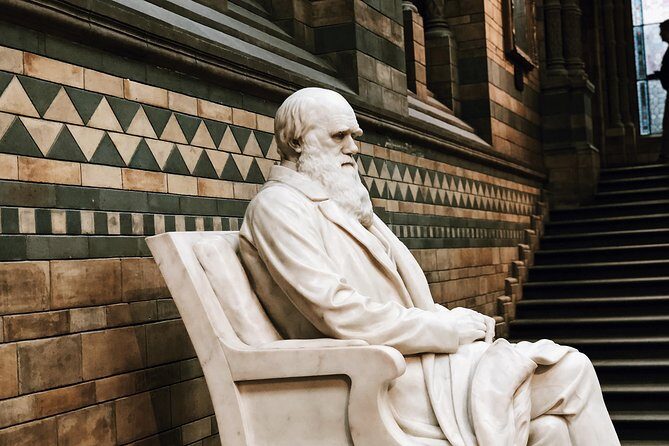
Your tour starts at Natural History Museum / Cromwell Road (Stop H), South Kensington (SW7 2DH), and it ends back at the same place. Since it’s near public transportation, you can usually plan a clean arrival—no complicated transfers needed.
Do note the museum’s entry rules. You’ll need appropriate dress, and you can’t bring large bags or suitcases inside. Think handbags or small thin bag packs for security screening. If you show up with a big bag, you’ll waste time sorting it out before you even start.
Also plan for lines. The tour may offer skip-the-line or no-wait access for parts of the route, but security and some queues can still form depending on conditions. The smartest move is arriving early enough that you don’t feel rushed while security does its thing.
Stop 1: Earth’s history through fossils, disasters, and early humans
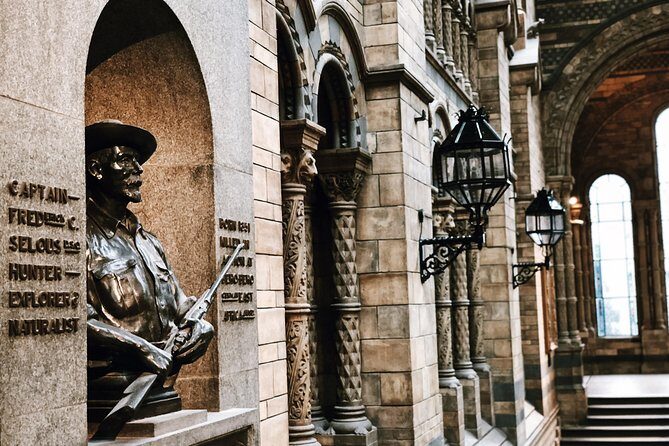
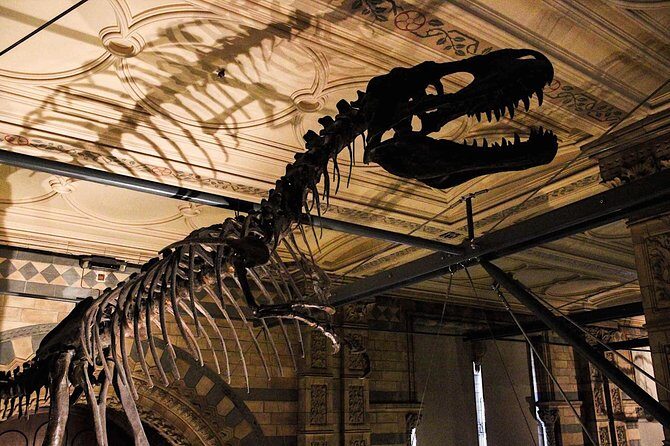
This tour focuses on one main hit: the Natural History Museum itself. In about two hours, you’ll get a curated arc of Earth and life—starting with the planet’s origins and moving through volcanic disasters, dinosaur extinction, and the dawn of humankind.
Instead of drifting from room to room, you follow a sequence that makes the museum feel like one big lesson. You’ll see how the guide ties different galleries together—for example, how deep geological events set the stage for fossils, and how later discoveries change what we think happened.
You’ll also get a “best-of” feel for major specimens. The route is designed so you can’t accidentally spend your whole time on just one theme. You’ll be nudged toward a range of exhibits—fossils, minerals, and even some strange historical facts that people often skip when they only chase the dinosaurs.
The stars you’ll remember: Archaeopteryx, Sophie the Stegosaurus, and the dodo
This is the section where the tour earns its keep. The guide pulls you toward several iconic items that are easy to miss if you’re trying to self-navigate.
One standout is the Archaeopteryx—often described as a key link between dinosaurs and birds. When someone explains how it fits into the bigger evolution story, it stops being a named fossil and starts feeling like a clue.
You’ll also meet Sophie the Stegosaurus and see the skeleton of the dodo. Those are the kind of exhibits you recognize from photos, but the tour pushes past “cool animal” and into why these fossils matter. That context is what makes it feel worth paying for a guide.
And yes, if you’re a dinosaur fan, you’ll have a good time. But keep your expectations realistic: the museum is huge and the dinosaur-related areas can be extremely popular. If a queue is heavy, the best route might mean you don’t reach every dinosaur display you dreamed of—some people have even felt the dinosaur section was the one they didn’t manage to fully cover.
Pompeii casts, skull-cup trivia, and why the museum is bigger than fossils
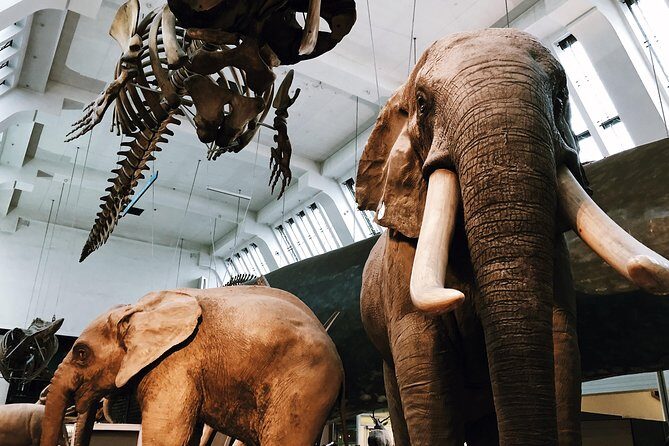
One of the smartest parts of this tour is the variety. You won’t only get fossils and skeletons. You’ll also move into exhibits that connect science to human history and culture.
Expect to see casts of Pompeii victims. That kind of display hits differently when it’s explained as a snapshot of a disaster—what people tried to do, what the eruption preserved, and why those impressions matter to history.
The guide may also share why some civilizations once used human skulls as drinking vessels. That’s not light trivia; it’s the kind of uncomfortable historical detail that makes you think about how societies built meaning from remains. If you’re traveling with kids, you’ll want to gauge their maturity. But for older teens and adults, it adds a memorable edge.
Even the way the tour selects artifacts matters. It’s not random. The route is designed to give you a rounded view of the museum—nature, Earth science, and how humans interpret evidence.
You can also read our reviews of more private tours in London





Giant Sequoia, gems, and minerals: how the route stays coherent
A museum like this can turn into a blur: one hall looks like the next, and suddenly you’re standing in front of another case with no idea what you’re looking for. The tour fights that fatigue with clear focus.
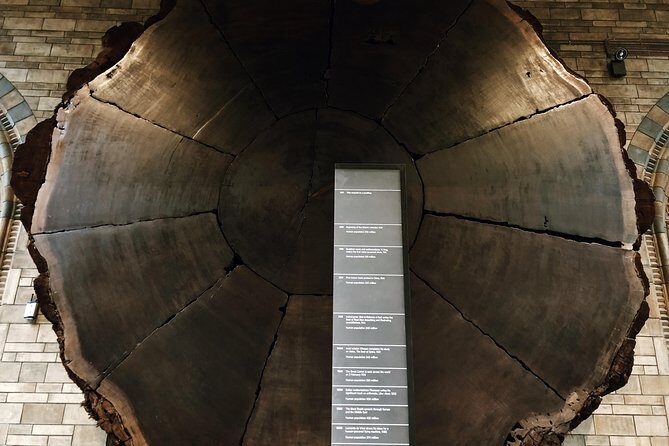
You’ll see an enormous slice of a Giant Sequoia and hear the secret histories behind specimens like this. The point isn’t just that it’s big. It’s that size and material can teach you about time, growth, and geology—if someone connects the dots.
You’ll also spend time around gems and mining-related highlights. One of the joys of the Natural History Museum is that minerals can be spectacular, but they’re also understandable when a guide explains how they form, what makes them notable, and why scientists care. If you’ve ever stared at mineral displays thinking they’re purely decorative, this section can change that.
A good rule: if you’re the type who likes to know why something exists, the guide’s explanations are where you’ll feel the value most.
Crowds, quiet rooms, and why small groups help your attention
The museum gets busy, especially around popular exhibits. A small group size helps because you’re not constantly stopping and starting to re-collect people who went off-script.
There’s also a less obvious rule built into the experience: some rooms inside the museum are very quiet or have restricted right to speak. Your guide will tell you the key information before entering those areas, so you’re not left scrambling to hear anything while everyone is whispering. It also keeps the group moving smoothly.
Finally, keep in mind that some collections can vary along the year. If you’re visiting during a season when certain displays shift, your guide may adjust the exact route to match what’s on view.
Price, value, and what this $108-ish tour buys you
At about $108.21 per person for roughly 2 hours, you’re paying mainly for three things: a guided route, expert context, and time savings in a huge museum.
Is it worth it? If you love science but hate museum planning, yes. The guide helps you hit the highlights efficiently and gives you explanations that make the exhibits stick. If you’re the “I’ll read every label at my pace” type, you might not need a guide—and you could get a different kind of satisfaction. But in terms of getting the most meaning per minute, this tour is designed for that.
One extra note: the itinerary indicates an admission ticket free element for the museum visit. Still, temporary exhibitions are not included, so if a specific special exhibit is your priority, you’ll want to check that on your own before you go.
Who should book this tour (and who might prefer DIY)
This tour is a strong fit if you:
- Want a guided highlights route through a massive museum
- Travel as a family with kids who do better with structure
- Love fossils, geology, and the bigger story behind specimens
- Have limited time in London and want a museum win without museum fatigue
You might consider DIY instead if you:
- Plan to spend most of your day reading every label and wandering slowly
- Are mainly chasing one specific temporary exhibition
- Are strongly focused on only one themed wing and don’t want any tradeoffs
As for guides, you could be led by names like Matilda, Ivo, Tony, or Anthony Matthews. What matters is the pattern: these guides tend to be enthusiastic and bring real specialty energy—one guide connection includes geology background—so the explanations feel grounded, not generic.
Should you book? A simple decision guide
If you’re visiting the Natural History Museum for the first time, have about two hours, and want the museum to feel understandable, I’d book this. The small group cap of 8 people max, plus a route that hits major specimens like Archaeopteryx, Sophie the Stegosaurus, and the dodo, is exactly the combination that turns a big museum visit into a satisfying one.
If you’re going specifically for every dinosaur room and you know the queues will be brutal, go in with flexibility. You might end up focusing on the tour’s best path rather than every single dinosaur-related corner.
And if you’re the kind of traveler who loves practical help—getting your bearings fast, seeing the right things, and learning a few surprises along the way—this is the style of tour that fits you.
FAQ
How long is the Natural History Museum London guided semi-private tour?
It’s about 2 hours.
What’s the maximum group size?
The tour allows a maximum of 8 people.
Where does the tour start?
It starts at Natural History Museum / Cromwell Road (Stop H), South Kensington, London SW7 2DH, UK.
Is the tour in English?
Yes, it’s offered in English.
Does the price include admission to temporary exhibitions?
No. Admission to temporary exhibitions is not included.
Is hotel pickup or drop-off included?
No, hotel pickup and drop-off are not included.
What do I need to provide before the tour?
You need to provide guests with a mobile phone number (including country code).
Can I cancel for a full refund?
Yes. You can cancel up to 24 hours in advance for a full refund.