REVIEW · OXFORD
Official Oxford Cycle Tour
Book on Viator →Operated by Bainton Bikes · Bookable on Viator
Oxford’s best moments show up on two wheels. This guided cycle tour strings together the city’s big-name architecture and a calmer river-and-meadow stretch, so you get your bearings fast. I really liked the way the local guide tied sites together with stories, including those playful rabbit-hole vibes tied to Alice in Wonderland.
What I love most is the mix: crisp photo stops at colleges and theaters, plus slower time by Port Meadow and the Thames. The other standout is the pacing—around 2 hours 30 minutes—with short stops that keep the ride moving and still give you time to look closely. One thing to consider: attractions aren’t included, so if you want to go inside any buildings, you’ll need to plan and pay separately.
In This Review
- Key highlights to know before you book
- Oxford on two wheels: how this 2.5-hour format works
- Walton Street Cycles start: easy to find, built for riders
- Radcliffe Camera and the Oxford skyline “big hits” in 15 minutes
- Bridge of Sighs: the Oxford version and why it exists
- Sheldonian Theatre: Christopher Wren’s design, built 1664–1669
- Lady Margaret Hall: from first women’s college to co-ed today
- Port Meadow: why this 30-minute break is worth the spin
- Thames River and Oxford Canal: rowers, narrowboats, and calm air
- What’s included (and why that matters for your budget)
- Price and value: is $47.99 a good deal?
- Who this Oxford Cycle Tour is best for
- Should you book the Official Oxford Cycle Tour?
- FAQ
- Where does the tour start?
- Where does the tour end?
- How long is the Official Oxford Cycle Tour?
- What is included in the ticket price?
- Are attraction entrance fees included?
- What language is the tour offered in?
- Do I need to bring a printed ticket?
- How many people are in the group?
- When should I check in?
- Is it suitable for kids and service animals?
- Is there a weather requirement?
Key highlights to know before you book
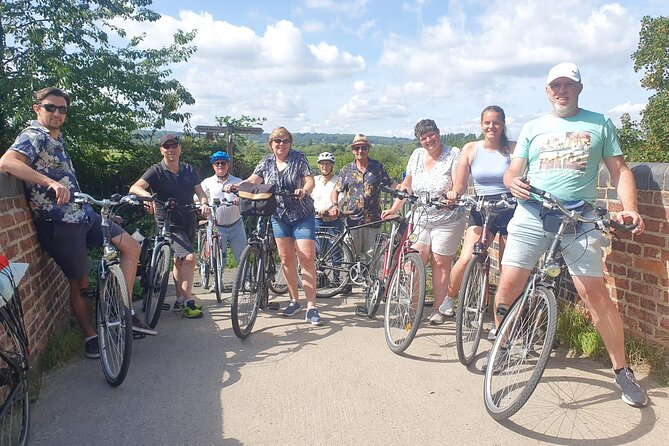
- Excellent guide storytelling that makes classic Oxford sites feel personal and easier to place
- Fast, efficient stop times that fit a half-day with minimal waiting around
- Port Meadow time where cows, horses, and wildlife graze in a protected open space
- Thames + Oxford Canal scenery with narrowboats, rowers, and small boats along the water
- College architecture highlights like Radcliffe Camera, Sheldonian Theatre, and Lady Margaret Hall
Oxford on two wheels: how this 2.5-hour format works
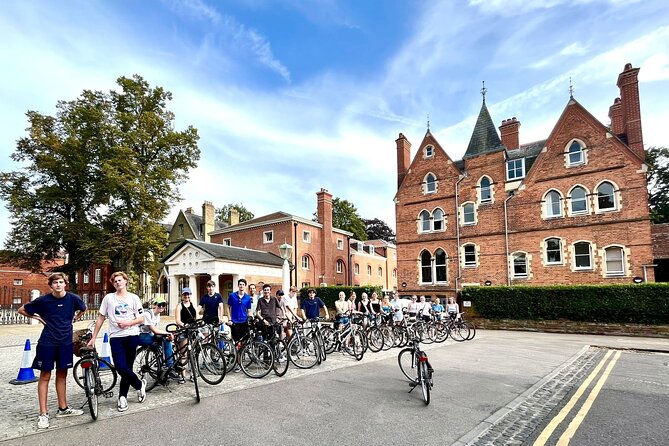
This is the kind of Oxford activity that helps you “read” the city instead of just spotting landmarks. With a guided ride and a bike provided, you spend your energy on the route and the views, not on logistics.
The total time is about 2 hours 30 minutes, and the ride is broken into short, timed stops. Expect a steady rhythm: look closely, listen, hop back on, and keep moving. It’s ideal if you’re visiting for a day or two and want an organized route without committing to a full walking tour.
You’ll also have a small group feel, capped at a maximum of 20 travelers. That matters because your guide can steer the pace, answer questions, and keep everyone together on busy streets.
You can also read our reviews of more tours and experiences in Oxford.



Walton Street Cycles start: easy to find, built for riders

Your tour begins at Walton Street Cycles, 78 Walton St, Oxford OX2 6EA. That location is practical because it keeps you close to central sights without forcing you to plan a long commute just to start biking.
Bikes are included, and your ticket is mobile, so you don’t need to hunt for printed paperwork. You’ll want to check in about 10 minutes before departure so the ride can roll on time with everyone geared up.
If you’re the type who gets stressed by gear, this is a good sign: it’s set up as a straightforward bike tour with provided bicycles and a local guide to keep things smooth. You can focus on the city, not on figuring out how to ride in traffic for the first time.
Radcliffe Camera and the Oxford skyline “big hits” in 15 minutes
The first stop is Radcliffe Camera, the neo-classical library built between 1737 and 1749. Even if you only look from the outside, it’s a standout Oxford silhouette—one of the university’s 28 libraries, and a building that visually anchors the whole area.
You’ll get about 15 minutes here, which sounds short until you realize how it helps. In a guided format, you’re not trying to read every plaque; you’re learning what you’re looking at and why it matters in Oxford’s layout. That’s the real value of a fast stop: it turns scattered photos into a coherent mental map.
Possible drawback: because entry isn’t part of the tour, you may have your photos and exterior time and still want more. If you strongly prefer inside-the-building visits, set expectations accordingly. You can enjoy the architecture without paying extra, but you might choose upgrades separately if that’s your travel style.
Bridge of Sighs: the Oxford version and why it exists
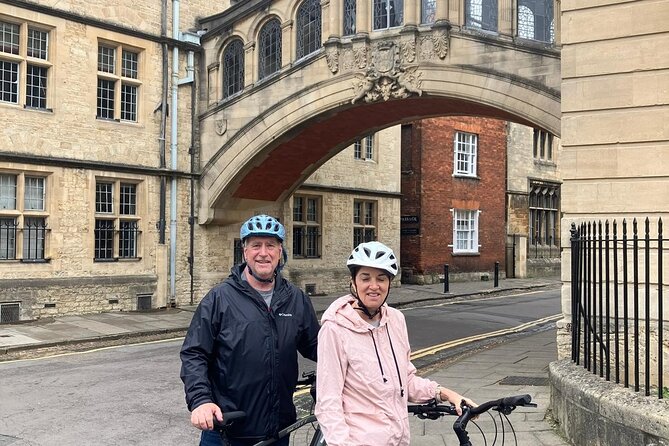
Next up is the Bridge of Sighs—a bridge that links two university buildings in the center of historic Oxford. The name alone hooks people because it echoes the famous Venetian idea, and this is Oxford’s own take on the concept.
This stop is also about 15 minutes, which works well because you’re mostly there for sightlines and the story behind them. You’ll see how the bridge fits into the campus feel of the surrounding streets, and you’ll start recognizing how Oxford’s academic world spills into the city’s everyday walking paths.
Good tip for this part: take a moment to look for the way the bridge frames surrounding buildings. Even without entering anywhere, that framing is where the photo payoff usually is.
Sheldonian Theatre: Christopher Wren’s design, built 1664–1669
The tour also includes the Sheldonian Theatre, designed by Christopher Wren and built between 1664 and 1669. This is one of those Oxford structures where the outside already tells you it’s built for formal gatherings, not casual strolls.
You’ll get about 15 minutes here, enough to appreciate the shape and detailing and to understand why it’s one of those “you need to see it once” buildings. Like the earlier stops, the quick timing keeps the tour from turning into a long queue-less waiting game.
Again, remember: admission isn’t included, so this is primarily an exterior look. If you’re the sort of traveler who plans theater tours, you might tack on a separate visit later. For everyone else, the guided exterior stop is still satisfying because it explains what you’re looking at and where it sits in Oxford’s story.





Lady Margaret Hall: from first women’s college to co-ed today
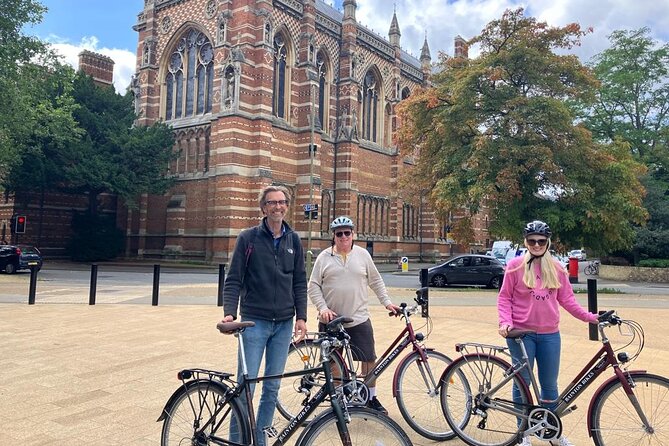
Then you’ll roll to Lady Margaret Hall (LMH), part of the University of Oxford. LMH matters for a clear reason: it was founded in 1878 as the first women’s college in Oxford, and it became co-ed in 1979, accepting both women and men.
This stop gives you the chance to connect architecture to modern Oxford life. A campus isn’t just a set of historic buildings; it’s a working institution. Hearing the timeline helps the buildings feel like they belong to real people and real change, not just old stone.
With about 15 minutes, you’ll have time to take photos and get the context, but you won’t have a long wander. If you like slow walking and reading every notice, you may want to return on your own later. If you like compact learning, this stop nails the balance.
Port Meadow: why this 30-minute break is worth the spin

The mood shifts at Port Meadow, where you’re invited to slow down for about 30 minutes. This is one of the largest open spaces in Oxford, and the defining detail is what makes it feel alive: cows, horses, and wildlife graze there.
The Thames also runs through the meadow, which helps explain why this area feels different from the city’s stone-and-steeple sections. And it’s not just a scenic break—Port Meadow is recognized as a Site of Specific Interest (SSSI) and a Scheduled Ancient Monument. That protection is part of why you can experience it at all in the middle of a working city.
Practical reality: you’re biking, then stopping, so dress for quick changes in comfort. This meadow stretch is where you’ll likely take the most photos and just breathe for a bit. If you’re someone who gets museum’d out, this is the reset.
Thames River and Oxford Canal: rowers, narrowboats, and calm air
After the meadow, the tour brings you to the Thames at Oxford, with about 30 minutes here. At this stretch, the Thames meets with the Oxford Canal, and that meeting point creates the mix of views you’ll remember: wildlife, small boats, and rowers coming and going from the universities.
This part is also great because it changes your perspective on Oxford. You still see the academic world, but it’s framed by water and movement instead of doorways and facades. It’s the spot where your brain stops thinking in “buildings” and starts thinking in “place.”
Then comes the Oxford Canal area for another 30 minutes. Historically, the canal was once thriving industry. Today, it’s home to many narrowboats that act like floating neighborhoods. That shift—from work route to living space—is what keeps the canal stop interesting even for people who think canals are just pretty lines in the background.
If you want the best photos, look for reflections and the slow changes in light along the water. And if you’re traveling with kids, this is the section where wildlife and boats naturally hold attention without forcing it.
What’s included (and why that matters for your budget)
You get a local guide and use of bicycle. That’s the core value of this tour, because it removes two big travel friction points: figuring out a route and figuring out bike logistics.
What you don’t get: food and drinks (unless specified), and entrance to attractions isn’t included. That doesn’t make the tour less fun. It just means you’re paying mainly for guidance and biking, not admission fees or museum time.
If you plan on paying for multiple interior visits anyway, you might treat this as a “set the map” experience and then add ticketed stops separately. If you prefer outside views and learning context, the lack of included admissions becomes less of a downside.
Price and value: is $47.99 a good deal?
At $47.99 per person, this isn’t a bargain in the “cheap” sense. But it’s strong value for what’s provided: bike + guide + a curated route through central Oxford plus the riverside/canal calm.
You’re paying for three things you’d otherwise spend time arranging:
- A logical sequence of sites (so you’re not zigzagging around the city),
- On-the-spot explanations that turn buildings into landmarks you understand,
- A guided ride that reaches Port Meadow and the water areas without you having to plan a bicycle-friendly path yourself.
Also, the stops are tight enough that you’re not losing a big chunk of your day. When a tour like this hits the sweet spot of pacing, it saves you energy for the rest of your trip.
For best value, pair it with un-ticketed wandering afterward—walk a bit around the places you saw and only pay for interiors if you truly want them. That way the tour becomes your map, not another bill.
Who this Oxford Cycle Tour is best for
This tour is a good match if you want an easy-to-follow Oxford highlights route with a local guide, and you like mixing architecture with outdoors time.
It’s also a solid option if you’re:
- Visiting Oxford for the first time and want fast orientation,
- Curious about university-era architecture without committing to long museum sessions,
- Comfortable enough to ride a bike for a multi-stop tour.
The tour does note that it’s not recommended for late stage pregnant travellers. If you’re in that situation, you’ll likely be happier with a different format that avoids the physical demands of cycling.
Should you book the Official Oxford Cycle Tour?
If you want a practical introduction to central Oxford plus Port Meadow and the Thames area, I think you should. The guiding is clearly the heart of the experience, and the pacing is built for real sightseeing instead of just passing through.
I’d book it especially if you like your Oxford with variety: formal buildings in short bursts, then a calmer stretch where cows and wildlife can steal the show. And if you’re trying to get the most out of a limited time window, the 2.5-hour format is genuinely helpful.
Skip it only if you strongly need included admission tickets, or if you prefer long, unhurried exploring with lots of stops you control. This tour is about guided efficiency and smart stops, not about staying planted at one attraction for hours.
FAQ
Where does the tour start?
The tour starts at Walton Street Cycles, 78 Walton St, Oxford OX2 6EA, UK.
Where does the tour end?
The tour ends back at the meeting point.
How long is the Official Oxford Cycle Tour?
It runs for about 2 hours 30 minutes.
What is included in the ticket price?
The ticket includes a local guide and use of a bicycle.
Are attraction entrance fees included?
No. Entrance to attractions is not included.
What language is the tour offered in?
The tour is offered in English.
Do I need to bring a printed ticket?
No. You’ll use a mobile ticket.
How many people are in the group?
The tour has a maximum of 20 travelers.
When should I check in?
You should check in 10 minutes before departure.
Is it suitable for kids and service animals?
Service animals are allowed. Children must be accompanied by an adult, and most travelers can participate. The tour is not recommended for late stage pregnant travellers.
Is there a weather requirement?
Yes. The experience requires good weather. If it’s canceled due to poor weather, you’ll be offered a different date or a full refund.