London has more layers than you expect.
This tour gives you the City of London view you don’t get from the usual big-bus stops, with a laugh-your-way-through-it guide who mixes finance-era London with the people-and-power stories most guides skip. I especially like the balance of smart comedy and on-the-stolder detail, and I like that you walk through a “square mile” area that still feels like it has rules, secrets, and old institutions doing real work.
The one thing to keep in mind: it runs in the open air, and it requires good weather. Also, at about 1 hour 45 minutes, you’ll cover a lot of ground and you’ll get great highlights, not a slow, museum-style pace.
In This Review
- Key things to know before you go
- Quick snapshot: price, timing, and what you’re paying for
- Where you meet: Southwark View Point (and the smart start)
- Stop 1: City of London dragon boundary marks (where the “rules” start)
- Stops 2 and 3: Fishmongers’ Hall and hidden backstreets
- Stop 4: Mansion House and the Lady Mayor angle
- Stop 5: Guildhall and the City Corporation headquarters
- Stop 6: Postman’s Park and a public-art finish
- The story style: finance, institutions, and people history tried to forget
- A realistic look at walking time and pacing
- Who this tour suits best (and who should consider a different option)
- Practical tips to get the most from it
- Should you book this officially unofficial City of London tour?
- FAQ
- How long is the tour?
- Where does the tour start and end?
- What time does the tour begin?
- Do the stops have admission fees?
- Is the ticket mobile?
- What’s the group size?
- What happens if weather is poor?
Key things to know before you go
- Officially unofficial, City-of-London focused: it’s designed to show you the place behind the tourist veneer
- Suse Steed leads the laughs: comedian, TedX speaker, and ex-economist Suse Steed
- Dragon boundary marks at Stop 1: you’ll actually stop and look at the City’s guardians
- Guilds and power, not just landmarks: Fishmongers’ Hall, Mansion House, and Guildhall all get story time
- Ends at Postman’s Park: a public-art finish near St Paul’s if you want to keep exploring
Quick snapshot: price, timing, and what you’re paying for
This tour costs $27.68 per person and runs for about 1 hour 45 minutes. It’s a small-group experience with a maximum of 15 travelers, and you’ll get a mobile ticket. Those details matter because they support the main promise of the experience: you can ask questions, you’re not lost in a crowd, and the guide can keep the story flowing.
Value-wise, I like that the stops themselves are marked as admission ticket free, which means you’re paying mainly for the guided storytelling and the route choice. For London, that’s a good deal. You’re not buying tickets to a single museum—you’re getting an organized walk through the City’s corners, with context on how power, money, and institutions shaped real lives.
You can also read our reviews of more city tours in London


Where you meet: Southwark View Point (and the smart start)
Your tour starts at Southwark View Point, London SE1 9DF, with a 11:00 am start. You’ll begin on the south side of the river area, then move into the City of London zone where the “square mile” idea becomes real fast.
This is a practical advantage if you’re using public transit. The meeting point is listed as near public transportation, so you can arrive without a long scramble. Also, the start time is late enough that you don’t feel rushed before it begins, but early enough that you can still use the rest of the day for other sights.
Stop 1: City of London dragon boundary marks (where the “rules” start)
The tour kicks off with City of London Dragon Boundary Mark. You don’t just glance at it—you stop and look at the dragons that guard the City of London.
I like this opener because it signals the tone of the tour right away. The City of London isn’t presented as generic London. You’re introduced to the idea that this place has its own boundaries, symbols, and identity. Even if you’ve read about London history, seeing these boundary marks in person helps the story feel grounded. It’s the kind of detail that makes you pay attention for the rest of the walk.
Stops 2 and 3: Fishmongers’ Hall and hidden backstreets
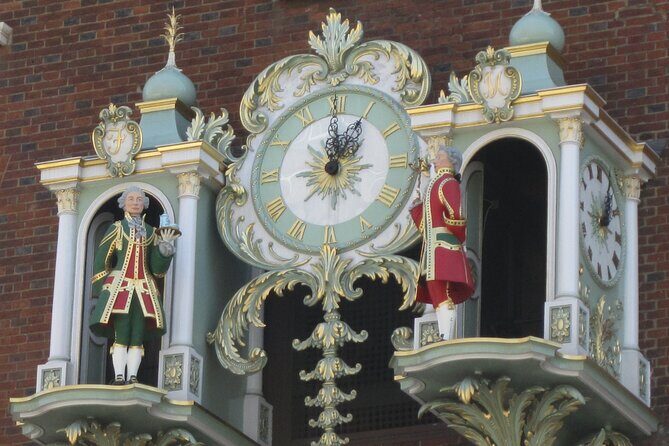
Next up is Fishmongers’ Hall. You’ll learn why the fishmongers mattered and why they have such a big hall. That sounds simple, but it’s a great example of how this guide reframes a place. Instead of treating the hall like a pretty building, you get the institution behind it—who had power, what their trade represented, and why the City’s guilds could look like mini empires.
After that comes an amble through hidden backstreets in the City of London, where you’ll pick up “secrets” tucked away from the main tourist paths. This is one of the strongest parts for me because it’s where the City starts to feel lived-in rather than staged. You’re not just collecting photos; you’re learning how to read the neighborhood.
A possible drawback here is the same thing that makes it fun: you’re moving. The stops are short—around 10 minutes for Fishmongers’ Hall and 20 minutes for the backstreets segment—so if you want extra time at one specific spot, you’ll need to plan to return later on your own.
Stop 4: Mansion House and the Lady Mayor angle
You then see Mansion House of the City of London, described as the mansion and home of the Lady Mayor of the City of London. This stop is short—about 5 minutes—but it’s useful, because it connects what you’re seeing to how the City governs itself through tradition and ceremonial roles.
I like when a tour explains why a building is there beyond its looks. Mansion House is positioned as part of the City’s identity, not just another grand address. Even in five minutes, the stop helps you understand how “local power” works in the City.






Stop 5: Guildhall and the City Corporation headquarters
Then you move to Guildhall, the headquarters of the City of London Corporation, plus the site of something described as secret and special. The time here is about 10 minutes.
This is where the tour’s theme locks in: the City isn’t only historic—it’s institutional. The guide doesn’t treat the City Corporation as background trivia. You get the sense that these structures shaped decisions, trade, and public life over long stretches of time.
Because the time is tight, you won’t get a slow, lecture-length explanation. Instead, you get the “what to notice” angle. If you like tours that teach you how to look, this works well.
Stop 6: Postman’s Park and a public-art finish
The tour ends at Postman’s Park (weather permitting), about 10 minutes at the final stop. This is where you see a special piece of public art.
I like ending here because it shifts the mood. You start with dragons guarding the boundary, you move through guild power and civic institutions, and then you land somewhere quieter and human—public art meant for people passing through. The description is weather-dependent, so have a Plan B. When the tour ends, you’re close to St Paul’s Cathedral, and the guide can point you in the direction if you want to head there afterward.
The story style: finance, institutions, and people history tried to forget
This is not just a landmarks tour. The big promise is that you’ll learn about people history has tried to forget, including slave traders and rebel leaders, alongside stories of ordinary Londoners who did extraordinary things.
That mix is bold, and it can be genuinely useful on a first visit to this area. If you only see the official-looking buildings, the City can feel like it runs on money alone. The tour pushes beyond that. It frames power as something real that involved people, choices, and consequences, not just an abstract “history of capitalism” lecture.
And the guide voice matters. Suse Steed is described as a comedian and TedX speaker with an ex-economist background, and the reviews emphasize her humour and lively delivery. That matters because it keeps heavy topics from turning into a slog. You’re more likely to remember the key points when the guide tells them with rhythm, timing, and jokes.
A realistic look at walking time and pacing
The total duration is about 1 hour 45 minutes, and the itinerary segments are relatively tight. That means you should treat it like a focused orientation walk rather than an all-day City crawl.
You’ll get multiple “micro-stops,” including the longer stretch through backstreets. For me, that pacing is a plus, because it helps you get the big ideas fast: City identity, guild power, civic roles, and where public memory lives.
If you’re the type who hates walking, or you want lots of time to linger for photos at every stop, this might feel short. But if you want a guided hit of context in a compact timeline, the pacing fits.
Who this tour suits best (and who should consider a different option)
This tour is a strong match if you:
- Want less tourist-veneer and more “how this place actually works”
- Enjoy guided history that includes the difficult parts without turning joyless
- Like a guide who can make you laugh while still keeping the facts and themes clear
- Prefer small groups (this one caps at 15)
It may be less ideal if you:
- Want a slow, museum-style experience with lots of time sitting and reading
- Prefer purely scenic views and minimal storytelling
- Are hoping for a stop-by-stop deep dive into one single building
From the reviews, I also get a sense this works well for repeat curiosity. One person even did the City tour twice with Suse. If you like returning to the same area with a different lens, this setup makes sense.
Practical tips to get the most from it
A few things will help you enjoy it more:
- Wear comfortable shoes. Even though the stops are short, you’ll be walking between them and moving at a guide-led pace.
- Bring a layer. The experience depends on good weather, and London can shift fast.
- If you’re planning extra sightseeing afterward, aim for St Paul’s. The tour ends near there, and you can continue if you want.
- If you want questions answered, small groups make that more realistic. With a maximum of 15 travelers, you’re less likely to feel like you’re just watching.
Also, the guide may include small extras along the way. One review specifically mentions mini snacks, so it’s worth expecting a little something along the route.
Should you book this officially unofficial City of London tour?
I’d book it if you want an efficient, funny, history-with-a-point walk through the City of London. The combination of Suse Steed’s humour, the small group size, and the route that spotlights institutions like Fishmongers’ Hall, Mansion House, and Guildhall makes it feel like real London research—without the heavy-handed vibe.
Skip it if you only want postcard landmarks, or if you need long stops to soak in one place. This tour works best as a first-or-fast orientation to how the City thinks, where its boundaries are, and why its stories are tied to power and people.
If your schedule allows and the forecast looks decent, it’s a smart use of money and time for anyone curious about London beyond the obvious routes.
FAQ
How long is the tour?
It lasts about 1 hour 45 minutes.
Where does the tour start and end?
It starts at Southwark View Point (London SE1 9DF) and ends at Postman’s Park (King Edward St, London EC1A 7BT), usually weather permitting.
What time does the tour begin?
The start time is listed as 11:00 am.
Do the stops have admission fees?
The itinerary notes free admission ticket entry at each listed stop.
Is the ticket mobile?
Yes. The tour includes a mobile ticket.
What’s the group size?
The tour has a maximum of 15 travelers.
What happens if weather is poor?
The experience requires good weather. If it’s canceled due to poor weather, you’ll be offered a different date or a full refund.