REVIEW · OXFORD
Oxford’s literary legends and landmarks: A Self-Guided Audio Tour
Book on Viator →Operated by VoiceMap Audio Tours · Bookable on Viator
Oxford has stories at every corner. This self-guided audio walk strings together literary legends and real Oxford landmarks into one easy, walkable route that takes about 1.5 to 2 hours. You start at Carfax Tower and finish at the Eagle and Child pub, hearing why each stop matters to famous books.
Two things I really like: first, the tour uses offline audio, maps, and geodata, so you can keep going even if your signal gets sketchy. Second, the route is built around specific places you’d normally glance past, like Pembroke Square and the St Mary the Virgin passageway, with clear prompts to pause and look closer.
One drawback to keep in mind: you’ll need your own smartphone (and headphones). And if the VoiceMap app acts up, it can turn a simple walk into a frustrating loop—so give yourself some buffer time and know you can contact VoiceMap support if you hit trouble.
In This Review
- Key things to know before you start
- Starting at Carfax Tower: your literary walking route begins
- Pembroke Square and the Tolkien connection
- Alice’s Shop: the sweet, real-world pause
- Christ Church’s Wonderland stained glass
- Merton College and the Alice Liddell thread
- St Mary the Virgin: CS Lewis and the Narnia-style passage
- Radcliffe Square to the Bodleian: His Dark Materials footsteps
- Clarendon Square and Divinity School: Harry Potter practice links
- Exeter College and Tolkien’s Oxford years
- Ending at the Eagle and Child: where the Inklings would hang out
- How good is the VoiceMap app in real life?
- Value and time: is $11.99 a good deal?
- Who this tour suits best
- Should you book this Oxford literary audio walk?
- FAQ
- How long is the Oxford literary legends self-guided audio tour?
- Where does the tour start and end?
- What do I need to use the audio tour?
- Is offline access included?
- Are entrance tickets included for stops like colleges or libraries?
- Is the tour available in English?
Key things to know before you start
- Carfax Tower to the Eagle and Child: a logical one-direction literary walk across central Oxford.
- VoiceMap offline support: audio, maps, and geodata are available without relying on mobile data.
- Story-linked landmarks: stained glass, college squares, passageways, and exact squares tied to Wonderland and Narnia-style connections.
- Plenty of “pause here” moments: you’re prompted to stop for details, not just pass by.
- Tolkien, Lewis Carroll, CS Lewis, and more: the route covers several big literary names in one outing.
- You control the pace: it’s self-guided, so you can linger around the bookish parts that catch your eye.
Starting at Carfax Tower: your literary walking route begins
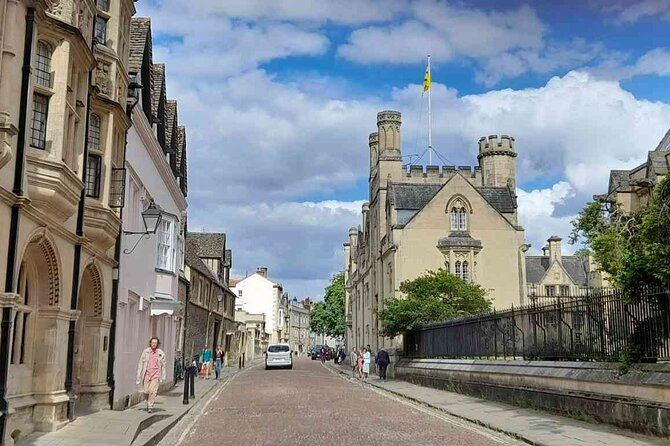
The tour kicks off right in front of Carfax Tower on Queen Street (OX1 1ET). That’s a smart place to start because it puts you in the thick of Oxford’s center. You’re not hunting for some obscure doorway in the middle of nowhere—you’re already in a place where pedestrians, shops, and views keep you oriented as you walk.
From the first moments, the audio frames what you’re about to do: wander the city centre and connect the dots between Oxford and the stories people associate with it. This matters because Oxford can feel like “college buildings in every direction” unless someone gives you a storyline to hold onto. Here, the storyline is the point.
You can also read our reviews of more tours and experiences in Oxford.



Pembroke Square and the Tolkien connection
Next up, you pass by Pembroke College and stop near Pembroke Square, where the tour points out the spot associated with JRR Tolkien and where he wrote The Hobbit. You’re not walking into a museum. You’re standing in an open-air square, looking at the kind of place where a writer might spend long hours.
Practical tip: when you hear the Tolkien portion, slow down and actually look at the edges of the square. College architecture tends to reward “sideways looking.” You’ll understand the vibe faster when you’re paying attention to the surrounding buildings, not just the name on the gate.
Alice’s Shop: the sweet, real-world pause
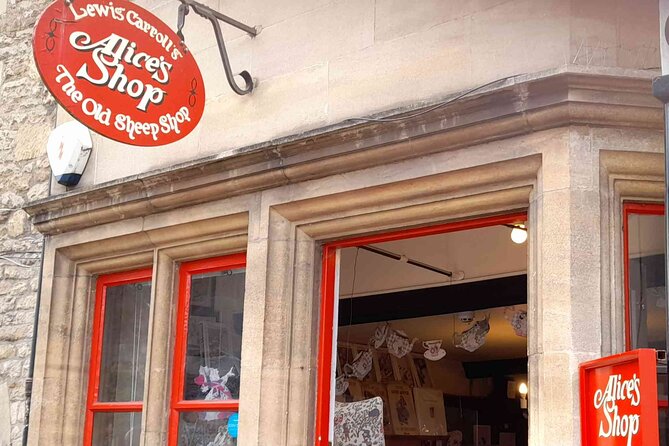
Then the tour passes by Alice’s Shop. The audio encourages you to pause here and browse, with the link that real-life Alice in Wonderland bought barley sugar there.
This is one of the more fun segments because it’s both literary and practical. If you want to stretch your legs, this is the moment. If you want to snack, this is the moment too—just remember the tour doesn’t include food or drink, so treat it as a chance to do your own thing.
A small consideration: since it’s a shop, it may feel more like stop-and-go than sightseeing. If you like quiet walking with minimal interruptions, take a quick look, then hop back into the audio when you’re ready.
Christ Church’s Wonderland stained glass
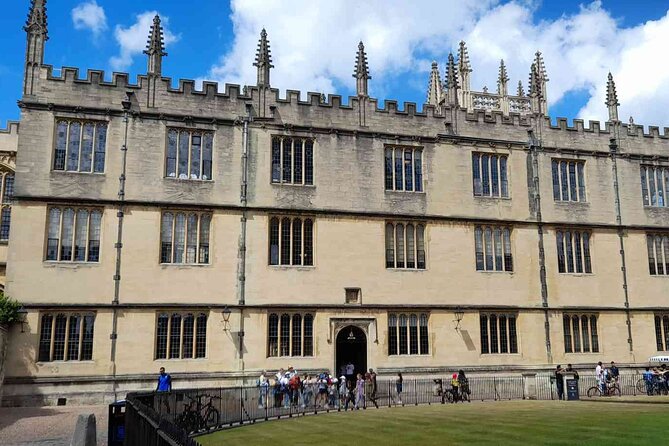
As you pass Christ Church, you’ll hear about eight stained-glass windows featuring characters from Wonderland. This is where Oxford stops being just “a name on a map” and becomes visual.
Stained glass can be hard to appreciate from the street, depending on angles and what’s visible. The tour’s approach helps because it tells you what to look for before you reach the best viewpoint. When you know that there are eight related windows, your eyes start hunting for them instead of letting the whole façade blur into one big backdrop.
If you’re the type who loves details, this part rewards patience. If you’re in a rush, you can still catch the idea quickly: eight windows, Wonderland characters, and Oxford’s literary connections made visible.
Merton College and the Alice Liddell thread
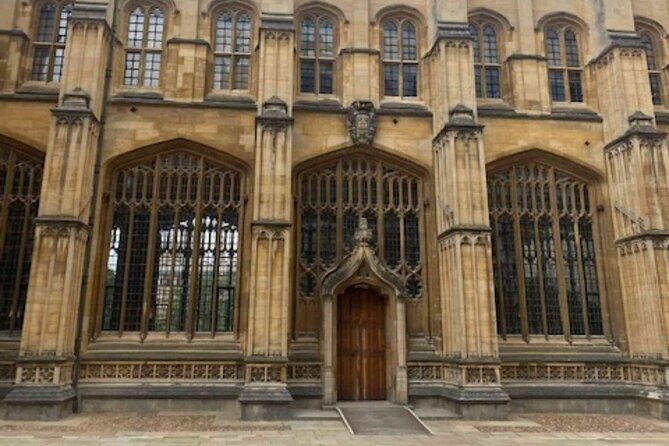
Next, you pass by Merton College and hear about Alice Liddell, described as the real-life inspiration behind Lewis Carroll’s Alice in Wonderland.
This is an important switch in the tour’s story focus. Early stops are about places linked to writing and publication. Here, the audio leans into people—who inspired the books in the first place. That makes the route feel more like a narrative than a checklist of famous names.
Practical advice: when the audio moves from “author” to “inspiration,” expect the conversation to change tone. Don’t tune out. That section helps you understand why the Wonderland connection sticks to Oxford in the first place.






St Mary the Virgin: CS Lewis and the Narnia-style passage
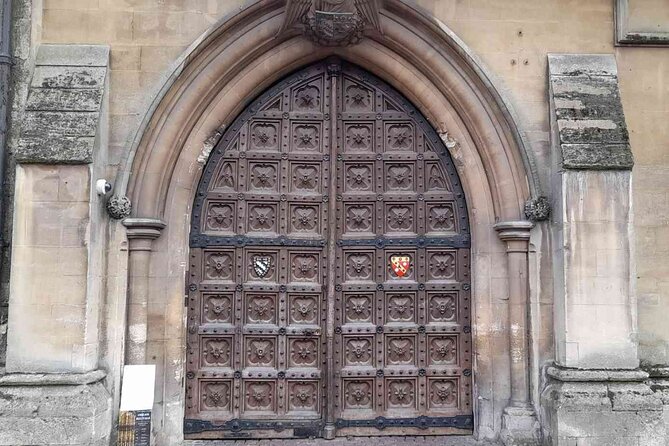
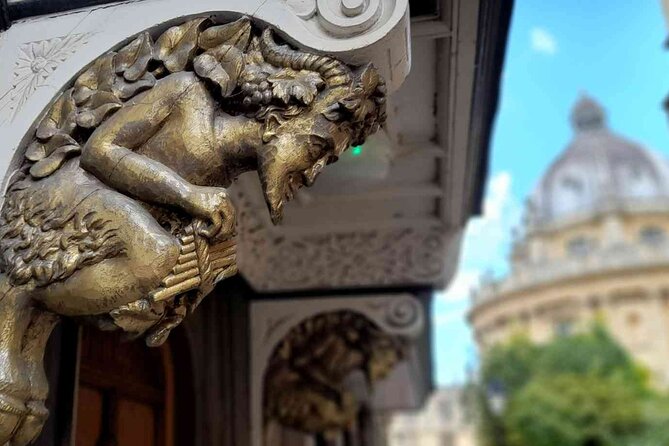
As you stroll past the University Church of St Mary the Virgin, the tour brings in CS Lewis and his friendship with JRR Tolkien. Then you’ll move to the passageway outside the church, which the tour describes as inspiration for Narnia.
This section is a great example of why self-guided audio works well in a place like Oxford. A passageway is easy to overlook when you’re just walking by. Hearing it framed as part of a story makes you slow down, look up, and notice how light and shadow move through an older walkway.
Also, it’s a nice pacing reset. After colleges and squares, you get a more enclosed feeling environment. If you’re walking on a busy day, this passageway moment can feel like a small quiet pocket—again, not because Oxford is empty, but because you’re focusing your attention.
Radcliffe Square to the Bodleian: His Dark Materials footsteps
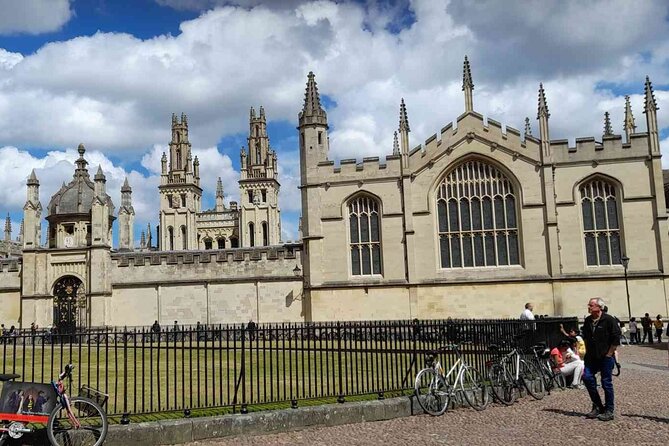
The tour then steps into Philip Pullman’s His Dark Materials. You follow the footsteps of Will and Lyra as you make your way around Radcliffe Square and toward the Bodleian Library.
Even if you’re not a hard-core fan of the series, this part works because it’s using Oxford as a stage. Radcliffe Square is a landmark area, so the audio connection helps you understand why so many stories like to use these kinds of dramatic settings.
A useful way to approach it: listen to the audio segment before you reach the square, then glance around as if you’re imagining the scene in motion. The tour is doing something clever here: it turns the walking time itself into the story time.
Clarendon Square and Divinity School: Harry Potter practice links
Next, the tour takes you through Clarendon Square and toward the Divinity School library, with the connection that Harry Potter practiced his witchcraft and wizardry there. The audio also points out an oak tree tied to the moment when Draco Malfoy is turned into a ferret.
This is the part that can feel the most “film-and-fantasy” depending on your tastes. The good news is that the tour doesn’t ask you to treat Oxford as Hogwarts. It gives you a set of story anchors so you can spot the places mentioned in that fictional world.
Practical note: outdoor landmarks like an oak tree are easy to reach, but not always easy to identify instantly if you arrive from an unexpected angle. When the audio cues it, step closer and take a moment. The tour is counting on you slowing down for these points.
Exeter College and Tolkien’s Oxford years
You’ll pass by Exeter College, and the audio adds more about Tolkien’s time at Oxford. By now, the Tolkien thread has multiple angles—writing The Hobbit, general Oxford atmosphere, and then his actual period at the university.
This section is valuable because it helps tighten the picture. Instead of thinking of Tolkien only as a famous author, you’re pushed to see him as someone who spent real time in this academic world.
If you’re a reader who likes to connect books to lived context, this is one of the better payoffs on the route.
Ending at the Eagle and Child: where the Inklings would hang out
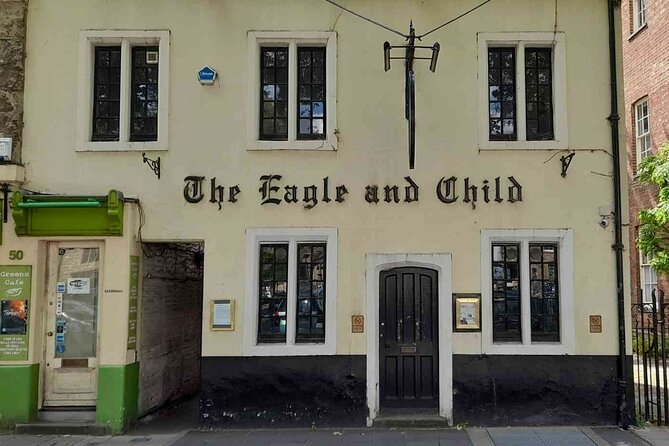
Finally, the tour ends in front of the Eagle and Child pub on St Giles’ Street. The audio connects this stop with the Inklings, an informal literary club from the early to mid-1900s.
This ending is a smart move. You finish at a place that fits the theme: writers gathering, talking books, tossing ideas around. Even if you just want a drink or a snack after your walk, it feels like a natural landing point.
And yes, the pub being open basically all day makes it easier to match your schedule. When you’re done with the audio, you’re not stuck wandering without a “home base” nearby.
How good is the VoiceMap app in real life?
This tour is delivered through the VoiceMap app (available on Android and iOS), with offline access included for audio, maps, and geodata. That’s a big deal in Oxford, where you can get spotty mobile coverage between stone walls and busy streets.
You also get a lifetime access model for this specific tour in English, which is handy if you want to re-walk the route later or if you travel back to Oxford and want a different way to see it.
One thing to watch: the tour does not include a smartphone or headphones. So plan your setup before you get to Carfax Tower. If you’re the kind of person who forgets chargers, bring a cable and a full battery—because there’s nothing worse than hitting a literary moment with a dead screen.
And if you do experience app trouble, VoiceMap support is reachable by email at [email protected] (and by telephone as well). It’s good that there’s an actual support channel, especially since one problem case reported repeatedly looping screens when starting the tour.
Value and time: is $11.99 a good deal?
At $11.99 per person, this tour is priced like a low-cost “story upgrade” for your day. You’re not paying for tickets, timed entries, or museum admissions. You’re paying for a guided narrative delivered through your phone plus offline tools that help you follow along.
Duration is about 1 hour 30 minutes to 2 hours, which is ideal if you’re doing a light agenda day or you want a solid chunk of Oxford without committing to a full guided tour group schedule. You can also pause naturally at shops and landmark viewpoints because it’s self-paced.
Where the value really shows: you get multiple big-name literary connections in one walk—Tolkien, Lewis Carroll, CS Lewis, Philip Pullman, and Harry Potter references—without needing to organize separate visits.
Who this tour suits best
This is a great fit if you:
- Want a walkable route that strings together Oxford sights with clear story context.
- Prefer self-guided flexibility but still want structure and prompts.
- Like literary connections tied to specific places, not just book trivia.
It may be less ideal if you:
- Hate relying on apps while walking.
- Don’t want to carry a phone and headphones.
- Want museum-style access or indoor time, because this route points out landmarks and emphasizes sights you can see without entry tickets.
Should you book this Oxford literary audio walk?
If you’re aiming for a day in Oxford that feels fun and story-led, I’d book this. The biggest strengths are the offline-ready VoiceMap experience and the way the route targets real-world locations tied to major literary fandoms—so your walk feels like an actual narrative rather than sightseeing by GPS.
I’d only hesitate if you’ve had issues using audio tour apps before. If you’re tech-comfortable and you arrive with charged headphones-ready gear, it’s an easy win for understanding Oxford through its books.
FAQ
How long is the Oxford literary legends self-guided audio tour?
It takes about 1 hour 30 minutes to 2 hours (approx.), depending on how often you pause and look around.
Where does the tour start and end?
The tour starts in front of Carfax Tower on Queen St, Oxford (OX1 1ET). It ends in front of the Eagle and Child pub at 51 St Giles’, Oxford (OX1 3LU).
What do I need to use the audio tour?
You’ll need the VoiceMap app on your smartphone plus headphones. The smartphone and headphones are not included.
Is offline access included?
Yes. The tour includes offline access to audio, maps, and geodata through the VoiceMap app.
Are entrance tickets included for stops like colleges or libraries?
No. Tickets or entrance fees to any museums or other attractions en route are not included.
Is the tour available in English?
Yes. The tour is offered in English, and you get lifetime access to it in that language.