REVIEW · LIVERPOOL
Qualified Guide: Liverpool Waterfront, City Centre & Beatles Tour
Book on Viator →Operated by The Liverpudlian · Bookable on Viator
Liverpool tells its story on foot. This walking tour links the Liverpool Waterfront to Beatles landmarks, with a local historian guiding you through the city places cars can’t reach. You get a tight, friendly intro to Liverpool’s big moments, from shipping and skyscrapers to pubs and architecture.
I especially like how Peter Eric Lang turns stone-and-brick sights into clear stories you can actually remember. I also like that the route hits both sides of Liverpool: the port-city facts and the pop-culture footsteps, so your tour feels well rounded, not one-note. One consideration: admission tickets are not included, so plan on learning from what you can see from the street rather than expecting to go inside major venues.
In This Review
- Key takeaways before you go
- Where the tour starts on Mann Island (and why it matters)
- The guide: Peter Eric Lang’s local-history storytelling style
- Albion House: White Star Line and the Titanic threads
- Beatles Statue: getting your bearings with Fab Four landmarks
- Royal Liver Building: skyscraper bragging rights and giant clock faces
- Water Street: views plus the origins of the skyscraper story
- Castle Street: Town Hall and the medieval town centre feel
- Mathew Street: where Beatles culture turns into walking reality
- St George’s Hall: Grade I grandeur and Charles III’s reopening
- William Brown Street: Victorian elegance plus major cultural institutions
- Victoria Street: Municipal Building viewpoints and style details
- Dale Street and Exchange Flags: port commerce meets war-era surprises
- Our Lady and Saint Nicholas Church and Garden: a quiet architectural closer
- Price and value: is $34.36 worth it for two hours?
- Who this Liverpool Waterfront and Beatles walk is best for
- Should you book it? A quick decision checklist
- FAQ
- How long is the Liverpool Waterfront, City Centre & Beatles Tour?
- How much does the tour cost?
- What language is the tour in?
- Where does the tour start and end?
- Who is the guide?
- Are admission tickets included for the stops?
- Is public transportation included?
Key takeaways before you go
- White Star Line and Titanic connections at Albion House, explained in plain terms
- Big Beatles focus, from the Beatles Statue down to Mathew Street’s Cavern Wall of Fame area
- Royal Liver Building and the skyscraper story, including those huge clock faces
- Grade I St George’s Hall plus Charles III details, a real wow-stop without needing museum time
- World War II clues at Exchange Flags, including the no-longer-top-secret bunker
- An easy end point for scouse, finishing outside Ma Boyle’s Alehouse and Eatery
Where the tour starts on Mann Island (and why it matters)

The walk starts at 25a Mann Island, and it’s a smart way to begin because you’re right by the waterfront energy of Liverpool. You’ll be on foot for about 2 hours, with enough stops to feel like you’re seeing a lot but not so packed that you’re sprinting between landmarks.
You’ll also appreciate the small group size: it tops out at 20 travelers. That means you get real back-and-forth, not just passive listening while everyone files along.
One more practical note: you’ll have a mobile ticket, and the tour is offered in English. If you’re traveling with a service animal, that’s also supported.
You can also read our reviews of more guided tours in Liverpool
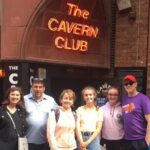


The guide: Peter Eric Lang’s local-history storytelling style
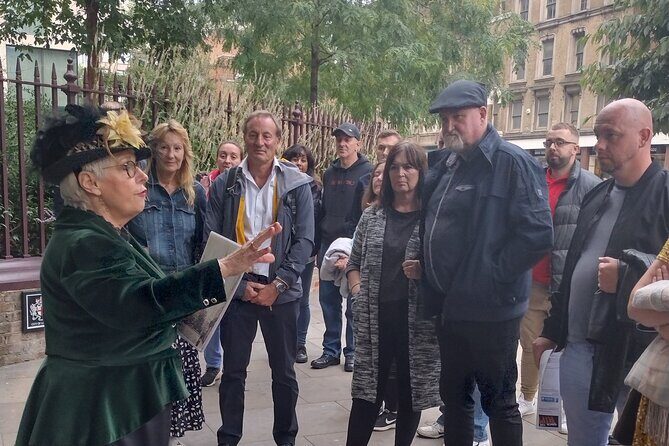
This is led by a qualified tour guide who’s also a local historian: Peter Eric Lang. What stands out in the experience is his ability to connect facts to place. Instead of naming dates and moving on, he ties each location to why Liverpool became what it is.
I like that the guidance feels built for questions. If you stop and ask why something matters, you’re not rushed through an answer. That’s a big deal on a short tour, because the best part of an intro is figuring out what you care about next.
Also, the pace is designed for a mixed group. You can be a hard-core Beatles fan, a port-history nerd, or just curious about architecture, and still feel like the walk is pointed at you.
Albion House: White Star Line and the Titanic threads
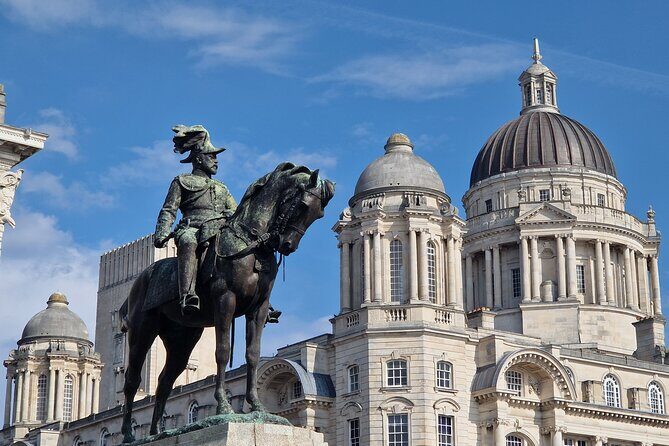
Your first stop is Albion House, where the connection to the White Star Line comes into focus. This is where the waterfront story starts to feel bigger than Liverpool itself, because shipping companies and global routes shaped the city’s identity.
Even if you’re not a Titanic superfan, this kind of setup helps you understand why Liverpool has always been more than a set of buildings. It’s a working port history turned into a city narrative you can walk through.
What to watch for here: how the guide frames the shipping era as part of Liverpool’s rise, not just a single dramatic headline. It gives you a framework for the rest of the tour.
Beatles Statue: getting your bearings with Fab Four landmarks
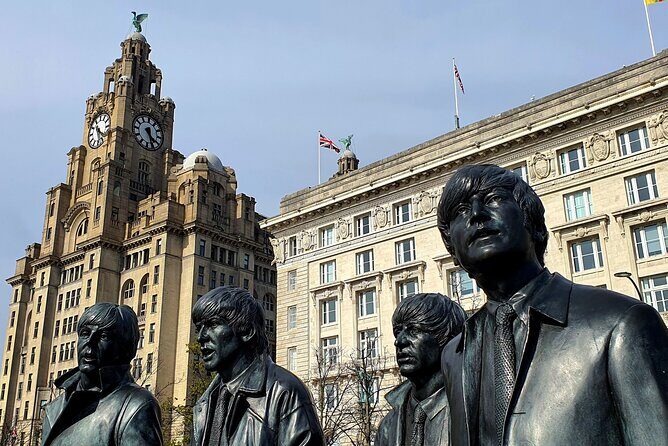
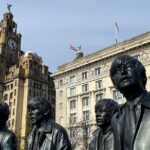
Next you’ll reach the Beatles Statue, backed by Waterfront buildings that help you feel the setting. This spot works as a quick orientation marker. It tells you: this walk isn’t only about music history in isolation. It’s about Beatles culture sitting right inside Liverpool’s working city.
The key value here is the way the guide explains how Liverpool became home to one of the most influential bands in history. You’re not just looking at a famous statue. You’re getting the city context that makes the Beatles story land.
If you’re short on time and want to know where the Beatles energy actually lives, this is a good early stop.
Royal Liver Building: skyscraper bragging rights and giant clock faces
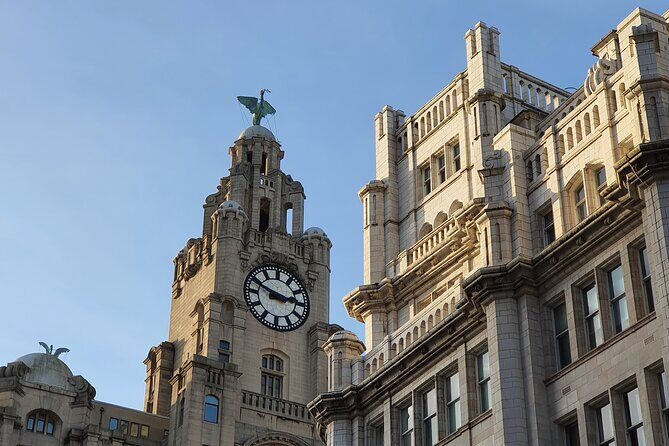
At Royal Liver Building, you get a proper architecture moment. The guide points out that it’s Britain’s first official skyscraper, and it’s also famous for having the largest clock faces in the whole of the UK—even larger than Big Ben’s.
That’s the kind of detail that makes a building feel alive. You start looking differently: not just at height, but at how the city wanted to project confidence and modern power.
What you’ll likely enjoy most is the framing around Victorian and Edwardian history and how it shaped Liverpool’s architectural style and civic pride. This stop is one of those where you’ll catch yourself standing still just to take it in.
You can also read our reviews of more city tours in Liverpool





Water Street: views plus the origins of the skyscraper story
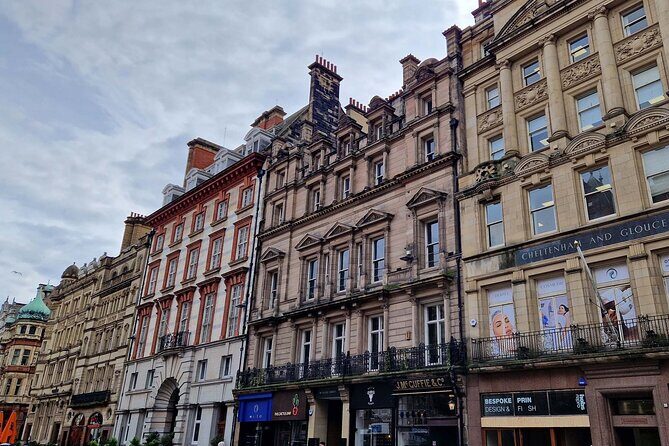
At Liverpool Water Street, you’ll get splendid views of the waterfront buildings again, which helps tie earlier history to what’s visible today.
This stop also touches on the idea that Liverpool has roots in the origins of the skyscraper. Even if you don’t go deep into architectural theory, it helps to hear the story because then you can spot the “why” behind the skyline.
A practical tip: keep your phone ready for photos, but also take a few seconds to look up without framing. The scale is a big part of the effect.
Castle Street: Town Hall and the medieval town centre feel
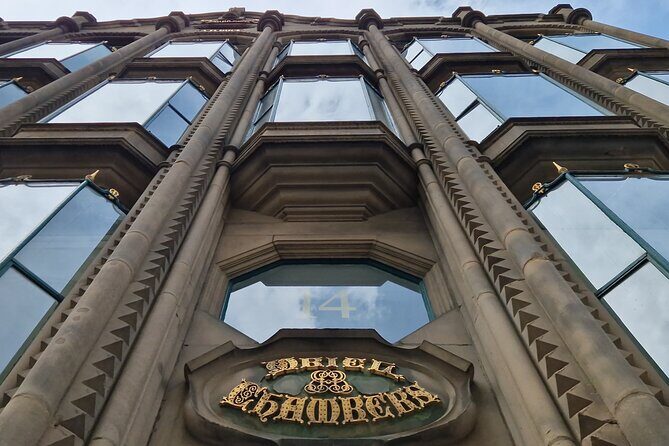
Then you’ll move to Castle Street, a stretch where history layers show up quickly. Here the focus is the Town Hall and the Medieval Town Centre.
This stop works like a bridge between the waterfront story and the inner-city story. Liverpool didn’t become a port powerhouse by living in a single era. It grew through different periods, and this street helps you see that progression.
If you like city planning and how streets evolve, Castle Street is a good place to pause and pay attention to the way buildings and street layouts guide your sense of time.
Mathew Street: where Beatles culture turns into walking reality
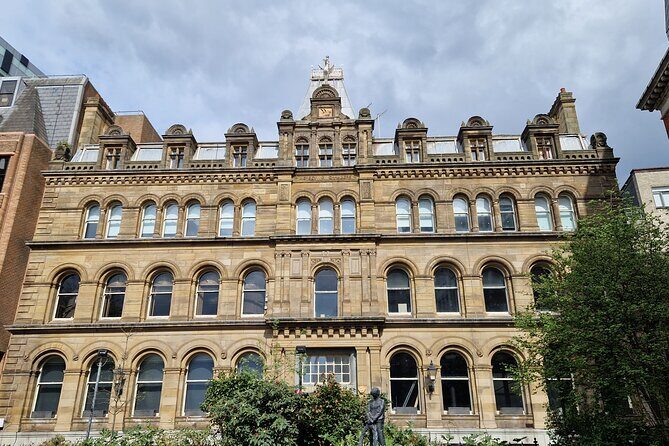
Mathew Street is where the tour’s personality shifts from architecture and civic history into music-life atmosphere. You’ll hear about the origins of this globally famous street and get a deeper appreciation for the Beatles in their home city.
This is also where you’ll see things that feel like a map made of fandom: the Cavern Wall of Fame, plus statues and the pubs and venues associated with the band. The tour helps you connect names and places so it doesn’t feel like trivia floating around.
A nice part of this stop is that it doesn’t treat music history like a museum exhibit. It treats it like Liverpool living memory.
One consideration: because this is a famous area, it can be busy. Keep your group together and stay aware of your footing on any uneven pavement.
St George’s Hall: Grade I grandeur and Charles III’s reopening
Your next major architecture stop is St George’s Hall. This is described as a Grade I Listed masterpiece, and the guide also notes that it was one of His Majesty Charles III’s favorite buildings, personally reopened in 2007.
That combination of official status and royal attention helps you understand why locals put weight behind this building. It’s not just pretty. It’s civic identity.
You’ll likely appreciate this stop even more if you enjoy big public buildings and the feeling of how a city wanted to show stability and permanence. The guide’s job here is to explain what you’re looking at in a way that makes it meaningful, not just impressive.
William Brown Street: Victorian elegance plus major cultural institutions
At William Brown Street, you’ll see a Victorian streetscape where several cultural institutions cluster together: a National Museum, the Central Library, and the National Gallery of the North.
This stop matters because it shows the other side of Liverpool’s success story: not only trade, not only shipping, but also arts and public learning. You can tell the city invested in culture as it grew.
Because admission tickets aren’t included, you’re not meant to turn this into a museum day. Instead, you learn how the street functions as a cultural spine, then you can decide later if you want to add ticketed visits.
Victoria Street: Municipal Building viewpoints and style details
Then comes Victoria Street, where the standout is outstanding architecture and especially views of the Municipal Building.
This stop is shorter, but it’s useful. It helps you train your eye for Liverpool’s building styles without forcing you to memorize architectural jargon. Even if you’re not a design person, you’ll feel the difference in scale and detail.
If you’re the type who loves snapping photos of civic facades, this is a good checkpoint.
Dale Street and Exchange Flags: port commerce meets war-era surprises
Next you’ll hit Dale Street, described as a steeped-in-history medieval street tied to Liverpool’s identity as a globally famous port city and a center of trade and commerce.
This is where the tour leans back into the port-city logic again. You’ll see the idea of commerce not as an abstract concept, but as something reflected in street character and the way the city evolved around trade.
Then the tour reaches Exchange Flags, home to the Vice-Admiral Lord Nelson Statue and a no longer top secret World War II bunker. That last detail is what makes this stop memorable. It adds a layer of modern history and survival to a route that could easily stay stuck in older eras.
If you like stories with a twist, this is it. You’ll walk away thinking about how war shaped the city’s infrastructure and how those footprints still show up in public space.
Our Lady and Saint Nicholas Church and Garden: a quiet architectural closer
The final stop is Our Lady and Saint Nicholas Church and Garden. The tour frames it as a site of historical and religious importance, with architectural elegance and plenty of stories to tell.
This stop works as a breath before you finish. After waterfront, statues, and streets tied to commerce and war, a churchyard and garden setting helps the whole walk feel complete.
You end near 22 Water St, outside Ma Boyle’s Alehouse and Eatery—a place locals point you toward for a Bowl of Scouse. It’s a smart ending because you’ve just learned Liverpool’s identity, and then you can eat it.
Price and value: is $34.36 worth it for two hours?
At $34.36 per person for about 2 hours, this is positioned as a short guided overview. That price makes sense for three reasons.
First, you’re paying for a qualified guide who’s also a local historian. In a city as story-heavy as Liverpool, the value is less about ticking off names and more about understanding what connects them.
Second, the small group cap at 20 travelers usually means you’ll get more interaction than on larger bus-style tours. That matters when you’re the kind of person who wants explanations, not just photos.
Third, the tour is built around outdoor viewing at locations where admission tickets are not included. That keeps the experience affordable and flexible. You’re not paying extra to enter multiple venues; you’re getting a guided framework you can use later if you choose to go inside museums or halls on your own.
If you want deep museum time, this walk won’t replace that. If you want the city’s main threads tied together quickly, it’s strong value.
Who this Liverpool Waterfront and Beatles walk is best for
This tour fits well if you’re one of these:
- A first-time visitor who needs a city intro before spreading out on your own
- A Beatles fan who wants Liverpool’s music landmarks in context, not as isolated stops
- A history or architecture lover who likes the port-city story behind the buildings
- Even a local, if you like seeing your hometown explained with care and pride
I also think it suits couples and small groups well, since the pacing is manageable and the stops cover a lot without feeling like a checklist.
Should you book it? A quick decision checklist
Book this tour if you want a guided Liverpool Waterfront + Beatles overview in about 2 hours, with stories tied to Titanic-era shipping, skyscraper-era pride, and music-landmark street culture.
Skip (or pair it with something else) if you’re expecting lots of inside-the-building access, because the tour notes that admission tickets aren’t included at stops. Also, if you hate walking, this may feel like too much time on your feet, even though it’s structured and not a forced sprint.
If you’re undecided, here’s the simplest way I’d decide: do you want to understand Liverpool’s connections in one guided loop? If yes, this is an efficient, story-driven way to get your bearings fast.
FAQ
How long is the Liverpool Waterfront, City Centre & Beatles Tour?
It runs for about 2 hours.
How much does the tour cost?
The price is $34.36 per person.
What language is the tour in?
The tour is offered in English.
Where does the tour start and end?
It starts at 25a Mann Island, Liverpool L3 1BP and ends at 22 Water St, Liverpool L3 1BN, outside Ma Boyle’s Alehouse and Eatery.
Who is the guide?
The tour is guided by Peter Eric Lang, a local historian, with a qualified tour guide included in the experience.
Are admission tickets included for the stops?
No. Admission tickets are not included, so you should expect to learn from what you can see at each location.
Is public transportation included?
No. Public transportation is not included, though the tour is noted as being near public transportation.