London’s richest scandals wear good shoes. This 2-hour walking tour tracks how wealth shaped power through lust, greed, vanity, and public spectacle, all in places you can actually stand in. I like the focus on small details and lesser-known corners, and I love the way guide Terry Silvers tells the stories with big energy and sharp humor, not lecturing. The one thing to consider is the tone: this walk leans into adult gossip and moral messiness, so keep expectations in that lane.
You’ll also get the real win of a private guide—you’re not stuck in a bus with headphones, and you can ask questions when a name or location clicks. A second plus is the practical route: the experience uses walking time well, swapping big monuments for lived-in streets and institutions. If you want only neat, polite history, you might find the framing a bit too cheeky.
In This Review
- Key things I found most worthwhile
- The tour’s hook: royals, money, and bad behavior you can trace on foot
- Price and pacing: why $41.34 can feel like good value
- Meeting points near Westminster: start easy, end at a practical location
- Royal Academy of Arts: Lucifer, idleness, and a scandal-themed opener
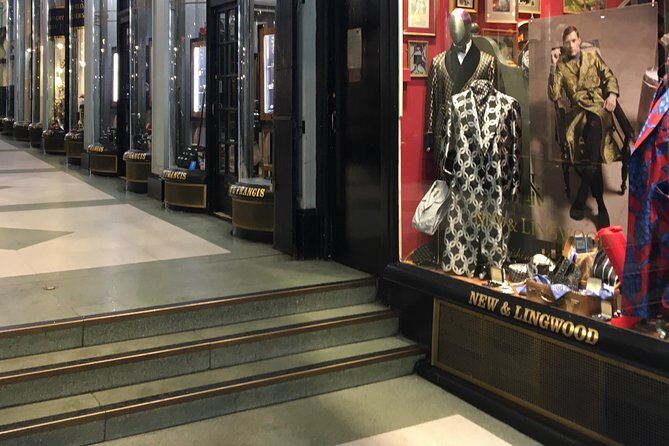
- Burlington Arcade: London’s first shopping mall and the ethics question
- Exclusive auction house, Nell Gwyn, and the scandal engine of the neighborhood
- Henry VIII and Anne Boleyn: the love-games that set centuries of talk in motion
- St James’s Park and Charles I: martyr talk meets the hard truth question
- Old Queen Street and Anne from The Favourite: gossip, film, and human nature
- How to enjoy it: shoes, attention span, and asking smart questions
- Who this tour fits best (and who might want a different theme)
- Should you book Rich People Behaving Badly?
- FAQ
- How long is the Rich people behaving badly walking tour?
- Is this a private tour?
- What language is the tour offered in?
- Where do I meet the guide and where does the tour end?
- Does the tour require specific weather conditions?
- Are service animals allowed, and is it suitable for most people?
Key things I found most worthwhile
- Terry Silvers’ storytelling style brings the royals-to-today comparisons to life
- Smaller, off-main-street stops help you see more than bigger tour routes
- Adult scandal framing makes the history feel human, not dusty
- A tight 2-hour duration keeps you moving without dragging
- Free admission noted at key stops means you spend on the tour, not entry fees
The tour’s hook: royals, money, and bad behavior you can trace on foot
This is a London walk that treats wealth like a character flaw with a crown. You’re not just passing historic sites; you’re following a theme—how rich people and powerful figures used money and status in ways that caused damage, scandal, and long ripples.
What makes it satisfying is the grounded pacing. Each stop is short enough to keep momentum, but long enough for the guide to point at a specific idea—an image, a building purpose, a neighborhood link, a famous person’s connection. You end up with a mental map that goes beyond the usual postcard checklist.
And yes, it’s fun. That matters in London, where you can easily burn a day on cold stone and overcrowded lines. Here, the story engine is the guide’s tone and attention to detail, which is why people rate this so highly and recommend it so often.
You can also read our reviews of more tours and experiences in London.


Price and pacing: why $41.34 can feel like good value
The price listed is $41.34 per person, and the experience runs about 2 hours. For London, that’s a workable commitment if you want a guided hit of context without turning it into a whole day project.
A big part of the value is that the walk is doing “guided sightseeing,” not “guided transportation.” You cover multiple meaningful locations on foot, so you’re getting history with your legs doing the heavy lifting. Also, at least some stops explicitly note admission as free, which helps keep the cost predictable.
One more value factor: this is a private tour/activity, meaning only your group participates. That often makes a difference in how responsive the guide can be when you ask follow-up questions—names, timelines, or why a particular scandal stuck around.
Meeting points near Westminster: start easy, end at a practical location
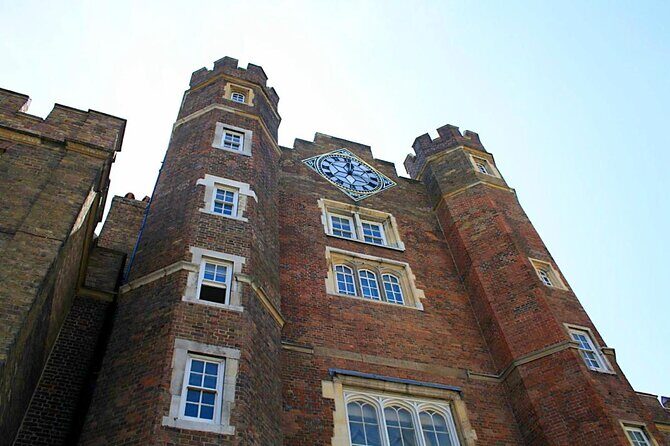
You start at 5A Burlington Gardens, London W1S 3EP, and you finish at Queen Elizabeth II Centre, Broad Sanctuary, London SW1P 3EE. Both are in a convenient zone for getting around, and the endpoint is near Parliament Square and Westminster Tube Station—useful if you’re pairing this with another stop afterward.
Timing is straightforward: the start time is 2:00 pm. A 2 pm slot is great when your morning is already handled and you want something focused for the afternoon. Just plan for walking time between stations and for the fact that London weather can shift quickly—this tour requires good weather to run.
Royal Academy of Arts: Lucifer, idleness, and a scandal-themed opener
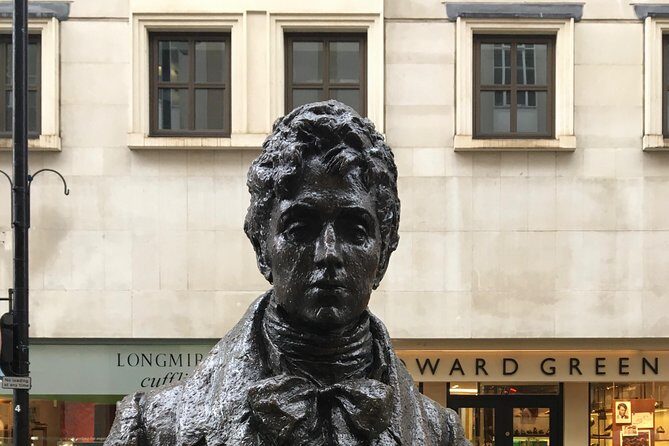
Your first stop is the Royal Academy of Arts. The start is pointed and slightly wicked: you begin with a picture linked to Lucifer as a kind of patron saint of the idle and self-indulgent. The point isn’t to push you toward religion; it’s to set the tone for the entire walk.
This stop frames the whole experience as a study of moral rot at the top—where money and status don’t just buy comfort, they sometimes buy harm. The guide leans into lust, greed, and vanity from centuries past, and they make it clear that the tour is not aiming for saint stories. It’s an intentional contrast with what many people expect from “royal history.”
A drawback to keep in mind: because this is the kickoff, the tone is strong right away. If you’re the type who likes your first stories calmer, you may want a quick mental adjustment before you start listening closely.
Practical note: admission at this stop is listed as free, which is a nice perk because it keeps your morning-to-afternoon budget steady.
Burlington Arcade: London’s first shopping mall and the ethics question
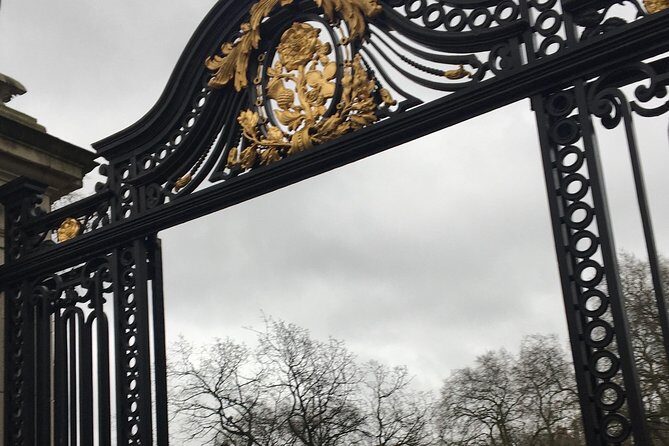
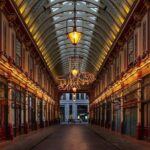
Next up is Burlington Arcade, described as London’s first shopping mall. The tone is high-end from the first steps inside, which is exactly why this stop works for this theme. The guide uses luxury as a prompt: if money is no object, what does that do to a person’s morals?
This is where the tour gets smarter than simple gossip. You start thinking about how “taste” can be tied to power and how people justify behavior when they believe they’re untouchable. Burlington Arcade also gives you a break from the big, loud streets. You’re moving through a space made for buying and showing off, which makes the moral discussion feel grounded rather than theoretical.
Admission at this stop is also noted as free, so it’s another low-friction stop. In a 2-hour experience, that matters: you spend time on the story, not waiting around to check tickets.






Exclusive auction house, Nell Gwyn, and the scandal engine of the neighborhood
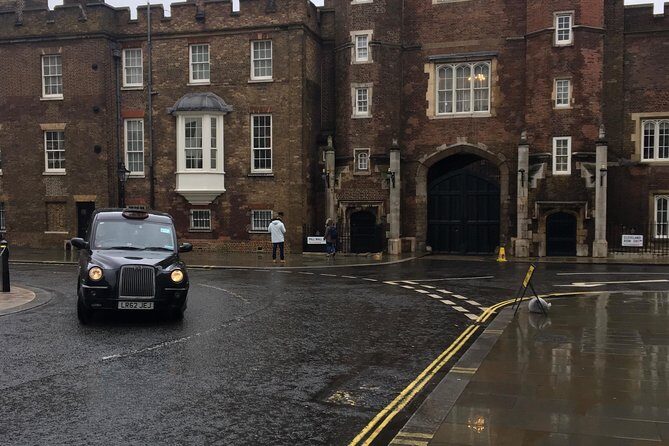
The tour then shifts to an exclusive auction house area, with a nod to how scandals have followed places like this over time. Auction houses are built on high value—and high value is where human temptation thrives. The guide uses that setting to connect money, power, and public humiliation.
From there, you get a specific London thread: the neighborhood where Nell Gwyn lived. She was one of Charles II’s most famous mistresses, and the story here is about ambition and money-grabbing in matters connected to the King. You’re essentially asked to hold two thoughts at once: how much can you admire strategy when opportunities are limited, and how much do you dislike the damage done along the way.
This stop also helps you understand why the tour’s theme keeps working. It isn’t just naming famous people; it’s showing how the city’s institutions and neighborhoods gave people leverage—and then watched them use it.
Henry VIII and Anne Boleyn: the love-games that set centuries of talk in motion
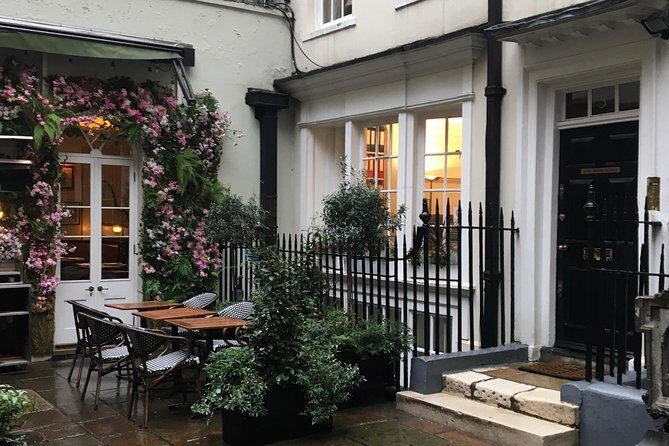
Another stop centers on Tudor romance and power: love games between Henry VIII and Anne Boleyn. The framing here is very direct, almost deliberately provocative, because the tour’s goal is to keep the history messy and human rather than polite and distant.
After that, the guide points out that later centuries were scandal-filled too. You end up with a pattern: in court life, relationships aren’t private. They become politics, and politics becomes public drama. That makes the Tudor story feel less like a standalone tragedy and more like the start of a long-running show London never fully stopped talking about.
If you’re sensitive to blunt storytelling, this is the point where you’ll notice the tour’s “bad behavior” title isn’t marketing fluff.
St James’s Park and Charles I: martyr talk meets the hard truth question
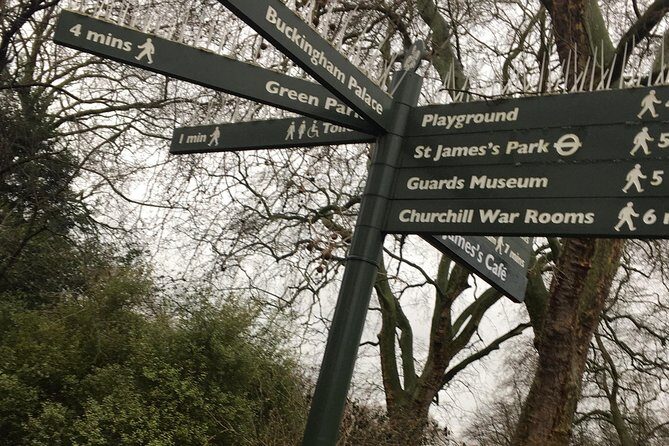
In St James’s Park, you connect to the shocking ending of Charles I. The guide explains that Charles I walked here to his execution on a cold January morning in 1649. This is the tour’s shift from court gossip into consequences.
There’s also a philosophical jab built into the stop: Charles I gets remembered by some as a martyr saint, but the guide asks whether sainthood is possible when someone knowingly lies. That question is what keeps this from becoming a simple execution recap. It turns the topic into something you can carry out of the park: how people rewrite motives after the fact.
Admission is again noted as free at this stop. You get a major historical location without the time sink of ticketing, which is a real advantage for a short afternoon tour.
Old Queen Street and Anne from The Favourite: gossip, film, and human nature
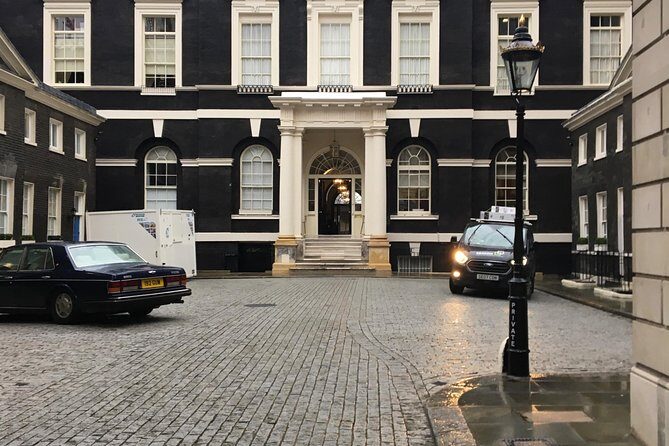
The final storytelling stretch points you toward Old Queen Street—and it connects the neighborhood to modern pop culture. The guide links it to Anne from about three hundred years ago, recently brought back in the film The Favourite, where she’s depicted as part of a bitter lesbian love triangle.
This is one of the more playful moments, but it still isn’t random. The guide asks whether you’re just enjoying gossip-history for fun, or whether there’s something to learn about human nature. That’s a key idea for the whole tour: scandals aren’t only entertainment. They’re also information about desire, status anxiety, and how people act when power is on the table.
For many people, this last stop is what makes the tour stick. It turns your listening into reflection, so you leave with more than facts—you leave with questions.
How to enjoy it: shoes, attention span, and asking smart questions
This is a walking tour, and good shoes are non-negotiable. The duration is about 2 hours, and the route includes a handful of stops that are only around 10 minutes each. That short-stop style works best if you stay mentally present instead of treating each stop like a quick photo moment.
Terry Silvers’ approach also rewards curiosity. In the best moments, the guide compares earlier characters to today, and he does it with clarity and timing. If you listen closely, you’ll understand why the same moral weaknesses keep returning in different costumes.
Language is English, and one review specifically praised that the guide speaks clearly and understandably for visitors from abroad. So if your English is a little rusty, you should still be okay, especially since questions during a private walk tend to be easy.
Who this tour fits best (and who might want a different theme)
This tour fits best if you enjoy stories about power, royalty, and court life—and you like your history with humor and edge. If you want a tour that focuses on the human mess behind the titles, you’ll probably have a great time.
It also works well if you already know the standard London sites and want a different angle. The route is built around places that are less about monuments and more about where the money-and-morals story actually happened.
A consideration: because the theme involves lust, greed, vanity, and scandal, it’s not a “clean and wholesome” history walk. If your group includes people who dislike adult gossip, check that expectations align before you book.
Also note the experience is designed so that most travelers can participate, and service animals are allowed.
Should you book Rich People Behaving Badly?
I’d book it if you want a guided London experience that’s short, focused, and fun while still serious about how power works. The best reason is the blend: you get a private guide, you see well-known central landmarks in a new light, and you get lesser-known corners that you’d be unlikely to find without help.
I’d skip it if your idea of a great walk is tidy storytelling with no moral shocks, no cheeky framing, and minimal adult themes. In other words: this tour is for people who like their history a little scandal-flavored and their guide fully in the story.
If that sounds like you, it’s a strong value use of a 2-hour afternoon—and a smart way to understand why London’s elite past still feels current.
FAQ
How long is the Rich people behaving badly walking tour?
It runs for about 2 hours.
Is this a private tour?
Yes. It’s listed as a private tour/activity, with only your group participating.
What language is the tour offered in?
The tour is offered in English.
Where do I meet the guide and where does the tour end?
You meet at 5A Burlington Gardens, London W1S 3EP, and you end at Queen Elizabeth II Centre, Broad Sanctuary, London SW1P 3EE near Parliament Square and Westminster Tube Station.
Does the tour require specific weather conditions?
Yes. The experience requires good weather. If it’s canceled due to poor weather, you’ll be offered a different date or a full refund.
Are service animals allowed, and is it suitable for most people?
Service animals are allowed, and the experience notes that most travelers can participate.