REVIEW · LONDON
Royal Observatory Greenwich & Prime Meridian Entry Ticket London
Book on Viator →Operated by National Maritime Museum · Bookable on Viator
Stand on two hemispheres in London. This Royal Observatory Greenwich entry takes you to the Prime Meridian Line courtyard for one-foot-in-each-hemisphere photos, plus a free audio guide to connect timekeeping to astronomy and space.
One thing to plan for: you’ll climb a steep hill in Greenwich Royal Park, and parts of the site aren’t fully accessible with only limited lift coverage once you reach the Observatory area.
Prime Meridian photos are the main event: stand astride the line, with east and west clearly part of the experience.
Free audio guide, multiple languages: you can download and use it as your pace-setting guide through the buildings.
Inside you’ll meet the time-makers: Harrison’s clocks and other landmark instruments and displays tell the story behind accurate time.
Time signal you can still see working: the red Time Ball dates to 1833 and remains part of the Observatory’s public rhythm.
That huge onion-dome telescope matters: the Great Equatorial Telescope is a centerpiece for understanding how sight of the universe changed.
Greenwich is built for an add-on day: National Maritime Museum and the Queen’s House are free and close by, and Cutty Sark is a strong follow-up.
In This Review
- Ticket Value: What You Really Get for $33.90
- Arriving in Greenwich Royal Park and Earning the Big Views
- Meridian Courtyard: One Foot East, One Foot West
- Flamsteed House and the Astronomers Royal Trail
- Octagon Room by Sir Christopher Wren: The Space Inside the Story
- Harrison’s Clocks and the Longitude Question
- Shepherd Gate Clock and the Red Time Ball Still Doing Their Job
- Great Equatorial Telescope: The Onion Dome Big Science Moment
- UNESCO Maritime Greenwich and Nearby Free Wins
- How Much Time You Should Plan (and How to Order Your Visit)
- Weather, Crowds, and Real-World Comfort Tips
- Accessibility and Mobility: What to Know Before You Go
- Who This Ticket Suits Best (and Who Might Be Happier Elsewhere)
- Should You Book Royal Observatory Greenwich and the Prime Meridian?
Ticket Value: What You Really Get for $33.90
At about $33.90 per person for roughly 2 hours, this ticket is strong value if you want something more than a quick photo stop. You’re paying for entry into a place where time is not just a concept—it’s built into the site: the line, the clocks, the instruments, and the public time signals.
The best part for many people is that you don’t feel rushed. The audio guide lets you go at your pace through the main rooms and displays, then spend time lingering where you care most. If you like hands-on explanations, you’ll likely spend extra moments around the clock displays and the Prime Meridian courtyard.
One more practical note: it’s a mobile ticket experience. That’s convenient, but make sure you have your ticket ready on your phone (screenshots help if networks act weird). Also, demand is steady—this is often booked about 35 days in advance, so locking in a time slot early is a smart move.
Arriving in Greenwich Royal Park and Earning the Big Views
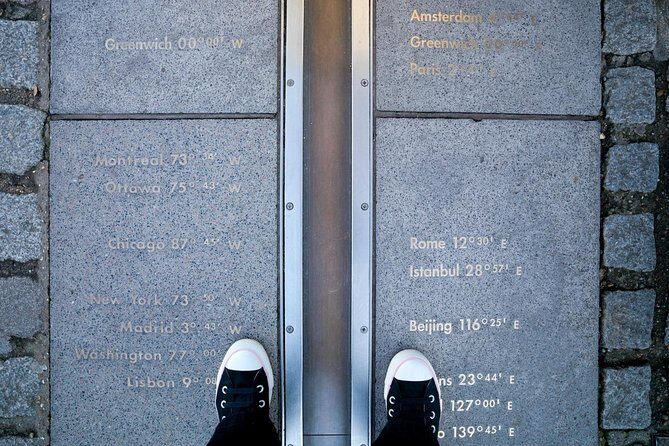
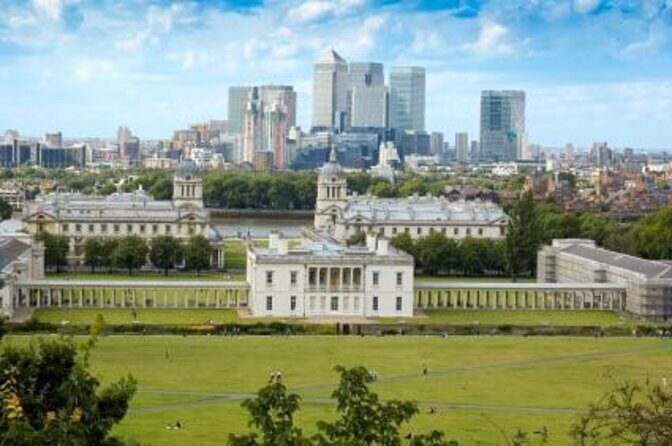
You start by making your way to the Observatory on a hill in Greenwich Royal Park. Even before you hit the buildings, you get dramatic views over Greenwich Royal Park, toward the City of London, and out over the River Thames.
This is one of those places where the walk is part of the payoff. Comfortable shoes help, because you’ll be on outdoor paths and then inside spaces with stairs in places. If rain moves in, expect the route to feel longer; the site isn’t designed like an indoor mall where weather disappears.
If you’re photo-minded, plan your timing. The Prime Meridian courtyard is often busy, and if you want clean photos (especially with both sides of the line visible), going earlier in your visit helps a lot.
A few more London tours and experiences worth a look



Meridian Courtyard: One Foot East, One Foot West
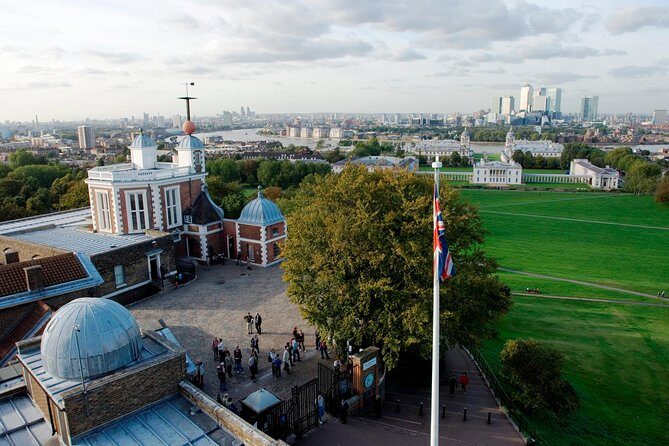
The visit begins in the Meridian Courtyard, where you stand astride the Prime Meridian Line. The experience is physical and easy to understand: one foot in the east, the other in the west, at the home of Greenwich Mean Time (GMT).
This is the moment that turns history into something real. You’re not reading about geography—you’re standing on it. It’s also a great “anchor point” for the rest of the visit. Once you’ve got that mental image, the timekeeping story inside the Observatory lands much better.
Photography tip: if you want the classic shot with the line clearly visible, give yourself extra time here before you move on. It’s the kind of place where a few minutes of planning beats constant camera-hunting later.
Flamsteed House and the Astronomers Royal Trail
From the courtyard, you move through Flamsteed House, walking in the footsteps of the Astronomers Royal. This matters because the displays aren’t just random artifacts; they’re connected to a working scientific tradition that shaped how people measured time and mapped the sky.
You’ll see the path through key rooms and exhibits, with a focus on how instrument design and time measurement evolved. If you’re curious about how societies built reliable schedules for ships, navigation, and everyday life, this is where the “why” starts to click.
Octagon Room by Sir Christopher Wren: The Space Inside the Story

One of the indoor highlights is the Octagon Room, designed by Sir Christopher Wren. The room is described as one of the best-preserved Wren interiors in London, and that’s exactly the point: you’re looking at architecture that kept its character while the science inside kept changing.
In practical terms, the Octagon Room gives your visit contrast. Outdoor walking gets you the scale of London; then the preserved interior wraps the story in an older sense of place. It’s a good spot to slow down if you’re the type who likes to read exhibits rather than just pass through.
Harrison’s Clocks and the Longitude Question
A big draw here is seeing Harrison’s clocks—the inventions that changed the world. This is also where the science becomes story-like. Accurate time wasn’t a luxury; it was a key that helped people figure out where they were on Earth.
If you care about longitude, you’ll probably enjoy how the exhibits connect timekeeping and navigation into one chain of ideas. It’s also a nice break from the purely theoretical side of astronomy: clocks are mechanical, tangible, and human-scale.





Shepherd Gate Clock and the Red Time Ball Still Doing Their Job
Two public-time displays are worth seeking out because they show timekeeping wasn’t locked away in laboratories.
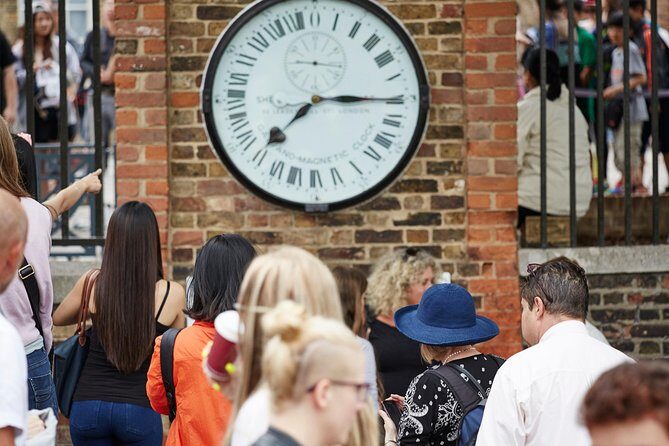
First is the Shepherd Gate Clock, mounted outside, described as the first clock to show GMT to the public. That idea—public access to a standard time—makes the Meridian Line feel even more relevant.
Then comes the bright red Time Ball on top of Flamsteed House. It was first used in 1833 and still operates today. Even if you don’t catch a signal moment at the exact time you arrive, knowing it still runs keeps the story grounded. This isn’t sealed-in-the-museum history; it’s a time signal that stayed part of public life.
Great Equatorial Telescope: The Onion Dome Big Science Moment
Don’t miss the Great Equatorial Telescope, housed in the huge iconic onion dome. The focus here is on how astronomers gained new views of the universe over 100 years ago.
If you’re an astronomy fan, this is the “wow” stop. And even if you’re not, it’s a reminder that progress in space observation depends on instruments—and on the people who build them.
UNESCO Maritime Greenwich and Nearby Free Wins

The Observatory sits in the UNESCO World Heritage Site of Maritime Greenwich. That’s not just a label. It helps explain why this location mixes science and navigation, and why Greenwich is more than one building.
The big practical advantage: you can combine this entry with nearby free attractions. The National Maritime Museum and the Queen’s House are a short walk away and are free to visit. That turns your two-hour museum ticket into a half-day or full-day Greenwich plan without adding extra museum costs.
If you want another strong Greenwich stop, Cutty Sark—the world’s sole-surviving tea clipper, now an award-winning museum and visitor experience—is a must-see add-on. It fits naturally with the maritime theme, especially if you like seeing how ships and timekeeping connect.
How Much Time You Should Plan (and How to Order Your Visit)
This experience is listed at around 2 hours, and that’s a good target for most people if you focus on the main highlights and don’t get pulled into every display reading every sign.
If you want a calmer pace, aim longer. The Observatory is a hill route with outdoor walking, plus indoor galleries and courtyard time photos. You’ll also want a little slack for the line at the Meridian Courtyard if it’s busy.
Order suggestion that tends to work well:
- Start with the Meridian Courtyard so you can get your photos while you’re fresh.
- Then move through Flamsteed House and the key clock and room areas.
- Finish with the telescope and time-signal displays if you want your most visual moments near the end.
Weather, Crowds, and Real-World Comfort Tips
This is a “walk-and-look” kind of visit. In fair weather, it feels great. When it rains, you’ll likely be cold, wet, or both, and outdoor sections take longer to manage. Bring layers even in mild months.
Crowds are common. The site can get busy quickly, so if your priority is a clear Prime Meridian photo, arrive early and get those shots first. Then you can enjoy the inside exhibits without rushing.
If you’re traveling with family or just want an easy win, this is still manageable. Most travelers can participate, but the steep hill is the main limiter for energy.
Accessibility and Mobility: What to Know Before You Go
This attraction notes that certain parts are not fully accessible, and you’re encouraged to contact the attraction if you need help planning. In plain terms: the Observatory is on a steep hill with stairs involved.
If you use a wheelchair or have trouble with long uphill routes, don’t assume it will be fully smooth. While there may be limited lift access in some areas, internal lifts are not available throughout the site. So your best move is to check your route in advance with staff and plan for a lot more time than you think.
If mobility is an issue, consider whether you can handle: outdoor hill walking, stairs at key points, and slower navigation. The views are worth it if you can get there comfortably—but only you can judge your limits.
Who This Ticket Suits Best (and Who Might Be Happier Elsewhere)
You’ll likely love this ticket if you:
- want an iconic Prime Meridian photo with real context
- enjoy how instruments and clocks connect to science and navigation
- like audio-guided museum pacing more than tight group tours
- plan to add Greenwich extras like the National Maritime Museum, Queen’s House, or Cutty Sark
It may feel less satisfying if you want a fully guided, easy-access, mostly flat experience. The Observatory is science-focused, and the physical climb is part of the deal. Also, if you’re expecting extra paid add-ons to be included, double-check what your entry covers.
Should You Book Royal Observatory Greenwich and the Prime Meridian?
Yes, I’d book it if you want a meaningful Greenwich anchor that blends geography, astronomy, and the history of timekeeping. The Prime Meridian courtyard photo is quick to get, but the clocks, Time Ball, and Great Equatorial Telescope are what make the visit feel complete.
Book ahead because it’s popular and time slots can fill. Go early if you want quieter photo moments. And wear shoes for a hill.
If you’re comfortable with stairs and outdoor walking, this is one of the most direct ways to turn London’s map into something you can stand on.
If you want, tell me your travel month and whether mobility is an issue, and I can suggest a best-time-of-day plan for pairing the Observatory with nearby free Greenwich stops.