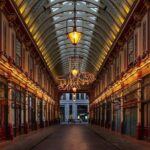
Shakespeare in London, with street corners as cues. This small-group Shakespeare Promenade threads you through major playhouse sites and landmark streets, including a striking Thames crossing and multiple places tied to how London staged drama. Two things I especially like: an actor guide who turns the walk into a chatty, theatrical experience (with lines and context), and a route that hits the famous names plus the lesser-visited stops that fill in how theatre actually worked. One thing to consider up front: it’s a walking tour with steps, stairs, and road crossings, so you’ll want solid mobility and good shoes.
It also has a smart pacing choice. You get short segments that keep you moving, plus a real breather at the Barbican area, which helps the whole thing feel doable in about two hours. If you’re hoping for lots of sitting-down sightseeing, this is not that kind of tour. But if you like walking, asking questions, and putting Shakespeare on the map, it’s a very good use of your time.
In This Review
- Key highlights
- A 2-Hour Shakespeare Walk That Actually Makes Sense
- Starting at Dowgate Hill: Getting Your Bearings Fast
- Thames Path to the Globe View: The River Sets the Stage
- Blackfriars Playhouse Yard: Monastery Ground and Theatre Ground
- St Paul’s and Milk Street: Theatre London Meets the City’s Civic Core
- Guildhall and the Shakespeare Folio Trail
- Roman Wall of Londonium and Shakespeare Lodgings Clues
- Barbican Highwalk: Elevated Views and Estate Storytelling
- Barbican Centre and the Royal Shakespeare Company Connection
- New Inn Yard: Where The Theatre Becomes the Shakespeare Museum
- Fortune Playhouse at Bunhill Fields and the Shift Toward Shoreditch
- Ending in Shoreditch Near Curtain Road
- What to Bring and How to Make It Comfortable
- Price and Value: Why $23.08 Is Fair for This Route
- Who This Tour Suits Best
- Should You Book the Shakespeare Promenade?
- FAQ
- How long is the Shakespeare Promenade?
- What’s the group size?
- What language is the tour offered in?
- Do I need to pay for admission at the stops?
- Where does the tour start and end?
- Is the tour suitable for children?
- What should I bring for comfort?
- Is cancellation free?
Key highlights
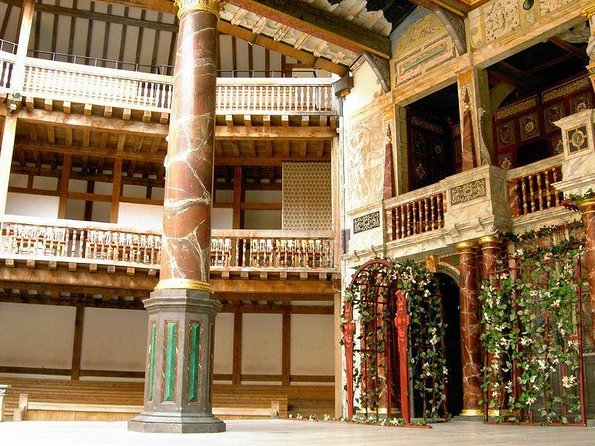
- Cross the Millennium Bridge for city views while tying Shakespeare sites to how London looks now
- See playhouse locations tied to Blackfriars, The Theatre, and the Fortune Playhouse
- Meet the Heminges and Condell Shakespeare statue at Guildhall, plus the folio connection
- Walk the Barbican Highwalk for elevated estate views and a different angle on London
- Enter the Shakespeare Museum area at New Inn Yard with included admission to match the story
A 2-Hour Shakespeare Walk That Actually Makes Sense
This tour works because it doesn’t try to cover all of Shakespeare London at once. Instead, it builds a clear route that moves from the river, to major civic landmarks, and then into the theatre-world pockets where the era’s drama took shape.
The small group size (maximum 6) matters more than you’d think. It keeps the pace human. You’re not shouting over other people, and your guide has time to answer questions that come up when you’re standing in front of a site rather than looking at it later in a book.
You’re also paying a modest amount for a format that includes guide-led storytelling and at least one paid entry built into the itinerary (the Barbican Centre stop). That balance is where the value shows: you’re not paying extra just to stand outside things, yet you do get one indoor moment tied to the Royal Shakespeare Company connection.
You can also read our reviews of more tours and experiences in London.



Starting at Dowgate Hill: Getting Your Bearings Fast
The tour begins at the Tallow Chandlers Company, 4 Dowgate Hill, in the EC4R area. The vibe here is practical. You gather near a point that makes it easy to transition into the historic Thames corridor.
From the start, the guide frames what you’re about to see. You’re walking toward playhouse ground and theatre-adjacent streets, so it helps to know the landmarks aren’t random. They’re chosen because London’s entertainment life was built around access to crowds, routes, and the river’s pull.
If you like your tours to start with context, this one does that. It sets up why the river matters first, then it keeps connecting back to how theatre spaces worked: where people came from, how the city flowed, and why certain sites ended up close together.
Thames Path to the Globe View: The River Sets the Stage
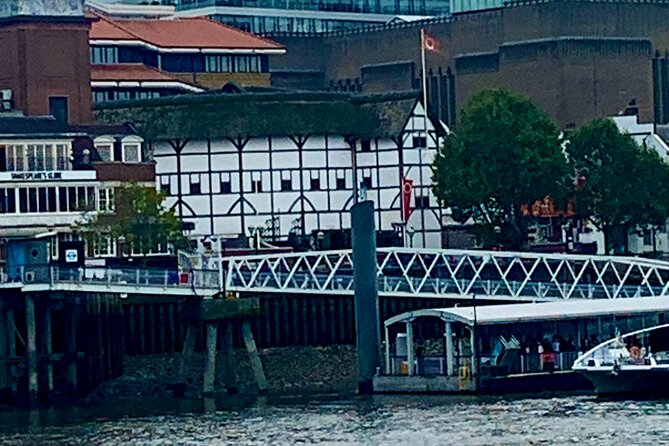
The first stop takes you onto the Thames path on the north bank. The big payoff here is the chance to look across at the Globe Theatre from the opposite side of the river. You get a viewpoint that feels like theatre from street level, not museum level.
Even better, you’re not just staring at the Globe. The walk continues toward Blackfriars, so the river serves as a thread. The guide ties what you see now to the idea of how audiences would have moved and gathered. You’ll probably notice that the Thames isn’t just scenery in this tour. It’s part of the story engine.
Logically, this is a strong opener. A river view helps you shake off jet lag if you’re arriving from farther out. It also gives your guide a clear starting point for explaining how playhouses were mapped into the city.
Blackfriars Playhouse Yard: Monastery Ground and Theatre Ground
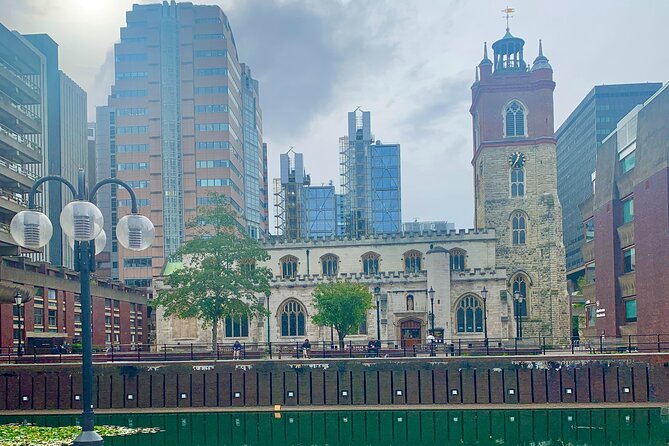
Right after the river views, you move to Playhouse Yard, a small stop that still packs meaning. This is the site of the Blackfriars Dominican Monastery and also where the first and second Blackfriars playhouses once stood.
That mix of uses is one of the more interesting ideas on the whole walk. It’s a reminder that the city reused space. Sites that served one purpose could later become theatre ground, depending on politics, money, and what London wanted to watch.
The practical upside: it’s a short stop. You won’t lose time hunting around. You’ll get the key interpretation and then be back on the move, which keeps the tour feeling efficient without rushing.
St Paul’s and Milk Street: Theatre London Meets the City’s Civic Core
Next comes a quick circuit around St Paul’s Cathedral, including along Cheapside and up Milk Street. This part might seem like a detour if your brain is only thinking playhouses. But it actually helps you understand the bigger picture: Shakespeare’s world didn’t exist in a separate bubble.
St Paul’s is an anchor landmark, so it gives you a sense of scale. The guide uses the streets to connect how a theatre-going public could overlap with civic life. It’s the kind of walking segment that helps you read London as a system: religious landmark, commercial streets, theatre districts, and the routes between them.
A consideration: the tour moves quickly through this area. It’s short on purpose. If you want to linger in photos at St Paul’s, build a little buffer into your day after the tour rather than expecting a long stop here.






Guildhall and the Shakespeare Folio Trail
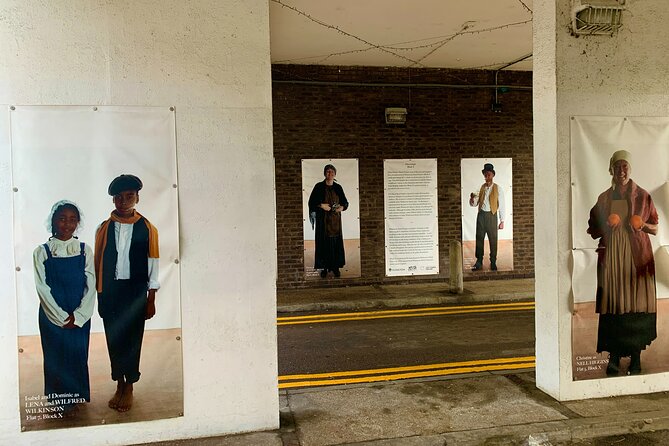
Guildhall is where the tour becomes sharply specific. You’ll see the Heminges and Condell Shakespeare statue on Love Lane. Those names matter because they’re tied to how Shakespeare’s work survived and was shaped for publication.
You also hear history and speech connected to the area, plus you’ll get the folio connection housed in the Guildhall context. The message is clear: theatre wasn’t only performance. It also became text, and people in city institutions helped preserve that.
This is one of the stops that can satisfy two types of visitors at once. If you’re a Shakespeare fan, you’ll care about the folio and legacy. If you’re a London-history fan, you’ll appreciate the idea of how the city’s official world links to the theatre world.
Roman Wall of Londonium and Shakespeare Lodgings Clues
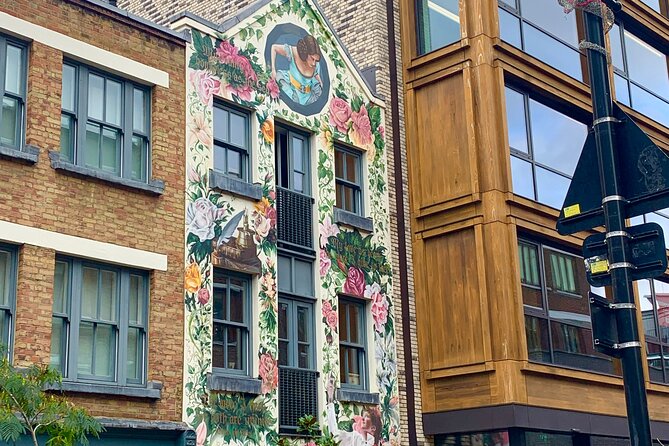
Then you shift time periods again. The route includes ruins of the Roman Wall on Noble Street and a plaque on Silver Street connected to Shakespeare’s lodgings.
That jump can be jarring in a good way. It keeps you from thinking of Shakespeare’s London as a single era sitting still. London is stacked, and this tour uses walking to show that layering in small, easy-to-take doses.
Since the stops are brief, you get the main interpretive points without turning it into a history lecture. Still, you’ll likely come away looking at street corners differently afterward, especially if you enjoy noticing how older structures and markers sit inside modern neighborhoods.
Barbican Highwalk: Elevated Views and Estate Storytelling
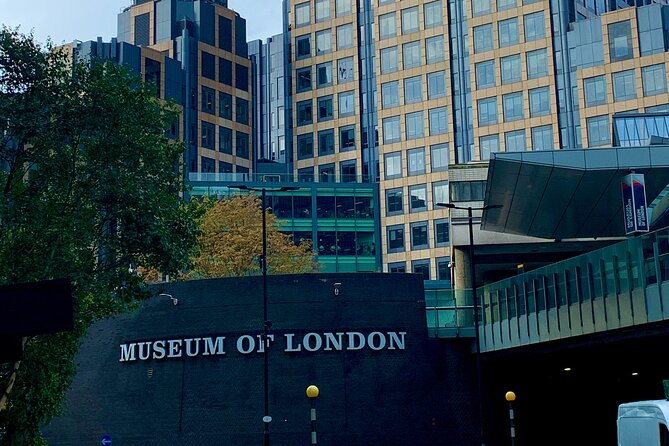
One of the most memorable segments is the Barbican Highwalk. You get a walkway through the Barbican estate with superb views and history of the estate and the Barbican Centre.
This is the tour’s “slow down without stopping” moment. You’re still walking, but you’re elevated, so you can see how the city spreads and how designed spaces fit into London’s older street grid.
There’s also a built-in 20 minute interval at Barbican, which gives you room to breathe, take photos, or just stand and look. Rest rooms are available at Barbican, which is a real quality-of-life detail when you’re walking for a couple of hours.
If you’re the kind of person who likes architecture and urban planning just as much as theatre, this section may be the one that surprises you.
Barbican Centre and the Royal Shakespeare Company Connection
After the Highwalk, you enter Barbican via walkways and learn the story of the Barbican Centre. This stop is included and ties directly to the London home of the Royal Shakespeare Company.
This is valuable because it bridges past and present. Shakespeare’s theatre world wasn’t frozen in 1600. The Royal Shakespeare Company represents how Shakespeare continues to be staged, studied, and produced as a living art form.
What to watch for: you’re not going to a museum-style, open-ended visit. It’s guided and time-managed. If you want to read everything on your own, you’ll probably want to schedule a separate return trip with more time later.
Still, as a stop within a walking tour, it’s a smart use of time because it adds an indoor “why it matters today” layer.
New Inn Yard: Where The Theatre Becomes the Shakespeare Museum
The tour then heads to New Inn Yard, with the site connected to the first playhouse The Theatre. Today, the area is also the home of the Shakespeare Museum, and admission is included here.
This is a key emotional stop for many people because it makes Shakespeare theatre feel concrete. You’re not only hearing about playhouses. You’re ending up at a place that connects the story to artifacts and interpretation tied to the museum setting.
Even with the included ticket, the timing is short enough that you can see it as part of the walking arc rather than a full day museum plan. That works well if you want a strong “Shakespeare London hit” without turning your trip into a schedule gridlock.
Fortune Playhouse at Bunhill Fields and the Shift Toward Shoreditch
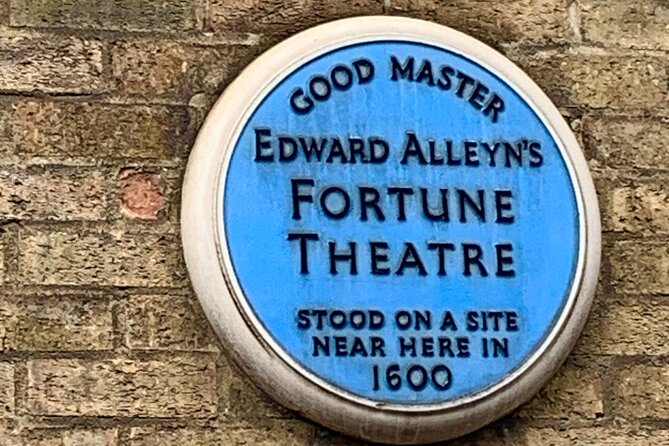
Next, you’ll walk up Whitecross street and see the site of the Fortune Playhouse. Then the route crosses the boundary to Shoreditch, bringing in history about the burial ground.
This is one of those segments that feels like a guided correction. Theatre history often gets told as if everything happened in a few famous pockets. Here, you’re reminded that London had multiple theatre spaces serving audiences across different areas.
Shoreditch is also a useful ending direction. It helps you carry the experience into a part of London that feels modern and street-level, where you can keep exploring after the tour without needing a long commute.
Ending in Shoreditch Near Curtain Road
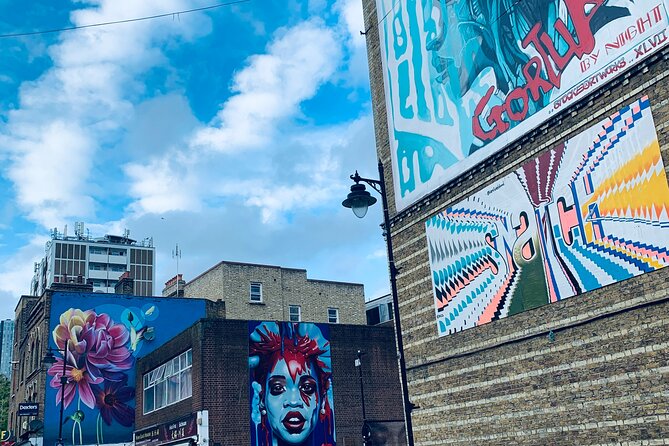
The final stretch moves through modern Shoreditch toward Curtain Road. It’s not a random walk to kill time. It’s a way to transition you from guided interpretation back into independent wandering.
The tour ends at New Inn Yard, just outside the Shakespeare Museum. It’s also conveniently close to transit options like Old Street Tube (Northern Line) and Liverpool Street (Central Line), which makes it easy to stitch onto the rest of your day.
If you want to build on the tour, this ending area is a practical place to do it. You can grab food nearby afterward without feeling like you left all your sightseeing behind at the museum door.
What to Bring and How to Make It Comfortable
This tour is not about sitting still. Steps and stairs are part of the route, and there are road crossings. You’ll get the best experience if you dress like you expect to walk more than you think you will.
Bring your own bottled water. The tour doesn’t provide refreshments or food. If you’re sensitive to cold or rain, also pack an umbrella or a rain mac, since London weather loves changing its mind.
Wear walking footwear you trust on uneven pavement. This is especially important if you’re going to the Barbican estate areas where surfaces and elevation can be different from street level.
One more small reality check: it’s not recommended for anyone who has difficulty walking or keeping up with a group, and it’s not suitable for children under 16.
Price and Value: Why $23.08 Is Fair for This Route
At $23.08 per person, you’re paying for three things: the actor guide storytelling, the tight route that links major Shakespeare-related sites, and at least one included admission that expands the experience beyond outdoor viewpoints.
Most of the stops are free in terms of admission tickets, so you’re not getting nickel-and-dimed at every corner. The Barbican Centre admission is included, which is a nice upgrade because it adds an indoor element without extra cost on your end.
Also, you’re getting a small-group format with time for questions. For many people, that turns the price into something closer to a guided conversation than a checklist tour.
If you’re trying to choose between a cheaper generic city walk and a focused Shakespeare route, this one is the better deal when you want meaning, not just motion.
Who This Tour Suits Best
This is an excellent match if you:
- like walking tours that connect landmarks to a story
- want Shakespeare-related sights in a compact two hours
- enjoy asking questions and getting answers on the spot
- care about how plays connect to text, publishing, and legacy (Guildhall and folio connections help here)
It may not be the best fit if you want a lot of long museum time, or if you need an accessible route with minimal stairs and limited walking.
Should You Book the Shakespeare Promenade?
Yes, you should book it if you want a focused Shakespeare London experience that feels personal and story-driven. The standout strength is the guide format: when an actor guide can work in playful performance energy and play-quote context, the walk stops being just sightseeing and turns into something you’ll remember when you’re reading or watching Shakespeare later.
If your day is already packed and you only have a short window, this route fits well. It gives you river views, key playhouse locations, a thoughtful institutional stop at Guildhall, and a Barbican segment with elevated views and an included cultural stop.
If you’re sensitive to walking pace, stairs, or road crossings, then consider a more static option. Otherwise, this is a strong value way to see Shakespeare’s London as a real map, not a vague idea.
FAQ
How long is the Shakespeare Promenade?
It’s about 2 hours total, including walking time.
What’s the group size?
The tour has a maximum of 6 travelers.
What language is the tour offered in?
It’s offered in English.
Do I need to pay for admission at the stops?
No entry fees are included for the stops listed as free, and the tour notes there are no entry fees for the stops. Admission to the Barbican Centre is included.
Where does the tour start and end?
It starts at The Tallow Chandlers Company, 4 Dowgate Hill, London EC4R 2SH. It ends at New Inn Yard, outside the Shakespeare Museum area, about 10 minutes from Old Street Tube and 15 minutes from Liverpool Street.
Is the tour suitable for children?
It is not suitable for children under 16.
What should I bring for comfort?
Bring your own bottled water, and wear suitable walking footwear. An umbrella or rain mac may be required. Rest rooms are available at Barbican.
Is cancellation free?
Yes. You can cancel for a full refund up to 24 hours in advance. If you cancel less than 24 hours before the start time, the amount paid won’t be refunded.