REVIEW · STRATFORD UPON AVON
Shakespeare’s Stratford-Upon-Avon: A Self-Guided Audio Tour
Book on Viator →Operated by VoiceMap Audio Tours · Bookable on Viator
This is Shakespeare in walking-form, paced by your phone. You’ll follow a VoiceMap audio track from The Jester statue through Stratford’s key sights, and the app uses GPS to cue the next segment when you reach each stop. I like that it lets you pause, replay, and control the timing without herding you into a rigid group schedule, and it works in a private setup where only your group is involved.
The main thing to plan for: it’s self-guided. If you’re new to walking audio tours, you may need a minute to get used to the app’s navigation cues, and on Sundays the Holy Trinity Church area can be affected by worship services—so finishing the full story at the tombs may depend on what’s happening when you arrive.
In This Review
- What makes it a good value for 30 to 45 minutes
- Key points to know before you go
- Entering The walk at The Jester: a smart start point
- VoiceMap on the ground: how the navigation really helps
- Shakespeare’s Birthplace area: first home, first context
- Past the statue: seeing the Bard as a landmark
- MAD Museum stop: a quick taste of what’s inside
- Clopton Bridge: history, and why you won’t cross it
- Bancroft Gardens and the River Avon: where tone shifts
- Royal Shakespeare Theatre: architecture plus story
- The Swan Theatre: Shakespeare’s link from a different angle
- More River Avon: letting the setting do the work
- Holy Trinity Church: baptism, burial, and a real-world timing issue
- Hall’s Croft: a quieter bridge between life and work
- Schoolroom & Guildhall: early learning and play ideas
- Ending outside Shakespeare’s New Place: closing the loop
- Price and value: why $11.99 can make sense here
- Who should book this self-guided VoiceMap tour
- Should you book it?
- FAQ
- How long is the Stratford-upon-Avon Shakespeare self-guided audio tour?
- How much does the tour cost?
- Is the tour available in English?
- Where do I start and where does it end?
- Can I start and finish whenever I want?
- Is this tour private?
- What does the tour include?
- What do I need to bring?
- Are museum or attraction tickets included?
- What if I need to cancel?
What makes it a good value for 30 to 45 minutes
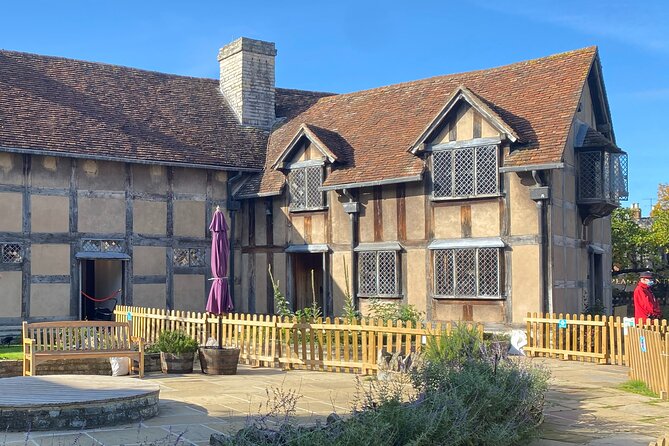
For $11.99 per person, you’re buying a short, focused route that hits the big Stratford landmarks tied to Shakespeare, with offline audio and maps built in. Tickets for museums or entry-only attractions aren’t included, so you’re mostly seeing sites from the street or outside the venues—but that’s also why the walk fits neatly into a half-day chunk.
The app is offered in English and includes lifetime access, which means you can come back later and do it again at your own pace. If you want a flexible way to connect the places to the plays—without committing to a full guided tour—this is a strong match.
Key points to know before you go
- GPS-triggered audio helps you start the next section when you’re at the right spot
- Pause and replay means you can slow down at the parts you like
- Offline audio, maps, and geodata is included, so you’re not stuck if coverage is spotty
- A tight route (about 30–45 minutes) keeps it doable even on busy days
- Major Shakespeare sites on the route include Birthplace, the Royal Shakespeare Theatre area, and Holy Trinity Church
You can also read our reviews of more tours and experiences in Stratford upon Avon.



Entering The walk at The Jester: a smart start point
Your walk begins next to The Jester statue on Windsor St. The audio starts by tying the Jester figure to Shakespeare’s world and then quickly gets practical about how the VoiceMap app works—so you know what you’re doing before you wander.
This first segment matters more than it sounds. If you’re trying audio for the first time, that early “here’s how the app cues you” moment saves you from fumbling later. I also like having the guide start with a symbol from Shakespeare rather than launching into logistics—your brain is already in story mode.
Tip: give yourself a minute at the start location to confirm your headphones are connected and the audio is ready. Once it’s running, you can trust the GPS-based timing more than you’d trust guessing where you are.
VoiceMap on the ground: how the navigation really helps

This is a self-guided audio tour, but it doesn’t leave you completely on your own. As you move, the app cues content tied to your location and can show direction prompts—so you’re not constantly pulling out a map. Several people really like that it tells you when you’re not moving the right way and guides you back.
You can also control the playback. That means if you pause for a quick photo, step aside to let pedestrians pass, or just want to hear a detail again, you can do it without losing the thread.
One consideration: the tour is designed to be listened to while walking. If you stop for long breaks, you might need to re-sync mentally. Keep it simple: short pauses are ideal; long detours turn this into a different kind of walk.
Shakespeare’s Birthplace area: first home, first context
Next you’ll pass Shakespeare’s Birthplace. The audio focuses on what his early home was like and connects it to the everyday realities of 16th-century Stratford. It also touches on what Shakespeare’s father did for a living, which helps you understand why the story of his early life isn’t just names and dates—it’s the lived environment that shaped him.
Why this stop is valuable: it’s easy to treat Shakespeare as distant. This segment brings him back down to street level. You’re walking where the early chapters started, and the audio gives you enough detail to picture the period without turning the walk into a textbook.
Practical note: you’ll be on foot between stops, so be ready for typical town pacing—shops, foot traffic, and occasional congestion. Going mid-morning often feels calmer than peak times, and you’ll still get the full flow of the audio.
Past the statue: seeing the Bard as a landmark
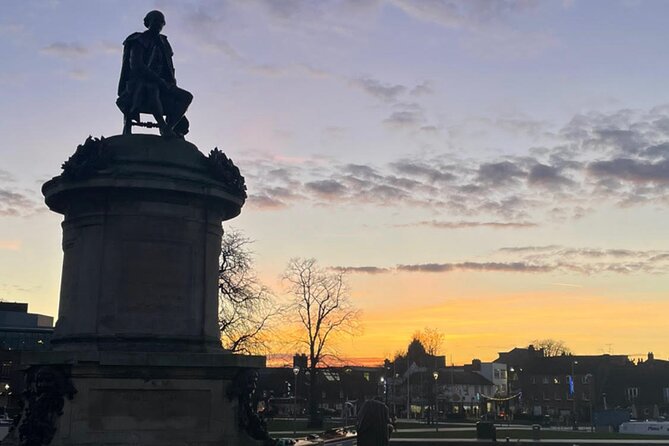
Then you’ll walk by William Shakespeare’s Statue, with audio commentary timed to where you are. Statues can feel like dead ends—something you glance at and move on. Here, the audio turns it into a checkpoint, reinforcing what you just heard and nudging you toward the next theme.
This works well if you like your sightseeing structured. Instead of random “photo spot, move on,” you get a rhythm: landmark, explanation, onward.
If you’re a fast walker, keep your phone volume at a level you can hear over ambient street noise. The presenter’s voice is described as easy to understand, so you don’t have to crank it—but clarity matters when you’re crossing sidewalks and sharing space with others.






MAD Museum stop: a quick taste of what’s inside
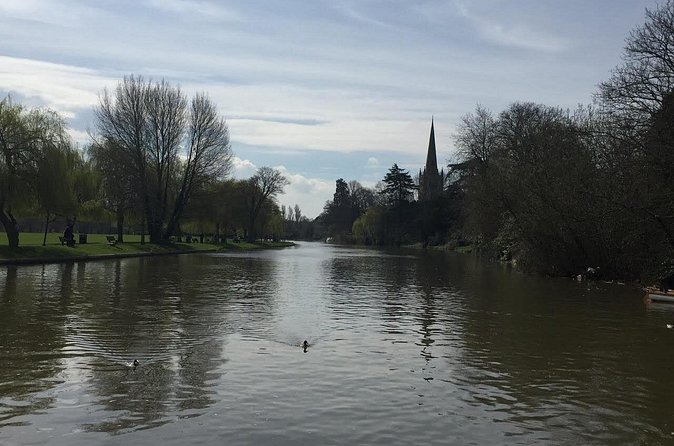
You’ll pass The MAD Museum, and the audio gives a quick preview of what’s inside as you walk by. Because tickets and entry are not included, this part is best thought of as a sidebar—information to help you decide whether you want to come back on another day.
This stop is a good reminder that the town isn’t only Shakespeare. Stratford has modern layers, too, and the tour nods at that without asking you to pay for extra entrances during your half-hour timeline.
If you’re the type who loves museums, you might use this audio to decide later. If you’re here only for the literary trail, you’ll be fine skipping it.
Clopton Bridge: history, and why you won’t cross it
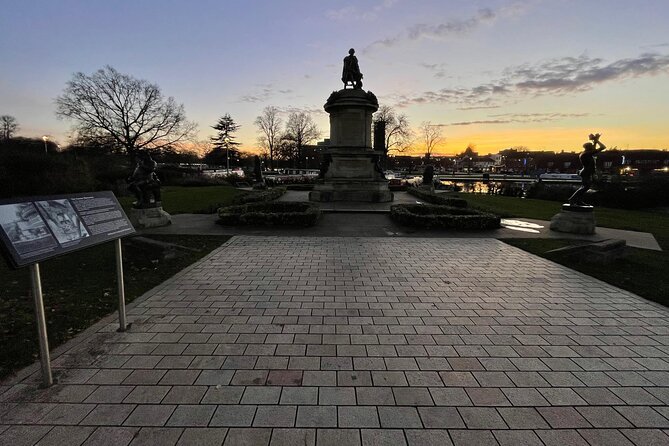
You’ll pass Clopton Bridge, but the audio route doesn’t ask you to cross. Instead, it shares background on the bridge and suggests how the setting might have contributed to Shakespeare’s ideas.
This is smart tour design. Crossing adds time, and time is what self-guided tours don’t have to spare. Keeping you on the same side keeps the walk smooth and keeps the audio timing more reliable.
As you listen, pay attention to the “might have inspired” angle. The story isn’t pretending to prove everything. It’s aiming to help you think the way Shakespeare did: watching people, streets, and rivers, and then transforming the observation into drama.
Bancroft Gardens and the River Avon: where tone shifts
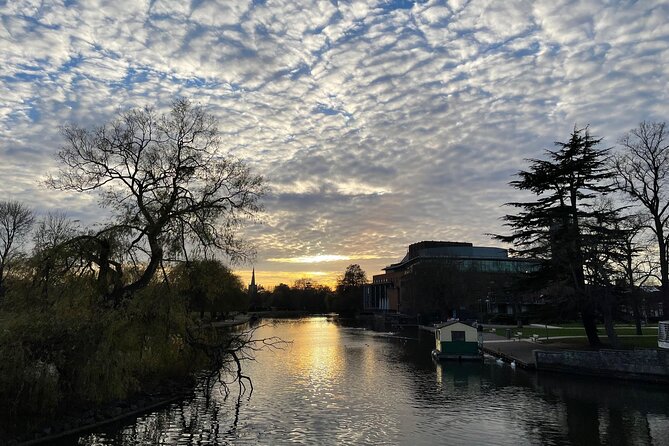
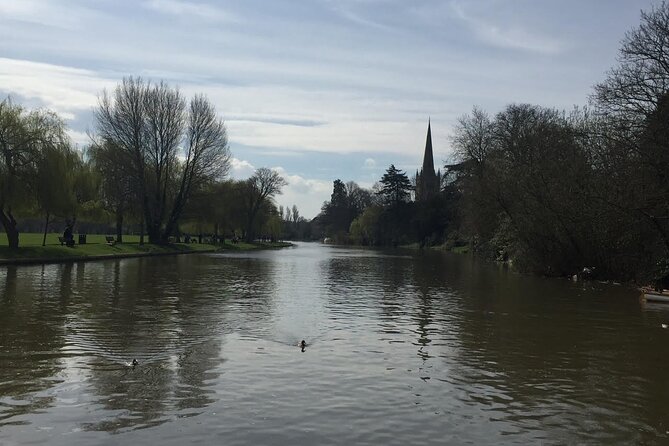
Part of the walk goes through Bancroft Gardens and along the River Avon. The audio continues with more about Shakespeare as you transition from dense town streets into open, calmer space.
This is one of the best “breaks” in the route. You get a change in pace, and the river walk helps you absorb the connections more naturally. Also, outdoor walking is where an audio tour becomes fun rather than work—you can keep your eyes scanning while the narration builds the link between place and play.
If the weather is good, this section is also your best moment for photos. Just don’t wander too far from the route line—GPS triggers work best when you stay close to the intended path.
Royal Shakespeare Theatre: architecture plus story
As you pass by the Royal Shakespeare Theatre, the audio focuses on the theatre’s history and its architect. The payoff here is two-fold: you learn why this venue matters, and you start seeing the modern performance world as part of the same long Shakespeare thread.
This stop is for you if you care about how art houses themselves are designed, not only the words inside the plays. Even if you’re not an architecture person, the audio is positioned to help you notice details while you’re walking by.
One practical point: theatres can draw crowds for events. If you’re listening at a busy time, you may need to step slightly aside so you don’t have to repeatedly stop and start.
The Swan Theatre: Shakespeare’s link from a different angle
Next comes The Swan Theatre, again with audio commentary as you walk past. This section reinforces the connection between Stratford’s theatres and Shakespeare’s world—helping you understand that the plays weren’t written in a vacuum. Places that staged drama mattered, and the town’s theatrical heritage is part of why Shakespeare feels so anchored here.
Think of it as a double-sided view: one theatre represented in today’s major cultural spotlight, another tied to the older theatrical lineage. Together, they give the walk more texture than a single landmark tour.
If your goal is to get a quick, coherent picture of Stratford as a theatre town, this is one of the strongest stretches of the route.
More River Avon: letting the setting do the work
The tour continues alongside the River Avon for another stretch, with extra narration about what might have inspired the plays. This isn’t just scenic padding. It’s used to connect the landscape—walking paths, water, movement—to themes that show up again and again in Shakespeare’s writing.
I like this because it turns the walk into interpretation. You’re not only collecting sites. You’re building a sense of how environment and daily life can feed art.
If you’re tired, this is also where you can lean in without thinking too hard. The sound cues keep you oriented, and the river gives you something pleasant to look at between stops.
Holy Trinity Church: baptism, burial, and a real-world timing issue
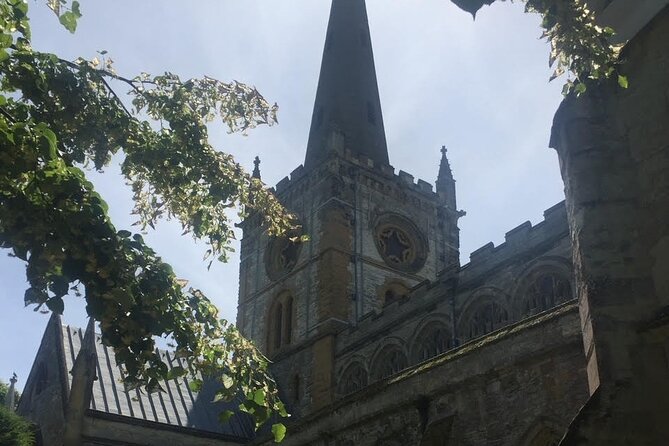
The audio route takes you past Holy Trinity Church, where Shakespeare was baptized and where he is buried. This is a major moment on the walk, including the famous idea of a curse placed on his own tomb.
Here’s the real consideration: if you’re visiting on a Sunday, worship services can affect access or what you can see when you reach the tomb area. One trip-specific problem mentioned was missing the tombs of Shakespeare and Anne Hathaway because the service meant the tour couldn’t finish that portion.
What to do with that info: plan your timing. If the tomb details matter a lot to you, aim for a day and time when you can move around with fewer interruptions. And if you arrive and it seems restricted, treat it as a sign to keep listening to the audio but don’t fight the situation.
Hall’s Croft: a quieter bridge between life and work
Next you’ll pass Hall’s Croft, with audio commentary along the way. This stop adds another layer to the picture of Shakespeare’s world by focusing on a place connected to the family and daily life.
When people rush through Stratford only hunting for the biggest headline spots, they miss places like this. Hall’s Croft helps the story breathe. It’s not just the theatre or the birthplace—this is the town’s fabric, the kind of background detail that makes the Bard feel less like a statue and more like a person.
If you enjoy slower narration and a calmer pace, this segment is a good one to keep your phone volume steady and let the audio land.
Schoolroom & Guildhall: early learning and play ideas
You’ll pass Shakespeare’s Schoolroom & Guildhall, and the audio shifts back to Shakespeare’s early days—especially how schooling could connect to parts of his plays.
This is valuable because it tackles the “how did he learn?” question. Shakespeare is often treated as raw genius. This segment nudges you toward the idea that education and local institutions shaped him too, and it gives you a more grounded pathway from youth to writing.
Practical tip: since this is near the tail end of the route, keep your headphones ready and don’t let battery anxiety creep in. If you’re using your phone all day, start charging before you begin the walk.
Ending outside Shakespeare’s New Place: closing the loop
The walk ends outside Shakespeare’s New Place, close to where the route began. Finishing here works because it ties the whole experience into a loop: you started with an emblem (The Jester), moved through early life, theatres, and church, and then arrive at the later “place in the story.”
If you’ve been listening actively, this ending feels satisfying. You’ll have a set of images in your head, and the audio helps connect them into one narrative.
And because it ends outside, you’re not forced to pay for entry to complete the walk. That fits the tour’s value idea: see a lot, learn enough, and keep your schedule flexible.
Price and value: why $11.99 can make sense here
At $11.99 per person, this isn’t trying to compete with full guided tours or museum tickets. The value is in the package: lifetime access, offline audio/maps, and a tightly planned route that covers many of Stratford’s biggest Shakespeare-linked landmarks in about 30 to 45 minutes.
What’s not included matters, too. You’ll need your own smartphone and headphones, and you won’t have museum entrance tickets covered for anything you pass. But that’s also why this stays affordable and fast.
If your goal is a calm, structured walk that connects sites to stories without locking you into a set departure time, this price feels fair.
If your goal is deep entry-only experiences inside every building, you’ll probably want to pair this with one or two ticketed attractions later.
Who should book this self-guided VoiceMap tour
This is ideal for you if:
- You like control—pause, replay, and keep your own pace
- You want a Shakespeare overview without spending hours
- You’re comfortable using a smartphone outdoors with GPS help
- You’re visiting as a pair or small group and don’t want to match someone else’s speed
It’s less ideal if:
- You dislike walking between multiple stops
- You want to guarantee access to interior tomb areas regardless of church services
- You need lots of museum-style content during the same trip
Overall, it’s a strong fit for first-timers who want orientation fast, and for repeat visitors who like refreshing their understanding with new angles.
Should you book it?
Yes—if you want a half-hour Shakespeare circuit you can control, with offline audio and GPS-based guidance, this is a smart purchase. The standout advantages are the ease of the app, the clear directions, and the way the narration feels timed to where you actually stand.
Skip the expectation that every highlight will be an inside visit. Plan for exterior viewing along the route, and if Holy Trinity Church details are on your must-see list, try to time your walk for fewer disruptions.
If you like learning while you walk and you’d rather not juggle guides, tickets, and schedules, this is exactly the kind of experience that makes a day in Stratford feel both easy and meaningful.
FAQ
How long is the Stratford-upon-Avon Shakespeare self-guided audio tour?
It takes about 30 to 45 minutes.
How much does the tour cost?
The price is $11.99 per person.
Is the tour available in English?
Yes, it’s offered in English.
Where do I start and where does it end?
The tour starts next to The Jester on Windsor St and ends outside Shakespeare’s New Place on Chapel St.
Can I start and finish whenever I want?
Yes. The tour is designed so you can start and finish at any time.
Is this tour private?
Yes. It’s listed as private, meaning only your group will participate.
What does the tour include?
You get lifetime access to the self-guided tour in English, plus the VoiceMap app for Android and iOS and offline access to audio, maps, and geodata.
What do I need to bring?
You’ll need your smartphone and headphones.
Are museum or attraction tickets included?
No. Tickets or entrance fees are not included for museums or attractions along the way.
What if I need to cancel?
You can cancel for a full refund up to 24 hours before the experience’s start time.