REVIEW · LONDON
Slave Trade Money Trail Tour in the City of London
Book on Viator →Operated by Darrel Blake · Bookable on Viator
London can feel innocent if you only skim. This walking tour turns major financial sites into real proof of how the transatlantic slave trade shaped modern London, with stops tied to commerce, shipping, and insurance. I like the tour booklet that helps you follow the story street by street.
I also like how the guide, Darrel Blake, keeps things focused on the money trail itself, not vague history. One drawback to weigh: this is a sensitive topic, and the connections can land emotionally, especially if you come in expecting a simple sightseeing walk.
In This Review
- Key things I’d circle before you book
- Following the money trail in London’s City of London
- Value for $48.01: what fits inside 3 hours
- Start at the Royal Exchange EC3V 3LL: the meeting point that sets the tone
- The Bank area stop: where money and institutions met the trade (15 minutes)
- Royal Exchange building stop: commerce as a facilitator (20 minutes)
- 20 Fenchurch Street: shipping profits headquartered in plain sight (50 minutes)
- Lloyd’s of London: underwriting as the quiet engine (20 minutes)
- Borough Market: sugar and tobacco tied to enslaved labor (20 minutes)
- What Darrel Blake’s guiding approach adds to the walk
- Who this tour is best for (and who might want to think twice)
- Should you book the Slave Trade Money Trail Tour?
- FAQ
- How long is the Slave Trade Money Trail Tour in the City of London?
- What does the tour cost?
- What is included in the price?
- What is not included?
- Where does the tour start and end?
- Is it offered in English, and how big is the group?
- Is the tour accessible and flexible with weather?
Key things I’d circle before you book
- A true money trail route through the City of London’s core financial buildings
- Royal Exchange, Lloyd’s, and 20 Fenchurch Street all tied to trade and profit
- Darrel Blake’s direct, question-friendly style that keeps you thinking as you walk
- Small group size (max 30), so you are not lost in a crowd
- Mobile ticket plus a tour booklet, making it easy to stay oriented
- Borough Market’s connection to sugar and tobacco gives the story a grounded, everyday feel
Following the money trail in London’s City of London
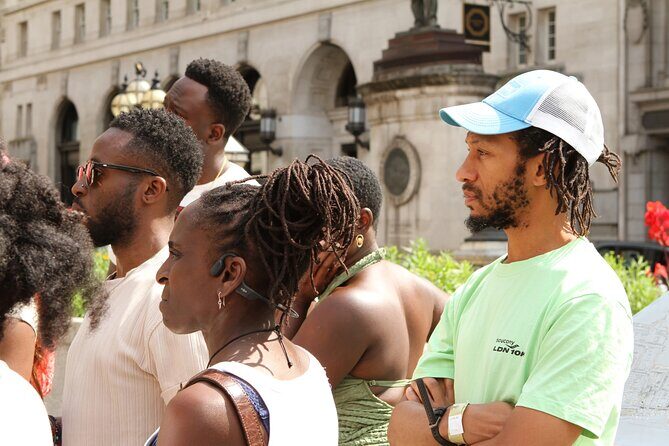
If you have only ever seen London as palaces and photo spots, this tour changes the angle. You start in the City of London, in that thick patch where banks, exchanges, and big business have always sat close together. The idea is simple: show how wealth from the transatlantic slave trade fed institutions, buildings, and systems that still matter today.
What makes this especially compelling is that it is not a generic lecture. You get a route you can walk, with clear stops at institutions tied to financing, shipping, and underwriting. You also get a written tour booklet, which helps you keep your place and review what you learned later (because yes, some of this sticks to your brain in a heavy way).
And because it is focused on money—how risk was priced, goods were shipped, and profits were protected—it helps you understand how colonialism worked through everyday mechanisms, not just dramatic events. That is where the tour earns its name.
You can also read our reviews of more city tours in London



Value for $48.01: what fits inside 3 hours
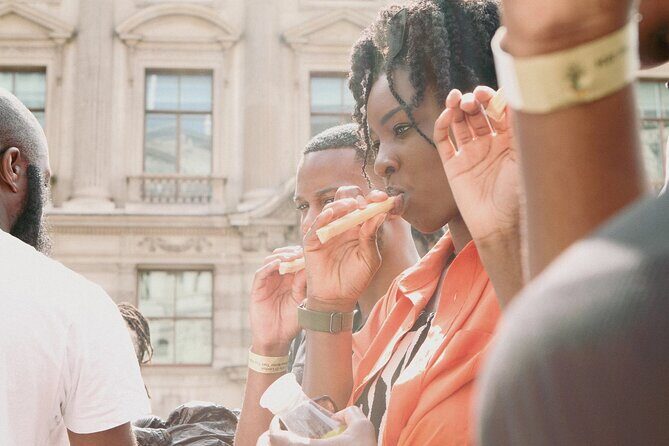
At $48.01 per person for about 3 hours, you are paying for a guided walk with a tight route and a lot of interpretation. The guide is included, and you also get a tour booklet. The big practical win is that several stops are free to enter, so you are mostly spending money on the thinking part, not ticket math.
A small group matters here. With a maximum of 30 travelers, you are more likely to ask questions and keep up with the flow. That becomes important when the subject is detailed and emotionally charged.
A couple of practical notes you should plan for:
- You should bring your own water. Bottled water is not included, and you will be outside moving around.
- Since lunch is not included, you’ll want to grab something before you start or plan a meal after you finish at Borough Market.
- This experience requires good weather. If weather is poor, you are offered a different date or a full refund—so check the forecast before you head out.
One more tip: it is often booked about 42 days in advance on average. That usually means you should reserve early rather than gambling on last-minute availability.
Start at the Royal Exchange EC3V 3LL: the meeting point that sets the tone
The tour starts at the Royal Exchange (London EC3V 3LL) at 12:00 pm, and you end at Borough Market (London SE1 9AL). That start point is a strong choice, because the Royal Exchange represents London’s commercial identity—contracts, trade, and the structures that make markets run.
When you arrive, take a moment to look around. The building is grand, but the tour focuses on what grand buildings are for: moving money, enabling trade, and consolidating power. Even before you get into the specifics, you can feel why this kind of story belongs in the City, not far away in a museum.
Your first guided stop is in this area and lasts about 15 minutes. The time might feel short on paper, but the pace works for a 3-hour experience. You are not meant to become an expert in one afternoon. You are meant to leave with a clear thread: the transatlantic slave trade did not just happen in far-off places. It was financially supported here.
The Bank area stop: where money and institutions met the trade (15 minutes)

One of the tour’s earliest stops takes you to the historic Bank area of the City of London for about 15 minutes. This is where the story turns from distant tragedy into local mechanics.
You will uncover the financial institutions tied to the transatlantic slave trade—because in many cases, the money work was handled through systems that look neutral on the surface. Think of it like this: when you remove the human suffering from the description, what you are left with is a profit engine. This stop helps you see that engine clearly.
A practical tip for this part: keep your attention on the connections the guide points out between buildings, institutions, and the specific ways wealth was built. That is what makes the rest of the walk make sense.
Royal Exchange building stop: commerce as a facilitator (20 minutes)

At the Royal Exchange, the tour focuses on how this landmark building served as a centre of London’s commercial life—and how that role overlapped with the transatlantic slave trade. This stop runs about 20 minutes and, importantly, the admission ticket is free.
What I like about framing it this way is that it avoids the trap of thinking slavery was only a political issue. It was also an economic system. The Royal Exchange theme reinforces the idea that trade required legal structure, financial clearing, and organized business activity.
If you are the type who enjoys learning through a specific location—standing somewhere and connecting it to what you are hearing—this stop is a good anchor.






20 Fenchurch Street: shipping profits headquartered in plain sight (50 minutes)
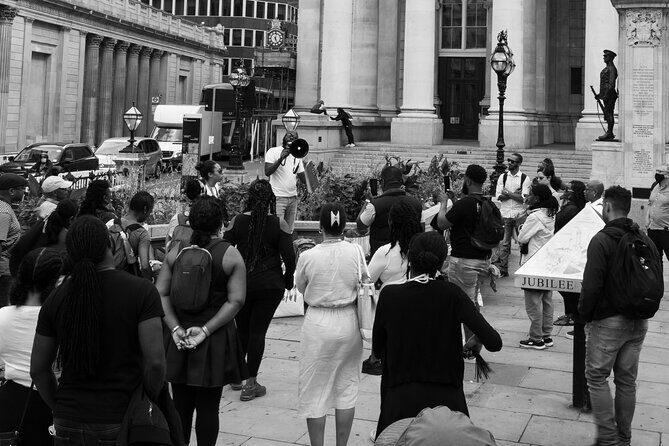
The longest stop is at 20 Fenchurch Street, with about 50 minutes on site. The time tells you the tour wants you to pay attention here, because this area connects closely to the shipping industry and the companies that profited from the trade.
This is one of those parts where the City layout becomes useful. You see how the financial core connects to the world of transport and goods. Even if you do not know the shipping history already, you should leave understanding the basic logic: slave-trade profit depended on moving people and products through global routes, and businesses needed hubs for decisions, coordination, and risk.
A small consideration: because this stop lasts longer than the others, you might want a quick mental reset halfway through. You will likely be hearing a lot of names, roles, and mechanisms. If you struggle with long stretches of info, write down one or two key ideas as you go. The tour booklet can help here, too.
Lloyd’s of London: underwriting as the quiet engine (20 minutes)
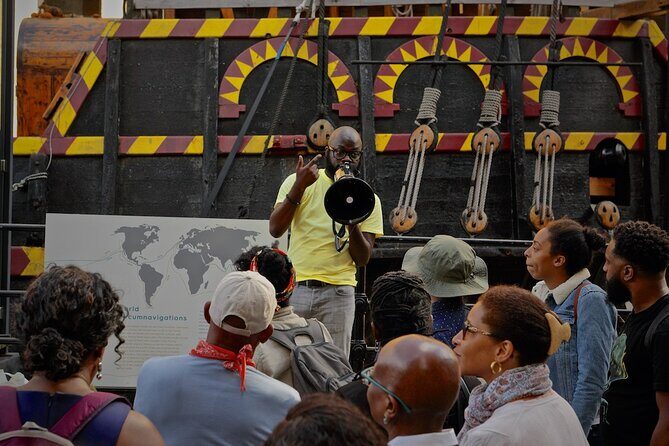
Next up is Lloyd’s of London for about 20 minutes. Again, admission ticket is free here. The focus is on the institution’s pivotal role in underwriting the transatlantic slave trade.
This is a powerful lesson because insurance and underwriting can sound boring—until you realize what it means. Underwriting is what turns a risky voyage into something that can be financed and repeated. If the route can be insured, it can be scaled.
In a tour like this, I find it useful when the guide connects the dots between abstract finance and real-world consequences. This stop is designed to do that. Listen for how the guide explains risk, profit, and the systems that made the trade manageable for business interests.
Borough Market: sugar and tobacco tied to enslaved labor (20 minutes)
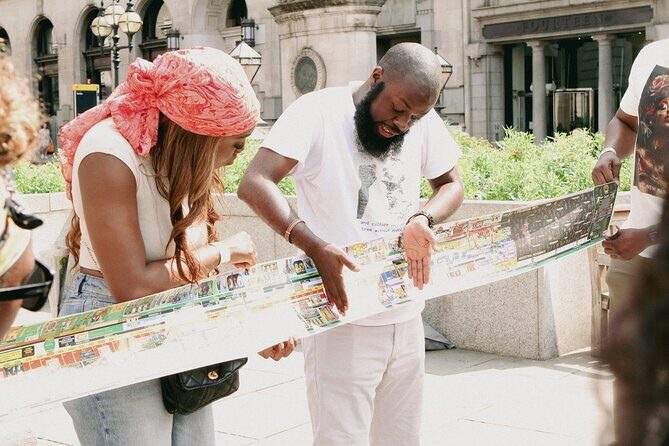
You finish with Borough Market, spending about 20 minutes. This is where the story becomes tactile. A historic trading hub right in the middle of modern-day Southwark, Borough Market is linked to goods produced by enslaved labor—specifically sugar and tobacco.
This stop also matters because it shows how the profits of colonial systems entered everyday life through commodities. You are not only hearing about distant events; you are hearing about what people bought, what people ate, and what people treated as normal.
One detail to note: the Borough Market admission ticket is not included. That means you may need to handle any entry-related costs yourself. The good news is the time here is short, so it is not a big time sink.
Also, consider your emotional bandwidth before you reach this final stop. If you are sensitive to the topic, Borough Market can feel especially stark because it is a lively food and market area. If that contrast is hard for you, it is still worth experiencing—but just plan for the mood shift.
What Darrel Blake’s guiding approach adds to the walk
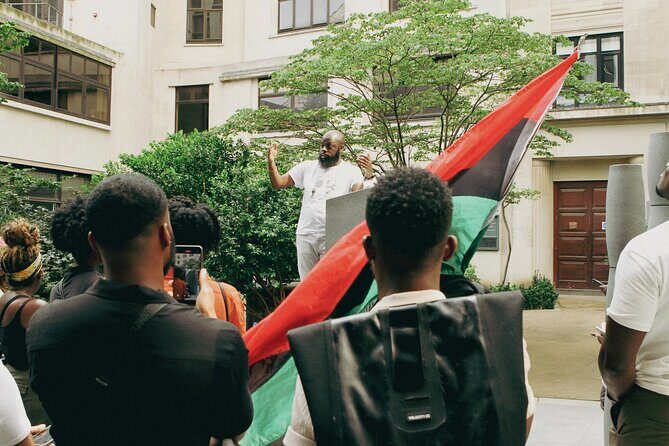
A big reason this tour earns strong ratings is the guide’s delivery. Darrel Blake is described as exceptionally passionate and knowledgeable in the practical sense: clear explanations, direct answers, and a willingness to handle questions.
One of the most useful teaching styles mentioned is how he keeps the group engaged, including prompting people to recall what they just learned. That turns the walk into more than passive listening. You leave with your own notes in your head, not just facts that drift away afterward.
He also brings artifacts into the story. That does two things. First, it makes the material feel less theoretical. Second, it gives you something concrete to hold onto while the locations do their work around you.
Who this tour is best for (and who might want to think twice)
This is a strong match if you:
- like history that connects to systems—finance, shipping, institutions
- care about social justice and human rights
- enjoy a focused route where every stop has a point, not just scenery
- want an afternoon plan that stays efficient and explanatory
It might be less ideal if you:
- want a light, casual City walk
- get overwhelmed by emotionally heavy topics
- prefer tours that avoid direct links to slavery and colonialism
Good weather is also required, and you will be outside walking between stops. Wear comfortable shoes. You will thank yourself later.
Should you book the Slave Trade Money Trail Tour?
I think you should book this tour if you want London history that connects to the real machinery of profit and power. The price is fair for a guided route with multiple free-entry stops and a booklet that helps you process the material.
However, go in with eyes open. This is not a neutral stroll. It is a structured look at how transatlantic slave trade wealth was supported through financial institutions and commercial systems that still shape the City. If you are ready for that kind of learning—and you want it delivered with clarity and purpose—this is a standout use of a few hours in London.
If you are looking for a gentle overview, or you are emotionally cautious about the topic, you may want to choose a different kind of London tour. But if you want the money trail in plain language, walk this one.
FAQ
How long is the Slave Trade Money Trail Tour in the City of London?
It is about 3 hours (approx.).
What does the tour cost?
The price is $48.01 per person.
What is included in the price?
The tour guide is included, and you receive a tour booklet. A mobile ticket is also used.
What is not included?
Lunch and bottled water are not included, and Borough Market admission is not included.
Where does the tour start and end?
You start at the Royal Exchange (Royal Exchange, London EC3V 3LL, UK) and end at Borough Market (London SE1 9AL, UK). The start time is 12:00 pm.
Is it offered in English, and how big is the group?
It is offered in English. The tour has a maximum of 30 travelers, and most travelers can participate.
Is the tour accessible and flexible with weather?
Service animals are allowed and it is near public transportation. The experience requires good weather, and if it is canceled due to poor weather you will be offered a different date or a full refund. Free cancellation is available up to 24 hours in advance for a full refund.