REVIEW · LONDON
The Great Rock and Roll Walking Tour of London
Book on Viator →Operated by London Walks&All · Bookable on Viator
London’s rock legends, on foot.
If you love music trivia, this tour is a fun way to see London’s soundtracks. You’ll get photo moments at Abbey Road and you’ll feel the energy of a small-group walk where the guide keeps things personal.
I especially like the mix of famous names and street-level details, from Beatles landmarks to guitar-guy magnet Denmark Street. One thing to plan for: it’s still a walking tour, so if you hate long stretches between stops, you’ll want to bring comfortable shoes.
In This Review
- Key things you’ll get from this tour
- Price and logistics: what you’re paying for (and why it can feel fair)
- Where the walk starts: Soho base to Denmark Street finish
- Trident Studios area (Soho Square): when Soho had studios in its bones
- Savile Row Beatles stop: the last-concert building moment
- Denmark Street (Tin Pan Alley): guitars, record shops, and the Les Paul story
- Wardour Street and the Marquee Club legacy
- Heddon Street: Ziggy Stardust plaque stop
- Regent Sounds: the shoestring studio story and Hendrix’s question
- Regent Street: Pink Floyd meets as architect students
- The Marquis: ending at London’s rock-and-roll watering hole
- Abbey Road zebra crossing: the photo moment that people talk about
- Why the small-group format changes the experience
- What to bring: the simple stuff that makes it better
- Should you book this rock-and-roll walking tour?
- FAQ
- Is the Great Rock and Roll Walking Tour of London about 2 hours long?
- How much does the tour cost?
- What time does the tour start and where is the meeting point?
- Where does the tour end?
- What’s the nearest underground station?
- How large is the group?
- Is the ticket mobile?
- Are admissions included at each stop?
- Are service animals allowed?
- What are the cancellation rules?
- Is the tour limited to certain types of travelers?
Key things you’ll get from this tour
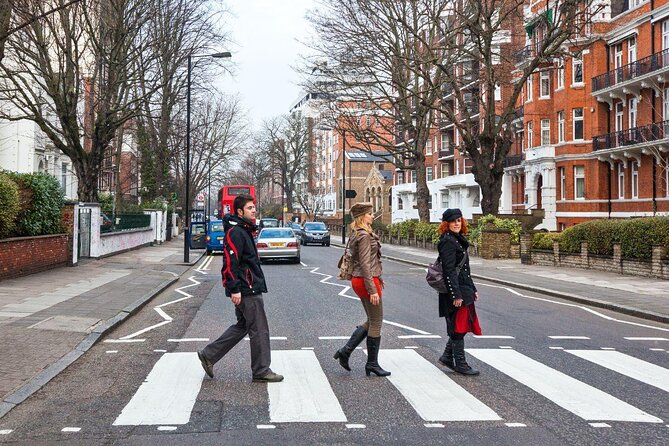
- Abbey Road zebra crossing photo moment like The Beatles
- Small group (max 15), so you’re not lost in the crowd
- Classic London music streets in tight walking distance (Soho, Chinatown area, nearby lanes)
- Studio and venue stops tied to real bands and real recording lore
- A finish in Denmark Street, right in the middle of London’s guitar-store vibe
- Guide attention and pacing that can slow down for photos when needed
Price and logistics: what you’re paying for (and why it can feel fair)
At about $27.46 per person for roughly 2 hours, you’re not paying for museum entry fees. You’re paying for a guided route that strings together music landmarks you’d never string together on your own.
That matters in London. The city is big, and “music history” can turn into random plaque hunting. This tour stays concentrated and gives you a reason to care at each stop—whether it’s a former venue, a studio, or a street where musicians actually went.
You’ll also move at a manageable pace. The tour is set up as a small group (up to 15), and that’s a practical advantage. In a bigger crowd, Abbey Road-style photo ops become chaotic. Here, the guide can help the group stay together and make sure you get your pictures.
You can also read our reviews of more tours and experiences in London.


Where the walk starts: Soho base to Denmark Street finish
The tour starts at 3 Villiers St, London WC2N 6NN, near Tottenham Court Road. That’s a smart location if you’re already exploring central London—Soho is close, and transit options are right there.
It ends on Denmark Street (Denmark St, London WC2H), so you can keep the music theme going. If you want to browse guitar shops after, or just grab something to eat nearby, you’re dropped in the right spot instead of back at some far-off meeting point.
Also, you’ll use a mobile ticket, and service animals are allowed. The tour says it’s suitable for most travelers, and it’s near public transportation, which helps if you’re balancing sightseeing with an early dinner plan.
Trident Studios area (Soho Square): when Soho had studios in its bones
You kick off around Soho Square, with Trident Studios (MPL) as the first stop.
A big part of why this works is that you start in the zone where record-making energy and famous faces clustered. Even if you don’t go inside anywhere (admission isn’t included here), you’ll still get the context: why Soho felt like a creative hotspot, and how streets turned into industry routes.
This early segment is also useful because it “sets the frequency.” The guide gets you thinking about what you’ll see next: venues, streets, and names that connect rather than feel like random facts.
Savile Row Beatles stop: the last-concert building moment
Next up is Savile Row, at the building where the Beatles played their last concert.
If you’ve seen the Beatles stories before, you’ll appreciate this stop more once the guide puts it into a timeline you can actually walk. It’s one of those spots where the street-level view feels more real than a poster ever does. You’re not just learning a name; you’re standing in the area where that chapter happened.
This stop is listed with admission not included, which usually means you’re viewing from the outside. That’s normal for this kind of walking tour: it keeps the schedule moving and keeps the price lower.
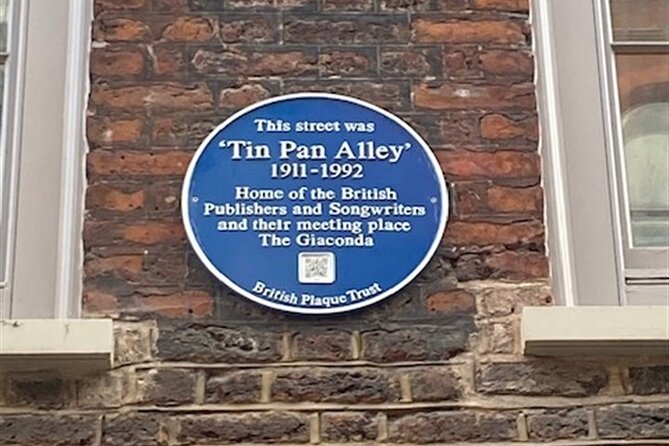
Denmark Street (Tin Pan Alley): guitars, record shops, and the Les Paul story
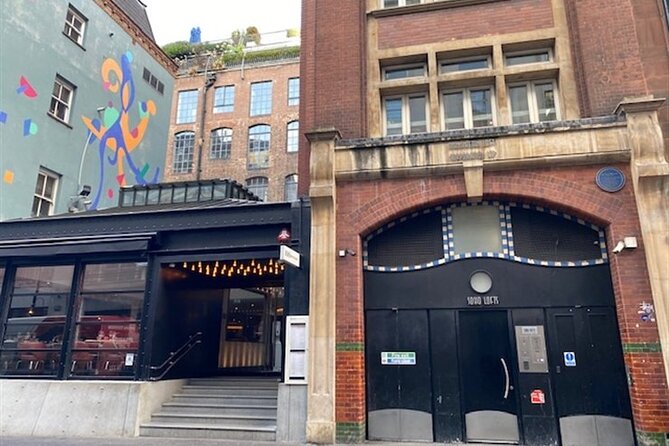
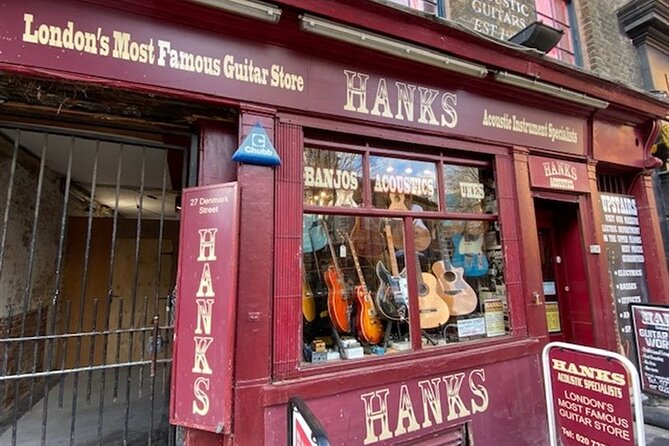
Then you move to Denmark Street, often described as Tin Pan Alley, and a place tied to buying a Gibson Les Paul.
This is the part of the tour that feels fun even if you’re not a hardcore music historian. Denmark Street is the kind of London street that makes you understand why musicians would want to hang out near instruments and shops. The tour doesn’t just name the place—it connects it to the culture around it.
You’ll get a short stop length here (about 10 minutes), so it’s more about soaking in the vibe and getting the story than shopping. But if you want to take photos and then keep wandering after the tour, you’re in the right neighborhood.





Wardour Street and the Marquee Club legacy
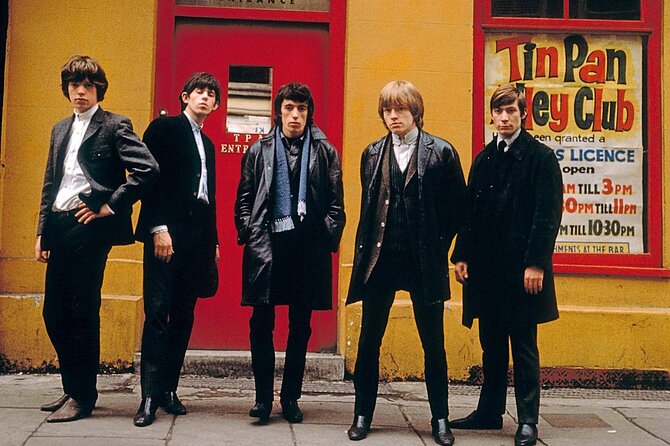
On Wardour Street, you’ll visit the former Marquee Club site—one of those London music venue stories that comes up again and again. The tour frames it as a place where acts like Jimi Hendrix, David Bowie, and The Who performed.
Again, you’re not here for ticketed entry. It’s about seeing the location and letting the guide connect it to the bigger picture. The value is in the “why this address matters” part.
A note for expectations: venue sites often feel subtle from the street. If you walk in expecting big official signage, you might be slightly underwhelmed. But if you enjoy learning how famous eras leave traces in ordinary buildings, you’ll like it.
Heddon Street: Ziggy Stardust plaque stop
At Heddon Street, you’ll see a plaque for Ziggy Stardust.
This is a quick, rewarding stop. It’s small, but it hits a sweet spot: pop culture is part of London’s identity, and plaques help you anchor those references to real locations. If your music tastes include Bowie-era lore, this is the kind of stop that makes the walking tour feel like more than just photos.
Regent Sounds: the shoestring studio story and Hendrix’s question
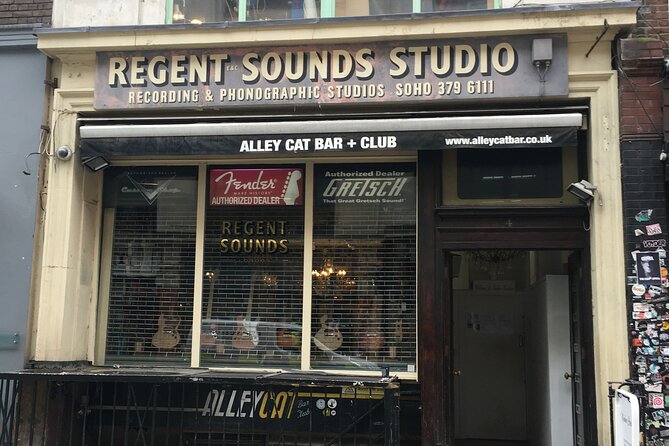
Now you’re at Regent Sounds, where the tour places two major elements side by side:
- The Rolling Stones and Black Sabbath recording their first album on a shoestring budget
- A story about Jimi Hendrix being asked to turn the music down
This is the kind of detail that makes walking tours worth it. It’s not just “famous people were here.” It’s the behind-the-scenes angle: what it felt like to record, how constrained the conditions could be, and how even iconic performances could come with small-room friction.
The stop is short, but the story does the heavy lifting. If you enjoy music-making as much as music fame, this is one of the most memorable moments.
Regent Street: Pink Floyd meets as architect students
At Regent Street, you’ll visit a spot now part of Westminster University, where Pink Floyd met as architect students.
This stop works because it shows you how bands can start in everyday student life rather than in myth. You’re seeing the “origin story” in physical form, which helps if you like understanding how personalities and connections happened—not just who became famous.
You’ll likely be able to take photos easily here. The tour lists this as a quick stop, but it’s one of those moments that sticks.
The Marquis: ending at London’s rock-and-roll watering hole
The tour’s The Marquis stop is where you land in a very on-theme way: London’s rock and roll watering hole.
Even if you’re not planning to go inside immediately, it’s a fitting finish. It’s like the tour hands you the “what to do next” feeling, letting you transition from streets-and-stories into actual London nightlife.
The stop is listed as about 5 minutes, so think of it as a thematic capstone rather than an extended bar visit.
Abbey Road zebra crossing: the photo moment that people talk about
Across the route, the tour includes a standout experience: posing for photos at the Abbey Road zebra crossing like The Beatles.
This is the stop that turns a music-walk into a memory you can share. And it’s also practical: it’s a very specific location where you can aim for your photo, not a vague “around the corner” type of visit.
The guide also helps here with timing and picture pacing. Some people specifically note that the guide was good about waiting when they needed extra time for photos and making sure the group got their moment. That kind of real-world handling matters because Abbey Road photos can take time, especially with crowds and traffic.
Why the small-group format changes the experience
With a maximum of 15 travelers, this tour avoids one of the biggest problems with group sightseeing: the tour becoming a one-size speech with everyone stuck behind one another.
Small-group tours can do two useful things:
- The guide can tailor stories to the group’s musical tastes.
- You’re more likely to get help when someone needs a second for photos.
In the best cases, this is exactly what you’ll feel. Guides such as Grant and Glen are specifically praised for being good at pacing and staying engaged, and for mixing well-known artists with lesser-known stops so the walk doesn’t feel repetitive.
What to bring: the simple stuff that makes it better
This tour is about walking. That means you should plan like it’s a real stroll, not a hop-on-hop-off day.
Bring:
- Comfortable walking shoes (the tour is about 2 hours)
- A charged phone for photos
- A light layer if the weather shifts, since Soho and central London can feel changeable
If you love music but prefer lots of sitting and museum-style exhibits, you might find the experience more “street and story” than “indoors and artifacts.” That’s not a flaw—it’s just the format.
Should you book this rock-and-roll walking tour?
Book it if:
- You want a tight, central route built around rock-and-roll landmarks
- You care about how bands connect to real London places
- You’d enjoy a photo moment at Abbey Road plus a string of nearby music streets
Skip it if:
- You hate walking or expect lots of ticketed indoor attractions
- You mainly want a passive experience with minimal movement
If you’re a music fan who also likes getting your bearings fast in a neighborhood, this tour is a strong value. You’re not spending much time or money compared to big-ticket tours, but you’re seeing enough specific locations to make the day feel like more than just wandering.
FAQ
Is the Great Rock and Roll Walking Tour of London about 2 hours long?
Yes. It runs for about 2 hours.
How much does the tour cost?
The price is $27.46 per person.
What time does the tour start and where is the meeting point?
The listed start time is 11:00 am, and the meeting point is 3 Villiers St, London WC2N 6NN, UK.
Where does the tour end?
The tour ends on Denmark Street (Denmark St, London WC2H, UK).
What’s the nearest underground station?
The nearest underground station listed is Tottenham Court Road.
How large is the group?
The tour has a maximum of 15 travelers, and it’s described as a small-group experience.
Is the ticket mobile?
Yes. It’s a mobile ticket.
Are admissions included at each stop?
Not always. Some locations list admission ticket not included, while others are listed as admission ticket free.
Are service animals allowed?
Yes. Service animals are allowed.
What are the cancellation rules?
You can cancel up to 24 hours in advance for a full refund.
Is the tour limited to certain types of travelers?
The experience states that most travelers can participate, and it’s near public transportation.