REVIEW · LONDON
The Mayflower Private Walking Tour
Book on Viator →Operated by Ye Olde England Tours · Bookable on Viator
London’s South Bank hides a Mayflower departure clue. This private walking tour strings together famous sights and lesser-known corners with a guided thread that runs straight through the Mayflower story. I especially love the mix of serious stops (prisons, plague burial grounds, Dickens connections) with relaxed breaks (Borough Market and a proper pub finish). I also like that you get lots of included admissions without having to plan ticket math. One thing to consider: it’s a longish walk for 3 hours, and you’ll want moderate fitness and good shoes.
You meet at Underground Ltd Station, Mansion House (38 Cannon St, London EC4N 6JD), with the tour starting at 9:30am. There’s mobile ticket use, and hotel pickup/drop-off is included only if you choose that option.
If you’re picky about crowds, this is a smart pick. The route leans toward quieter stretches, and the operator even suggests starting a little later (around 10:30am to 11am) to skip rush hour. Dress for all weather, since the tour runs rain or shine, and masks are optional with a guide who can wear one.
In This Review
- Key things to know before you go
- Why the Mayflower story fits this South Bank route so well
- Private tour value: $205.29, pickup option, and what you’re really paying for
- How price links to “included” value
- How the 3-hour timing feels when you’re walking the Thames corridor
- From Millennium Bridge to Borough Market: art, ruins, prisons, and a market that goes way back
- Millennium Bridge: the modern photo anchor
- Winchester Palace: ruins that survived industrial life and war
- The Clink Prison Museum: the darker choice (ticket not included)
- Golden Hinde: seeing an exploration-ship idea close to the water
- Crossbones Graveyard & Garden of Remembrance: plague, poverty, and unmarked burial
- Marshalsea Prison South Wall: Dickens’s family connection
- The George: a galleried tavern tied to pilgrim stories
- Southwark Cathedral: beautiful, often overlooked
- Borough Market: a thousand years of eating culture (included)
- London Bridge: why it’s here and what used to happen
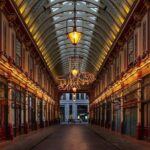
- Hay’s Galleria: the covered dockyard turned into eating and leisure
- Prisons to ships to bridges: HMS Belfast, Tower Bridge, and the Dickens-by-water feel
- HMS Belfast: WWII cruiser as a tourist attraction (optional ticket)
- City Hall and its Armadillo nickname
- The Scoop: modern outdoor theatre with riverside energy
- Tower Bridge: the hydraulic icon, and walking under it
- Shad Thames: crime, drainage, and Dickens-linked streets
- Edward III’s Manor House: a hunting lodge that rose from swamp
- The Angel pub: smugglers, trap doors, and Cook’s departure connection
- Rotherhithe and the Mayflower landing trail: church, pub, Brunel, and quirky cafés
- St Mary’s Church, Rotherhithe: Pilgrim Fathers and the Mayflower connection
- The Mayflower Pub: departure point energy (included)
- Brunel Museum at Rotherhithe: the underwater tunnel idea
- Watchhouse Café: a weirdly human story, free entry
- Rotherhithe Picture Research Gallery: costumes, cinema, and a small café
- Tickets that are included, free, or not included: how to avoid surprises
- Should you book the Mayflower Private Walking Tour?
- FAQ
- How long is the Mayflower Private Walking Tour?
- What does the tour cost per person?
- Is this tour private?
- Are any attractions included with admission tickets?
- Do you offer hotel pickup and drop-off?
- Does the tour run in bad weather?
Key things to know before you go
- Private guide for your group so you can ask questions and keep your own pace
- Mayflower-focused South Bank route with stops that connect the ship story to churches and pubs
- A mix of free, included, and optional entries so you control how many paid sites you add
- Worth it for the in-between sights from Thames views to Dickens-linked places
- 4–5 mile walking day feel with short photo breaks instead of long museum marathons
Why the Mayflower story fits this South Bank route so well
The Mayflower story isn’t just a museum topic here. It shows up in street-level details: churches, burial grounds, taverns, and a “ship by the water” feeling that makes the Thames look like the city’s old highway. Walking this area, you start to see why people lived where they did, worked where they did, and how poverty, crime, and reform sat close to trade and entertainment.
I like that the tour doesn’t treat the South Bank like one big postcard. It treats it like a chain of neighborhoods, each with its own past—Roman-era roots at Borough Market, medieval remnants at Winchester Palace and Edward III’s Manor House, and later industrial layers around Rotherhithe and Brunel-linked sites. The end result is that your “Mayflower” theme keeps picking up new context rather than repeating the same few facts.
You can also read our reviews of more tours and experiences in London.


Private tour value: $205.29, pickup option, and what you’re really paying for
At $205.29 per person, this isn’t a bargain-basement group shuffle. The value comes from the private format: only your party and your guide. That matters on a walking tour because pace, photo time, and question time can stay flexible instead of snapping back to a strict group schedule.
The tour duration is about 3 hours, which is long enough to get a real feel for the South Bank, but short enough that you’re not stuck for an entire half day. Plus, you’ll hit enough stops to avoid “one sight, then a long gap” fatigue—short visits and quick orientation keep the momentum.
Hotel pickup and drop-off is available if you select it. If you don’t, you’ll start at Mansion House (easy for taxis and ride-hail pickups). The tour also uses mobile tickets, which tends to make entry smoother when a stop includes an admission ticket.
How price links to “included” value
A big reason this tour can feel worth it is the structure of admission fees. Several stops list admission included, and a handful are free. That reduces the chance you’ll feel nickel-and-dimed at each site. You still have optional paid entries (like Clink Prison Museum and Golden Hinde), but the core story isn’t locked behind extra spending.
How the 3-hour timing feels when you’re walking the Thames corridor
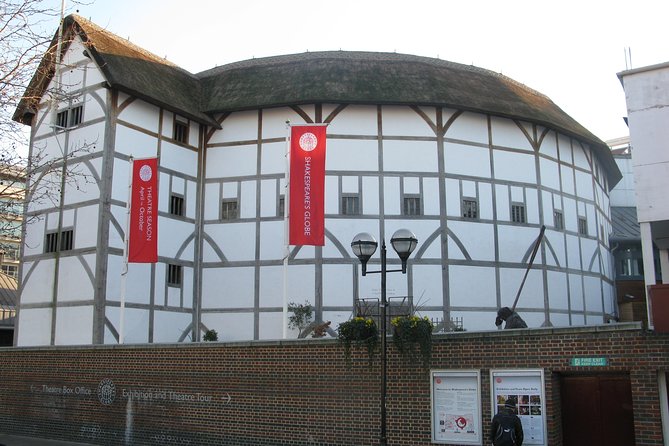
This experience works because the stops are short—often around 5 minutes, sometimes up to 10. You’re not meant to linger all day in indoor exhibits. Instead, you get quick orientation: what the place is, why it matters, and what to look for before you move on.
A useful reality check: the walk can feel like a 4–5 mile day. That lines up with the amount of ground covered from Millennium Bridge across to the Tower Bridge area and onward into Rotherhithe. If you’re traveling with limited mobility, this might still be doable only if you’re comfortable with a steady walking pace and frequent “stop, look, move” moments.
The good news is that it’s designed for real streets, not endless staircases. Still, bring good footwear and plan for weather. The operator notes it runs in all weather conditions, so a drizzle won’t stop the route.
From Millennium Bridge to Borough Market: art, ruins, prisons, and a market that goes way back





Millennium Bridge: the modern photo anchor
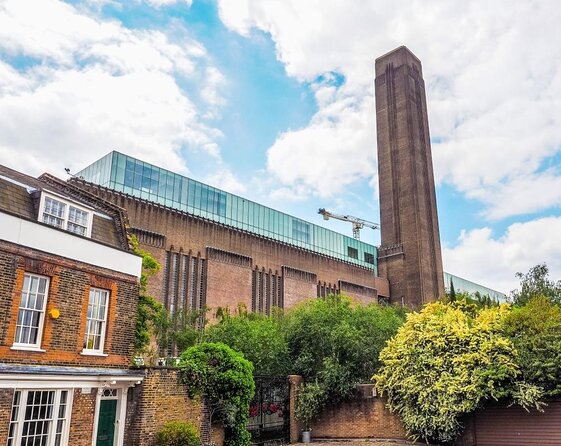
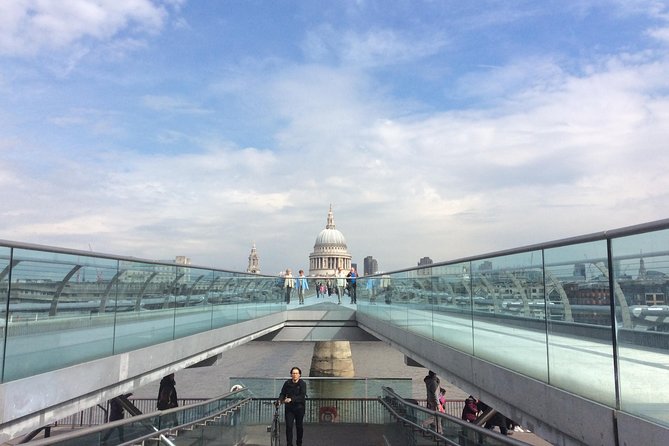
You start at Millennium Bridge, the newer bridge connecting St Paul’s Cathedral and Tate Modern. It’s the kind of London view that can look familiar even if you’re not a local—because it has shown up in popular film and TV. Coming here first is smart: you get a clean landmark pairing before the tour starts layering in the older, darker, and more surprising stories.
This is a quick stop, and the admission listing is free. That’s also a good pattern for the day: you’ll often get a “look and learn” moment without needing extra tickets.
Winchester Palace: ruins that survived industrial life and war
Next comes Winchester Palace ruins. What I like about this stop is the way it reframes “London is ancient.” This isn’t just a single monument; it’s the visible remains of a once-grand palace that endured centuries and even survived the hard knocks of industry and World War II. You’re looking at history that didn’t just sit there—it survived.
This one has admission included, which means you don’t have to decide on the spot whether it’s worth paying to enter.
The Clink Prison Museum: the darker choice (ticket not included)
Then the tour heads toward the Clink Prison Museum area. The premise is bleak: a prison site described as possibly among the worst in Britain or the world. You don’t have to go inside on this stop because the admission is not included, but the exterior atmosphere is meant to do part of the job.
If you love punishment-and-poverty stories and you’re comfortable paying extra, you might want to use this as your deeper prison moment. If you’d rather keep costs predictable, you can still get the narrative beat and move on.
Golden Hinde: seeing an exploration-ship idea close to the water
The Golden Hinde is a ship replica, so it’s not the real object—but it helps you picture what “this part of the Thames” felt like in earlier centuries. It’s also a nice shift after prisons: you get a sense of trade and exploration instead of only suffering and confinement.
Admission is not included here, so treat it as optional depending on what you like.
Crossbones Graveyard & Garden of Remembrance: plague, poverty, and unmarked burial
Crossbones Graveyard is one of the tour’s most emotionally heavy stops. You’ll learn about a burial place for thousands—plague victims, criminals, and women described as fallen—interred in grim circumstances. The key angle for me is how the tour links these realities of extreme poverty to social reform and to Charles Dickens’ writings.
Admission is included, which is great for value because this is exactly the kind of site you don’t want to skip due to ticket fatigue.
Marshalsea Prison South Wall: Dickens’s family connection
After that, you’ll see the small park that marks the former Marshalsea prison Debtors’ location. The Dickens family connection is the reason this hits for many history lovers: it turns Dickens from “books” into “people nearby, caught in the system.”
Admission is included. That makes it a low-friction stop to add.
The George: a galleried tavern tied to pilgrim stories
Then it’s on to The George, described as the only remaining galleried tavern in London. The tour also points out literary links, including the idea of a pilgrim assembly yard referenced in the Canterbury Tales tradition. Even if you don’t think of yourself as a literary person, taverns like this are where you can feel how public life and stories mixed.
Admission is not included, so you’ll likely enjoy this as a look-and-context stop rather than a formal entry.
Southwark Cathedral: beautiful, often overlooked
Southwark Cathedral is another “pause and look” moment. The tour notes it can be overlooked, which is true in many cities where the famous landmark gets all the attention. Here, you get a cathedral with local weight, inside a neighborhood that has always been connected to the Thames economy.
Admission is not included.
Borough Market: a thousand years of eating culture (included)
Then you reach Borough Market, and it’s time for a different kind of history. The tour frames it as a food marketplace with long roots—at least around a thousand years and possibly since Roman times. That’s why it works as a break: you can reset your brain and still keep the story moving.
Admission is included at this stop. Even if you don’t buy a thing immediately, you’ll have a chance to orient yourself for the rest of the walk.
London Bridge: why it’s here and what used to happen
London Bridge follows, with a focus on why this specific location became so central and what awful things used to happen here. It’s one of those stops where the guide’s narration helps you see beyond the view and into the social function of the place.
Admission is free. That means you can spend more time just absorbing what you’re told and less time thinking about costs.
Hay’s Galleria: the covered dockyard turned into eating and leisure
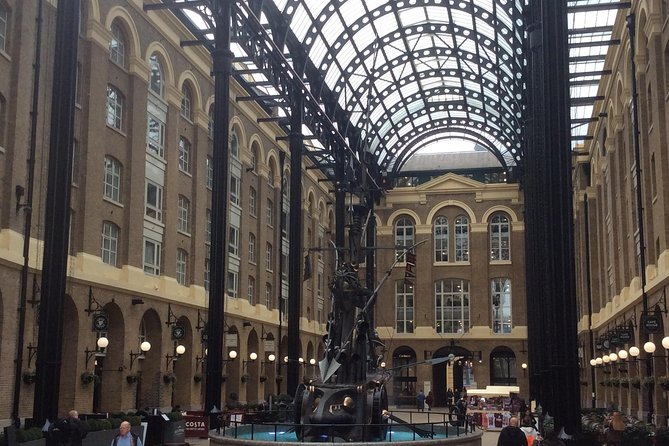
Hay’s Galleria is next, tied to the idea of a covered dockyard and the shift from shipping to leisure. The tour highlights it as once the world’s first covered dockyard, now a place for food and time outdoors. Even if you only take a few minutes here, it helps you understand how the Thames edge reinvented itself.
Admission is included.
Prisons to ships to bridges: HMS Belfast, Tower Bridge, and the Dickens-by-water feel
HMS Belfast: WWII cruiser as a tourist attraction (optional ticket)
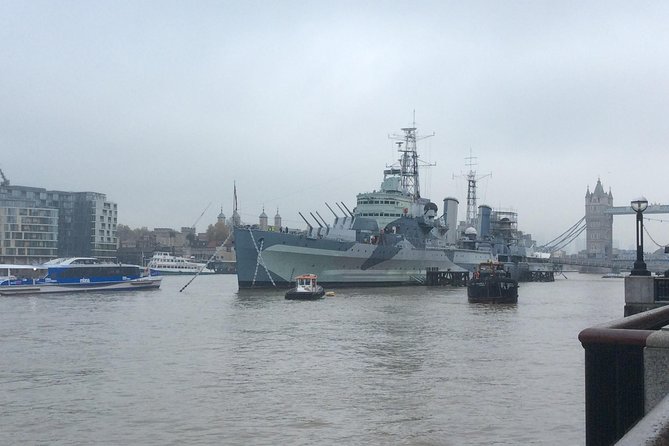
HMS Belfast is a World War II Royal Navy cruiser permanently berthed and open as an attraction. Admission is not included here, but the ship is a strong visual anchor—especially after the darker prison stops earlier. It shifts the tone to military history and the city’s role in wider events.
If you’ve got limited energy and only want the big overview, you can keep it as a viewing stop. If you want to add the inside museum layer, you’ll need to pay separately.
City Hall and its Armadillo nickname
City Hall is where the Mayor of London and the London Assembly hang out, and the building gets a nick name of Armadillo. It’s a modern contrast point that helps you avoid the “all past, no present” feeling. This kind of stop is useful because it reminds you the South Bank is still a working civic area, not only a stage set.
Admission is not included and it’s likely an outside look.
The Scoop: modern outdoor theatre with riverside energy
Then you’ll see The Scoop, described as one of London’s modern outdoor theatres. Again, it’s more about place and scale than about entry. This is where you’ll notice how the South Bank uses open space for culture.
Admission is free.
Tower Bridge: the hydraulic icon, and walking under it
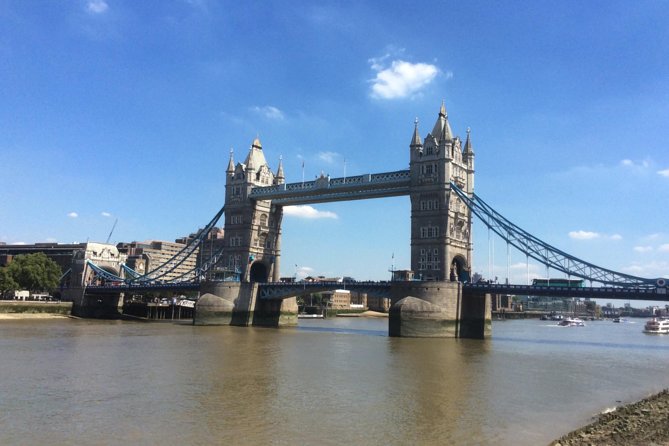
Tower Bridge is the famous piece of the puzzle, including the hydraulic lifting bridge mechanism mentioned by the tour. The key moment is that you walk under it, so you get the feeling of the structure instead of just standing far away and taking one quick photo.
Admission is not included.
Shad Thames: crime, drainage, and Dickens-linked streets
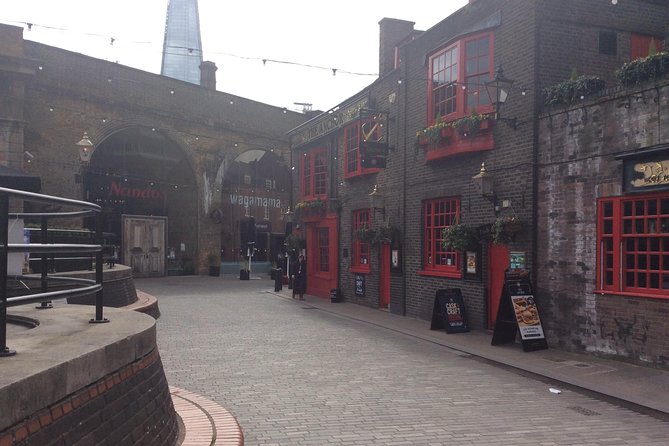
Shad Thames comes next, with a “Venice of Drains” past and stories tied to murders and executions and Charles Dickens. This stop is where the tour’s tone becomes almost cinematic. You’re walking a place that looks like it has been renovated for style, but the narration keeps dragging you back toward the hard side of the old city.
Admission is included.
Edward III’s Manor House: a hunting lodge that rose from swamp
Edward III’s Manor House is a fascinating history angle: the tour explains this area was swamp land before a hunting lodge. Remains were unearthed relatively recently, which gives the site a fresh feeling even though the story is medieval.
Admission is included.
The Angel pub: smugglers, trap doors, and Cook’s departure connection
The Angel is an old pub described as a smugglers den. The tour also points out that trap doors can still be seen. It adds more threads: Captain Cook’s voyages connecting to this area, and a hanging judge nearby to watch sentences carried out.
Admission is not included, so think of this as a historical stop where the building and the surrounding cues matter more than an entry ticket.
Rotherhithe and the Mayflower landing trail: church, pub, Brunel, and quirky cafés
Now the route turns toward Rotherhithe, and that’s where the Mayflower narrative tightens again. This part of London feels more “working past” than “royal brochure,” which fits the grim-but-intriguing stories earlier in the walk.
St Mary’s Church, Rotherhithe: Pilgrim Fathers and the Mayflower connection
St Mary’s Church, Rotherhithe is described as having a monument to the Pilgrim Fathers. The tour also notes that the Captain of the Mayflower is buried here and that the ship was beached up on the Thames behind. Whether you’re fully into the Mayflower legend or just curious, this is a powerful anchor because it turns the story into a named place and a physical location.
Admission is included.
The Mayflower Pub: departure point energy (included)
Then you reach The Mayflower Pub, and the tour frames it as the place from where the Mayflower crew departed for the New World. Admission is included, and this is one of those stops where you can linger afterward if your schedule allows.
This is also the end-of-tour vibe many people like: a drink, a meal, and a final “okay, I get it now” moment. One review note highlighted that the tour ends at a pub and that it’s within walking distance of the Overground, which is a helpful way to plan your next step.
Brunel Museum at Rotherhithe: the underwater tunnel idea
Next comes the Brunel Museum at Rotherhithe. The tour mentions Brunel built the very first underwater tunnel here, and trains still use it today. It also points out that docking could take days or weeks at one point, and the tunnel was hoped to solve part of that problem.
Admission is not included, so treat it as optional if you want a deeper engineering stop.
Watchhouse Café: a weirdly human story, free entry
Watchhouse Café is described as an organic, funky spot for snacks and drinks. The tour’s backstory is grim but specific: it used to be a Watch House where dead bodies washed up on beaches were protected from thieves until authorities arrived.
Admission is free. Even if you don’t buy anything, it’s a chance to take a breath and reset before the final cultural stop.
Rotherhithe Picture Research Gallery: costumes, cinema, and a small café
The last major stop is the Rotherhithe Picture Research Gallery. The tour describes it as an industrial building now used for cinema and heritage costuming, plus a reference library of how the area used to look. Admission is free, and it’s paired with a café, so it’s a relaxing close.
This is a nice finishing note because it connects the past you’ve been walking with how that past gets recreated on screen.
Tickets that are included, free, or not included: how to avoid surprises
The tour is built around a clear split in access and fees:
- Included admission stops: Winchester Palace ruins, Crossbones Graveyard & Garden of Remembrance, Marshalsea Prison South Wall, Borough Market, Hay’s Galleria, Shad Thames, Edward III’s Manor House, St Mary’s Church, Rotherhithe, and The Mayflower Pub.
- Free admission stops (as listed): Millennium Bridge, London Bridge, The Scoop, Watchhouse Café, and Rotherhithe Picture Research Gallery.
- Admission not included: Clink Prison Museum, Golden Hinde, The George, Southwark Cathedral, HMS Belfast, City Hall, Tower Bridge, The Angel, Brunel Museum at Rotherhithe.
What this means for you: if you like a “story-first” walk, you can stick to the included and free stops and still get a full, satisfying narrative arc. If you’re the type who always wants inside-the-building time, plan on paying a few optional extras, like the prison museum or the ship attraction.
Should you book the Mayflower Private Walking Tour?
Book it if you want a guided South Bank route that feels story-driven and not cookie-cutter. The private format and the mix of included entries make it easier to enjoy without constant decisions. I also think it’s a great match for people who like history that shows both sides: the art and food, but also the prisons, poverty, and grim real-world consequences that helped fuel reform.
Skip it or rethink if you want mostly museum time or you hate walking. The experience is built around short stops and steady movement, and the walk can feel like 4–5 miles.
FAQ
How long is the Mayflower Private Walking Tour?
It runs for about 3 hours.
What does the tour cost per person?
The price is $205.29 per person.
Is this tour private?
Yes. It is a private tour/activity, and only your group participates.
Are any attractions included with admission tickets?
Yes. Some stops list admission as included, such as Winchester Palace, Crossbones Graveyard & Garden of Remembrance, Marshalsea Prison South Wall, Borough Market, Hay’s Galleria, Shad Thames, Edward III’s Manor House, St Mary’s Church in Rotherhithe, and The Mayflower Pub. Some stops are free, and others are not included.
Do you offer hotel pickup and drop-off?
Hotel pickup and drop-off are included if you select the option. Pickup is not automatic unless that option is chosen.
Does the tour run in bad weather?
Yes, it operates in all weather conditions, so you should dress appropriately.