REVIEW · LONDON
The Roman City of St Albans Private Tour
Book on Viator →Operated by Ye Olde England Tours · Bookable on Viator
A Roman site day trip is easier when you start at your hotel. This private St Albans outing pairs Roman remains at Verulamium with medieval gems, all explained by a real person who keeps the story moving. I love how much you get for a six-hour schedule, and I especially like the stop-and-look pacing around the Roman mosaic and hypocaust. One consideration: the walking and uneven old streets mean you’ll want comfy shoes and a steady pace.
The big value here is that you’re not piecing together transport and tickets. You get hotel pickup and drop-off, an English-speaking guide, and entry tickets for the major indoor stops, so your day stays simple even if you’re short on time in London. There’s also smart-casual dress guidance if you want to go into the Abbey Cathedral area.
If you’re after a calm, self-directed stroll, you might feel a bit rushed. But if you like history that feels connected, not like random ruins, this route works well because it moves from Roman life to Christian and later centuries in a logical flow.
In This Review
- Key highlights worth your attention
- A Roman-day trip that starts at your London hotel
- Hotel pickup and logistics from London (what to expect)
- Holy Well to Roman Walls: the first proof this city is layered
- Hypocaust and the Roman mosaic: the best reason to slow down
- St Michael’s Church and the Great Gateway: Anglo-Saxon and medieval echoes
- Roman Theatre of Verulamium and Verulamium Museum: connect what you saw to what survived
- St Albans Cathedral: the pilgrimage story and a smart-casual requirement
- Ye Olde Fighting Cocks, the market, and little time-markers you’ll actually remember
- Price and value: is $377.07 per person worth it?
- The guide makes the difference (Kevin’s impact)
- Who this private St Albans Roman tour suits best
- Should you book the Roman City of St Albans private tour?
- FAQ
- FAQ
- How long is the St Albans private tour?
- Do I get hotel pickup and drop-off?
- Are entry tickets included?
- Is there food included?
- What should I wear for the cathedral?
- What is the cancellation policy?
Key highlights worth your attention
- Hotel pickup and round-trip transport from your London base keeps the day stress-free
- Roman mosaic and hypocaust take you from ruins to the actual tech of Roman heating and decoration
- St Albans Cathedral blends pilgrimage history with the city’s early Christian story
- Verulamium Museum gives you a clear way to connect what you saw outside to what’s preserved indoors
- Kevin-style guiding energy makes the walk feel like a guided story, not a checklist
A Roman-day trip that starts at your London hotel
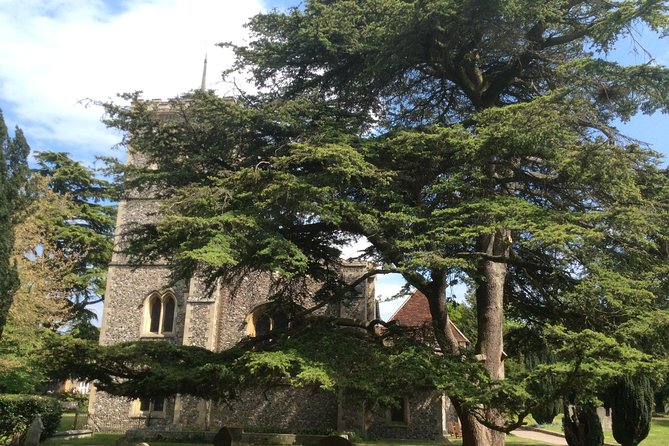
St Albans is close enough to London that it can feel like a quick escape. But it’s also far enough that you get a different rhythm: stone buildings, old churches, a market that pulls people in, and that sense that you’re watching time layer on top of time.
What makes this tour work is the structure. You’re not just dropped at a single site. You’re guided through multiple stops that explain how Roman Verulamium sat here, how later communities built around it, and why the city became important long after Rome. Then the day folds toward the cathedral and other historic landmarks so you don’t leave with only fragments.
The tour is private, so it’s only your group. That matters. Questions get answered, the pace can match your comfort level, and you’re not stuck listening to a crowd your guide can’t hear over.
You can also read our reviews of more tours and experiences in London.



Hotel pickup and logistics from London (what to expect)
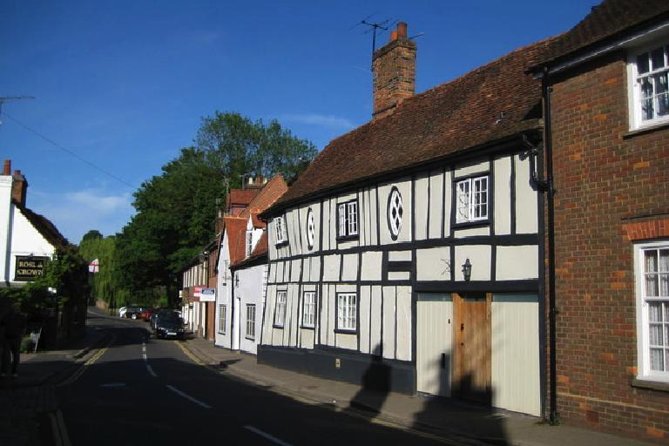
This is designed to be an easy day. Hotel pickup and drop-off are included, and the tour runs from 8:30 am for about six hours. You’ll travel with your guide using local transport, and the overall plan is set up so you can focus on the sights instead of route planning.
One small budget note: the tour info points out that return train fare (about £15) isn’t included. In practice, the tour still offers pickup and drop-off, so you’re unlikely to be on your own. Still, I’d treat that £15 as a likely extra so there’s no surprise later.
The tour is offered in English, works in all weather, and the dress code is smart casual for the Abbey Cathedral area. Pack for British weather, even in summer—thick clouds can appear without warning, and you’ll be outside for plenty of the day.
Holy Well to Roman Walls: the first proof this city is layered
The day begins with a stop at Holy Well, a place tied to legends that connect this spot to Roman-era saints and later Arthurian material. Even if you’re not the type to chase myths, it’s a strong start because it sets the tone: St Albans isn’t one era. It’s a stack of stories.
From there, you move toward Verulamium Park, which sits right over the old Roman city. That’s the thrill here. You’re walking on top of remains, and the modern city sits up on higher ground. When you see that layout explained by your guide, it clicks fast: the landscape tells you where Rome lived, where later buildings grew, and why certain ruins survived.
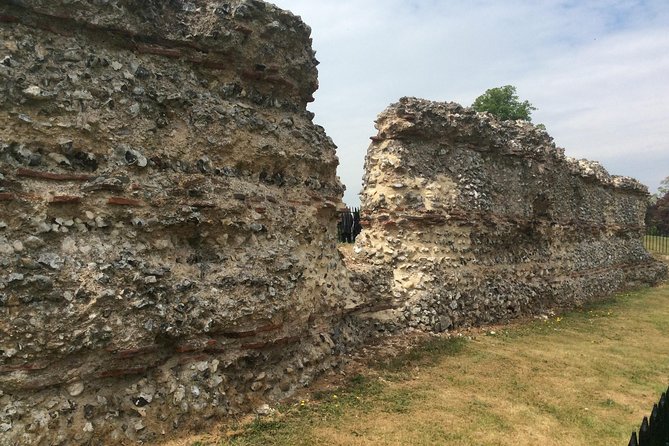
Next comes a look at surviving Roman walls. Even when only sections remain, they’re powerful because they give you scale. Roman cities weren’t small village clusters. They were planned and protected, and the walls help you picture how the city protected its boundaries and controlled movement.
Practical tip: the early stops are short. Use them to get your bearings. Don’t worry about taking in every detail on the first walk—your guide will connect the dots as you go.
Hypocaust and the Roman mosaic: the best reason to slow down
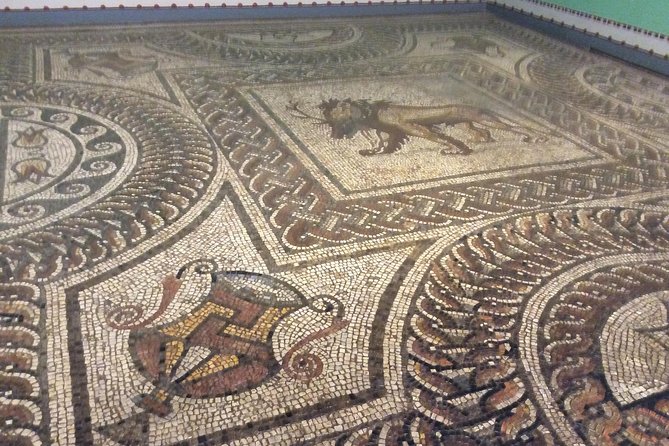
This stop is the one I’d circle if you want one anchor moment for the whole day: Hypocaust & Roman Mosaic. A hypocaust is the Roman heating system, and seeing it alongside an exceptional mosaic makes the site feel more real than a wall fragment alone.
The mosaic is described as one of the finest in Britain, and that tracks with the kind of attention Roman art received at higher-status places. In the moment, what you want to do is look for patterns and craftsmanship. Your guide’s job here is to show you what you’re actually seeing: how the floor decoration was more than decoration, and how the heating system reflects daily comfort and engineering.
This is a quick stop on the schedule, but it’s also a high impact one. If you rush through it, you’ll miss the reason it’s famous.
St Michael’s Church and the Great Gateway: Anglo-Saxon and medieval echoes
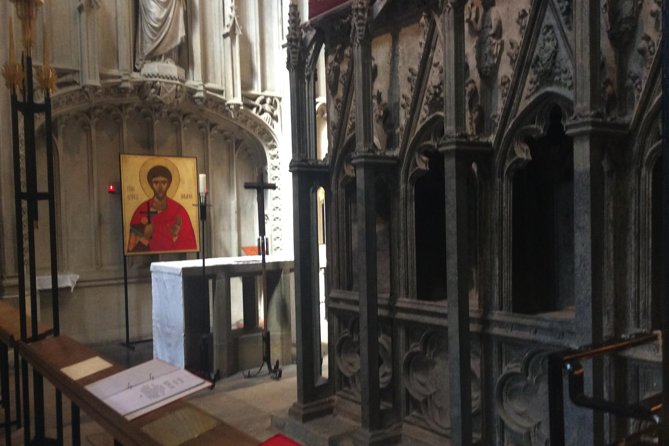
After the Roman segment, the tour turns toward earlier English periods. St. Michael’s Church dates back about 1,000 years and is described as Anglo-Saxon in origin, with the key point that it’s still used today. That continuity is what I love about it. You’re not only looking at history; you’re watching a living piece of the past remain part of daily life.
Then you’ll see the Great Gateway of the Monastery. This is one of those landmarks that works well on a private tour because your guide can frame why it feels important even when it’s not the headline attraction. Gatehouses often control traffic and signal status, and this one is treated as a standout part of the city’s hidden story.
These stops are quick, but they add a needed bridge. Without them, the day can feel like Roman ruins only. With them, the city reads like a timeline.






Roman Theatre of Verulamium and Verulamium Museum: connect what you saw to what survived
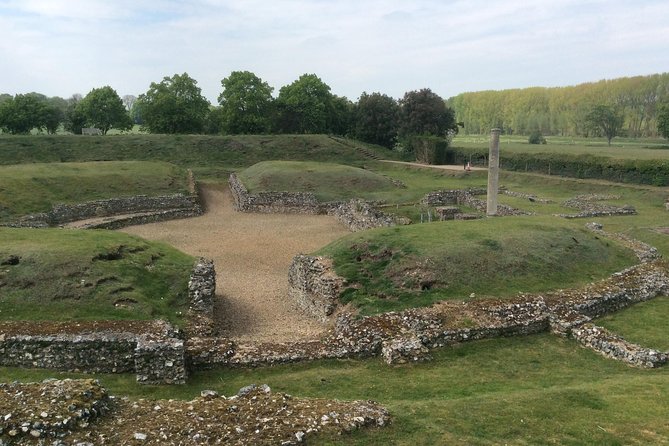
Next up is the Roman Theatre of Verulamium, including ruins and nearby shop remains. Even in fragments, theaters tell you something about how communities gathered. Your guide will help you picture the space as more than stones on grass—think performance, social life, and the Roman habit of building public spaces with purpose.
Then you step into Verulamium Museum, which is where the outside story gains context. The museum is highlighted as having lots of Roman objects discovered in the park and city, and it lasts about one hour. That time matters. One of the biggest mistakes people make with Roman sites is skimming the artifacts and leaving with only atmosphere.
In the museum, I’d focus on two things:
- How the objects reflect everyday life, not just major monuments
- How the items found around the park connect to what you already saw on foot
St Albans Cathedral: the pilgrimage story and a smart-casual requirement
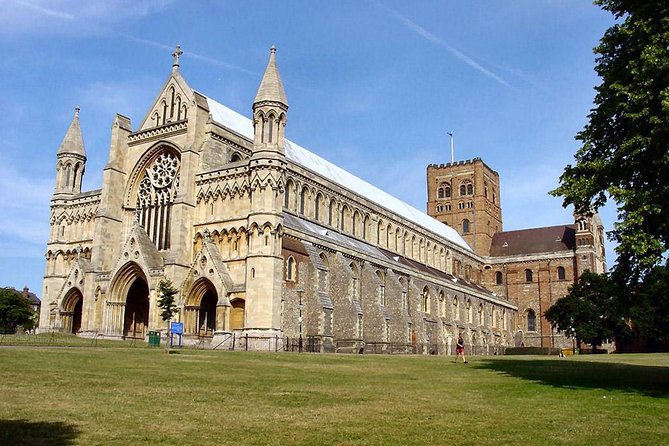
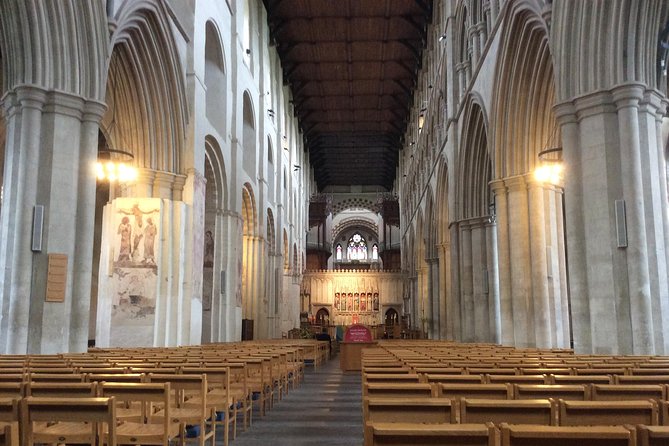
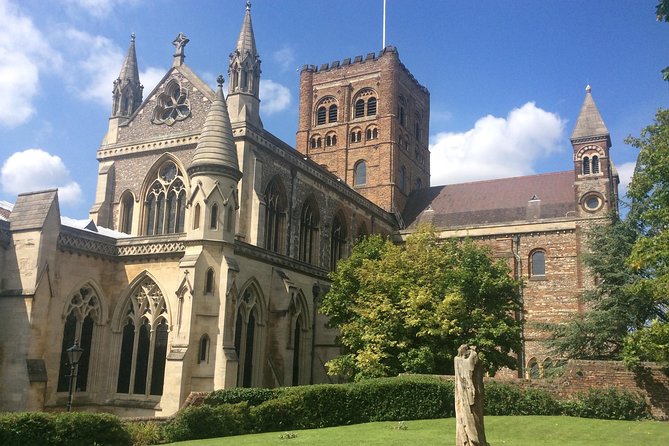
This is the longest single stop: about 1 hour 20 minutes at St Albans Cathedral, and it’s included in the tour. The cathedral is described as one of the oldest Christian sites in England. It ties into the city’s earliest Christian martyr story from Roman times, and it also carries pilgrimage importance.
It’s also tied to major shifts in English religious history, including the period when the abbey became less central after King Henry VIII. That gives the building more than a beautiful backdrop value—it’s a way to understand why St Albans mattered to the nation, not only to locals.
Dress code note: the tour specifies smart casual for entrance into the Abbey Cathedral area. If you show up in things that are too casual, you might get turned away or asked to adjust. Better to plan ahead and avoid friction.
Ye Olde Fighting Cocks, the market, and little time-markers you’ll actually remember
Not every stop is a big-ticket monument, and that’s a good thing. St Albans works because it has small moments.
You’ll stop at Ye Olde Fighting Cocks, described as a contender for the oldest inn in Britain, serving patrons not long after the Romans. Even if you don’t go inside for a drink, the point is that the city’s story continues in everyday places.
Then you’ll have time at St Albans Market (when it runs). The schedule gives you about 15 minutes, enough to see how the city feels and spot what local life looks like.
You’ll also encounter the Verdun Tree, a living reminder from World War I. It’s short—about five minutes—but it’s the kind of pause that makes a historic day feel human. Finally, you’ll pass the St Albans Clock Tower, built in 1403, noted as the only free-standing belfry in Britain. It’s a quick look, and it’s listed as not included for admission.
Practical tip: if you want photos, do it at the market and cathedral edges. The Roman and museum stops can be more information-heavy, so you’ll want your attention there.
Price and value: is $377.07 per person worth it?
At $377.07 per person, this tour isn’t the budget option. But the value case is fairly clear: you’re paying for a guided day that includes hotel pickup and drop-off, a private experience, and entry tickets for the major stops.
What you’re getting that self-guided travel can struggle with:
- A connected story across Roman, Anglo-Saxon, medieval, and later periods
- Time saved on figuring out what’s worth seeing and when
- A guide who can answer questions while you’re standing in front of the actual remains
The included sites matter too. The plan covers the Roman mosaic and hypocaust, St Michael’s Church, the Roman Theatre, the Verulamium Museum, and St Albans Cathedral, with tickets included for those. That’s where the money often goes when you plan separately.
The two cost considerations I’d keep in mind:
- Return train fare (about £15) is not included
- You may want to budget for food and drinks, since those aren’t included
If you’re traveling as a small group and want someone to handle the day’s flow, I think it’s easier to justify than it sounds.
The guide makes the difference (Kevin’s impact)
One theme from recent experiences is the guide’s energy. A guide named Kevin is singled out for enthusiasm and for knowing the city from Roman times through the present. That matters more than people expect. On a private walking tour, the best guides don’t just recite dates—they connect places so the route feels like one story.
Kevin is also described as willing to keep going as long as people wanted, and accommodating when energy levels dipped. That’s useful for your planning because a city like St Albans includes hills. If someone in your group tires out, the guide being flexible can keep the day enjoyable rather than exhausting.
If you value guidance, this tour’s guide-driven approach is one of the main reasons to choose it over a DIY plan.
Who this private St Albans Roman tour suits best
I’d steer you toward this tour if:
- You want a Roman and medieval day without picking through guidebooks
- You prefer in-person context at real sites like the mosaic, museum, and cathedral
- You like the feel of a city that’s compact but layered, and you don’t mind walking
It’s also a good fit for couples or small groups who want a private rhythm instead of matching pace to strangers.
If your group includes anyone with mobility issues, the walking and old uneven areas could be challenging. The tour operates in all weather, so you’ll still be out in the elements—plan for that.
Should you book the Roman City of St Albans private tour?
If your goal is to get beyond a quick look and actually understand how St Albans became the city it is, I think you should book. The blend is strong: Roman remains (Verulamium), indoor context (museum), and a cathedral that explains why this place became important beyond its Roman footprint.
Skip it only if you want a totally self-guided, slow and flexible day with no structure. This is planned and timed, and it’s best when you’re ready to follow a route and let a guide do the connecting.
FAQ
FAQ
How long is the St Albans private tour?
It runs for about 6 hours.
Do I get hotel pickup and drop-off?
Yes. Hotel pickup and drop-off are included.
Are entry tickets included?
Tickets are included for the stops where admission is listed as included, including St Albans Cathedral, St Michael’s Church, the Roman Theatre of Verulamium, and Verulamium Museum. Some stops are listed as free.
Is there food included?
No. Food and drinks are not included.
What should I wear for the cathedral?
The dress code is smart casual for entrance into the Abbey Cathedral area.
What is the cancellation policy?
You can cancel for a full refund if you cancel at least 24 hours before the experience’s start time. Free cancellation is offered, and confirmation is subject to availability.