REVIEW · LONDON
Walking Tour in London with Tower Bridge and St Pauls Cathedral
Book on Viator →Bookable on Viator
London’s Thames walk starts with fire. This route strings together landmark moments and quiet detours, from the Monument to St Paul’s Cathedral. What makes it especially fun is the mix of outdoor icons, photo-friendly pauses, and a guide who can adjust the pace to your interests.
I especially like how it includes both big-name sights and calmer pockets, like St Dunstan in the East and the market time at Borough Market. Another win for me is the flow of the day: you’re not just staring at buildings, you’re walking through how the city rebuilt itself and kept evolving. The main drawback to consider is that a few of the most famous stops are outside-only, so if you want lots of inside time or ticketed entry, you’ll need a separate plan.
In This Review
- Key Highlights Worth Your Time
- Monument Station Start: The Great Fire Column and a 311-Step View
- St Dunstan in the East: A WWII Ruin That Became a Quiet Garden
- Tower of London Outside Stop: Royals, Prison Life, and Ravens
- Tower Bridge Crossing: Views, Photo Angles, and the London Bridge Mix-Up
- Borough Market: Food Market Energy Without Ticket Hassles
- London Bridge History: The First Bridge Over the Thames
- Southwark River Walk: Drake’s Replica Galleon and an Old Prison Story
- Shakespeare Steps: Theatre Replica Walk-By
- The Old Power Station Art Stop and the Wobbly Bridge Angle
- St Paul’s Cathedral Finale: Admire the Dome Without a Ticket Detour
- Price, Timing, and Real Value at This $164.61 Per Person
- Who Should Book This Walk (and Who Might Not Love It)
- Should You Book This Tour?
- FAQ
- How long is the walking tour?
- Where does the tour start and where does it end?
- What is the price per person?
- Is a mobile ticket used?
- Is the tour offered in English?
- Are tickets included for Tower of London, Tower Bridge, and St Paul’s?
- Can I climb the Monument steps?
- What is the cancellation window?
Key Highlights Worth Your Time
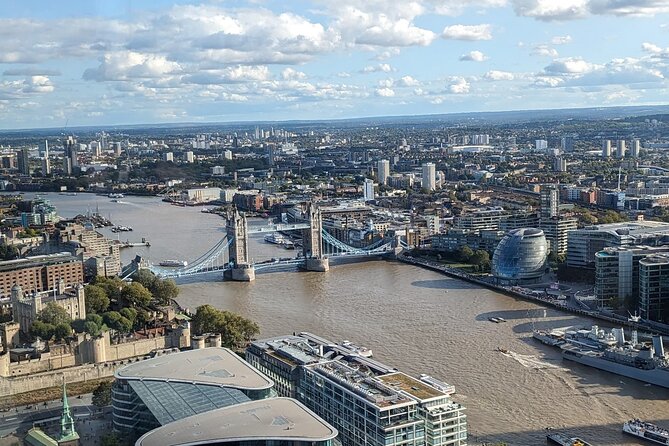
- Monument at the start: a Great Fire landmark with an optional 311-step climb for skyline views.
- St Dunstan in the East: WWII-damaged church turned into a calm garden—great for photos and a breather.
- Tower Bridge plus London Bridge comparison: you’ll stop for the views and understand why people mix them up.
- Borough Market food energy: a free, sensory stop with time to grab a bite if something calls your name.
- Southwark river walk variety: Drake’s ship replica, an old prison story, and Shakespeare’s theatre replica.
- Finale at St Paul’s: the tour ends outside so you can admire the dome and details at your own speed.
Monument Station Start: The Great Fire Column and a 311-Step View
Most walking tours in London start with a grand scene. This one starts with context. You meet at Monument Station, right by King William Street, which sets the tone: you’re about to learn how London rebounded after disaster.
The walk begins at the Monument, a tall column built to commemorate the Great Fire of 1666. Even before you get into the bridge and cathedral parts of the day, the guide frames why this site matters. You’ll learn what the Great Fire changed, and why London rebuilt in a way that shaped everything you see later.
There’s also an optional challenge. If you want the payoff, you can climb the 311 steps for one of the better skyline views in London. This is one of those choices that makes the tour feel personal: you either take the stairs and earn the viewpoint, or you stay with the street-level storytelling. Either way, it’s a strong launch, and the timing works because you’re starting near central transport.
Practical tip: wear comfortable shoes. This is mostly walking, and the day mixes flat sections with some gentle ups and downs as you move along the river area.
You can also read our reviews of more tours and experiences in London.



St Dunstan in the East: A WWII Ruin That Became a Quiet Garden
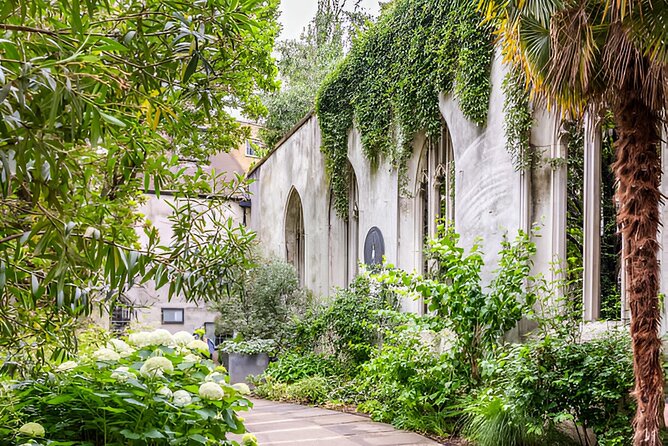
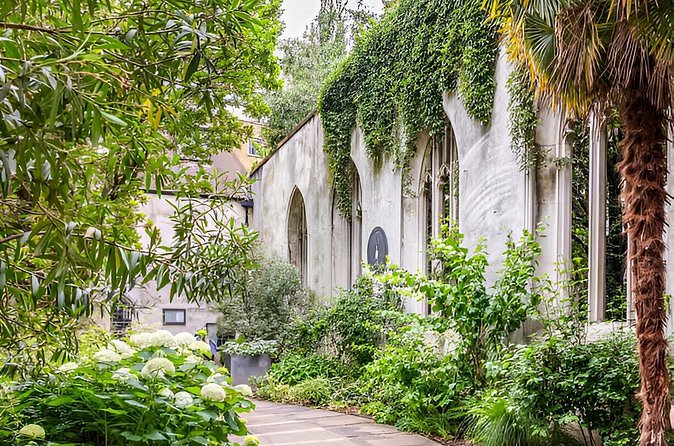
Then comes one of the most satisfying kinds of London stops: a place that feels like you found it yourself. St Dunstan In The East is a peaceful church site that was destroyed during World War II and later became a garden.
The key here is the shift in mood. After the Monument’s memorial intensity, you step into something quiet and green. It’s a short stop—about 10 minutes—but it’s long enough to reset your brain and get photos without fighting crowds.
There’s no admission ticket for this part, so you can simply walk in and enjoy the calm. If you’re the type who likes balance—big monuments plus small still moments—this stop is one of the best reasons to choose this route.
If the weather is rough, this garden pause can still be worth it. It won’t feel like you’re forcing the day to go on in bad conditions.
Tower of London Outside Stop: Royals, Prison Life, and Ravens
Next up is Tower of London, one of the city’s most recognizable names. But here you’re not waiting in ticket lines or trying to fit everything into one day. You stop outside, take a good look, and let the guide explain the layers.
The story arc matters. You’ll learn how it changed roles over time—from royal palace to prison—and why it became such a famous tourist magnet. You’ll also hear about the ravens and how they’re tied to the idea of protection for the kingdom.
This is a smart way to experience the Tower if you don’t want the whole day consumed by one ticketed attraction. It gives you enough background to make the exterior feel meaningful, not just dramatic.
Consideration: if you’re expecting deep museum-level detail inside the fortress, you may feel your curiosity tugging at the Tower’s doors. Since entry isn’t included for this stop, you’ll have to decide whether to add that later.
Tower Bridge Crossing: Views, Photo Angles, and the London Bridge Mix-Up
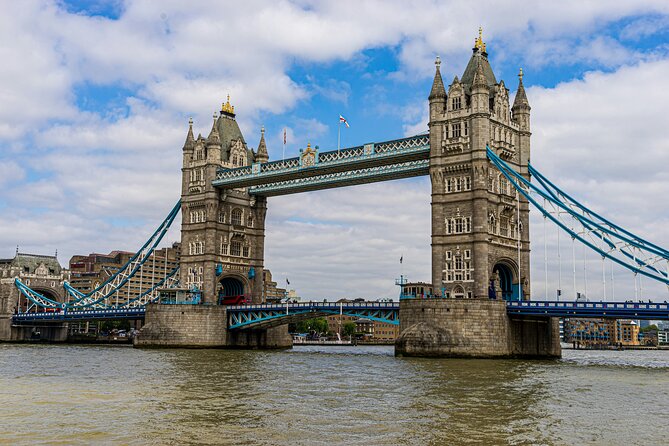
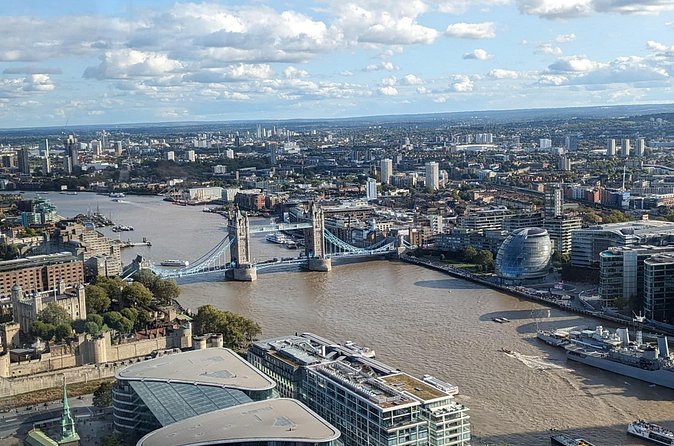
Now you get to do what London does best: make you stop and look. You head to Tower Bridge, and the walk includes crossing it. This matters because the bridge is not just something you see; you experience it as you move across the Thames.
You’ll also clear up a classic confusion. Tower Bridge is often mistaken for London Bridge, and the guide helps you understand the difference. That’s more than trivia. It changes how you read the city. Once you understand which bridge is which and how they’re positioned, your mental map locks in fast.
The stop time is about 15 minutes, and you’ll get views in multiple directions as the river opens up around you. Since admission isn’t included here, your time is focused on the essentials: the walk across, the photos, and a bit of explanation so you’re not just guessing at what you’re looking at.
Practical tip: if you’re photo-focused, plan for one side you prefer. The Thames views can look different depending on which angle you’re standing at, so don’t just snap randomly while walking.
Borough Market: Food Market Energy Without Ticket Hassles
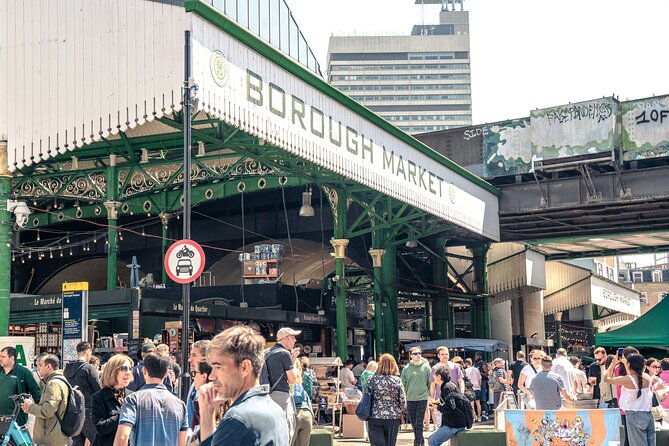
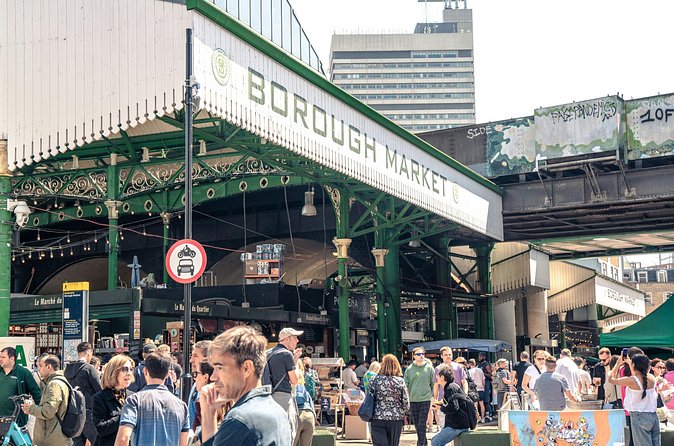
From bridges to mouths: you make your way toward Borough Market, which is one of the best places in London to feel the city’s daily rhythm. The tour passes through the market area for about 30 minutes.
This stop is free, and that’s part of the value. You get to smell spices, see street-level food action, and maybe grab a quick bite if something catches your eye. The market part of this itinerary is useful because it breaks up the “monument brain” you’ve been running since the Monument—now you’re in the present tense.
Even if you don’t buy anything, it still works. Markets are social spaces. You get people-watching, color, and a sense of scale that you don’t get from photos alone.
If you want to eat: go with small and simple. You don’t have unlimited time on the tour, and you’ll want energy for the final stretches toward St Paul’s.






London Bridge History: The First Bridge Over the Thames
After Borough Market, the route includes a quick stop at London Bridge—about 10 minutes—with a big takeaway: it was the first bridge built across the Thames.
This stop is where the guide’s job really shines. The bridge you see today is only part of the story. You’ll hear how London Bridge used to have houses, shops, and even a chapel on top. That detail helps you understand how London grew around river crossings, not away from them.
It also reinforces a theme that runs through the whole walk: London keeps reinventing itself, but old functions don’t vanish. They change form.
If you’re the kind of traveler who likes to connect dots, this is a satisfying checkpoint. You’ll walk away with more meaning than you came in with.
Southwark River Walk: Drake’s Replica Galleon and an Old Prison Story
Once you move along the river toward Southwark, the tone changes again. The itinerary opens into a longer stretch of river views mixed with historic dock vibes and modern edges—old warehouses and newer glassy buildings close together.
One of the standout features here is a pass by a full-size replica of Sir Francis Drake’s 16th-century ship—the one associated with his voyage around the world. You’ll hear about its journey and how the replica ended up docked in Southwark.
Right after that, you walk past one of London’s oldest prisons. This part comes with a cautionary edge. You’ll learn about its dark history, some famous prisoners tied to it, and the tough conditions. You’ll also get an angle that surprises many people: the prison was run as a money-making business.
This sequence is valuable because it gives you texture. It shows London isn’t only temples and towers. It’s also commerce, punishment, and strategy—power expressed in buildings and systems.
Shakespeare Steps: Theatre Replica Walk-By
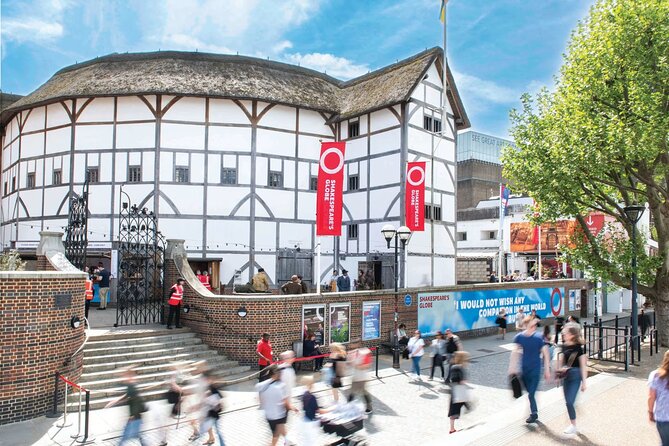
Then you’ll come across an exact replica tied to Shakespeare’s plays—an exact replica of the original theatre where the plays were performed. You’ll walk past it and hear about how it was rebuilt.
The time spent here is short, but it works because the walk has been moving in time periods: Great Fire, WWII, early modern London, and then the Shakespeare connection. It’s like watching London’s timeline compress into one morning or afternoon.
If you’re a Shakespeare fan, this stop can spark a deeper connection to the stories you already know. If you’re not, it’s still a memorable marker of how London has celebrated theatre for centuries.
The Old Power Station Art Stop and the Wobbly Bridge Angle
This portion of the walk gives you the modern London you want on a day like this. You pass a big art museum in an old power station—the contrast of industrial structure and gallery space fits the route’s theme of rebirth.
Next comes one of those London quirks you’ll remember later: a footbridge nicknamed the Wobbly Bridge. The guide explains why it earned that nickname, and if you’re a Harry Potter fan, you might recognize it from a scene involving the Dementors.
Even if the pop-culture link isn’t your thing, the photo opportunities here are solid. You’ll get panoramic views and skyline angles, and this part helps you build toward the day’s finale.
Practical tip: if you’re prone to motion sensitivity, note that “wobbly” bridges are usually designed to look good while still feeling springy underfoot. Go slow, steady yourself, and take your photos when you’re planted.
St Paul’s Cathedral Finale: Admire the Dome Without a Ticket Detour
The walk ends at St Paul’s Cathedral, outside in the churchyard. This is the dramatic payoff: a chance to take in one of London’s most breathtaking buildings without trying to squeeze museum hours into your schedule.
You’ll learn how the cathedral has stood through fire, war, and time. The dome is the obvious visual, but the guide also points you toward architectural details so it feels more like a living monument than a postcard.
Admission isn’t included for the end stop, so you’re not locked into an entry schedule. That’s a plus. It means you can choose to continue exploring on your own after the tour wraps.
If you’re trying to get the most from your day, I’d suggest planning what you want next after the tour: either a calmer sit-down nearby or a quick decision about whether you want to go inside St Paul’s on a different time window.
Price, Timing, and Real Value at This $164.61 Per Person
At $164.61 per person for a 3 to 4 hour private walking tour, the value comes from how the time is structured. This isn’t a long, slow slog. It’s designed to hit major highlights—Monument, Tower Bridge, Borough Market, St Paul’s—while also keeping the breaks meaningful.
The biggest value isn’t the list of stops. It’s the human element: the guide. In past experiences, the guide has been described as fun, engaging, and personal—someone like Maggie (also shown as Magdalena in one case) who adjusts to what you care about and gives useful tips for moving around London.
And because it’s private (only your group), you’re not dealing with a giant herd. That matters on a walking itinerary with lots of photo moments and a few outside-only stops, where timing can get awkward in a big crowd.
Average booking timing is also worth noting. This tour often gets booked about 93 days in advance, which suggests people plan it like a core London activity. If you have fixed dates, booking early makes sense.
What about language? It’s offered in English, and that’s important because the tour’s stories are the product. If you want to follow details at pace, English keeps it smooth.
Who Should Book This Walk (and Who Might Not Love It)
This is a strong match if you want:
- A guided, story-driven walk through central London’s key landmarks
- A good balance of famous sights and calmer pauses
- Outside viewing plus enough context to make the city feel readable fast
- A guide who can make the day feel like you’re exploring with a friend, not marching through facts
It might be less ideal if:
- You want lots of inside ticketed time at the Tower of London, Tower Bridge, or St Paul’s. Those parts are listed as not included, and the itinerary leans toward outside stops.
- You prefer very long market time or museum time. Borough Market is a pass-through, not a deep food workshop.
If you’re doing London for the first time and want to understand the city’s layers quickly, this works well. If you’re returning and already know the classics, you’ll still get value from the connecting stories and the less-obvious rhythm.
Should You Book This Tour?
Yes, if your goal is to walk London’s core and come away with a clearer sense of how it rebuilt itself and kept reinventing. The itinerary is built to deliver both “wow” moments (Tower Bridge, St Paul’s) and breathing space (St Dunstan in the East, Borough Market). It’s also priced like a quality guided experience, and the private format helps justify the cost.
Before you book, decide one thing: do you want your day to be guided walking with smart outside stops, or do you want mostly ticketed interiors? If you’re happy with the first option, you’ll likely love how the route makes the city feel personal and practical in one go. If you’re craving deep interior time, plan those separately.
FAQ
How long is the walking tour?
The duration is about 3 to 4 hours.
Where does the tour start and where does it end?
It starts at Monument Station (King William St, London EC4R 9AA) and ends at St Paul’s Cathedral (St. Paul’s Churchyard, London EC4M 8AD).
What is the price per person?
The price is $164.61 per person.
Is a mobile ticket used?
Yes, the tour includes a mobile ticket.
Is the tour offered in English?
Yes, it’s offered in English.
Are tickets included for Tower of London, Tower Bridge, and St Paul’s?
No. Tower of London, Tower Bridge, and St Paul’s are listed as admission not included, and the tour description indicates viewing during the stops.
Can I climb the Monument steps?
Yes. There’s an optional climb of 311 steps for skyline views.
What is the cancellation window?
Free cancellation is available up to 24 hours before the experience starts for a full refund. If you cancel less than 24 hours before, the amount paid is not refunded.