REVIEW · LONDON
Wildlife Photography Workshop in Richmond Park in London
Book on Viator →Operated by Photography Workshops by Matthew Williams-Ellis · Bookable on Viator
Deer and camera lessons in London. This Richmond Park wildlife photography workshop gets you learning in real nature without a long trip outside the city, with famous Red and Fallow deer as your subjects. You’re also planning your shots with one big advantage: evening lighting is built into the session.
I like that the teaching works for different levels. You can pick up the basics or sharpen what you already know, and the focus is not only on camera settings, but on your thinking—composition, framing, and how to spot opportunities before they vanish.
One thing to consider: you’ll need to be smart about timing to leave the park. One past participant had trouble getting out because some gates were locked around closing time, so build in a buffer before you start heading back.
In This Review
- Key things to know before you go
- Richmond Park wildlife photo workshop: why this feels like a smart London escape
- The 3-hour rhythm: how the session likely plays out
- In-the-field shooting: deer, trees, lakes, and better composition
- Evening light and bird settings: when the technical help pays off
- How the guide teaches: composition plus a proactive mindset
- Logistics that actually affect your photos (and your sanity)
- Getting to the meeting point
- Walking and physical comfort
- The gate-closing reality
- Price and value: is $161.56 worth it?
- Who this workshop is best for
- Should you book this Richmond Park wildlife photography workshop?
- FAQ
- Where does the workshop start?
- How long is the workshop?
- What wildlife will we focus on?
- How big is the group?
- What language is the workshop offered in?
- What if the weather is bad?
- Is there any accessibility or fitness guidance?
Key things to know before you go
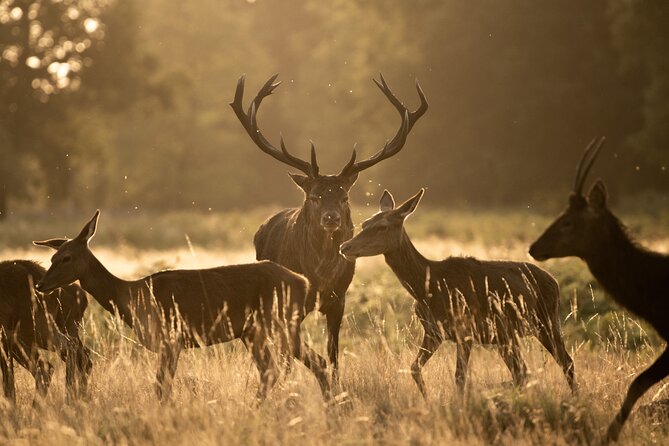
- Richmond Park wildlife, close up: Red and Fallow deer plus chances at birds
- Evening light: better conditions for photography and more “golden hour” vibes
- Small group (max 8): more time for questions and hands-on help
- Real coaching in the field: composition, framing, and practical camera guidance
- Action-focused skills: tips for birds (including manual settings for birds in flight, based on past participants)
- Meet at Queen’s Rd: you make your own way to the entrance to meet your guide
Richmond Park wildlife photo workshop: why this feels like a smart London escape
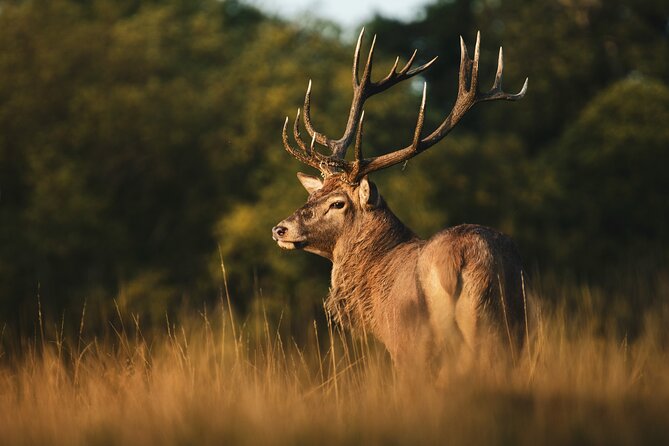
Richmond Park is one of those rare London places where the scenery does not feel like London. You trade traffic and sidewalks for open parkland, trees, and animals that don’t care about your schedule.
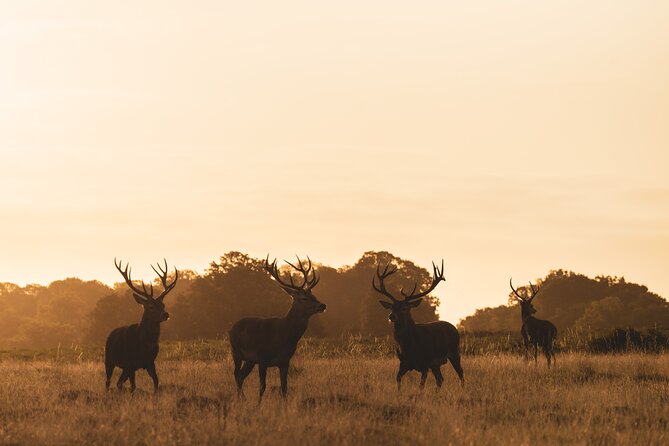
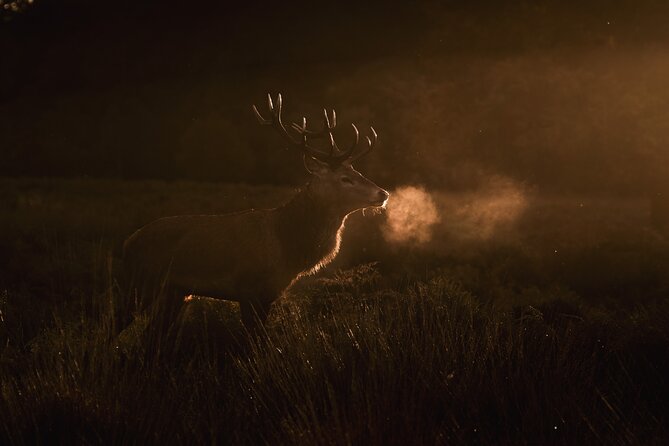
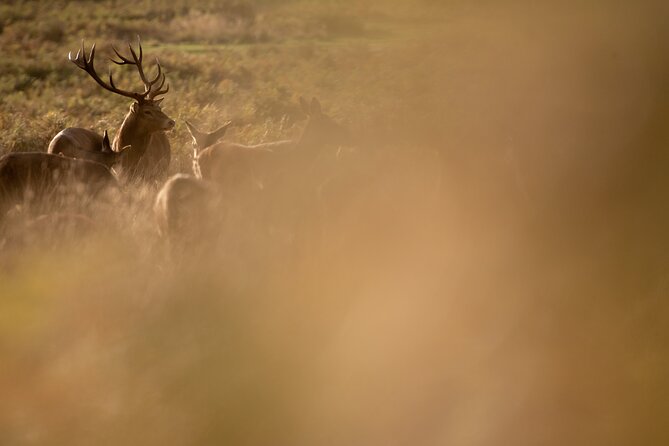
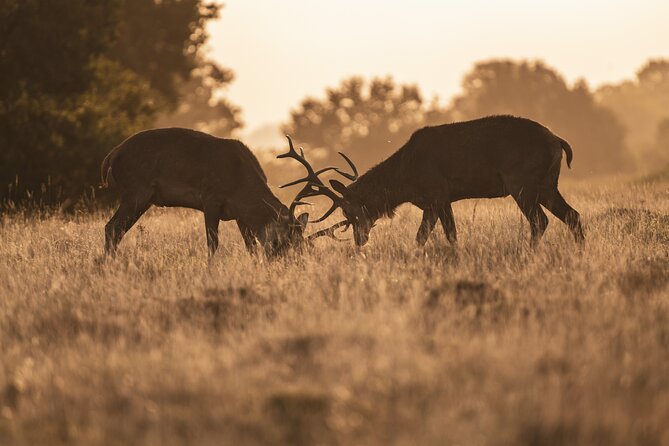
What makes this workshop practical is that it’s designed around actual wildlife backdrops you can use right away. You’ll be working with Red and Fallow deer in the Royal Park, plus scenery like silver birch tree copses, lone oak trees, ferns, and lake views. That matters because wildlife photos aren’t just about having a subject. It’s about building a scene where your subject looks intentional inside the frame.
You’ll also get a mental shift that’s easy to miss in typical photo meetups: you’re not only learning how to press the right buttons. You’ll practice how to compose with a plan—so when an animal appears, you’re ready instead of scrambling.
You can also read our reviews of more tours and experiences in London.
The 3-hour rhythm: how the session likely plays out
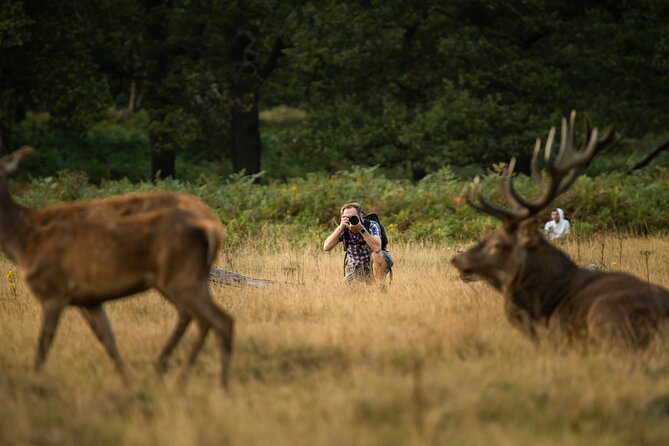
The workshop runs about 3 hours, and it ends back at the meeting point. With a timeframe like that, the structure tends to be “teach in motion.” You learn short chunks, then apply them quickly while you’re still in the right light.
You start at Queen’s Rd, Richmond TW10 6JJ, and you meet your guide there. You make your own way into the park to match up, which is common for small-group experiences in London. The upside: you’re not stuck on a big bus doing nothing. The downside: you should arrive early enough to find the correct meeting point without rushing.
Also keep in mind the workshop is described as an evening session for the best lighting. That’s great for photos. It also means you should plan your departure like an adult who respects closing times (more on that soon).
In-the-field shooting: deer, trees, lakes, and better composition
The core of the experience is hands-on instruction “in the field.” That means you’re learning where wildlife actually shows up, and you’re not just sitting with a slideshow.
Here’s what you can expect to work with:
- Red and Fallow deer as your main wildlife subjects
- Tree scenes such as silver birch copses and lone oak trees
- Natural textures like ferns
- Water elements like lake views that can add mood and depth
Now, why is that more valuable than a generic photography walk? Because deer are usually moving slowly—or paused long enough to try compositions. That gives you time to experiment with framing. You can try tighter shots for face detail, wider shots that place the deer in context, and angles that use trees to break up the background.
The instructor also emphasizes thinking about photos, not just capturing them. In plain terms: you’ll be guided to develop a “photographic eye” that looks for patterns—where light falls, where the background gets clean, where the trees create separation, and where a deer’s pose will look natural rather than accidental.
Evening light and bird settings: when the technical help pays off
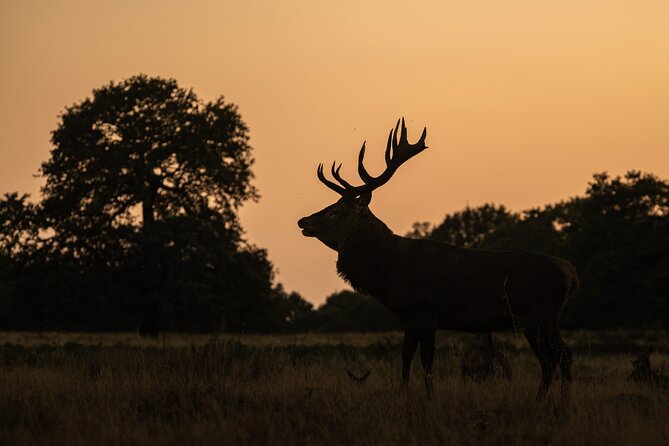
Evening is where a lot of wildlife photography gets easier. The light is less harsh, shadows are softer, and you can often get richer tones without turning your photos into squint-fest.
This workshop leans into that. You’ll be taught around lighting and framing as you’re actively shooting. And if you want action, you’re not stuck only with patient deer. Past participants specifically reported seeing birds such as kestrels, woodpeckers, and a little owl, and that the instructor helped them with manual settings for birds in flight.
I love that this kind of coaching goes beyond theory. When someone helps you set up for a moving subject, you stop guessing. You start building a workflow you can use later in any park, any season, any camera situation.
Even if you don’t get every bird, you still leave with a practical approach: how to adjust settings for the way wildlife moves, not just for the way wildlife looks.
How the guide teaches: composition plus a proactive mindset
The instructor behind the workshop is Matthew Williams-Ellis (often referred to as Matt). A big theme from people who’ve done this is how he handles mixed skill levels. In a group of up to 8, that’s a real advantage. You can ask questions, and you can actually get feedback.
From what participants described, his teaching blends:
- Technical guidance (camera setup and settings)
- Composition and framing tips
- Guidance on light and how to place your subject
- A focus on thought process—what to look for before the shot happens
This matters because wildlife photography is a timing game. Animals don’t pose on demand. If you only learn settings, you’ll still miss shots waiting for the perfect moment to occur. If you only learn “art,” you’ll still miss focus or end up with motion blur. This workshop targets the middle: the system that connects your camera choices to your composition decisions.
You’ll also notice the coaching isn’t just “point your lens here.” It’s about building a proactive mindset—so you can respond when conditions change, like lighting shifts, animals move position, or the background suddenly gets messy.

Logistics that actually affect your photos (and your sanity)
This is where people can get tripped up, and it’s worth planning ahead.
Getting to the meeting point
You meet at Queen’s Rd, Richmond TW10 6JJ. The workshop does not include a pickup described in the info you provided, so plan to arrive under your own steam. The good news: it’s near public transportation, so you should be able to reach it without a car.
Walking and physical comfort
The activity calls for moderate physical fitness. Richmond Park is walkable, but you’re also outside and moving with a group while looking for opportunities. Wear shoes you’re happy to walk in for a few hours.
The gate-closing reality
Here’s the honest consideration: one past participant said they had trouble getting out because many gates were locked when they tried to leave, despite asking about gate closure time. Even if that’s not your situation, it’s a useful warning. Go with a conservative plan.
My advice: don’t treat leaving as “we’ll figure it out.” Start your return early enough that you’re not racing gates at the last second. Build in buffer time before the workshop ends, especially since this is an evening session.
Price and value: is $161.56 worth it?
At $161.56 per person for about 3 hours, the price is not low. But you’re paying for something that’s hard to replicate on your own: a small group with focused instruction at the exact location where you’ll shoot.
Here’s where the value comes from:
- Small group size (max 8) means less time waiting and more time getting help
- In-the-field teaching means you learn while applying
- The instructor covers both the how (settings, framing, lighting) and the why (composition and mindset)
- Wildlife opportunities in Richmond Park can reduce the need to travel farther for a “nature” photo session
If you’re a total beginner, you may find this cost easier to justify than buying a lot of gear or spending hours on your own without guidance. If you’re already comfortable technically, you’re still likely to benefit because the session includes composition, timing, and field decision-making.
Who this workshop is best for
This is a strong fit if:
- You want to photograph deer and birds in a real London park
- You’re ready to learn or improve camera basics (or refine what you already do)
- You want a coach to help with composition, framing, and lighting
- You prefer a small group and hands-on feedback over a large tour format
It may be less ideal if:
- You hate walking for a few hours outdoors
- You need strict control over the exact route and timing inside the park (because wildlife photography requires flexibility)
- You’re counting on guaranteed wildlife sightings in a specific way (the park is wildlife-based, so the result depends on the day and conditions)
Should you book this Richmond Park wildlife photography workshop?
I’d book it if you want an organized way to learn wildlife photography in a setting that actually delivers subjects—deer, trees, lake views, and, on some days, birds. The biggest selling point is the mix of technical help plus composition and mindset, taught by Matthew Williams-Ellis with coaching designed for different abilities.
I’d think twice if evening park logistics could stress you out, especially around gate closing. If you’re the type who likes to be back at a time on the dot, simply give yourself extra buffer and you’ll likely be fine.
Overall, this is one of those London activities that feels like it gives you both a good photo plan and a better way to look at the world through your camera. If that’s what you want, it’s a solid use of a half-day.
FAQ
Where does the workshop start?
The workshop starts at Queen’s Rd, Richmond TW10 6JJ, UK.
How long is the workshop?
It lasts about 3 hours.
What wildlife will we focus on?
You’ll focus on Red and Fallow deer, and there are also wildlife photo opportunities like birds.
How big is the group?
The workshop has a maximum group size of 8.
What language is the workshop offered in?
The workshop is offered in English.
What if the weather is bad?
This experience requires good weather. If it’s canceled due to poor weather, you’ll be offered a different date or a full refund.
Is there any accessibility or fitness guidance?
It’s listed as requiring moderate physical fitness. Service animals are allowed, and it’s near public transportation.
If you want, tell me your camera model (or whether you shoot on a phone vs a camera), and I’ll suggest a few practical things to prepare so you can get the most from the manual settings and field coaching.