REVIEW · LONDON
Wizarding London: Interactive Game & Magical Walking Tour
Book on Viator →Operated by Questo · Bookable on Viator
London becomes a game, not just sightseeing. This interactive walking tour turns major landmarks into clue stations, and it’s designed to feel flexible since you can start whenever you want and pause whenever you need. I especially like the offline gameplay (no internet required) and the fact that it’s truly self-led—no guide pressure, no crowd herd. One thing to consider: the wizarding feel is more general and puzzle-led than strictly Harry Potter–specific, so hardcore fans may want to keep expectations a bit grounded.
You’ll cover a classic stretch from Whitehall to the West End, hitting stops like Trafalgar Square, the atmospheric Cecil Court alley area, and the Palace Theatre area tied to the wizarding stage phenomenon. The game pushes you to slow down and read the streets, not just pass them. If you’re traveling with kids, plan for the text-heavy parts of the app and bring a calm approach to shared reading and device time.
In This Review
- Key Highlights You’ll Actually Feel While Walking
- Wizarding London in 3 Hours: How This Self-Led Format Really Works
- Price and Value: What $7.21 Buys You in London
- Route Plan: From Whitehall to the West End Puzzle Loop
- Stop-by-Stop: What Each Location Adds to Your Quest
- Horse Guards Parade at Whitehall: Start With Ceremony and a Clear Lead-In
- Trafalgar Square: Riddles in the Middle of the Action
- Cecil Court: The Alley Energy That Fans Know Immediately
- St. Clement Danes Church: A Classic London Anchor for the Mid-Walk Shift
- Palace Theatre Area: Stage-Play Magic Without the Ticket Hassle
- Seven Dials: Finish in a Quirky, Puzzle-Friendly Neighborhood Vibe
- The App Experience: Text, Timing, and How to Avoid Frustration
- Who Should Book This Wizarding London Quest (And Who Might Pass)
- Final Verdict: Should You Book Wizarding London?
- FAQ
- FAQ
- Where does the Wizarding London game start and end?
- How long does the tour take?
- Do I need an internet connection?
- Can I start at any time?
- Is there a physical tour guide with you?
- Is it private, or will I join other groups?
- Is it free for kids?
- What language is it offered in?
- Is it easy to fit into a day with public transport nearby?
Key Highlights You’ll Actually Feel While Walking

- Offline-friendly gameplay, so you can keep data use low while you wander
- Start-and-stop flexibility that lets you shop for a wand moment and rejoin instantly
- Movie-inspired street choices like Cecil Court and Goodwin’s Court–area alley vibes
- Puzzle difficulty that stays in the middle, not brain-melting, not too easy
- No physical guide means a calmer experience, but you’ll rely on the app for the narrative
- A West End stop near the Palace Theatre, tied to the award-winning wizarding stage play
Wizarding London in 3 Hours: How This Self-Led Format Really Works

This is a scavenger hunt you run yourself. You get the mission, you follow the clues, and you move from landmark to landmark at your own speed. The tour is listed at about 3 hours, but in practice you can often finish faster or slower depending on how many times you stop to read, think, and take photos.
What makes this style useful in London is simple: you control the pacing. Traditional tours can feel like you’re walking to someone else’s schedule. Here, you can pause for a snack, detour for a quick shop, or slow down if a riddle makes you think. If you don’t want the stress of keeping up with a group, that freedom matters.
You’re also not locked into one start time. The experience is described as available every day and says you can start at any time that suits you, which is great when your day is already crowded with museums or theatre tickets. Just keep in mind the game still has you moving between real outdoor locations—so you’ll want comfortable shoes and a sensible pace.
You can also read our reviews of more walking tours in London



Price and Value: What $7.21 Buys You in London
At $7.21 per person, this one is priced like a budget-friendly activity, not a premium guided tour. The value comes from the format: you’re paying for access to the app-based game and the built-in route through central London. You’re not paying for a guide’s time, which is exactly why the price stays low.
Here’s how to think about the deal:
- If you enjoy puzzles and like walking at your own tempo, the cost feels fair.
- If you’re looking for a heavily curated, Harry Potter–only storyline with a costumed guide presence, you may feel like you paid for a game rather than a full-themed tour.
The sweet spot is families who want a fun activity that gets kids moving, couples who want a different way to see central London, and anyone who likes the idea of turning famous streets into a real-time mystery.
Route Plan: From Whitehall to the West End Puzzle Loop

The walk is set up like a loop that starts and ends back near Westminster Station. That means you don’t have to solve the logistics of where to meet later or how to get back to a final point. It’s also ideal if you’re using the Underground that day—you’re close to public transportation right from the start.
Expect a central London route with multiple landmark zones. The game’s clues guide you between:
- A ceremonial Whitehall landmark
- Big-open Trafalgar Square energy
- The alley vibe of Cecil Court area streets
- A classic church stop in the St. Clement Danes zone
- The Palace Theatre area
- The Seven Dials neighborhood area
Because it’s outdoors and the app tells you where to go, you’ll want to check the day’s weather before you start. Rain in London can be dramatic; this is still a walking game, not a sit-and-read experience.
Stop-by-Stop: What Each Location Adds to Your Quest

Below is the kind of experience each stop is built to create. Some parts lean more scenic, some more puzzle-focused, and some do a little of both.
Horse Guards Parade at Whitehall: Start With Ceremony and a Clear Lead-In
Whitehall is a strong opening choice. The Horse Guards Parade area gives you wide views and a “grand London” feel right away. Starting here works because the space is easy to orient yourself—ideal for kicking off a walking game before you get absorbed.
What I like about an opening like this is that it sets a confident tone fast. You’re not hunting for the first clue in a maze. You’re in a major area where landmarks help you keep your bearings as you begin solving.






Trafalgar Square: Riddles in the Middle of the Action
Trafalgar Square is the kind of location that makes a walking game feel like more than an app on a screen. The square’s scale helps you see where you are while you work through the clues.
This stop is also where the wizarding angle shows up in the mission design—there’s a focus on a film-inspired Death Eaters route. That’s a smart pairing: big, recognizable film-era London visuals plus a puzzle moment. Even if the story doesn’t feel like strict Harry Potter canon, the connection to movie geography can still be fun for fans.
Cecil Court: The Alley Energy That Fans Know Immediately
Cecil Court (in the broader area often linked with Goodwin’s Court) is the main “wand-and-wonder” mood-maker. This is one of those spots where you can feel why people associate certain alleyways with wizarding scenes. In the game, Cecil Court is tied to the real-life inspiration behind Diagon Alley and Knockturn Alley–style alley vibes.
This stop is one of the strongest reasons to do the tour. It turns a small street into a story setting, and it encourages you to slow down, look at the buildings, and notice details you might otherwise ignore while rushing between major sights.
St. Clement Danes Church: A Classic London Anchor for the Mid-Walk Shift
St. Clement Danes Church gives the route a more grounded, historic feel. Mid-walk is when puzzle fatigue can hit—your brain may start feeling like it’s reading a screen and walking at the same time. A church stop helps reset your attention with a clear landmark.
The upside here is practical: if your legs are getting tired, this is the kind of stop where you can pause, take in the setting, and then re-focus on the next clue.
Palace Theatre Area: Stage-Play Magic Without the Ticket Hassle
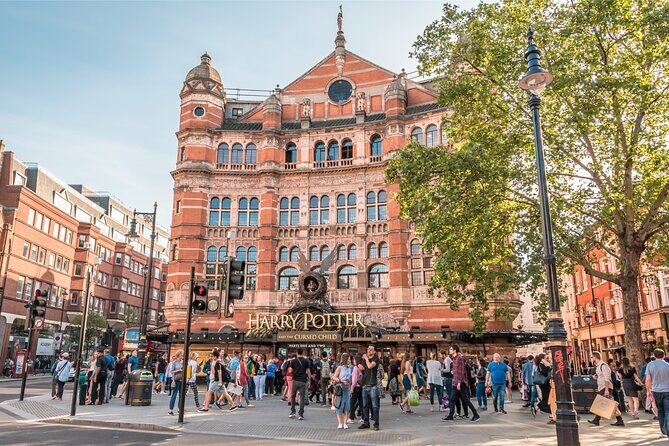
The Palace Theatre stop is a fun match to the wizarding theme. It’s linked to the award-winning wizarding stage play, and the location itself makes sense for a magical quest. It’s also a good point for a quick photo, a rest, or a wand-shopping detour—West End streets naturally invite that kind of break.
If you’re already planning to see a show that day, this stop can add an extra layer of anticipation before curtains rise.
Seven Dials: Finish in a Quirky, Puzzle-Friendly Neighborhood Vibe
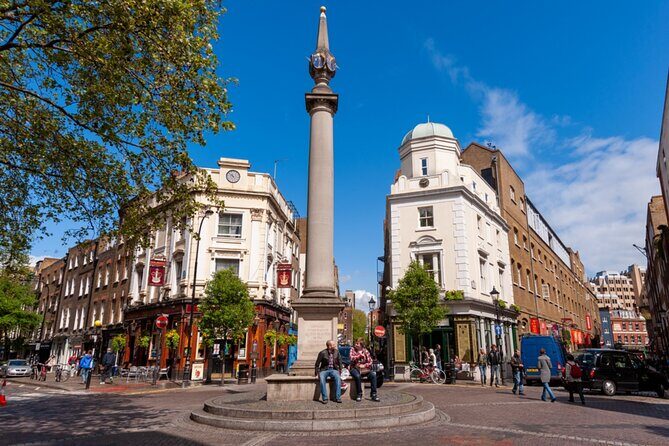
Seven Dials is an excellent closing stop because the neighborhood feels lively and slightly off-center compared to the grand formality of Whitehall. It helps the game finish with variety rather than ending in another huge open plaza.
By the time you reach Seven Dials, you’ve usually solved enough riddles to get the rhythm. At this stage, the experience can feel like a fun walk with clever checkpoints, not like work.
The App Experience: Text, Timing, and How to Avoid Frustration

Because this is self-led with an app, the biggest variable is how you handle reading and clue-solving while on the move. The game runs offline, which is a big win for London where you might otherwise burn data just to keep navigation working.
Still, a couple practical tips can make the difference:
- If you’re walking with kids, take turns reading aloud and keep breaks frequent. The app can involve a lot of text, and some families find that taxing over time.
- If a clue feels odd, don’t panic. Some puzzle moments can involve surprising reference points. A few clue types may feel like they’re loosely themed or a bit whimsical, including misdirections involving objects you might expect to match a different item.
- If you feel like you’re backtracking, it may be worth slowing down earlier. Clues often require you to confirm you’re in the right place before moving on.
Also note the physical rhythm: there’s enough walking here that “moderate physical fitness” makes sense. You’re not climbing hills, but you are covering central London distances between fixed points.
Who Should Book This Wizarding London Quest (And Who Might Pass)
I think this is ideal if you fall into one of these categories:
- You like puzzles and you enjoy figuring things out with a group.
- You want a budget-friendly wizarding-themed walk without paying for a private guide.
- You’re traveling with children who can handle phone-based clues and enjoy scavenger-hunt energy.
It may be less satisfying if you want:
- A fully Harry Potter–coded story experience all the way through.
- A guided explanation of what you’re seeing at every step.
- Minimal reading and minimal phone dependence, especially for younger kids.
One more honest point: the mission vibe isn’t always strictly Harry Potter in tone. Some players describe it as less on-the-nose and more focused on riddles than on deep franchise storytelling. If your goal is pure canon immersion, you might enjoy using the app as a fun puzzle overlay on top of your usual Harry Potter–style stops.
Final Verdict: Should You Book Wizarding London?

If you want a low-cost, self-led walking game that lets you control your pace and use offline play, this is an easy “yes.” The strongest value is that it connects famous London geography with wizarding-inspired locations—especially that Cecil Court alley-area feel—and wraps it in puzzles that many people find neither too easy nor too hard.
I’d book it when:
- You have 2–3 hours of walking time.
- You want something different from standard sightseeing.
- You’re okay with a story that’s more game-mission than full Harry Potter roleplay.
I’d skip it or choose something else when:
- You need a guide-led, deeply scripted Harry Potter storyline.
- You prefer minimal reading during your sightseeing day.
- You’re traveling with kids who get quickly disengaged by phone text and a looser magical narrative.
FAQ
FAQ
Where does the Wizarding London game start and end?
It starts at Underground Ltd, Westminster Station, Bridge St, London SW1A 2JR, UK, and it ends back at the meeting point.
How long does the tour take?
The experience is listed as about 3 hours. Your pace can change how long you spend at each stop.
Do I need an internet connection?
No. The game is designed to be played offline, so you do not need internet connection to play.
Can I start at any time?
Yes. The experience is described as flexible, letting you start whenever it suits you, and it’s also listed as available daily.
Is there a physical tour guide with you?
No. This is a private, self-led game, so there is no physical tour guide included.
Is it private, or will I join other groups?
It’s private in the sense that only your group participates.
Is it free for kids?
Yes. Kids are listed as free.
What language is it offered in?
It’s offered in English.
Is it easy to fit into a day with public transport nearby?
Yes. The meeting point is near public transportation, and it’s centrally located around Westminster Station.
If you want, tell me your travel dates and who you’re going with (solo, couple, kids’ ages, Harry Potter level). I can help you decide if this is the right fit versus a more strictly franchise-focused option.