REVIEW · LONDON
A Christmas Carol and Charles Dickens Old London Walking Tour
Book on Viator →Operated by Richards Tours · Bookable on Viator
Christmas Carol spots feel walkable and real. This private Christmas Carol walking tour in central London, led by Richard (you may spot his green jacket, grey bag, and umbrella), follows the story’s themes through the real streets and buildings that fed Dickens. I especially love the storytelling-guided walking and the way you land at real-life settings, not just plaques and photos.
Plan for 2–3 hours of steady walking and some time lingering outside historic doorways and market corners. Stops are brief, and food and drinks are not included, so if you want a full sit-down holiday meal as part of the package, you’ll need to add that yourself.
In This Review
- Key highlights to look forward to
- A Christmas Carol walk through London’s story-shaped streets
- Meeting at Temple Station and ending at Leadenhall Market
- Inner Temple: the Inns of Court that fed Dickens
- Ye Olde Cheshire Cheese: a 13th-century tavern and Dickensian hangout energy
- Royal Exchange steps: Scrooge’s dark future meets the City’s power center
- The George and Vulture area: Scrooge’s counting-house vibe and Dickens’s chop house favorite
- George and Vulture: inside-the-story atmosphere with an unchanged interior
- Simpsons Tavern: the little Scrooge question you’ll remember
- Leadenhall Market: the turkey moment and the covered-market feel
- Price and value for a private Dickens walk in London
- Who this Christmas Carol and Dickens tour suits best
- Should you book this Christmas Carol and Charles Dickens Old London walking tour?
- FAQ
- How long is the Christmas Carol and Dickens Old London walking tour?
- Is this a private tour?
- What language is the tour offered in?
- What is included in the price?
- Are food and drinks included?
- Where does the tour start and end?
- Is the tour near public transportation?
- Can children join the tour?
- What’s the cancellation policy?
Key highlights to look forward to
- A private guide for just your group, so questions and pacing stay flexible
- Real Dickensian locations tied to A Christmas Carol, from Inner Temple to Leadenhall Market
- Old pubs and long-lived interiors, including tavern cellars and places associated with Dickens and clubs like the Hellfire Club
- Scrooge and the City’s power centers, with a Royal Exchange stop that connects to the story’s visions
- Holiday atmosphere year-round, built around the seasonal themes even outside December
A Christmas Carol walk through London’s story-shaped streets
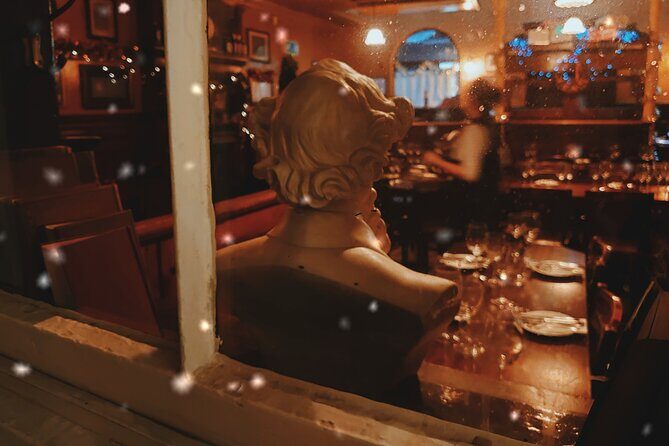
This tour is built for one big feeling: the City of London starts behaving like a novel. You’re not stuck in a classroom, and you’re not just checking off famous landmarks. You’re walking between sites that connect directly to Dickens’s world—legal training, publishing-era hangouts, taverns where the talk would’ve sounded like the 1800s.
The private format matters. With a regular sightseeing crowd, you often get rushed at each stop. Here, you can listen, ask, and adjust if you’re curious about a character detail or a building oddity. That turns the walk from sightseeing into something closer to guided reading—except you can point at the street and say, that’s where the scene could fit.
Also, it’s designed around the holiday themes even though Christmas isn’t the only time London looks dramatic. Expect a slightly theatrical tone without going full costume party. Think: story first, places second, and both handled with real context.
You can also read our reviews of more walking tours in London
Meeting at Temple Station and ending at Leadenhall Market
You start at Underground Ltd at Temple Station, near Victoria Embankment, which is a handy entry point for anyone already moving through central London. You’ll end at Leadenhall Market (Gracechurch St). Your guide will escort you to your nearest station or help with onward travel, which is a nice touch because you’re finishing in an area that’s easy to continue from.
A practical note: you’ll be moving across central City streets. That’s part of the charm, but it also means sensible shoes are a must. If you’re the type who hates walking between stops, you might find the flow a bit “on your feet” for the full 2–3 hours.
Inner Temple: the Inns of Court that fed Dickens
The walk opens around Inner Temple, in the general area that shaped Dickens’s sense of place and people. You’ll hear about the Inns of Court and how Dickens drew inspiration from the world there—particularly the idea of legal administration and the social machinery around it.
This stop is more than trivia. It helps you understand why Dickens’s stories feel specific. His scenes aren’t floating in a made-up London. They’re grounded in institutions, habits, and power structures. You’re also linked to his broader works, not just A Christmas Carol. The guide connects the themes to stories like David Copperfield, Great Expectations, and Martin Chuzzlewit, which makes the author feel more like a working observer of real life.
What to do here: look up at the scale and character of the buildings. The Inns of Court aren’t just old walls—they’re part of why London fiction carries that “this could be true” punch.
Ye Olde Cheshire Cheese: a 13th-century tavern and Dickensian hangout energy
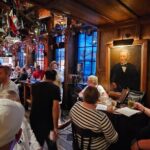
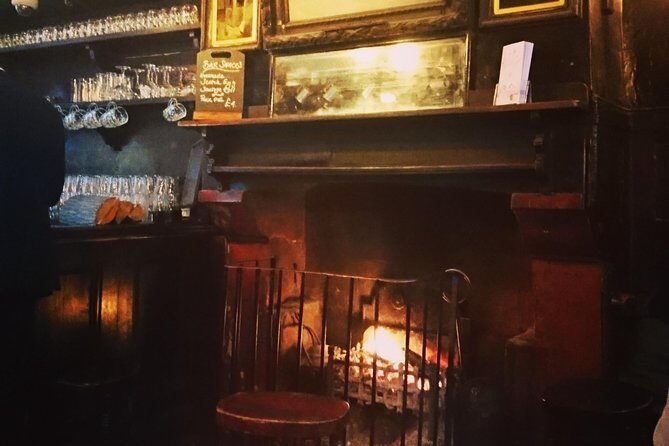
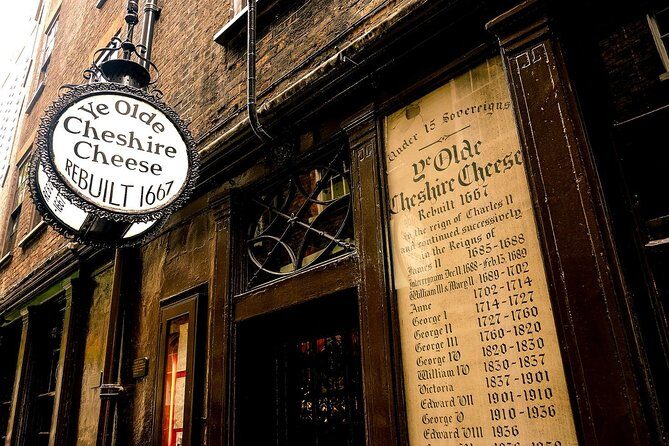
Next up is Ye Olde Cheshire Cheese, a tavern with cellars dating to the 13th century. Even if you don’t go in for long, the atmosphere hits. This is the kind of place that feels like it has memories trapped in the stonework.
Here’s what makes it story-relevant: this pub was a Dickens haunt, and it also ties to the Hellfire Club, a name that’s fun to hear in a real-world setting. The tour also links it to David Copperfield, which gives you another thread to follow beyond the main Christmas narrative.
The practical angle: the stop is long enough (about 30 minutes) to warm up if you want. The tour description even nods to mulled wine by the fire. Drinks aren’t included, but if you enjoy a holiday drink, this is a logical place to consider it instead of saving it for later and forgetting.
Potential drawback: if you’re sensitive to crowds or prefer very quiet moments, taverns can be busy at peak times. The stop is structured, but you’ll still be in a working pub environment.
Royal Exchange steps: Scrooge’s dark future meets the City’s power center
Royal Exchange is the kind of location that instantly signals money, influence, and public performance. It sits right next to the Bank of England, which helps you grasp the City of London side of Dickens’s world—where decisions have consequences and where reputations get traded like commodities.
This stop connects directly to the most unsettling scenes around Christmas future visions. The Royal Exchange steps are described as the spot where the Ghost of Christmas Yet to Come takes Scrooge to see his colleagues discussing his funeral. That doesn’t mean the building is spooky by itself. It means you get a stronger mental picture when you place the scene in a real civic setting.
You’ll also hear about the steps as a traditional spot for Royal announcements. That’s useful context. Dickens understood spectacle. He knew that public spaces can feel like stages, and that’s exactly how many scenes land.
Today, the scene has shifted. You can cross the trading floor, but bankers are gone. Instead, designer shops and champagne bars pull attention. That contrast is part of what you’re seeing: London changes clothes, but the setting still knows what it’s for.
A few more London tours and experiences worth a look
The George and Vulture area: Scrooge’s counting-house vibe and Dickens’s chop house favorite
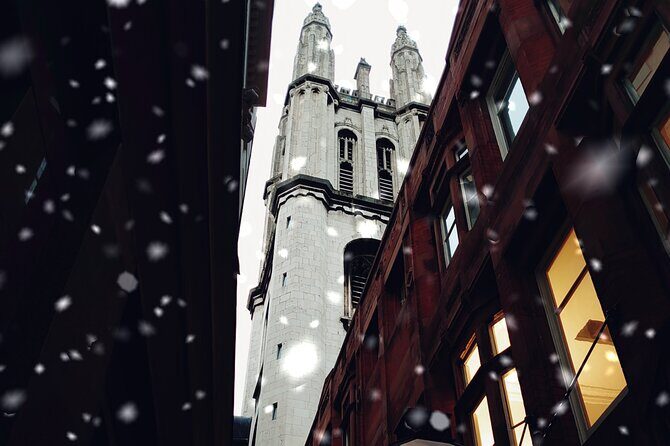
Now you move into the most atmospheric part of the tour: places tied to Scrooge’s world of counting, supper, and clubby conversation. The guide frames the area around Scrooge’s Counting House—where he took supper on Christmas Eve—and around Dickens’s favorite Chop House, the George and Vulture.
This section works well because it links business and character. A Christmas Carol isn’t only about ghosts and redemption. It’s also about what people do for a living, who they answer to, and what kind of life a person builds when they treat money like the only truth.
You’ll also hear about the George and Vulture as an old meeting place for the Pickwick Club, named in the Pickwick Papers more than 20 times. That kind of detail matters because it keeps the author’s world from feeling one-note. It shows Dickens liked to borrow from real London social circles.
One of the best “make it real” moments here: you’ll be guided to an understanding of why certain taverns feel linked to characters—plus how interiors and corners stay recognizable enough to trigger your imagination.
George and Vulture: inside-the-story atmosphere with an unchanged interior
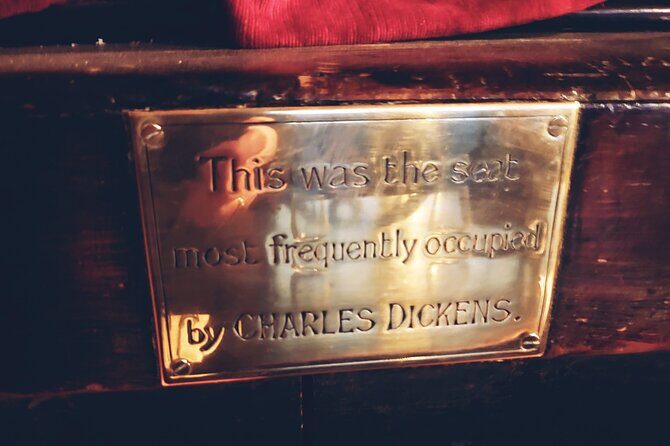
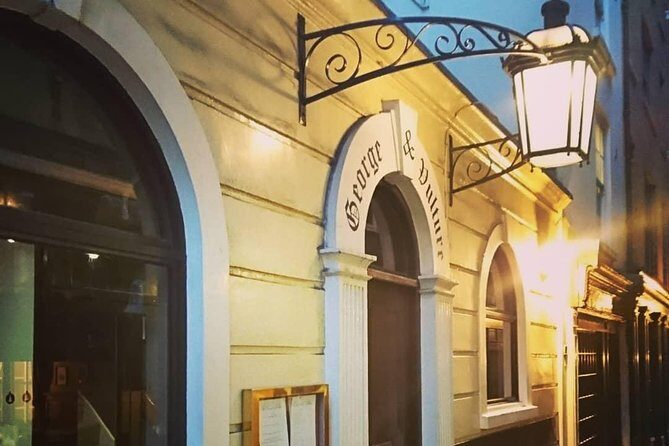
The tour gives the George and Vulture its own stop, and the focus is simple: this is one of Dickens’s favorite restaurants and chop houses, and it has strong ties to Mr. Pickwick and clubs like the Hellfire Club. The interior is described as unchanged since Dickens’s time, which is a big deal for the feel of the tour.
Even if you’re not a history fanatic, unchanged interiors help your brain do something useful: stop treating the story like a distant text. Instead, you start seeing it as a lived routine—meals, meetings, and gossip that could belong to someone you might pass on a street today.
Time here is short (around 5 minutes), so treat it like a snapshot stop. Spend those minutes looking, not rushing to take every photo.
Simpsons Tavern: the little Scrooge question you’ll remember
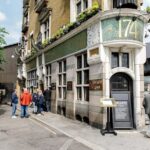
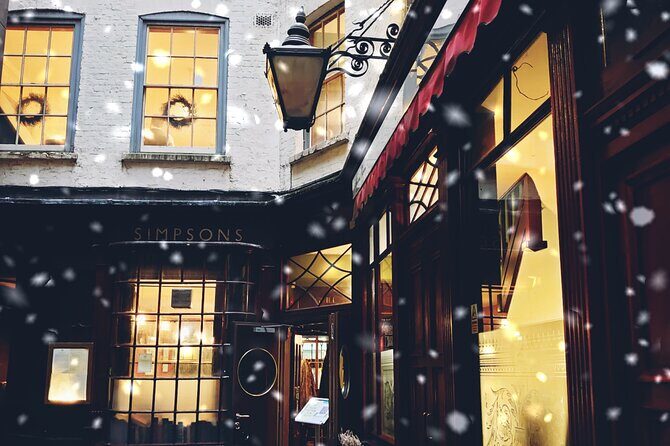
Then you get a quick stop at Simpson’s Tavern. The tour frames it as a possible inspiration for Scrooge’s Dismal Tavern, with the guide explaining why it’s likely to connect.
This is a fun stop because it teaches you how Dickens built credibility. He didn’t rely only on invention. He often shaped his characters with real London impressions. Even when you can’t prove a direct one-to-one link, the reasoning makes you read the story differently afterward—less like fantasy, more like sharp observation.
Expect this stop to be brief (around 5 minutes). It’s not trying to be a long lecture. It’s meant to leave you with a single character-image you’ll carry while you keep walking.
Leadenhall Market: the turkey moment and the covered-market feel
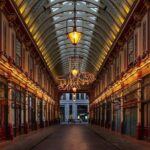
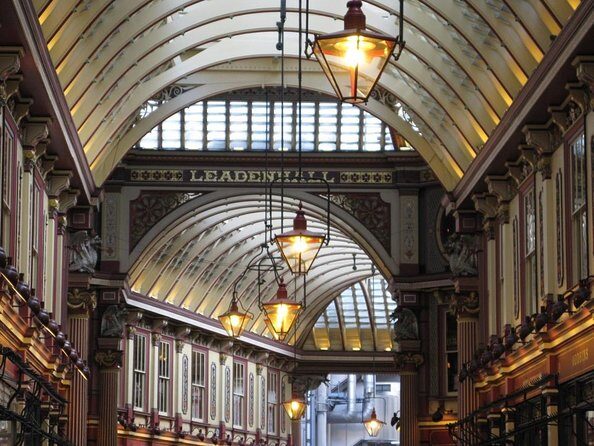
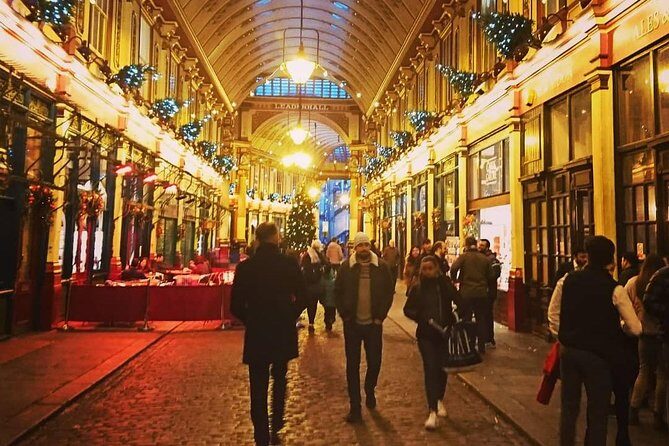
Leadenhall Market is where the tour lands with warmth. You’ll hear it used in modern film settings like Harry Potter, but the point of the stop is Dickens first: Charles Dickens used this location in A Christmas Carol.
This is the scene connection that many people come for. It’s where Scrooge sends the boy to fetch the largest turkey on Christmas morning after he awakens as a reformed man. In other words, you end where the story turns from dread to action.
The covered-market setting helps a lot. Markets have a sound and rhythm that feels very London. Even if the roles have changed over time, you’re still standing in a place where commerce and daily life run on the same basic engine.
Time here is about 10 minutes in the walk flow, so don’t save all your questions for the end. Use the earlier stops to ask for character connections, and then treat Leadenhall like the story’s landing.
Price and value for a private Dickens walk in London
At $227.06 per person, this isn’t the cheapest way to see central London. The value comes from what you’re paying for: a private guide with an organized route through multiple story-linked sites.
A few value signals stand out:
- Every stop in the walk is listed with free admission tickets, so you’re not paying repeated entry fees to match the story vibe.
- The experience is structured around a tight 2–3 hour window, which is good if you want story-focused sightseeing without losing half a day.
- You’re getting professional guiding plus a route that includes both holiday-themed scenes and the broader Dickens world.
The main tradeoff is the format. You’re paying for time with a guide and for the connections between locations. You’re not paying for included meals or a fully catered holiday event. Since food and drinks aren’t included, you’ll likely spend extra if you want mulled wine or want a proper late lunch afterward.
If you’re traveling as a small group and you hate generic group tours, the private nature can make the price feel more rational. If you’re trying to keep costs down or you don’t like walking, you may feel it’s high for what’s essentially a guided stroll.
Who this Christmas Carol and Dickens tour suits best
This fits best if you meet at least one of these:
- You love Dickens and want your reading to match real streets and interiors
- You like story-driven walks more than monument-driven walks
- You want a private guide who can explain why certain places feel connected to specific scenes
- You’re visiting in a season mood and want that holiday theme even outside December
It’s also a good pick if you’re the type who appreciates institutions and social context, not only ghost stories. Inner Temple and the Inns of Court angle adds a deeper layer than you might expect from a Christmas Carol theme.
If you mostly want classic tourist hits with lots of time inside major attractions, this might feel too focused on specific literary settings and outdoor pacing.
Should you book this Christmas Carol and Charles Dickens Old London walking tour?
I’d book it if you want London to feel like a storybook you can actually walk through. The strongest reason is the combination of private guidance and real-location storytelling—from old tavern spaces through City institutions and finally to Leadenhall Market’s big Christmas-moment ending.
Skip it (or at least think twice) if walking for 2–3 hours and standing during short stops isn’t your thing, or if you need food included as part of the experience.
One smart move before you go: pick one or two scenes from A Christmas Carol that you care about most. Then use the walk to see where the guide places those feelings on the map. You’ll get more out of each stop, and the tour will stick with you long after the holiday season is over.
FAQ
How long is the Christmas Carol and Dickens Old London walking tour?
The tour lasts about 2 to 3 hours.
Is this a private tour?
Yes. It’s a private tour/activity, and only your group participates.
What language is the tour offered in?
The tour is offered in English.
What is included in the price?
It includes a professional guide and the private tour.
Are food and drinks included?
No. Food and drinks are not included.
Where does the tour start and end?
It starts at Temple Station (Underground Ltd) and ends at Leadenhall Market on Gracechurch St.
Is the tour near public transportation?
Yes, it’s near public transportation.
Can children join the tour?
Children must be accompanied by an adult.
What’s the cancellation policy?
You can cancel for a full refund up to 24 hours in advance. Free cancellation is available up to 24 hours before the experience start time.