REVIEW · LONDON
Beatles Walking Tour of London
Book on Viator →Operated by Ye Olde England Tours · Bookable on Viator
Beatles London walks feel like a time machine. You get a private, guided walk through the streets tied to the band’s rise, built around real-world landmarks like Abbey Road and the neighborhoods where it all played out. The best part is how the guide turns each corner into a scene, with behind-the-scenes trivia you can actually picture.
I especially like the tour’s mix of Beatles stops with related music-landmarks, including David Bowie and the Rolling Stones. Just keep one consideration in mind: the London Underground ticket isn’t included, and a few addresses are marked as part of the longer 5-hour option rather than a straight 3-hour loop.
In This Review
- Key highlights to look for
- Getting oriented: Marble Arch start and Denmark Street finish
- Abbey Road Studios and the Abbey Road crossing
- Paul’s St. John’s Wood to the Marylebone streets: where the stories have addresses
- Savile Row, Apple, and the Beatles machine around 1960s London
- Bowie, the Stones, and the 60s orbit around the Beatles
- Trident Audio Post and the sound-side details behind Hey Jude
- Price and logistics: is $268.39 worth it?
- Who this tour fits best
- Should you book the Beatles Walking Tour of London?
- FAQ
- How long is the Beatles Walking Tour of London?
- Where does the tour start and end?
- Is pickup available?
- Is the London Underground ticket included?
- What’s included in the tour price?
- Do I need to bring anything?
- Is the tour cancellation free?
Key highlights to look for
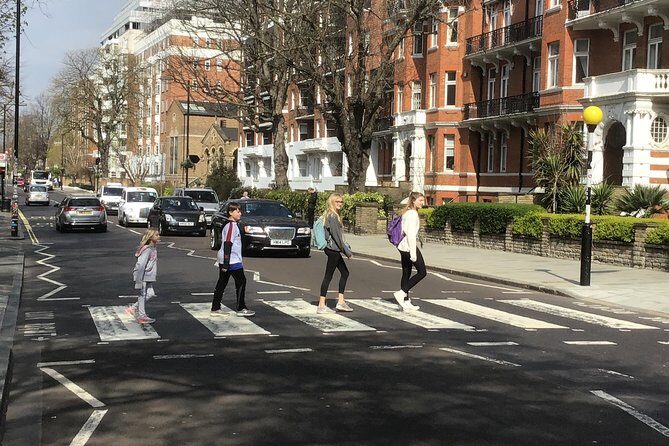
- Bring a pen for Abbey Road Studios so you can sign the wall outside
- Abbey Road crossing access is included in the time you’re on-site
- Paul’s St. John’s Wood and John/Yoko’s Marylebone homes are all street-level viewing stops
- Brian Epstein and the Apple label story shows up around Savile Row and nearby streets
- David Bowie and the Rolling Stones are built into the walk, not added as an afterthought
Getting oriented: Marble Arch start and Denmark Street finish
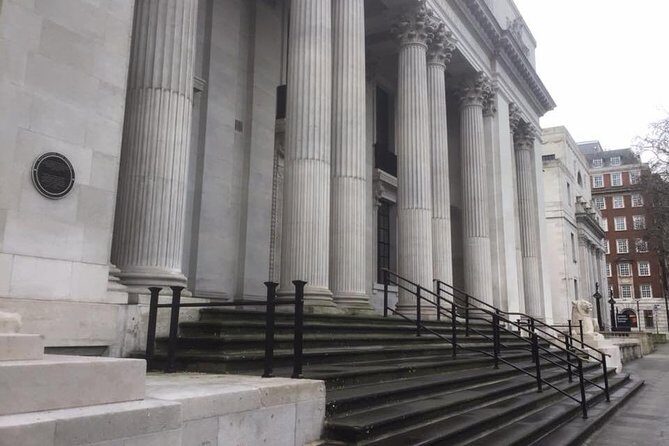
The tour starts at Marble Arch Underground Station (Oxford St, W1C 1CX) at 9:30am, which is a smart time to be walking in central London. You’ll finish at Denmark Street (Denmark St, WC2H), close to Tottenham Court Road, and also a short walk from Leicester Square, Covent Garden, Soho, Piccadilly, and Oxford Street. That end location is handy if you want to keep exploring right after your tour.
If you’re staying nearby and want less hassle, pickup is offered—just share your hotel info so they can meet you in the lobby. If you need to get to the start point, transport costs aren’t included, but you’ll get help figuring it out and buying your own ticket.
This is a private tour, meaning it’s just your group. That matters here because the guide can pace the walk and answer questions without juggling lots of people, which is exactly how you get the good details (and not just quick photo stops).
You can also read our reviews of more walking tours in London



Abbey Road Studios and the Abbey Road crossing
The first big moment is Abbey Road Studios, seen from the outside. You won’t be going inside, but you will get a fun, low-effort activity: bring a pen and you can sign your names on the wall outside. It’s the kind of small thing that makes the stop feel personal instead of like a drive-by.
Next comes Abbey Road itself—the famous crossing. You’ll walk on the pedestrian area tied to Beatles imagery, and the tour includes what’s needed for that stop so you’re not scrambling for extra add-ons once you get there. Expect this to be the most “everyone knows this place” moment of the day, so plan to slow down for photos and still listen for the story beats.
One practical note: Abbey Road is a high-visibility spot. If you’re sensitive to crowds, treat this as a “watch and wait” moment. The guide will time the stop so you can get what you came for without turning it into an all-day queue.
Paul’s St. John’s Wood to the Marylebone streets: where the stories have addresses
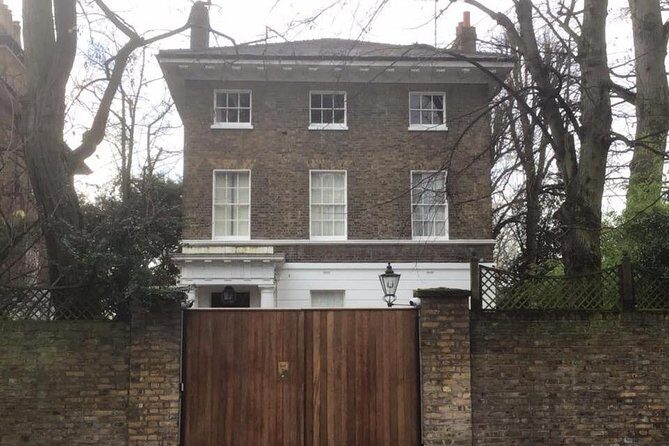
After Abbey Road, the walk shifts into the residential and neighborhood phase. This is where the tour stops feeling like a checklist and starts feeling like London-as-a-storybook.
You’ll view the outside of Paul McCartney’s home in St. John’s Wood. It’s not about seeing a museum display—it’s about recognizing the place and connecting it to the way the band’s world spread outward into real neighborhoods. Since it’s street-level viewing, your main “what to look for” is the context: streets, facades, and the scale of the area compared to the legend.
Then you move to The Old Marylebone Town Hall, a beautiful building where several Beatles weddings took place. The stop works best if you listen for the human side of the timeline—London landmarks weren’t just backdrops; they were where real life events happened during the same era as fame.
Two especially strong stops follow: Wimpole Street and Marylebone. On Wimpole Street, you’ll see the Asher family home, where Paul’s move with girlfriend Jane led to a basement recording studio. This is where the tour connects the street to famous songs like Yesterday and I Want To Hold Your Hand. It’s a big takeaway because it reframes “great music” as something built in normal places, not only in high-profile studios.
In Marylebone, the tour points out a house tied to Ringo leasing it and renting the basement to John and Yoko. This stop also covers a darker chapter—events around a drugs raid that led to arrests. Even if you don’t know the full story, the value here is in the guide’s ability to connect music mythology to actual headlines and consequences.
The route then includes Green Street, where Brian Epstein bought a house for the band after their second number 1 hit, She Loves You. It’s noted as the only house where they all lived together, which gives this stop extra emotional weight. You’re still outside-looking-in, but the “together” detail is the hook that makes it memorable.
A quick heads-up: several of these addresses are marked as part of the longer 5-hour option. On the standard 3-hour tour, you might not see every one of these stops. Either way, the core idea stays the same: you’re walking through the real locations behind the band’s public image.
Savile Row, Apple, and the Beatles machine around 1960s London

A key theme of the walk is how the Beatles weren’t only performers. They were also a brand, a label, and a business—built on paperwork, design, and meetings as much as on guitars.
That brings you to Savile Row, famous for fine tailoring. Here, the tour ties the street to the Beatles creating the Apple label, and also notes it as the setting for their last ever performance together. This is one of those stops where the street doesn’t scream Beatles at you, so you’ll want the guide’s story to do the heavy lifting.
From there, you’ll pass through more street-level “how it worked” moments. Old Compton Street is included for the location where the Beatles had their collar suits made—fashion as part of identity, not just styling. The stop on Kingly Street points to a club where bands socialized in the 1960s and where Paul met Linda, adding a more personal layer to the fame story.
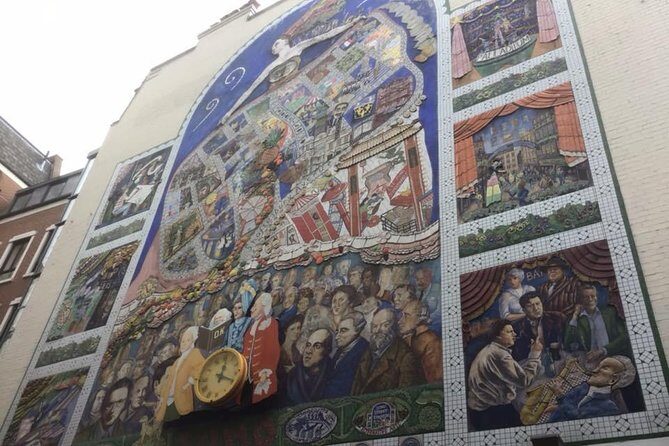
If you like album-art clues, Broadwick Street is worth your attention. The tour highlights a mural that inspired the cover of Sgt. Pepper, turning visual design into something you can physically locate on a wall. It’s a great contrast to Abbey Road: one is the instantly recognizable pop icon; the other is a design detail that only makes sense when you know to look.
The walk also features Old Compton and nearby style spots for the “look” of the band, and it keeps circling back to how music, fashion, and city culture fed each other.
Bowie, the Stones, and the 60s orbit around the Beatles
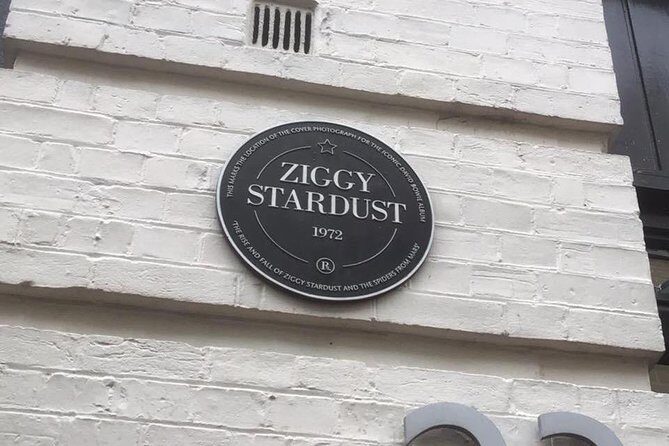
One smart thing about this tour: it refuses to treat the Beatles as a solo planet. Even when the day is centered on Beatles landmarks, you’ll get nearby music-world context that helps London feel connected rather than segmented.
You’ll go to the album cover location for David Bowie’s Ziggy Stardust—a photo-location stop that also includes a few other sights in the same area. If you’re a Bowie fan, this part feels like bonus value. Even if you’re a Beatles-only person, it’s a reminder that the same streets later hosted a different kind of rock-theater.
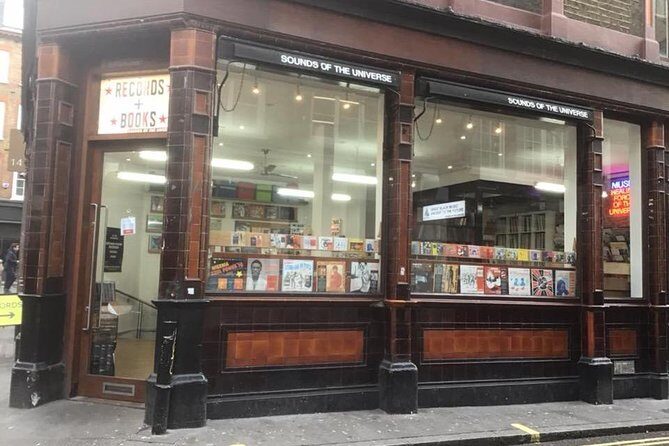
Then there’s a stop tied to Sounds of the Universe, pointing to where the Rolling Stones began. This is the kind of cross-band connection that makes the tour feel like “music London,” not just “Beatles London.” It also helps you understand how the 1960s scene moved—one act inspiring or overlapping with another.
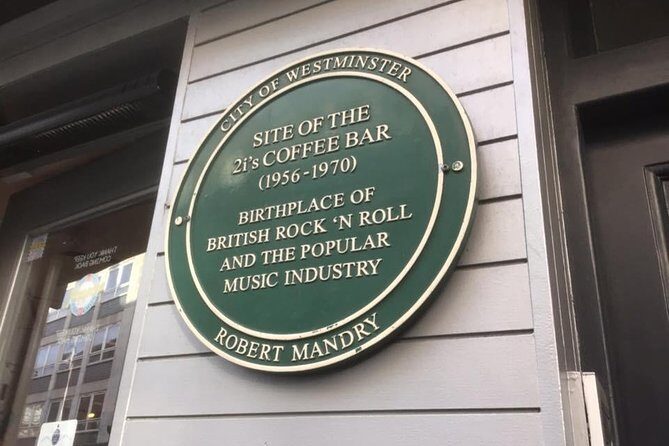
You’ll also see Tin Pan Alley, with a stop that references La Giaconda, where John and Paul helped with a favor for the Rolling Stones by supporting their first hit, I Want To Be Your Man. That story adds an extra layer to the stop because it frames relationships between bands as active, not myth-only.
If you want one takeaway: you’re not only learning where Beatles legends were. You’re learning how the city’s music ecosystem worked.






Trident Audio Post and the sound-side details behind Hey Jude
The tour doesn’t treat studios like distant temples. It gives you the street-level “where it happened” feeling, and one stop nails that best: Trident Audio Post. This is where the Beatles recorded Hey Jude, and the tour also notes that countless other big stars recorded there too.
This is a great moment to slow down and let the guide connect the sound-world to the city-world. You’re standing outside a working audio landmark, and the stories turn famous songs into something grounded in real production spaces.
If you’re the kind of person who cares about how records get made, this stop is a strong reason to book. It’s not just name-dropping; it’s about linking a specific song (Hey Jude) to the place tied to it.
Price and logistics: is $268.39 worth it?
At $268.39 per person for a walk that’s about 3 hours, the value depends on what you’re buying.
You’re not paying for admission-heavy attractions. Most stops are outside and street-level, and some places are explicitly marked as not included for admission (while Abbey Road is marked as included for that crossing stop). So you’re paying mainly for a private guide—the storytelling, the connections, and the pacing.
For Beatles fans, that storytelling piece is often the deciding factor. The tour is rated 5/5 with consistent praise for the guide’s passion and the amount of context delivered in a short window. In particular, the guide name Kevin shows up repeatedly, with people pointing out that he doesn’t just stick to Beatles facts; he ties the band to broader London history and the wider music scene. One-on-one also means you can ask follow-up questions instead of waiting for a lull in a big group.
Logistics are mostly straightforward, but here’s what you should budget for:
- Your London Underground ticket (not included)
- Some stops where admission is not included, depending on what’s covered on your exact run
The biggest “time value” angle: booking this kind of guided walking tour around central London is a way to avoid the scattershot approach of trying to self-navigate Beatles landmarks without context. If you want a route that’s already stitched together by someone who knows the connections, the price starts to make sense fast.
Who this tour fits best
You’ll get the most from this tour if you’re:
- A Beatles fan who wants more than photo ops
- Someone who likes music history tied to real locations
- Traveling with just your group and wanting a private walking pace
- Interested in London beyond the band, since the route includes other major music names and street-level cultural clues
If you’re the type who hates walking, this might feel like too much. The tour is still just a few hours, but it’s a true walk through multiple parts of central London. The data also calls for moderate physical fitness, so wear comfortable shoes and keep it simple.
Should you book the Beatles Walking Tour of London?
If your goal is Beatles storytelling anchored to the exact London places where the legends were made, I think you should book—especially because the private format keeps the tour from turning into a race. Abbey Road Studios with the outside signing moment, the Abbey Road crossing stop, and the street-level homes and studio address points create a route that feels like a guided narrative, not a scavenger hunt.
Before you book, do two quick checks:
- Confirm whether all the “longer 5-hour” labeled stops are important to you, since the standard 3-hour version may not include every address.
- Plan for the fact that you’ll need your own Tube ticket and that some stops don’t include admission.
If that fits your travel style, this is an easy yes for Beatles fans who want London with a soundtrack—and a guide who clearly loves the subject.
FAQ
How long is the Beatles Walking Tour of London?
The tour runs for about 3 hours.
Where does the tour start and end?
It starts at Marble Arch Underground Station (Oxford St, London W1C 1CX) and ends on Denmark Street (Denmark St, London WC2H).
Is pickup available?
Yes. Pickup is offered if you share your hotel information, and they can meet you in your hotel lobby.
Is the London Underground ticket included?
No. London Underground tickets are not included in the tour price.
What’s included in the tour price?
The included item is a private guided tour.
Do I need to bring anything?
For Abbey Road Studios, you should bring a pen so you can sign your names on the wall outside.
Is the tour cancellation free?
Yes. You can cancel for a full refund up to 24 hours before the experience start time.