REVIEW · LONDON
Booze, Brothels & The Bard: A Walking Tour of London’s Bawdy Borough
Book on Viator →Operated by Historic London Tours · Bookable on Viator
London has a darker side. This two-hour walk through Southwark pairs Shakespeare-era storytelling with the gritty places that shaped London’s early fame and trouble.
I love the way the route keeps moving while still hitting real landmarks tied to free admission stops, so you get a lot of variety for $27.78. The one drawback to plan for: most stops are quick photo-and-context stops, so you may want to return later if you’re the linger-at-every-spot type.
In This Review
- Key highlights at a glance
- A bawdy Southwark walk with literature at the center
- From Borough High St to Shakespeare’s Globe21: the route arc
- Marshalsea’s last remnant: St George the Martyr
- Crossbones Graveyard and the Garden of Remembrance
- Hop Exchange and George: beer trade and galleried coaching life
- Old Operating Theatre Museum and Herb Garret: London’s medical oddity
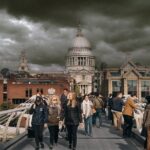
- London Bridge and Southwark Cathedral: two famous anchors
- Borough Market and Winchester Palace: food, power, and old stone traces
- The Clink Prison Museum and the walk to Shakespeare’s Globe
- Price, small-group size, and why the value makes sense
- Who should book Booze, Brothels & The Bard?
- Should you book this walking tour?
- FAQ
- How long is the tour?
- What is the price per person?
- Is the tour in English?
- What group size should I expect?
- Where does the tour start and end?
- Do the stops include admission?
- Do I need a paper ticket?
- Is cancellation free if plans change?
Key highlights at a glance
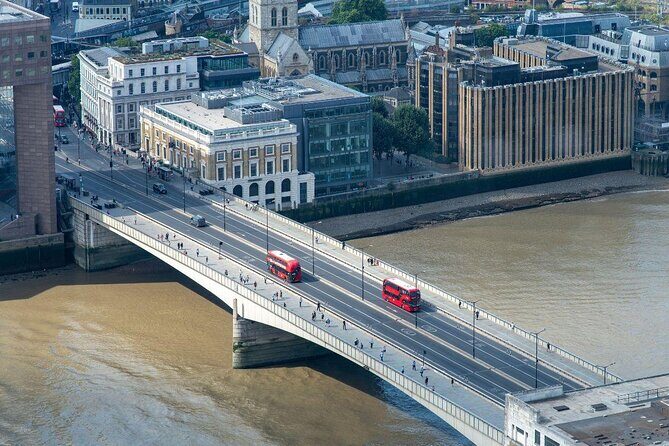
- Bawdy theme, real Southwark locations that connect literature to the neighborhood’s underworld vibe
- A walk from Borough High St to Shakespeare’s Globe, with famous sights along the way
- All the listed stops are free to enter, so your money goes to the guide, not extra tickets
- Small groups (max 15), which makes it easier to ask questions and hear the stories clearly
- Oddball variety: prisons, beer trade relics, an old operating theatre, and a landmark cathedral
A bawdy Southwark walk with literature at the center
This experience is for people who think London is more than royal photos and tidy parks. Southwark has always been a place where commerce, crime, and performance rubbed shoulders. And that’s exactly the lens the tour uses: booze, the seamy edge of city life, and the writers who turned it into story.
You’ll get cultural context tied to big names like Shakespeare and Dickens, plus other literary figures connected to the area. The cool part is that you’re not just hearing plot summaries. You’re seeing the physical backdrop—old buildings, burial grounds, church spaces, and the edge-of-city landmarks that made these stories feel real.
You can also read our reviews of more walking tours in London
From Borough High St to Shakespeare’s Globe21: the route arc
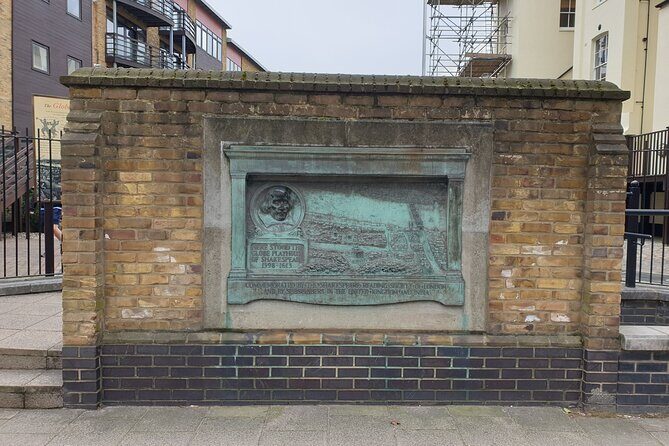
You start on Borough High St (SE1 1JX) and finish at Shakespeare’s Globe21 New Globe Walk (SE1 9DT). That end point matters. Even if you only know Shakespeare from school, reaching the Globe area by walking there is a fast way to make the Bard feel local instead of faraway and marble-museum-ish.
The walk is built for a 2-hour window. Expect a steady pace and short stops that are meant to give you bearings and context fast. If you like a long wander with time to sit, sketch, or read every plaque, this may feel a bit “on the move.” If you like a guided route that helps you understand what you’re looking at before you explore further on your own, it fits well.
Practical note: the tour is offered in English, uses a mobile ticket, and keeps things group-friendly with a maximum of 15 people. Near public transportation also helps if you want to tack on time before or after.
Marshalsea’s last remnant: St George the Martyr
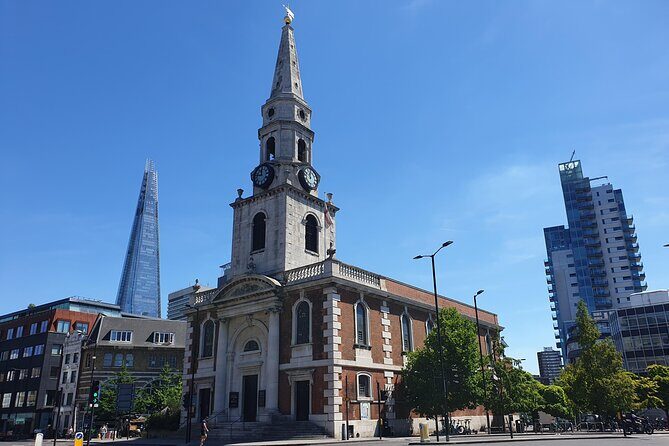
Your first stop is St George the Martyr, described as the only remaining part of the Marshalsea Prison. That’s the kind of detail that makes a tour like this click. You’re not visiting some distant ruin in a field. You’re at a surviving piece of a place that once held prisoners, which changes how you see the surrounding neighborhood.
What I like about starting here is the mood shift. The tour doesn’t bury you in gloom, but it does set the stakes: Southwark’s famous literary connections didn’t grow in a clean bubble. They grew in a London that had harsh institutions running close to daily life.
The limitation: because it’s a brief stop, you’ll get the main story and key facts, but not a slow, in-depth look. Treat it as a launchpad, not a full prison-history lecture.
Crossbones Graveyard and the Garden of Remembrance
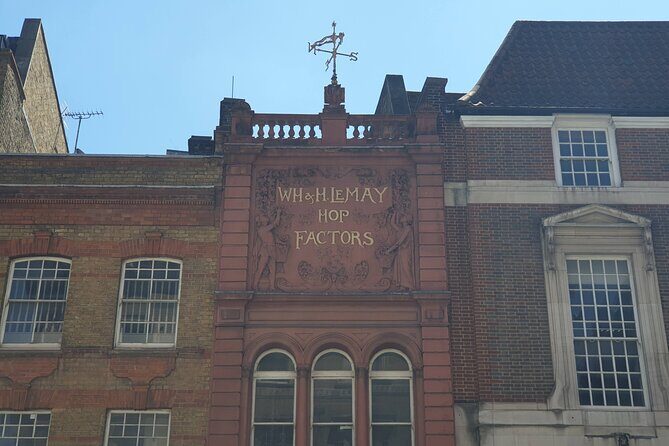
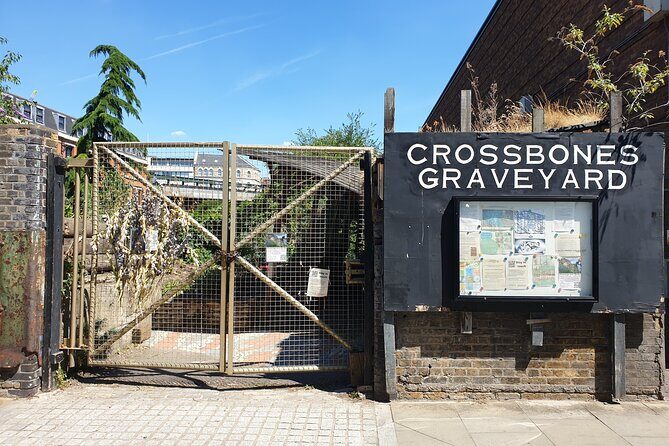
Next up is Crossbones Graveyard and the Garden of Remembrance, where thousands of Southwark’s outcast dead are said to be buried. This stop has a different tone from the rest of the route. It’s not about commerce or performance. It’s about people who were pushed aside.
If you care about how cities really function—who gets cared for, who gets ignored, who gets memorialized—this is one of the most meaningful stops. Even if you’re not into dark history, the site gives you a reality check on what “respectable London” left behind.
Potential consideration: this part of the walk can feel heavy. If you prefer lighter sightseeing, balance it with the fun stops ahead. The tour does give you that contrast right afterward.
Hop Exchange and George: beer trade and galleried coaching life
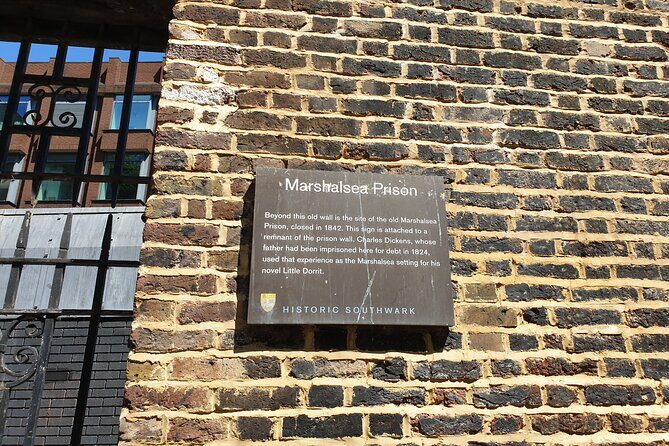
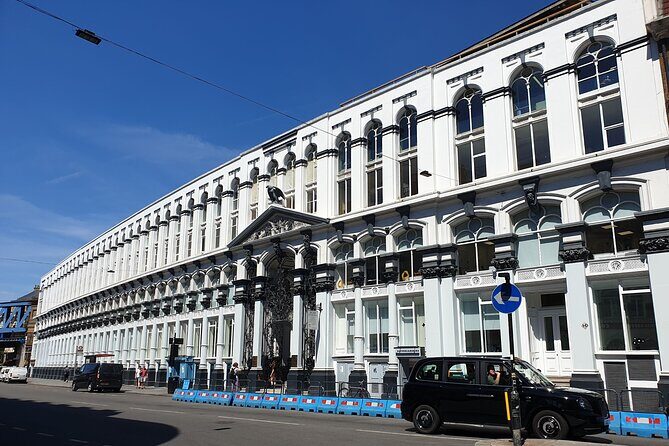
Then the route pivots to something that feels more everyday and more entertaining: The Hop Exchange. It’s described as the largest extant reminder of Southwark’s beer trade. That’s a great clue that you’re in the right neighborhood. Beer wasn’t just a drink here; it was infrastructure. It supported trades, workers, taverns, and the social world that writers could observe and exaggerate.
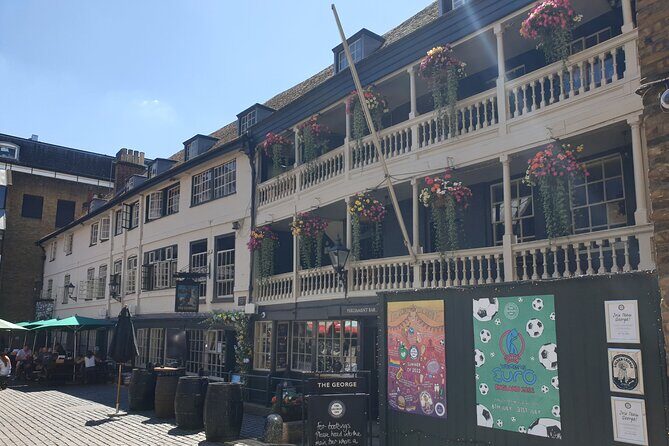
A few minutes later, you’ll see George, London’s last surviving galleried coaching inn. This is the kind of building detail that’s easy to overlook from the street. But a coaching inn is really a story about movement: travelers arriving, wagons unloading, conversations happening fast, news spreading quicker than you’d think.
Why this section is valuable: it gives you a “how people lived” backbone before the tour slides back into prisons and theatres. It helps you understand why Southwark became fertile ground for characters, plots, and satire. It’s hard to write about a place you don’t feel.
Short-stop drawback again: you’ll get highlights, not a long architecture lesson. Still, it’s enough to make you notice details you’d otherwise miss.




Old Operating Theatre Museum and Herb Garret: London’s medical oddity
One of the most surprising stops is the Old Operating Theatre Museum and Herb Garret, described as Europe’s oldest surviving operating theatre. That’s not a random curveball. It fits the tour’s big idea: this borough has always held the unusual next to the ordinary.
What you’ll likely take away here is how close medicine and spectacle once were. Old surgical spaces didn’t exist in a clean, distant science world. They sat inside communities, often with a very different view of public learning than we’re used to today.
Consideration: if you’re the type who gets squeamish, this is the stop to mentally brace for. The tour frames it as a landmark, but you may still feel uncomfortable if medical history hits you the wrong way.
London Bridge and Southwark Cathedral: two famous anchors
From there, you hit London Bridge, the iconic one everyone knows by name. On a themed walk, this can feel like a palate cleanser: you go from very specific local history to a major global landmark.
Then comes Southwark Cathedral, noted as London’s oldest surviving gothic church. This is where the tour gives you architectural weight without turning the day into a strict museum schedule. A cathedral changes the rhythm. You can feel the pause it creates in a walk that’s otherwise full of human-scale, often grim stories.
Why it works: it balances the darker stops with a place that still draws people in for awe and reflection. It also helps you connect the borough’s past to London’s religious and civic identity.
Borough Market and Winchester Palace: food, power, and old stone traces
Next is Borough Market, described as a food market with a thousand-year presence. Even if you don’t eat on the spot, it’s a powerful contrast to the prison and operating theatre themes. Markets are where daily life happens. They’re where people trade, share gossip, and keep a city moving.
I like this stop because it’s practical for planning after the tour. If you want to turn this into a full day, you’ll likely find plenty of places to grab something nearby. It’s not just history on a timeline; it’s a still-living neighborhood hub.
After that, you’ll see the remains of Winchester Palace, described as the remains of one of the most prestigious homes in medieval England. Palace ruins can feel like leftovers, but that’s the point: they show you the layers. Southwark wasn’t always only “the underbelly.” Power sat here too, right alongside the trades and institutions.
The Clink Prison Museum and the walk to Shakespeare’s Globe
The penultimate stop is The Clink Prison Museum, described as the site of the notorious Clink Prison. A prison site on a walk called Booze, Brothels & The Bard sounds intentionally provocative—and that’s part of why it’s effective. It reminds you that stories need conflict, and cities produce it.
You’re then led toward the tour’s finale: Shakespeare’s Globe Theatre, described as a reconstruction of Shakespeare’s Globe Theatre. Even if you’ve never toured a theatre before, ending here gives the theme an ending you can feel. It’s the bridge from real life to performance, from lived hardship to staged story.
This is also where the whole route starts clicking emotionally. You’ve seen institutions that controlled people, trades that supported people, and spaces that entertained people. Now you stand at a place built specifically for plays. It’s an easy way to grasp how writers could turn the raw world into something audiences wanted to watch.
Price, small-group size, and why the value makes sense
At $27.78 per person for about 2 hours, this isn’t trying to be a premium, ticket-heavy day. The value comes from the mix: a guided story that connects multiple major sites, with the listed stops marked as admission ticket free.
That means your cost is mostly paying for context and pacing, not separate entrances stacking up. For many London walks, you end up paying extra for museums, houses, or attractions. Here, you keep the financial burden lighter and use your time more flexibly.
The group size helps too. With a maximum of 15 travelers, the guide can keep attention on everyone. It also means you’re less likely to lose the story while trying to squeeze past other groups.
Only you can decide if “quick stops” is your style. If you want deep, hour-long museum time, you may feel rushed. If you want a guided route that gives you smart context fast, this is a very good deal.
Who should book Booze, Brothels & The Bard?
This walking tour is a strong fit if you:
- want a different angle on London—less postcard, more neighborhood reality
- like literature that connects to real places, especially Shakespeare and Dickens
- enjoy short, focused site stops instead of long museum marathons
- appreciate small groups and clear guide-led storytelling
It’s also a solid choice for couples or friends who want to walk and talk rather than stand in lines. And if you’re planning a first or second London visit, the route helps you “get the borough map” quickly—where key landmarks sit and how they relate.
If you’re traveling with someone who hates grim topics, you’ll want to gauge tolerance for the prison and burial sites. The tour isn’t only heavy, but those elements are part of the theme.
Should you book this walking tour?
Yes, if you like London with edges—if you enjoy the way a guided walk can turn a familiar city into a set of stories with bones and brick.
Skip it only if you strongly prefer slow pacing and extended time at each place. This walk moves, and several stops are meant to be quick. You’ll leave with a strong overview and good pointers for what to revisit.
One last tip: wear comfortable shoes. You’re walking between landmark clusters, and the route is timed to stay in a two-hour rhythm. Do that, and you’ll finish the day knowing Southwark in a way most visitors never manage.
FAQ
How long is the tour?
The tour lasts about 2 hours.
What is the price per person?
It costs $27.78 per person.
Is the tour in English?
Yes, the tour is offered in English.
What group size should I expect?
The maximum group size is 15 travelers.
Where does the tour start and end?
It starts at Borough High St, London SE1 1JX, UK, and ends at Shakespeare’s Globe, 21 New Globe Walk, London SE1 9DT, UK.
Do the stops include admission?
The listed stops are marked as admission ticket free.
Do I need a paper ticket?
No. You’ll use a mobile ticket.
Is cancellation free if plans change?
Yes. You can cancel for a full refund up to 24 hours in advance of the experience start time.