REVIEW · CAMBRIDGE
Cambridge University Walking Tour
Book on Viator →Operated by Christian Heritage Cambridge · Bookable on Viator
Cambridge history gets real on foot. This small-group walk threads together the Round Church, the River Cam, and major university sights, with a guide who connects buildings to the big ideas behind Cambridge. I love that the Round Church Visitor Centre includes an exhibition and a 20-minute film, so you get context fast. You’ll also appreciate the chance to ask questions as you move—this is designed for people who want more than quick photo stops.
One heads-up: the pacing is moderate to fast, and the story can lean more toward Cambridge’s religious/theological roots than you’d expect if you’re hunting only for the sci-tech fame.
In This Review
- Key things I’d plan around
- Why the Round Church Visitor Centre is the perfect starting point
- The walking pace and group size: what that means for your comfort
- What you’ll actually see: colleges inside vs. outside
- Stop-by-stop: from the River Cam origins to Senate House
- Magdalene Bridge: getting the River Cam “first impression” right
- Magdalene College: perspective on what courts and chapels mean
- St John’s College: the “college as institution” moment
- Trinity College gatehouse and Newton’s apple tree (outside)
- Great St Mary’s Church and the central university core
- Senate House: the graduation viewpoint
- King’s College exterior: chapel wow-factor, minus the ticket gamble
- St Edward’s Church: iconic, but slightly less crowded
- Corpus Clock: a modern curiosity in a historic frame
- St Bene’t’s Church: the oldest building feeling
- The Eagle pub: a tiny pause with city-life context
- Old Cavendish Laboratory: science credibility with a street-level view
- Christ’s, Emmanuel, and Sidney Sussex: finishing with more college identity
- The tour’s tone: faith-heavy for some, balanced for many
- What makes the guides stand out in real life
- Practical tips so you enjoy it in the real Cambridge weather
- Is this Cambridge University Walking Tour good value at $20.80?
- Should you book this tour?
- FAQ
- How long is the Cambridge University walking tour?
- What does the tour include at the start in the Round Church?
- Will we go inside Cambridge colleges?
- What pace should I expect?
- Is the tour suitable for people with limited mobility?
- Can I bring a dog or service animal?
- What language is the tour offered in?
- Is there free cancellation?
Key things I’d plan around
- Round Church first: you start at the 12th-century building and get included entry to the exhibition and a 20-minute film.
- Small group focus: capped at 15 travelers, which usually means more back-and-forth with your guide.
- College structure, not just college names: expect perspective on how Cambridge works as a cluster of colleges around the university.
- Mostly exterior views of big sites: you’ll admire gatehouses, towers, and chapels even when college entry isn’t possible.
- Route varies for the best day: you may see a slightly different mix of stops depending on conditions and access.
Why the Round Church Visitor Centre is the perfect starting point
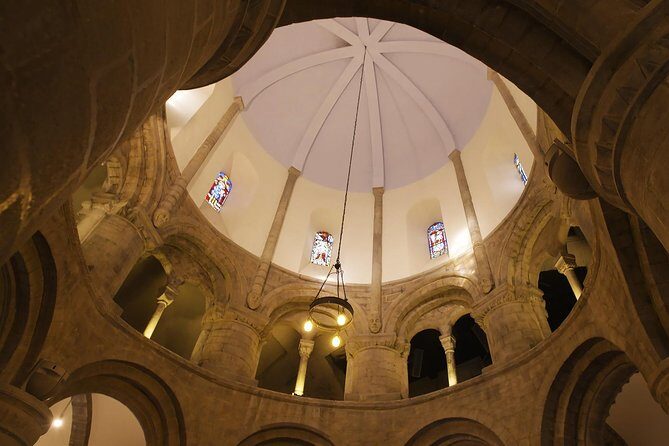
If you want to understand Cambridge, start with a building that predates the colleges. The tour kicks off at the Round Church Visitor Centre, Cambridge’s quirkiest church shape, dating back to the 12th century—about 150 years older than the earliest colleges. That detail matters because it flips the usual order: instead of beginning with college fantasy, you begin with the older place of ideas, community, and worship that helped shape the ground on which the university later grew.
Included here is more than a quick look. You get access to the visitor centre exhibition and a 20-minute film, timed to get you oriented before the walking ramps up. Even if you’re not a church-history person, the film helps you understand why Cambridge became the kind of place that produced scholars who debated everything from theology to natural philosophy.
And because the tour starts at the Round Church, you don’t waste your first 30 minutes wandering the streets hoping you’ve found the right “Cambridge” vibe. You’re already plugged into it.
You can also read our reviews of more walking tours in Cambridge


The walking pace and group size: what that means for your comfort
This is a 1.5 to 2 hour walk, and you’ll cover ground at a moderate to fast pace. That’s great if you like a steady rhythm and dislike long waits. It’s less great if you prefer slow strolling, frequent sitting breaks, or lots of time to linger at every corner.
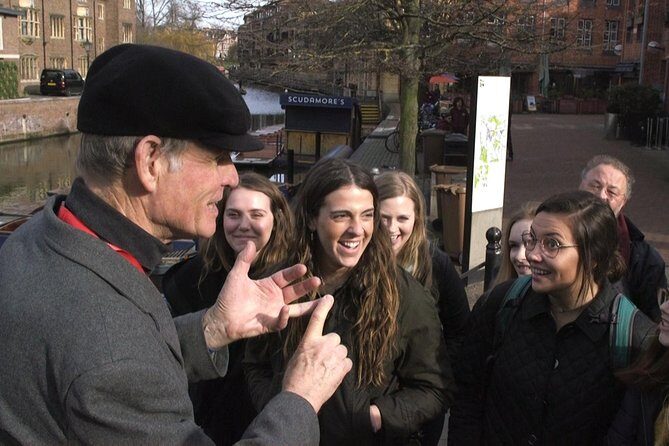
The tour is capped at 15 travelers, which is one of the main reasons people score it so high. With a small group, it’s easier for your guide to keep track of the crowd and for you to ask questions without feeling like you’re shouting over a bus full of people.
If you know you need a slower pace, plan ahead. The provider notes that you can contact them to arrange a private tour if required. That’s the kind of detail that can turn a stressful outing into an enjoyable one.
What you’ll actually see: colleges inside vs. outside
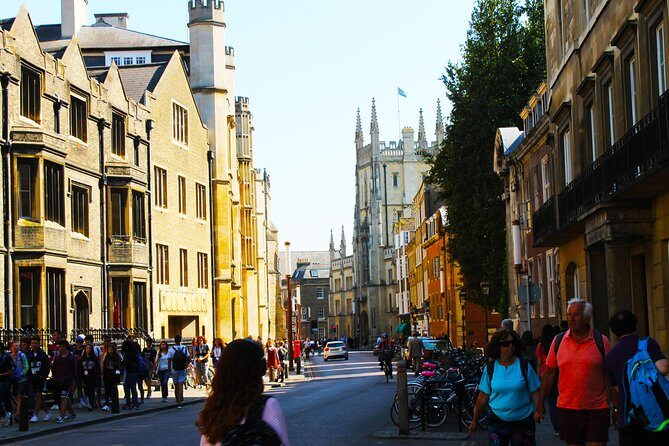
Cambridge’s colleges are central to the experience, but you should go in with realistic expectations. College entry depends on restrictions and day-to-day access, so you can’t count on walking into courtyards whenever you want.
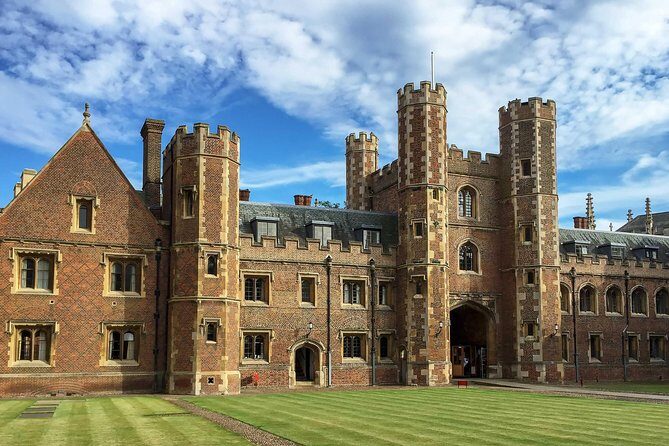
In practice, most walks include admiring about two colleges. The important part is what you’ll learn even if you’re only viewing buildings from outside: how Cambridge’s system is built around individual colleges rather than one giant campus.
Your walk may include stops near or in college grounds, such as:
- Magdalene College, where you can appreciate the courts and chapels even if entry isn’t guaranteed.
- St John’s College, which can be included outside University exam term, with admission fee included on days when the tour enters St John’s.
- Trinity College and King’s College, typically seen from the street—expect exterior highlights like gatehouses and chapel views.
- Christ’s College, Emmanuel College, and Sidney Sussex College, again with the college-based structure explained as you pass through key visual landmarks.
And there’s a practical note that affects comfort for some visitors: dogs can be present, but they must remain outside any colleges visited. If you travel with a service animal, service animals are allowed.
Stop-by-stop: from the River Cam origins to Senate House
This route is designed like a guided thread. You’re not just collecting famous names—you’re walking through how Cambridge developed and how the university lives in everyday street-level sightlines.
Magdalene Bridge: getting the River Cam “first impression” right
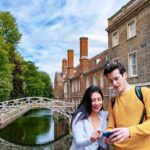
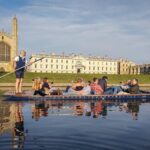
From the start area, you typically head down to the River Cam via Magdalene Bridge. This is a quick but useful moment because the river is part of Cambridge’s visual logic: it shapes the town, the college edges, and the feel of the place. You’ll often hear the story of how the town grew alongside what the university later became.

Magdalene College: perspective on what courts and chapels mean
Next is Magdalene College, where you’ll likely get a closer look at the spaces that make Cambridge colleges feel like small worlds. Even if you can’t go inside, the guide can point out the differences in layout and what those patterns suggest about how colleges functioned as communities.
One drawback to keep in mind: at multiple stops, there may be some standing around for explanations. One review note was that the tour wasn’t always sprinting from stop to stop. The upside is that when standing happens, guides tend to choose spots where you can pause without it turning into a chore.
St John’s College: the “college as institution” moment
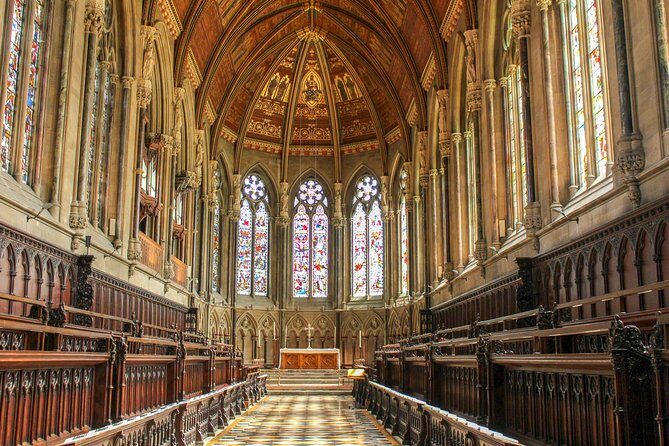
If the route includes it, St John’s College is another key read on Cambridge’s structure. The tour approach here is less about promising a ticket into the most famous rooms and more about helping you interpret what you’re seeing: chapels, courts, and the way these institutions sit in the city.
Trinity College gatehouse and Newton’s apple tree (outside)
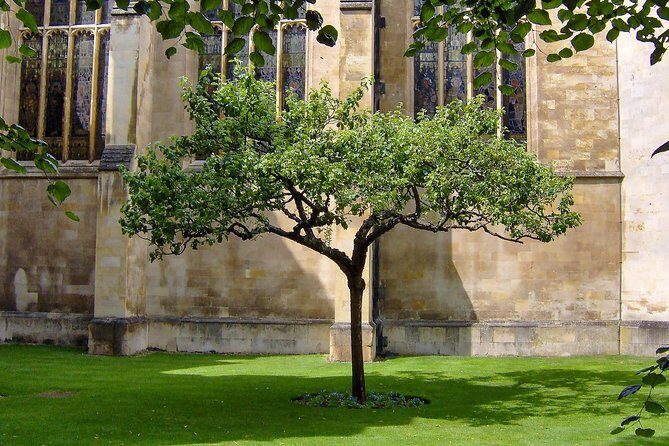
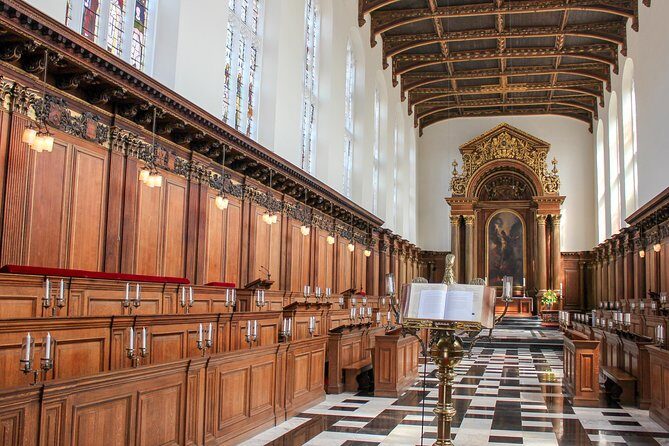
At Trinity College, you typically stop briefly outside to admire the gatehouse and Isaac Newton’s apple tree. This is the kind of stop that’s worth a short pause. Even if Newton is one of those names you already know, seeing the place tied to the story makes him feel more grounded and less like a schoolbook character.
Great St Mary’s Church and the central university core
You then move to Great St Mary’s Church. This is where the walk starts to feel like a map of Cambridge’s institutional heart. You’ll be in the area with university buildings like the Senate House nearby and the Cambridge University Press bookshop in the mix. It’s also an important transition: religion, scholarship, and civic life aren’t separate stories here.
Senate House: the graduation viewpoint
Opposite Great St Mary’s is the University Senate House, where students graduate. The tour doesn’t just point at the building—it helps you understand why it matters in the rhythm of university life.
King’s College exterior: chapel wow-factor, minus the ticket gamble
Next is King’s College, viewed from King’s Parade. Expect a classic Cambridge photo moment: the chapel exterior and the feeling that this is one of the most recognizable visual brands of the city. If you’re hoping for interior access, remember this is primarily an exterior appreciation point.
St Edward’s Church: iconic, but slightly less crowded
St Edward’s Church (Church of England) is another short stop that helps balance the big-name sights. If you’re lucky, you’ll hear the story tied to the claim about the first Protestant sermon in England. Even if you don’t treat religious history as your main hobby, this adds texture to Cambridge’s identity.
Corpus Clock: a modern curiosity in a historic frame
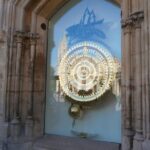
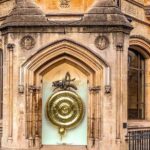
A quick stop at the Corpus Clock brings a nice break from heavy stone-and-stained-glass concentration. You’ll learn why it matters and how it fits into the larger atmosphere around the university.
St Bene’t’s Church: the oldest building feeling
At St Bene’t’s Church, you’ll admire the tower, described as dating from around c.1020—the oldest building in Cambridge. That age detail gives you instant perspective. You start to see Cambridge not as a single era, but as a layered timeline you can still walk through.
The Eagle pub: a tiny pause with city-life context
Opposite St Bene’t’s is The Eagle pub. It’s a small stop, but it’s useful. It reminds you that the university isn’t sealed off behind gates. Cambridge’s history exists alongside everyday habits, including the local rhythm of pubs and conversation.
Old Cavendish Laboratory: science credibility with a street-level view
Then comes Old Cavendish Laboratory, where significant scientific work happened. This is one of the stops that keeps the walk from becoming purely religious or institutional. It gives you a reminder that Cambridge is also a place where research shaped the modern world.
Christ’s, Emmanuel, and Sidney Sussex: finishing with more college identity
The final college stops often include Christ’s College, Emmanuel College, and Sidney Sussex College. When you hit these in sequence, the value isn’t only architectural. It’s the cumulative effect: after seeing multiple colleges, Cambridge’s college-based structure stops being an abstract concept and becomes something you can point to with your own eyes.
The tour’s tone: faith-heavy for some, balanced for many
Here’s the fair warning that will help you choose. The walk explores the foundational ideas that shaped Cambridge, which includes the roles of religious and theological thinking. Some people will love that framing because it explains why institutions formed the way they did. Others come expecting a science-first highlight reel and feel disappointed.
The good news is that the route does make room for scientific relevance, such as the Old Cavendish Laboratory stop and a mention of famous figures tied to Cambridge. Still, if your priority is purely scientific discoveries, you should know this tour is built to explain how big ideas—especially religious ones—helped shape the university over time.
If you’re interested in the full Cambridge picture—religion, politics, scholarship, and how those forces mixed in real institutions—this approach can feel satisfying rather than limiting.
What makes the guides stand out in real life
The experience is strongly driven by your guide. Names that come up repeatedly include Dave, Martin, Jon/Jon (spelled in the reviews both ways), John, Bobby, and Ian—and people consistently praise guides who speak clearly, tell stories in an organized way, and keep the group engaged even in rain.
One review detail that’s especially helpful for you: guides often try to manage pauses so you’re not standing for explanations with nowhere to put your legs. It still isn’t an escape-from-standing walk, but the tone is usually practical rather than rigid.
If you care about asking questions, small-group format helps. Bring your curiosity. I’d ask things like:
- How did the college system evolve from earlier structures?
- Why does the university still look the way it does on the streets?
- What’s the link between the churches and academic life?
Practical tips so you enjoy it in the real Cambridge weather
Cambridge weather is famous for being changeable. Plan for that and you’ll have a better time.
- Wear comfortable shoes. This is a moderate to fast walk with many short stops.
- Bring a light layer. Even if it starts mild, standing still outside near churches can cool you down.
- Have your questions ready. With a max of 15 people, your guide can actually respond.
- Use your phone camera like a tool, not a distraction. Take a few steady photos at each exterior highlight, then listen. The narrative between stops is a big part of why the tour is worth it.
- If you’re planning a college entrance fantasy, keep expectations flexible. College access depends on restrictions and the day’s situation.
Also note: the tour runs in English, and it starts at 2:15 pm from the Round Church Vestry on Bridge Street (9a Bridge St, Cambridge CB2 1UB).
Is this Cambridge University Walking Tour good value at $20.80?
At $20.80 per person, this is priced like a “serious orientation” tour rather than a budget stroll. What helps the value is the included content at the start: you get admission to the Round Church Visitor Centre exhibition and a 20-minute film, not just a photo stop.
The rest of the value comes from interpretation. You’re paying for someone to connect:
- why older church buildings matter to the university story,
- how the college system works,
- and what you’re looking at across Cambridge’s central streets.
If you’re short on time and you want a coherent overview without getting lost, the small-group size is part of what you’re buying. You’re not trapped in a crowd where nobody can answer questions.
If you’re the type who only wants interiors inside famous colleges, you might feel like the walk is too exterior-focused. But if you want the structure and the meanings behind what you see, the price-to-knowledge ratio tends to work.
Should you book this tour?
Book it if you want a guided way to understand Cambridge University as a living system—where churches, colleges, and civic spaces all connect. I’d especially recommend it if you like organized stories, want to ask questions, and enjoy seeing Cambridge as you walk through it rather than collecting a list of separate sights.
Skip it (or choose a different style) if you need slow pacing, have limited mobility needs, or if you’re specifically hunting a science-only agenda. The walk’s framing includes theology and religion more than some visitors expect, though it still touches science along the way.
If you can handle a moderate-to-fast stroll and you’re excited by the idea of learning what Cambridge buildings meant to the people who shaped the university, this is a strong use of an afternoon.
FAQ
How long is the Cambridge University walking tour?
It runs about 1 hour 30 minutes to 2 hours, depending on the route and day.
What does the tour include at the start in the Round Church?
Your guided walk ticket includes admission to the Round Church Visitor Centre exhibition and access to a 20-minute film.
Will we go inside Cambridge colleges?
You can’t be guaranteed entry into college grounds. The tour typically enters about two colleges, depending on the day and restrictions. College access is not possible during University exam term (late April to end of June).
What pace should I expect?
The walk is described as moderate to fast. If you need a slower pace, you can contact the provider about arranging a private tour.
Is the tour suitable for people with limited mobility?
It is not recommended for those with limited mobility.
Can I bring a dog or service animal?
Service animals are allowed. Dogs must remain outside any colleges visited due to college restrictions.
What language is the tour offered in?
The tour is offered in English.
Is there free cancellation?
Yes. You can cancel for a full refund up to 24 hours before the experience’s start time. Free cancellation is supported through that window.