REVIEW · CAMBRIDGE
Scholars & Secrets of Cambridge: Self-Guided Puzzle Adventure
Book on Viator →Bookable on Viator
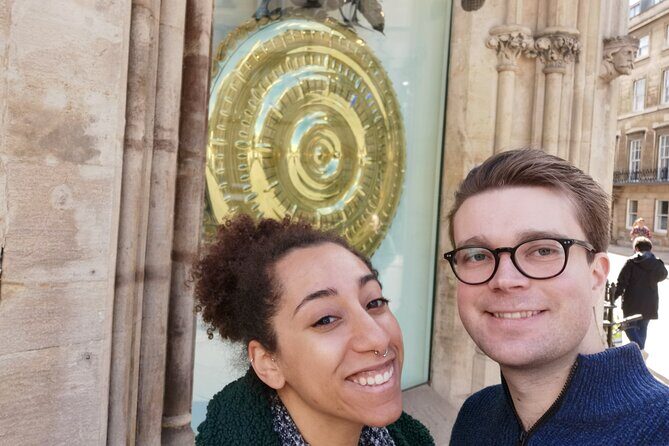
Cambridge feels like a living postcard, and this puzzle walk adds a layer of play. You’ll use a smartphone with GPS riddles to move between major sights while still wandering at your own speed, and you start and finish right at the Corpus Clock. I especially like that the route is made of free, outdoors stops around the university colleges, so you can enjoy Cambridge without lining up or paying admission fees.
What I like most is how the story pushes you to look closely at places you’d otherwise just pass by, and how the game is built for short attention spans—great for families who want something active. The one thing to consider is that puzzle adventures live and die by clue clarity and directions, so if a step feels off or you can’t see a landmark clearly from where you’re standing, you may need a little patience before you move on.
In This Review
- Key points to know before you start
- A phone-led mystery route through Cambridge colleges
- Price and timing: getting real value for $8.68
- Stop-by-stop: Corpus Clock, King’s College, and the Round Church
- Corpus Clock (about 10 minutes)
- King’s College (about 10 minutes)
- Gonville and Caius College (about 10 minutes)
- Clare College (about 10 minutes)
- Trinity College (about 5 minutes)
- St. John’s College (about 5 minutes)
- The Round Church Visitor Centre (about 10 minutes)
- Christ’s College (about 5 minutes)
- Ending back where you started
- How the clues + GPS change the way you look at Cambridge
- Crowds and comfort: why private, no-guide matters here
- Potential hiccups to keep expectations realistic
- Who this suits best (and who may want a different plan)
- Should you book this Cambridge college puzzle walk?
- FAQ
- How much does Schol ars & Secrets of Cambridge cost?
- How long does the Cambridge puzzle adventure take?
- Where does the experience start and end?
- Do I need an internet connection to play?
- Is there an in-person guide with you?
- Are the stops free to visit?
- Can I start at any time and take breaks?
- Is this activity private for my group?
- What’s the cancellation policy if plans change?
Key points to know before you start
- Phone + GPS riddles guide you stop to stop, but you still control your walking pace.
- Free outdoor college sights mean you can focus your money on the game, not tickets.
- Offline play is built in, so you’re not stuck hunting for signal.
- Private by design: only your group plays, with no live guide contact.
- Short, varied stops keep it realistic in 1–2 hours, even with a kid or two.
- You can pause and resume, which is handy if you want to duck into a café break.
A phone-led mystery route through Cambridge colleges
This is the kind of activity that’s ideal when you want structure without the pressure of a tour group. Instead of listening to facts on a schedule, you’ll answer clues that tell you where to go next—then you’ll get on-the-spot hints about how to continue. It’s a smart match for Cambridge, because the city’s big attractions are concentrated and walkable.
I also like that the experience is set up for curiosity. The game gives you a reason to stop at each college and study details at street level, not just admire the big names from across the road. If you’ve got kids, this kind of “find the next location” energy beats a long lecture every time.
Just know what it is: a self-guided puzzle game. That can be a win for independence and avoiding crowds, but it’s not the same as having a human guide to smooth over confusion or answer questions on the spot.
You can also read our reviews of more guided tours in Cambridge



Price and timing: getting real value for $8.68
At $8.68 per person for about 1 to 2 hours, the value comes from the balance of cost vs. what you actually get to see. You’re not paying entry fees for the colleges on this route—every listed stop is free, and the experience is designed around outdoor viewing.
That matters in Cambridge, where time and money can disappear quickly if you tack on multiple paid admissions. Here, your main expense is the game itself, and the rest is the walking and the storytelling.
Timing is flexible too. You can start at any time, take a break, and resume later. One note: the listing also shows opening hours from 8:00 AM to 9:00 PM, while the activity is described as always available; in practice, I’d plan to start within the posted hours if you want the smoothest experience.
Stop-by-stop: Corpus Clock, King’s College, and the Round Church
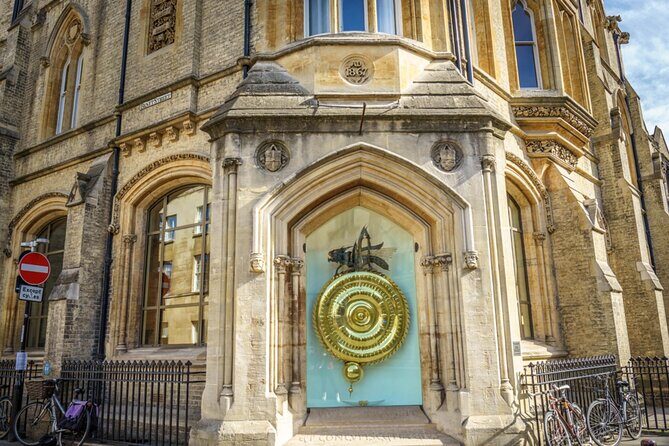
Your route begins at the Corpus Clock at 58 Trumpington St, Cambridge CB2 1RH. From there, you’ll work your way through a tight loop of college landmarks and a standout church feature called the Round Church. Most stops are quick—think 5 to 10 minutes—so you won’t feel trapped in one place too long.
Corpus Clock (about 10 minutes)
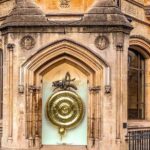
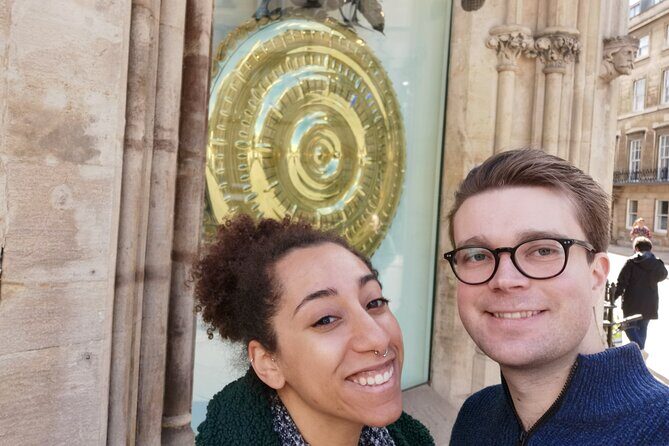
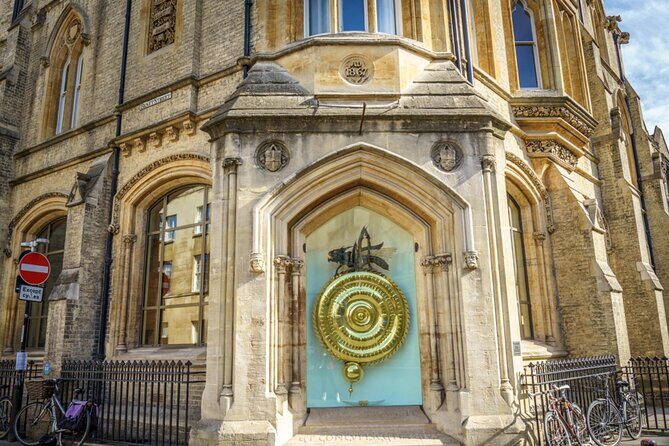
This starts you at a very Cambridge kind of landmark: a large sculptural clock at street level, outside the Taylor Library of Corpus Christi College. It’s a great opening because it gives you a clear visual reference point right away. Plus, because it sits in a busy, public area, you can jump in quickly before your brain fully wakes up.
King’s College (about 10 minutes)
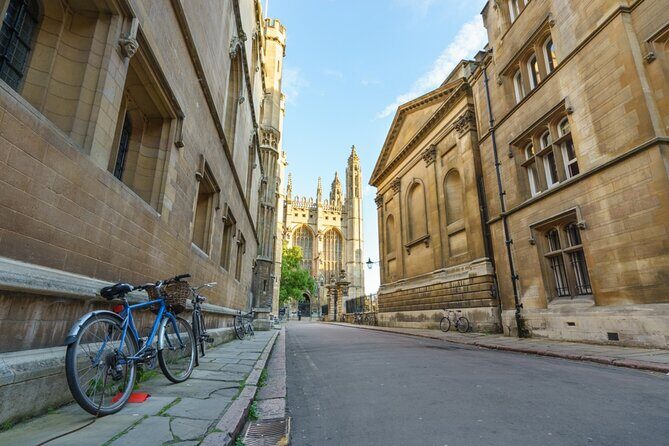
King’s College is one of Cambridge’s headline names, and the location on King’s Parade makes it easy to frame in your mind as you walk. The college lies by the River Cam and faces toward the center of the city—so the game can nudge you to look outward and notice the setting, not just the buildings.
A practical tip: even when you’re just viewing from outside, you can still get a lot by pausing. Use the game’s clue moment to stop, take a wider look, then zoom in mentally at the details it prompts.
A few more Cambridge tours and experiences worth a look



Gonville and Caius College (about 10 minutes)
Gonville and Caius is the fourth-oldest college at the University of Cambridge. That kind of fact is exactly the tone of the game: short, specific, and tied to a location. Here, the value is in helping you recognize that these places aren’t just pretty facades—they have age, identity, and long continuity.
Clare College (about 10 minutes)
Clare College has a founding date you can actually remember: it began in 1326 as University Hall, making it the second-oldest surviving college after Peterhouse. That makes this stop more than a quick pass-through. You’ll likely feel the contrast between the age of the place and the casual flow of the street around it.
Trinity College (about 5 minutes)
Trinity College is the largest Oxbridge college by number of undergraduates. Even with a short stop, this is a helpful anchor. Trinity gives you a sense of Cambridge’s scale—not only the romance of old stones, but the reality of thousands of students moving through the city.
If you want the best experience here, don’t rush. Take your 5 minutes, but also give yourself 30 extra seconds to look for the elements the clue directs you to notice.
St. John’s College (about 5 minutes)
St. John’s College was founded by Lady Margaret Beaufort. If you like history that’s tied to a name you can say out loud, this is a good pause. It’s quick, but it helps you connect Cambridge’s institutions to real people rather than treating everything as anonymous “old buildings.”
The Round Church Visitor Centre (about 10 minutes)
The Church of the Holy Sepulchre is known in Cambridge as the Round Church, and the experience routes you to its visitor centre. This is the kind of stop that makes the walk feel more than a straight line of college gates. A round church form is visually distinct, and it helps break up the college-focused rhythm.
Even if you’re mostly outdoors, the church’s identity gives you a reason to slow down. Look for the shape cues the game pushes you to find, and let it reset your attention.
Christ’s College (about 5 minutes)
Christ’s College is the final listed college stop. It’s short by design, which can be perfect when you’re about done with the route and want a last “hit” before the game guides you back. The learning moment here is more about closing the loop—ending at a recognizable Cambridge institution after you’ve already trained your eyes at the previous stops.
Ending back where you started
The game ends back at the meeting point. That keeps logistics simple: no need to figure out a second drop-off location. You also get to decide when you’re truly finished, because you’re free to pause and come back later.
How the clues + GPS change the way you look at Cambridge
Cambridge can be a “too many beautiful buildings” problem. When that happens, you start forgetting what you saw. A puzzle route solves that by forcing a sequence: clue, move, stop, look, solve, repeat.
The big advantage of using GPS with riddles is that you don’t have to constantly consult a map. Your phone tells you where to go next, and the story gives you a task that makes looking feel purposeful. You’re not just sightseeing—you’re participating.
You don’t need internet connection either. Offline play matters because Cambridge can be hit-or-miss for data depending on where you are and how many people are connected. With offline mode, you’re more likely to keep momentum instead of losing time to buffering, weak signal, or app errors.
If you like a smooth start, plan to arrive with a charged phone and a fully updated puzzle app if needed. Then keep the screen brightness reasonable so you can read instructions without squinting.
Crowds and comfort: why private, no-guide matters here
This experience is private and designed so only your group participates. That’s a big deal in Cambridge, where college streets can get busy, especially near the biggest-name colleges.
No human contact is also part of the appeal. If you don’t want to coordinate meeting points with a guide, or you’d rather solve at your own speed, this approach helps. It’s safer in the sense that you’re not blending into a larger group tour flow.
You also avoid the classic “my friend got separated” problem. With a phone-based route and a consistent start and end point, it’s easy to keep the whole group together, even if people walk at different speeds.
The tradeoff is the lack of real-time help. If something seems confusing—directions at a tricky gate, or a clue that points you to something hard to see—there’s no guide to step in. For most people, that just means taking an extra minute to re-check the screen and try again.
Potential hiccups to keep expectations realistic

I’d go into this knowing that puzzle games are sensitive to small changes in the environment. If a landmark is hard to view from the game’s intended point of view, you might feel like the clue doesn’t match reality.
A couple of issues have shown up for people, including directions that can be confusing near Trinity College gates and clues that don’t line up perfectly when something isn’t visible or has changed. There are also cases where access is limited, so you may only see certain spots from the outside even though they’re included in the story.
Here’s how to handle that in a practical way:
- If a step seems wrong, pause and read the next instruction carefully before moving on.
- Re-check that you’re standing in the right spot relative to the clue prompt.
- If a place is clearly not accessible, switch into outside-observation mode and keep going with the next instruction.
If you want a stress-free day, bring patience. If you want zero chance of confusion, you may prefer a guided tour instead.
Who this suits best (and who may want a different plan)
This is a great fit for first-time Cambridge visitors who want a focused introduction without committing to paid admissions. The route hits major college names—Corpus Clock, King’s College, Gonville and Caius, Clare, Trinity, St. John’s, the Round Church visitor area, and Christ’s College—so you’ll come away with a mental map of the city’s core.
It also makes sense for families. The stop timing is short, the activity is active, and the “find the next clue” rhythm keeps kids engaged. Even for teens, having a game goal tends to beat passive sightseeing.
You might skip this if you strongly prefer live interpretation. If you want a person to explain context, correct misunderstandings instantly, or answer spontaneous questions, this is more of a self-driven experience.
It’s also worth thinking about your group style. If your group enjoys technology and puzzles, you’ll probably have a better time than if you’d rather do pure walking with a guidebook.
Should you book this Cambridge college puzzle walk?
I’d book it if you want a low-cost, family-friendly way to see Cambridge’s college icons while walking a tight loop that doesn’t require admissions tickets. The offline feature and flexible start times make it practical, and the private setup helps you avoid the usual crowd friction.
I’d hesitate if you get frustrated by puzzles that rely on exact directions or if your group hates tech-based steps. Since the experience doesn’t include a physical guide, you’ll be your own troubleshooting team if something doesn’t look like the clue expects.
If you’re trying to decide on value: for under $9, you’re paying for a structured way to spend 1 to 2 hours moving through Cambridge with built-in prompts. In a city where paid tours and admissions add up fast, that can be a smart play.
FAQ
How much does Schol ars & Secrets of Cambridge cost?
It costs $8.68 per person.
How long does the Cambridge puzzle adventure take?
Plan on about 1 to 2 hours.
Where does the experience start and end?
It starts at the Corpus Clock, 58 Trumpington St, Cambridge CB2 1RH, UK, and ends back at the same meeting point.
Do I need an internet connection to play?
No. You can play offline, so you do not need internet to run the game.
Is there an in-person guide with you?
No. This is a self-guided smartphone experience, so there is no physical tour guide included.
Are the stops free to visit?
The listed stops are shown as free, and your experience is built around viewing these places from the outside.
Can I start at any time and take breaks?
Yes. You can start at any hour, take a break, and resume later.
Is this activity private for my group?
Yes. It is private, and only your group participates.
What’s the cancellation policy if plans change?
You can cancel for a full refund up to 24 hours in advance of the experience’s start time. If you cancel less than 24 hours before, the amount paid is not refunded.