REVIEW · CAMBRIDGE
Cambridge Quest: Self Guided City Walk & Immersive Treasure Hunt
Book on Viator →Operated by Go Quest Adventures · Bookable on Viator
Cambridge plays best when it’s a quest. This self-guided city walk turns Cambridge’s center into a clue-led route, with a mobile app guiding you between landmarks while you earn points. You pick your own rhythm—pause for a café stop or move fast to chase the leaderboard.
I like the flexible start and no marching schedule. I also like the mix of sightseeing and mental workouts, with puzzles plus bite-size facts such as a time-eating clock, a secret society, and references to where a castle once stood.
The main drawback is that the clue hunts can be tough to follow, and the app-based format means it’s not as straightforward as a live guide when you want clear explanations on the spot.
In This Review
- Key things I think you’ll care about
- A Quest-Style Walk Through Cambridge’s College Center
- Starting at Great St Mary’s: App-Only Tickets and Daylight Timing
- Colleges, Cobbles, and the Best Views Along the Route
- How the Clues Work: Points, Puzzles, and a Leaderboard Option
- The Time-Eating Clock, Secret Society, and a Castle Site on Foot
- Pacing, Breaks, and Fit for Families, Couples, and Teams
- Value for $39.82: When It’s Worth It and When It Isn’t
- Practical Tips That Help the App Walk Go Smoother
- Should You Book the Cambridge Quest?
Key things I think you’ll care about

- Start anytime, finish your way: no fixed start or end beyond daylight play, and you return to the start point.
- App-only ticket: no printing, just a mobile ticket and an English-only experience.
- Puzzles that change the pace: expect brainy, sometimes challenging clue-finding and puzzle-solving.
- Point system and leaderboard option: you can go leisurely or treat it like a friendly race.
- Sights built into the route: famous college exteriors, a top-view moment, and story bits you can’t really get from standing still.
- Real-world practicality matters: one drawback reviewers noted is that app routes and clue locations can feel hard if you prefer an easy walk with clear storytelling.
A Quest-Style Walk Through Cambridge’s College Center
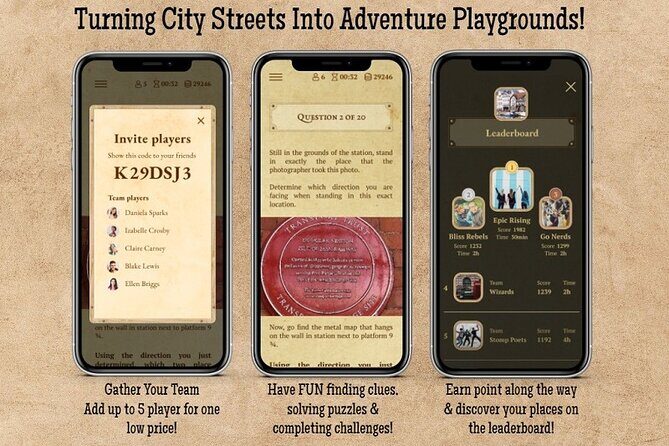
This is a city walk that treats Cambridge like an adventure playground. Instead of listening to a single guide voice for two hours, you’re working as a team inside a mobile app experience. The structure is simple: follow the route, answer clues, solve puzzles, and rack up points as you go.
That format works well in Cambridge because you’re surrounded by visual landmarks that reward attention. College buildings, cobblestone streets, and classic streetscape angles all make sense when you’re actively searching for details. You’ll see places most people hurry past because you’re given a reason to look closer.
I also like that the experience is designed to be flexible. You’re not stuck in a group bottleneck. If your team wants to linger outside one college facade while you argue over a clue answer, you can. If your legs need a pause, you can grab a snack and keep going.
You can also read our reviews of more walking tours in Cambridge



Starting at Great St Mary’s: App-Only Tickets and Daylight Timing

Your quest begins at Great St Mary’s, The University Church, on Senate House Hill (Cambridge CB2 3PQ). It ends back at the same place. That back-to-start design is useful: you don’t have to figure out a second pickup point or reorganize your transport for the finish.
You can play any time within opening hours (daily, 7:00 AM to 8:00 PM). It also needs to be played during daylight hours, so it’s not ideal for an evening-only plan. If you’re visiting with limited daylight, this matters more than you might think. Cambridge is pretty in the daytime, but this activity is built for visibility—reading clues outdoors and spotting physical details along the route.
The ticket is mobile, with instant access and nothing to print. You’ll also want to know the app is English only. If your group needs another language, this one won’t fit.
Finally, it’s a private group activity. That’s a nice perk if you want your team to move together without merging into other visitors.
Colleges, Cobbles, and the Best Views Along the Route

The route starts you in the heart of Cambridge and guides you through cobblestone streets where the university center feels grand even when you’re just walking past. The attraction here isn’t only the big, obvious architecture. It’s the way the app nudges you to notice the angles, the details, and the context of what you’re seeing.
Along the way, you’ll pass some of the area’s most famous colleges. But you’re not treated like a passive tourist. The clue path is meant to pull you from “I recognize that building” into “I can point out something specific about what I’m looking at.” That is where the sightseeing feels less like ticking boxes and more like real orientation in the city center.
There’s also a specific moment built around one of the better views of Cambridge. Even if you’ve seen photos, the walk-to-view pacing changes things. You’ll arrive with your brain already “on”—you’ve been solving clues and scanning for details—so the view lands as part reward, part reset.
A small practical note: because it’s a self-guided route, the pace is yours. If your group is slower with puzzles, your “about 2 hours 30 minutes” estimate can stretch, especially if you stop often for snacks or you want to re-check answers. If your group is faster, you might finish with time to spare.
How the Clues Work: Points, Puzzles, and a Leaderboard Option

The core of the experience is the hidden trail reveal. You earn points by finding clues, solving puzzles, and completing challenges. You can play it like a calm walk or make it a race by aiming for the city leaderboard.
Here’s the important part: the puzzles are not all gentle. One reviewer called the clues challenging, and another described some games as hard to understand. That split is worth taking seriously when you’re deciding if this is your kind of activity.
If you like logic puzzles, clue interpretation, and team problem-solving, you’ll probably enjoy the format. It can feel like a light escape-room style challenge blended into a Cambridge walk. But if you want a smooth, clearly narrated route with minimal thinking, the app will feel less helpful. In that case, you may end up focusing on figuring out the next step rather than absorbing stories.
Also, because the experience is app-driven, you’re relying on the interface and the route flow. One review pointed out that limitations of the app format are obvious. Translation: don’t expect the same “clarity on demand” you get from a live guide who can read your confusion and correct course quickly.
The upside is that you can create momentum yourself. If one clue stalls your group, you can pause, regroup, and keep walking. If you want to run ahead for the next clue, that’s part of the fun too.
The Time-Eating Clock, Secret Society, and a Castle Site on Foot
What I like about this quest concept is the way it turns famous ideas into walk-by moments. Instead of a lecture about Cambridge, you get story hooks sprinkled along the route—small facts you can attach to what you’re seeing.
The descriptions you’ll encounter include:
- a time-eating clock
- a secret society reference
- a spot connected to where a castle once stood
Those themes are a clever way to build curiosity. Even if you don’t know Cambridge lore right now, the app nudges you to slow down and look at the city as more than “pretty buildings.”
The app also includes sections labeled as did-you-know style facts. One review liked that the experience added information, while another reviewer said it didn’t teach much. That contradiction usually comes down to expectations: if you want a deep, explanatory narrative, an app puzzle walk may feel too light. If you’re happy with short facts you can connect to visuals, the format works.
For me, the strongest value is that you come away with mental labels. You won’t just remember college architecture. You’ll remember a story idea you saw while standing in the street—like the clock theme or the castle reference—because the quest keeps you searching until you can connect the clue to the surroundings.
You can also read our reviews of more guided tours in Cambridge






Pacing, Breaks, and Fit for Families, Couples, and Teams

Because the route is self-guided, you can build your own “two hours 30 minutes” adventure. Want a long stop at one location? Do it. Need to reset with a snack? The city has plenty of cafés and pubs along the way, and the quest doesn’t punish you for taking breaks.
That’s a big plus for families. Kids (and adults) who get bored with straight museum-style sightseeing often do better with a goal-based activity. You can keep them engaged without constantly redirecting.
It’s also a solid option for couples and groups of friends. The “work together” structure gives you natural conversation topics. You can argue over answers, compare interpretations of clues, and take silly competitive swipes at the leaderboard.
Team-building groups can also like it, since the experience naturally creates collaboration. People split tasks—someone reads, someone searches, someone tracks points—and you get a shared goal without needing a formal facilitator.
The one caution: if your group is large and puzzle-solving slows down, the quest may feel longer than expected. Plan comfortable walking shoes and some patience with the app’s clue flow.
Value for $39.82: When It’s Worth It and When It Isn’t

Price is per group: $39.82 for up to 5 people. That can be good value if you treat it as a shared activity rather than a replacement for a guide.
Here’s when I think it’s worth it:
- You want a short-time way to see the center of Cambridge while doing something interactive.
- Your group enjoys puzzles, clue hunting, and working as a team outdoors.
- You’re okay with learning in small pieces rather than a continuous guided story.
- You want flexibility—start when you want in daylight, stop for breaks, and move at your pace.
Here’s when it might disappoint:
- If you want easy navigation and very clear instructions, the clue difficulty may frustrate you.
- If you expect a lot of guided explanation, the app format may feel thin.
- If your group is time-poor and hates getting stuck on hard clues, it may feel like wasted time.
One reviewer called it a good value option for a visitor with limited time, and another said it was expensive and felt like a waste. That contrast is usually what you should use to judge fit. If you’re the type to enjoy scavenger-style challenges, the value looks much better. If your idea of sightseeing is more straightforward, you’ll likely feel the price more sharply.
Practical Tips That Help the App Walk Go Smoother

Since this is app-based, small preparation steps matter more than with standard guided tours.
- Bring a charged phone and make sure you can keep the screen bright enough for daylight reading.
- Start early enough that you’re not rushing. Daylight is a requirement, and finishing calmly helps puzzle-solving.
- Use a simple team strategy: split roles (reader, spotter, puzzle solver) so everyone isn’t staring at the same part of the screen.
- Expect some clues to be hard to find. If you get stuck, take a short pause, then try again instead of forcing it at full frustration.
- If you hit route issues due to construction, note where you encountered trouble. The provider response suggests the app can be updated when problems are reported.
Also, one helpful detail: if you don’t finish in one go, the quest route should still be available later so you can return to complete the last stretch.
Should You Book the Cambridge Quest?
Book it if your goal is to see Cambridge’s college center with a bit of challenge, teamwork, and short, fun facts tied to what you’re looking at. It’s especially good for groups of up to five who like puzzles and want a flexible schedule without waiting on other people.
Skip it if you want a step-by-step guided history lesson with easy wayfinding and minimal ambiguity. The clue difficulty and the app-only format can feel rough if you prefer straightforward interpretation.
If you’re on the fence, think about your group’s personality first: puzzle-lovers usually get a lot more out of this than people looking for a traditional tour.