REVIEW · CAMBRIDGE
Harvard’s Secret Society: Exploration Game and Tour
Book on Viator →Operated by Questo · Bookable on Viator
Harvard Yard, solved like a mystery. I love that this is self-guided with a phone-based escape-game feel, so you can slow down or speed up between clues, and you still get a structured walk through recognizable Harvard landmarks. The downside: if Harvard access is restricted on your day, you may not be able to reach every spot and might have to work from what you can see nearby.
You start at Harvard Square and play your way stop-by-stop through the campus, finishing at the Harvard Lampoon building. Since there’s no tour guide included, it’s you + your phone (Questo app) + a clue chain that points you to the next location, usually pacing out to about 1 hour 20 minutes to 1 hour 50 minutes at a comfortable stride.
In This Review
- Key highlights at a glance
- How the Harvard Secret Society game plays (and why it works)
- Price and value: $6.01 for a Harvard Yard walk with no ticket hassles
- Starting at Harvard Square: first clue, first directions
- Johnston Gate: the moment you transition into the Yard vibe
- Charles Sumner Statue and Phillips Brooks House: clues that reward slow looking
- Holden Chapel and the Statue of John Harvard: the stops where landmarks do the heavy lifting
- Memorial Church to Widener Library: a long but satisfying campus stretch
- Carpenter Center for the Visual Arts and Beck-Warren House: where the game feels like a campus scavenger hunt
- Harvard Crimson Building to Harvard Lampoon: finishing strong
- What you’ll actually get from this beyond the walk
- When this experience is a great fit
- Who should book: solo, couples, and groups who like independence
- Should you book Harvard’s Secret Society: Exploration Game and Tour?
- FAQ
- How long does the Harvard Secret Society game take?
- Where does the experience start and end?
- Is there a tour guide during the experience?
- What language is the game offered in?
- Do I need entry tickets to attractions?
- What do I need to play on my phone?
- Can I take breaks at each stop?
- Is it suitable for most travelers?
- What is the cancellation policy?
- What if something goes wrong during the game?
Key highlights at a glance
- Self-guided clue path across Harvard Yard: solve, walk, and keep moving at your pace
- Escape-game + scavenger-hunt format: practical structure without the herd feeling
- Mobile ticket via the Questo app: your phone becomes the map and game controller
- A campus loop that feels like a mini city walk: Harvard Square to Harvard Lampoon, in sequence
- 24/7 customer support: help is there if the app acts up
- Great for avoiding crowds: no scheduled group timing needed once you start
How the Harvard Secret Society game plays (and why it works)
This experience is built around a simple idea: instead of reading a guidebook and hoping you notice things, you use a clue to decide where to go next. Each time you arrive at a stop, you’re given a new challenge that becomes the story engine for the next leg of the walk.
Here’s the part I think makes it feel different from a standard tour: the game rhythm is flexible. You can pause as long as you like at each stop, then continue when you’re ready. That means you’re not stuck at the exact same pace as strangers in matching tour shoes, and you can spend extra time if a clue makes you look harder at a specific spot.
It also helps that the format mixes a few styles into one: tour-walk structure, escape-game thinking, and scavenger-hunt navigation. In practice, that usually means you’re not just walking to famous names—you’re scanning your surroundings for whatever the clue is asking you to notice.
A few more Cambridge tours and experiences worth a look



Price and value: $6.01 for a Harvard Yard walk with no ticket hassles

At $6.01 per person, this one is priced like an inexpensive activity, not a premium guided tour. And that’s not just marketing math. The big value drivers are:
- You pay for the game experience via the app.
- You’re not paying for a guide’s time on top.
- You don’t need entry tickets to attractions to finish the route.
So what you’re really buying is time. In about 1 hour 20 minutes to 1 hour 50 minutes, you get an organized walk across a cluster of Harvard landmarks, with built-in reasons to stop and look. If you’ve ever spent a morning on a big campus and felt like you only saw the highlights, this kind of structure tends to make the walk feel more complete.
The other value angle: you’re not locked into a crowd-driven tour schedule. Since the experience is self-guided, you can choose when to do it during open hours listed for the activity window (the schedule provided runs Monday–Saturday, 6:00 AM–11:30 PM).
Starting at Harvard Square: first clue, first directions

Your game begins in a very practical spot: Harvard1400 Massachusetts Avenue, at/near 1 Brattle St at, Cambridge. This is a smart first move because Harvard Square is a familiar landmark area for many visitors, and it gives you a place to gather yourself before you head deeper into the campus zone.
You’ll get your first clue right at the start. The clue isn’t just a question—it’s designed to unlock the next stage of the story and give you directions to the next stop. This matters because it reduces the mental overhead of figuring out where to go next on foot. If you’re the kind of traveler who loves exploring but hates constantly checking maps, this approach is a relief.
Tip for your start: treat those first minutes like a warm-up. Get your phone charged, open the Questo app, and read the clue carefully before you begin walking. Early mistakes can cost you time later, especially if you have to backtrack.
Johnston Gate: the moment you transition into the Yard vibe

Next up is Johnston Gate, where you’ll receive a new clue. This is one of those stops where the game design nudges you from the street-level buzz of Harvard Square into the more contained rhythm of campus paths.
What to do here is simple: look at what the clue is asking for, answer it as accurately as you can, then take the time you need to move on. The experience explicitly lets you stop for as long as you like at each stage, and that freedom is one of the real “quality of life” features.
Potential consideration: if campus access feels restricted on your day, this early gate-stage can be where you notice it most. If you can’t get right up to the exact location, you may still be able to work the clue from nearby context—but don’t assume every spot will be fully reachable.
Charles Sumner Statue and Phillips Brooks House: clues that reward slow looking
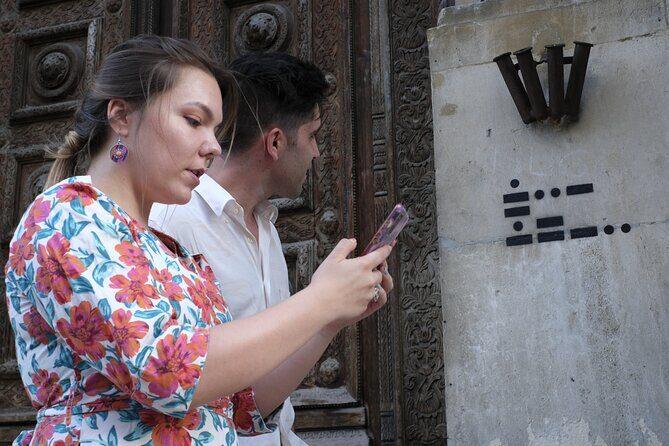
After Johnston Gate, you move to the Charles Sumner Statue, then onward to Phillips Brooks House. In clue-based walks like this, these stops usually function as your “detail checkpoints.”
At a statue stop, you’re likely to be hunting for something visible and specific—names, wording, or a detail that helps you confirm your answer. At a house stop, the clue may steer you to notice architectural or signage-type information in the area. Even when you don’t know what you’re looking for yet, the clue narrows the field fast.
What I like about these middle stops is pacing. They break the walk into chunks so you’re not thinking only about distance. Instead, you’re thinking about arriving, solving, and then moving.
If you’re traveling with someone who gets bored in long sightseeing walks, these kinds of stops can keep attention from drifting. It gives every person a job: read clue, look around, compare what you see, pick an answer, and move.






Holden Chapel and the Statue of John Harvard: the stops where landmarks do the heavy lifting
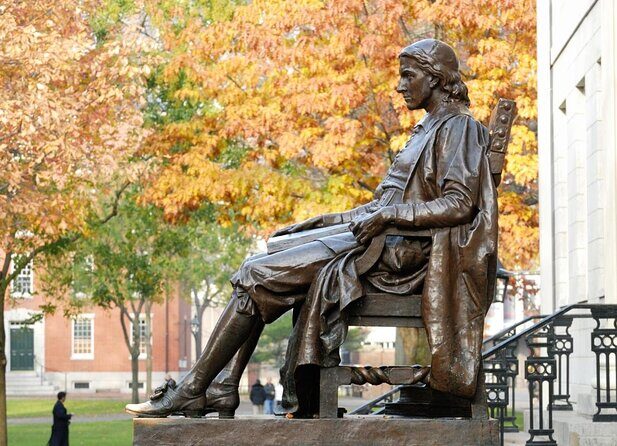
Next you’ll reach Holden Chapel, then the Statue of John Harvard. These are major visual anchors by name alone, and that’s part of why they’re so useful in a self-guided game. Even if you’re not a campus expert, the names help you confirm you’re in the right place.
Here’s a practical mindset: treat these stops like orientation pins. The game doesn’t just ask you to solve; it gets you to build a mental map of where things are relative to each other. That makes the overall walk feel less like random wandering and more like a loop you understand.
One thing to watch for is access. If a specific chapel or viewing area is closed to public foot traffic, you can still keep moving through the story—just be ready that your solving might depend on what you can see without entering restricted areas.
Memorial Church to Widener Library: a long but satisfying campus stretch
Now the route continues through Memorial Church and on to Widener Library. This part of the walk tends to feel like the “big campus” stretch—lots of recognizable landmark names in a row.
This is also where the self-guided nature starts to shine. If you want a quick break, you can take it. If you want to slow down because the clue has you staring at details, you can. If you want to keep momentum, you can do that too.
From a strategy point of view, I recommend you don’t try to solve every clue instantly. If you rush, you may end up redoing work later or feeling frustrated when something doesn’t match what you thought. The time you save by moving fast can turn into time loss if you need to correct an answer.
Carpenter Center for the Visual Arts and Beck-Warren House: where the game feels like a campus scavenger hunt

You’ll then hit Carpenter Center for the Visual Arts, followed by Beck-Warren House. These two stops shift the feel of the walk slightly—more variety in what you’re seeing, and another set of clue prompts that ask you to pay attention rather than just pass through.
For a scavenger-hunt style activity, variety matters. It keeps the experience from becoming “walk, stop, answer, repeat” in a monotonous way. Each time the environment changes, your clue-solving brain gets a new kind of prompt.
If you’re visiting Cambridge as a couple or small group, this is also a section where you can share reactions without needing to coordinate a tour guide. You can compare what you’re noticing, talk through the clue, and decide your next move together.
Harvard Crimson Building to Harvard Lampoon: finishing strong
The final stretch brings you to the Harvard Crimson Building, then you finish at the Harvard Lampoon building, where both the story and city exploration games end.
This ending point is a good choice because it feels like a distinct payoff. Instead of ending at some random corner, you end at another landmark by name, and you get that satisfying feeling that you reached the final stage of the route.
Practical thought: if you’re short on time, pace yourself earlier so you don’t sprint through the last stops. Many people rush the end because they’re eager to be done. With a clue chain, rushing can be a trap—your best answers usually come after you’ve slowed down enough to really read the prompt.
What you’ll actually get from this beyond the walk
A self-guided clue tour can sound like a gimmick. In reality, it often delivers two very real travel benefits.
First, it gets you to notice campus details you’d skip with a standard sightseeing plan. The clue structure forces your eyes to land on specific things at specific times. Even if you don’t feel like a puzzle-person, that habit improves your experience of the place.
Second, it helps with crowds. Harvard can get busy, and when you’re on a normal guided tour you’re stuck in the same timing knot as everyone else. Here, you can stop when you want and take a breather without feeling like you’re falling behind a group.
One big caution from real-world use: if Harvard is closed to the public while you’re playing, you may not be able to access all the locations. That can be frustrating, especially if a clue expects you to be at a precise point. The good news is that the game isn’t tied to a strict schedule—Questo-style games are built to be usable without a hard expiry, so if some stops are inaccessible, you can return later when you can actually reach them.
When this experience is a great fit
This is the kind of activity I’d recommend if you want:
- A structured walk without paying for a guide
- A way to explore Harvard Yard and Cambridge in a loop that makes sense
- A lighter, puzzle-based approach to sightseeing (escape-game + scavenger hunt energy)
- Flexibility in pacing: pause, think, and continue at your preferred speed
It may be less ideal if you hate any uncertainty. Since some stops can depend on on-the-ground access, you’ll want to be okay with the idea that your phone clues may sometimes be answered with what you can see rather than what you can enter.
Who should book: solo, couples, and groups who like independence
Because it’s a private activity where only your group participates, you can treat it like your own mini expedition. Solo travelers get a built-in reason to keep moving without feeling like you’re wandering alone. Couples and friends can coordinate easily since there’s no guide’s voice telling you where to stand next.
If you’re traveling with kids, it can work well in the sense that it turns walking into a game. Just keep expectations realistic: you’ll still need patience for clue reading and stopping for answers.
If you’re a mobility-limited traveler, the provided info says most travelers can participate, but the experience still involves walking between campus landmarks. Decide based on your own comfort level with campus terrain and your ability to pause often.
Should you book Harvard’s Secret Society: Exploration Game and Tour?
Yes, if you want a low-cost, clue-driven way to see Harvard Yard and feel like you completed something—story included—without buying attraction tickets or signing up for a timed guided group.
I’d book especially if you like the idea of avoiding crowds and using your phone as a guide. And I’d plan for one possible snag: if campus access is limited on your day, you might not reach every exact spot. The best move is to keep your expectations flexible, take your time, and if needed, plan to finish later when you can get closer to each location.
If that sounds like your style—curious, independent, and happy to solve your way around the Yard—this is a strong value play for Cambridge.
FAQ
How long does the Harvard Secret Society game take?
Plan for about 1 hour 20 minutes to 1 hour 50 minutes, depending on how long you choose to stop at each clue location.
Where does the experience start and end?
It starts at Harvard1400 Massachusetts Avenue, 1 Brattle St at, Cambridge, MA 02138, and ends at the Harvard Lampoon building, 44 Bow St, Cambridge, MA 02138.
Is there a tour guide during the experience?
No. A tour guide is not included. You play the game using the Questo app on your phone.
What language is the game offered in?
The game is offered in English.
Do I need entry tickets to attractions?
No. Entry tickets to attractions are not needed to complete the tour.
What do I need to play on my phone?
You’ll use the city exploration game available on your phone through the Questo app, with a mobile ticket.
Can I take breaks at each stop?
Yes. At each clue location, you can stop for as long as you like and continue at your own pace.
Is it suitable for most travelers?
The information provided says most travelers can participate, and service animals are allowed.
What is the cancellation policy?
Free cancellation is available if you cancel at least 24 hours before the experience’s start time for a full refund.
What if something goes wrong during the game?
Customer support is available 24/7, and you’ll have help if you need assistance while using the app.