REVIEW · OXFORD
Oxford: Stories, Secrets & Sights Walking Tour with a local
Book on Viator →Bookable on Viator
Oxford has more stories than you think. In this 2-hour walk with a local guide, you’ll get Oxford’s highlights and Harry Potter film locations without needing to decode the city on your own. I love the small-group pace and the way each stop comes with plain-language context about Oxford life, not just dates. One thing to plan for: you’ll see many sites from the outside, so if you want full building interiors, you’ll need a separate visit after.
If you like humor, street-level detail, and university traditions you can actually picture, this tour fits well. Guides such as Tony and Nigel have been praised for turning architecture and odd little facts into something you can feel in the streets, and the session keeps moving at a laidback tempo.
In This Review
- Key Highlights You’ll Care About
- Why This 2-Hour Oxford Walk Feels Worth It
- Getting Started on Broad Street and Ending at Carfax
- The “Oldest College” Opening: A Quick Map of Oxford
- No Building Interiors Most of the Time (Except One Big Moment)
- Harry Potter Film Locations Without the Guesswork
- The Museum Stop: Collections with a Personal Chain to Famous People
- Theatre Architecture and Historic Ceremonies
- A Venice-Looking Bridge and an Annual Oxford Tradition
- The Library Buildings: Kings, Collections, and Student Use
- The Most-Photographed Building and Its Hidden Tunnels
- The Oxford Martyrs Trial Stop: Go Inside for Free
- Covered Market and Galatia: Oxford’s Everyday Side
- Town and Gown: The 600-Year Relationship Behind the Stones
- Price and Value: What Your $34.36 Buys You
- Who Should Book This Tour
- Should You Book This Oxford Stories, Secrets & Sights Tour?
- FAQ
- How long is the Oxford Stories, Secrets & Sights walking tour?
- What time does the tour start?
- Where does the tour start and end?
- How much does the tour cost?
- Is the tour offered in English?
- Do you go inside any buildings during the tour?
- What’s the maximum group size?
- Is there a mobile ticket?
- Are service animals allowed?
- Is free cancellation available?
- Where do I find the meeting point details?
Key Highlights You’ll Care About
- Small group cap (max 15) makes it feel like a conversation, not a lecture
- Harry Potter film locations explained as you walk, so you don’t waste time guessing
- University traditions and ceremonies tied to specific places, not vague facts
- Free indoor stop at the Oxford martyrs site (most other places are outside)
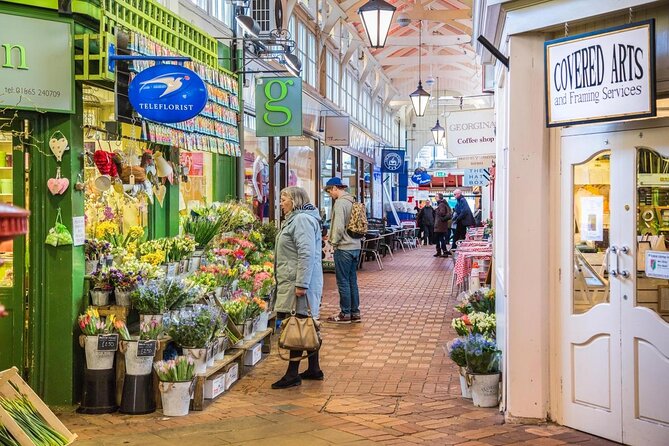
- Covered Market time with independent traders, plus a look at Oxford’s everyday side
- Town-and-gown history gives you the human tension behind the famous colleges
Why This 2-Hour Oxford Walk Feels Worth It

Oxford is famous for colleges, but that can turn into a “pretty postcard” loop if you’re wandering alone. This tour is built to keep you oriented and curious. You get the right sequence of sights, plus the stories that explain why the city looks the way it does.
At $34.36 per person, it’s not a tiny expense, but it also isn’t priced like a museum-heavy day. The value comes from a real local guide, a tight 2-hour structure, and at least one free entrance included during the walk. If you’re visiting for a short time, this is the kind of format that helps you use the rest of your trip smarter.
You can also read our reviews of more tours and experiences in Oxford.



Getting Started on Broad Street and Ending at Carfax
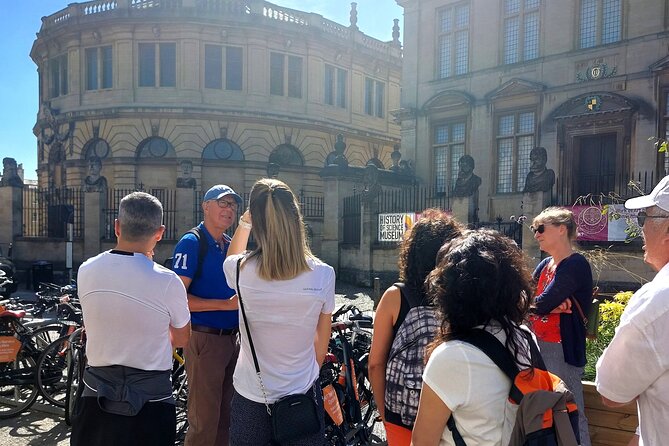
The tour starts at 15 Broad St, Oxford OX1 3AS at 1:00 pm. It finishes at 2 Cornmarket St, Oxford OX1 3EX, with the walk ending at Carfax Tower.
That end point matters. Carfax Tower sits near the center of Oxford, so you can roll right into a late lunch, a quick browse of nearby streets, or a second, self-guided walk without feeling stuck at the edge of town.
It’s offered in English, with a mobile ticket, and it runs with a maximum of 15 travelers. In practice, that group size keeps things flexible and helps the guide answer questions without the whole tour waiting in line behind one person.
The “Oldest College” Opening: A Quick Map of Oxford
You start at Oxford’s oldest college, where you get a brief history of Oxford and the university itself. This is the right kind of first stop. Before you see famous buildings, you learn how Oxford works as a system—so the details you’ll notice later make sense.
Because the tour focuses on stories rather than rushing inside rooms, you’re set up to look at facades, streets, and gates with better eyes. You also get the basic vocabulary: what makes a college different, why traditions keep repeating, and how the university shaped the city around it.
If you love learning fast, this opening delivers. If you’re the type who wants big photo moments right away, you might find the first stretch a little more “history lesson on foot” than spectacle. Still, it pays off because the stops later feel clearer.
No Building Interiors Most of the Time (Except One Big Moment)
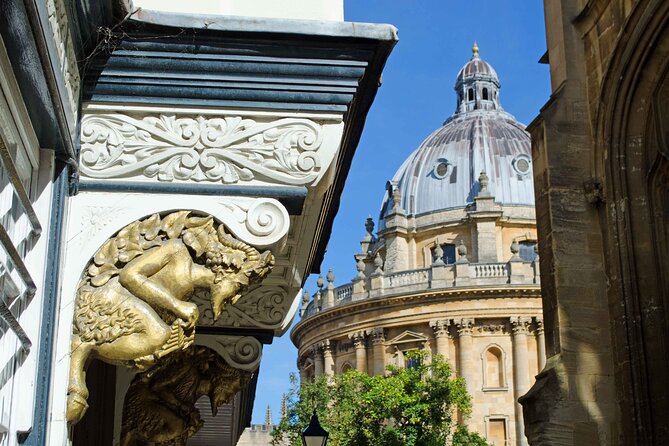
The tour explicitly notes that you do not go inside buildings during most stops. That’s a real consideration, especially if you’re dreaming about vaulted halls, cloisters, or lecture rooms.
The exception is important: you do go inside for the stop connected to the trial of Oxford’s martyrs, and the entrance is free. So you’re not completely missing the interior experience—you just get it in a focused, meaningful place instead of spending the entire tour in ticketed sites.
Tip for your planning: if a specific college interior or library space is on your must-see list, treat this tour as the story map. Then schedule building access for another day when you can go at your own pace.
Harry Potter Film Locations Without the Guesswork
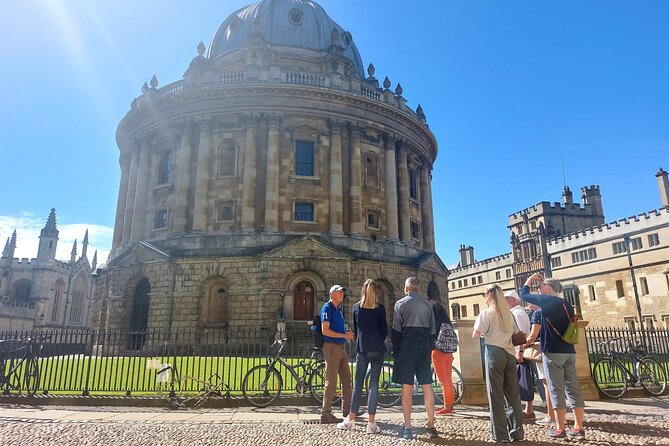
One of the best parts is how the guide handles the Harry Potter angle. You see the film-linked locations as part of the walk, but you’re not stuck in “spotting game” mode.
The payoff is that you get context for why those locations work on screen, and how Oxford’s real character helped shape the look and feel. Even if you’ve never watched a single film scene, you still benefit because the explanation connects to the streets, architecture style, and university layout that make Oxford so distinctive.
This is also why the tour works for repeat visitors. If you’ve already done the major highlights, the film locations can help you notice details you previously passed by.






The Museum Stop: Collections with a Personal Chain to Famous People
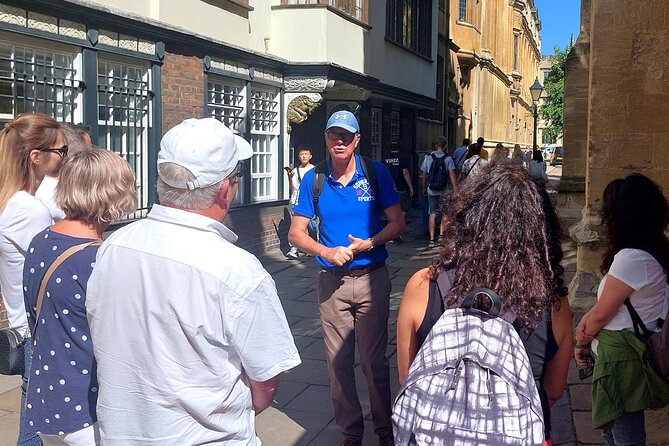
At the next stop, you learn about a museum’s history and its collection—many of which were owned by famous people. The key value here isn’t just the “who owned it” trivia. It’s the way the guide ties ownership and collecting habits to Oxford’s intellectual identity.
You’ll come away thinking differently about museums. Instead of seeing objects as isolated exhibits, you’ll understand them as part of networks: collectors, academics, and institutions that shaped what Oxford holds onto.
Because this is part of a walking sequence, it also prevents museum time from feeling random. You get a reason for the museum’s role before you even settle into it.
Theatre Architecture and Historic Ceremonies

Next is a stop focused on the architect and the history of the theatre, including how it’s used today. The guide also covers two Oxford University historic ceremonies tied to the site.
This is exactly the kind of stop that turns “I saw a pretty building” into “I understand what the building does.” You get a sense of why architecture in Oxford isn’t just decorative. It’s functional for tradition, performance, and big moments in the university calendar.
If you’re the kind of traveler who likes institutional rituals—degree ceremonies, public events, the formal side of old universities—this section will feel like it clicks into place.
A Venice-Looking Bridge and an Annual Oxford Tradition
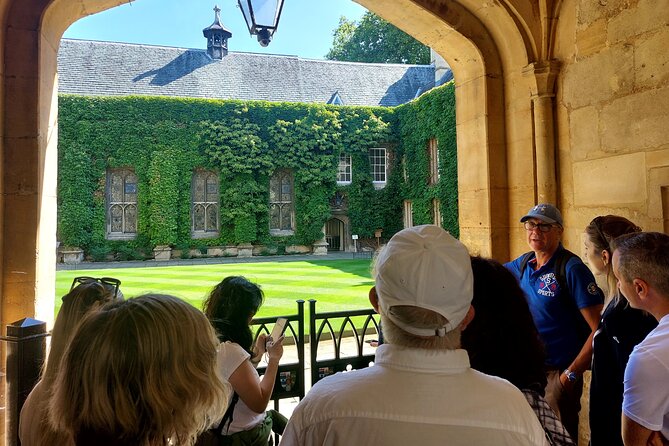
You’ll also see a bridge described as something that wouldn’t look out of place in Venice, plus the way it’s used in an annual Oxford University tradition.
Bridges in Oxford are never just crossings. They’re meeting points for local routines, and they often show up in the city’s visual identity. When a guide connects a bridge to an annual tradition, you start seeing Oxford as a living place rather than a museum outdoors.
This part is great for photographers too. Even if you’ve seen Oxford bridges before, you’ll know what to look for and when the tradition would make the bridge feel “alive” instead of still.
The Library Buildings: Kings, Collections, and Student Use
One of the tour’s major story beats is the library area. You learn about the buildings that make up the library, its links to Kings, how the collection was created, and how it’s used by students today.
That blend—royal connection, the origin of the collection, then modern student reality—is what makes this stop feel practical. You’re not only studying the past. You’re learning what still matters now: access, study, and how students move through scholarly spaces.
It also helps you avoid a common Oxford mistake. If you treat libraries and universities like locked-in monuments, you miss the daily life of the place. This tour nudges you to pay attention to how knowledge is actually used.
The Most-Photographed Building and Its Hidden Tunnels
Probably Oxford’s most photographed building is next. The guide explains what it is, its architects, and the use of its hidden tunnels.
This is one of those stops that’s tailor-made for walking tours. From street level, Oxford’s famous structures can look like they’re all surface and sightseeing. The “hidden tunnels” detail changes that. You start to imagine the invisible routes that support the visible architecture.
When you hear why tunnels exist and what they connect, you stop thinking of buildings as disconnected pieces. You see them as parts of an internal system.
If you’re into odd facts and light mystery, this section is a strong reason to book.
The Oxford Martyrs Trial Stop: Go Inside for Free
Then comes the trial of Oxford’s martyrs. This is noted as the stop where you do go inside during the tour, and the entrance is free.
Even if you don’t know the story already, this is a meaningful pivot. You move from the university’s architectural legends into a moment of religious and political tension that shaped Oxford’s reputation and identity.
Because the tour includes an indoor moment here, you get a change of pace. You’ll probably find you remember this stop longer than the purely exterior sights, since it’s physically different and the guide ties it to the larger Oxford narrative.
Covered Market and Galatia: Oxford’s Everyday Side
Later, you get to see a unique market full of independent traders and an amazing Galatia.
This is a smart move for a walking tour. Oxford’s colleges can dominate your perception, but markets remind you there’s a day-to-day rhythm underneath the academic glamour. Independent traders also tend to reflect Oxford’s local tastes—more modern, less ceremonial.
If you enjoy browsing, snack-hunting, or just watching how people move through small stalls, this stop gives you a natural break in the walk. It’s also a good place to pick up something small for later rather than forcing yourself to sit down immediately.
Town and Gown: The 600-Year Relationship Behind the Stones
The tour ends with a town-and-gown incident that epitomized the relationship between town people and students dating back 600 years.
This story does something practical: it explains why some of Oxford’s social energy can feel split between “the university world” and “the lived city world.” Without this context, Oxford can feel like a collection of perfect academic spaces. With it, you see conflict, negotiation, and community in the background.
It’s also a reminder that traditions aren’t always polite. They often come from real tension, and those tensions can shape everything from celebrations to street habits.
Price and Value: What Your $34.36 Buys You
Let’s talk value in real terms.
For $34.36 you get about 2 hours with a local guide, a tight sequence of Oxford highlights, Harry Potter-linked sights explained as you go, and at least one free interior entrance at the martyrs trial stop.
The money is really paying for two things:
- Guiding time that turns confusing streets into a clear story
- Context that makes the photos mean something later
If you plan to spend the rest of your visit doing a self-guided “see everything” approach, a tour like this can save you time. It also helps you choose where to return. You’ll know what deserves a longer look because you’ll understand what you’re seeing.
Who Should Book This Tour
This is a strong fit if:
- you want Oxford explained at a human pace
- you like university traditions, ceremonies, and the logic behind historic buildings
- you want Harry Potter spots handled without stress or guessing
- you prefer a small group walking experience over big crowds
It may not be the best match if:
- you’re hoping for lots of building interiors (most stops are outside)
- you want a museum-style deep dive into one site instead of several areas in one session
Should You Book This Oxford Stories, Secrets & Sights Tour?
I’d book it if you want a smart first pass through Oxford that helps you see more in less time. The best reason is the balance: highlights plus deeper stories, delivered at a relaxed pace by a guide who can make Oxford feel personal.
If you’re short on time, this is the kind of tour that helps you avoid wandering in circles. If you have extra days, it becomes the “map and meaning” tool that tells you what to return to on your own.
Go in expecting mostly outside viewing, with one key free indoor moment. Then bring your curiosity. You’ll leave with Oxford not as a list of sights, but as a place with relationships, traditions, and a few well-told secrets.
FAQ
How long is the Oxford Stories, Secrets & Sights walking tour?
It lasts about 2 hours.
What time does the tour start?
The start time is 1:00 pm.
Where does the tour start and end?
It starts at 15 Broad St, Oxford OX1 3AS and finishes at 2 Cornmarket St, Oxford OX1 3EX, with the tour ending at Carfax Tower.
How much does the tour cost?
The price is $34.36 per person.
Is the tour offered in English?
Yes, it’s offered in English.
Do you go inside any buildings during the tour?
You do not go inside buildings during most stops. However, you do go inside for the stop connected to the trial of Oxford’s martyrs, and the entrance there is free.
What’s the maximum group size?
The tour has a maximum of 15 travelers.
Is there a mobile ticket?
Yes, it includes a mobile ticket.
Are service animals allowed?
Yes, service animals are allowed.
Is free cancellation available?
Yes. You can cancel for a full refund if you cancel up to 24 hours before the experience starts.
Where do I find the meeting point details?
The tour lists the exact start location at 15 Broad St, Oxford OX1 3AS and the finish near 2 Cornmarket St, Oxford OX1 3EX (ending at Carfax Tower).