REVIEW · OXFORD
Discovering Cheltenham: A Self-Guided Audio Tour
Book on Viator →Operated by VoiceMap Audio Tours · Bookable on Viator
A self-guided walk sounds easy until Cheltenham pulls you in. This one lets you explore at your own tempo with offline audio and GPS-style guidance, and I like that it hits the big-name landmarks without dragging you along on a rigid schedule. The second thing I really like is the lifetime access—buy once, use the route again whenever you return. One drawback to plan for: you must bring your own smartphone and headphones, and the app works best when you set location access properly.
You start right in the centre at the Wilson Art Gallery and Museum, then the route layers in church history, Regency and Georgian architecture, and even music connections. Expect a relaxed 1 hour 30 minutes to 2 hours, mostly on foot, with audio that plays as you approach each spot. If you’re the kind of traveller who likes learning while walking, this format is a strong fit.
The route ends in Montpellier Gardens, so you finish somewhere nice to linger. Just don’t wait for the last minute to download—having a smoother setup makes the walk feel effortless instead of fiddly.
In This Review
- Key highlights worth your time
- Cheltenham on your terms: why an audio walk fits this town
- Price and what you really get for $11.99
- Starting at The Wilson: setting up before you hit the streets
- Cheltenham Minster and St Mary’s: churchyard walking, not museum hopping
- Royal Crescent: the Georgian terrace you can actually walk by
- Sophie Ryder’s Hare and the Minotaur: art as a town-history clue
- Edward Wilson statue: learning a famous Cheltenham name
- Neptune Fountain: design, water source, and who made it
- Cheltenham Town Hall: public space with a performance past
- Imperial Gardens and the Sherborne-to-Imperial Spa story
- Gustav Holst and music in the middle of a walking route
- Queens Hotel and the joy of purposeful architecture
- Montpellier Walk by William Hill Knight: shopping street with an architect’s signature
- Cheltenham College Chapel by Henry Prothero, plus a famous day pupil
- Finishing in Montpellier Gardens: concluding the Regency story
- A few smart tips to make the audio actually work
- Who should book this audio tour
- Should you book this tour or skip it?
- FAQ
- How much does the Cheltenham self-guided audio tour cost?
- How long is the tour?
- Is the tour self-guided?
- Does it work offline?
- What do I need to bring?
- Where does the tour start and end?
Key highlights worth your time
- Offline audio, maps, and geodata so you can keep moving without worrying about signal
- GPS-triggered narration that helps you hit each stop in the right order
- A tight historic core covering Cheltenham Minster, Royal Crescent, Regency terraces, and gardens
- Sculpture and statuary stops including Sophie Ryder’s Hare and the Minotaur and the Edward Wilson statue
- Architecture and music connections from the Neptune Fountain to the Gustav Holst statue
- Lifetime access so you can revisit Cheltenham (or repeat the walk on a second visit)
Cheltenham on your terms: why an audio walk fits this town
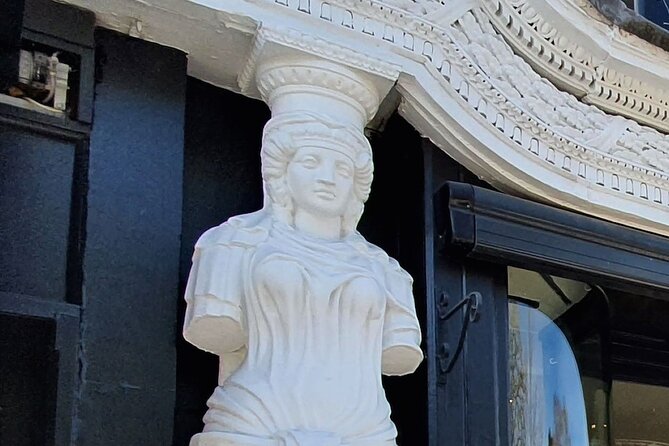
Cheltenham rewards slow sightseeing. The streets are walkable, the buildings are packed close together, and the town has a strong story—especially around the Georgian and Regency eras when Cheltenham grew into a fashionable spa destination. A self-guided audio tour works well here because you can slow down for a closer look at façades, then speed up when you’re just passing through.
Also, the route isn’t just generic sightseeing. It’s built around named landmarks and specific design details, so you’re not only seeing places—you’re learning what to notice. That matters in towns like Cheltenham, where a lot of value is in architectural cues: terrace layouts, fountain design, and the way grand buildings use public space.
You can also read our reviews of more tours and experiences in Oxford.


Price and what you really get for $11.99
At $11.99 per person, this is a budget-friendly way to add guided context to an existing walking plan. The real value is the combination of price plus lifetime access. Instead of paying again the next time you want to revisit, you can reuse the same tour on a future day.
You also get offline access to the audio and the maps/geodata inside the app. That means the cost isn’t tied to whether your phone has roaming data, and it’s easier to keep the walk going. For many people, this becomes the difference between a walk that stays fun versus one that turns into stopping and searching.
There’s one cost you should factor in before you buy: your phone and headphones are not included. If you show up without them, you won’t be able to do the tour.
Starting at The Wilson: setting up before you hit the streets
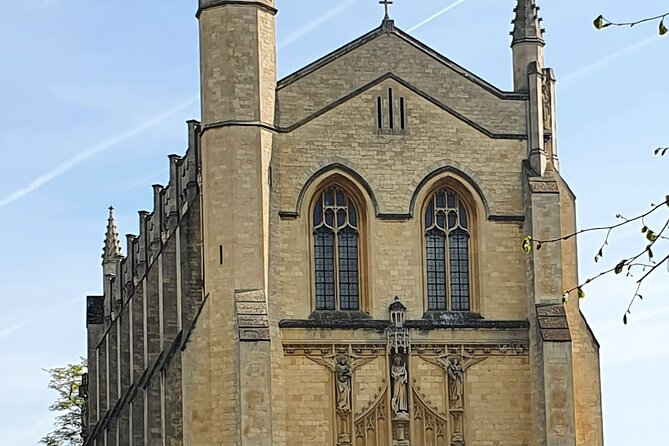
Your tour begins in front of the Wilson Art Gallery and Museum on Clarence Street. The opening track gives you a quick orientation to the museum and art gallery, then explains how VoiceMap works. It also gives you a history primer on Cheltenham so the later stops make more sense.
Here’s the practical part that will make or break the experience:
- Download the tour before you start, ideally in a good Wi‑Fi zone if your data is unreliable.
- Make sure your phone’s location access is set to work reliably. The audio is designed to line up with where you are, and if location permissions are too limited, you can end up with tracks starting at the wrong moment or not starting when you expect.
Once your setup is right, you’ll get a smooth rhythm: walk a short distance, audio cues you in, then you move on.
Cheltenham Minster and St Mary’s: churchyard walking, not museum hopping
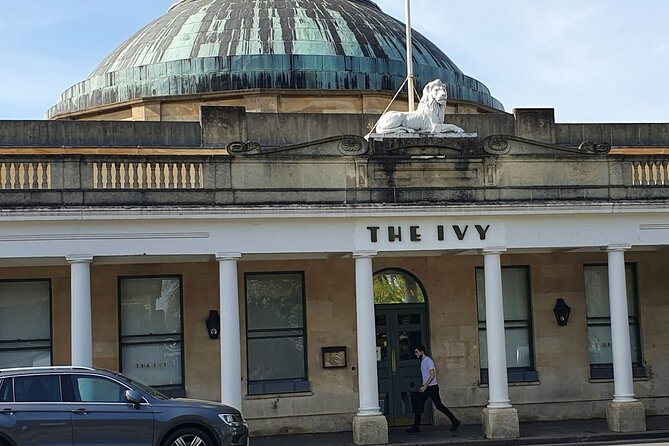
After The Wilson, you’ll come to Cheltenham Minster and the church of St Mary’s. This is one of those stops where audio beats photos. You can walk around the church while the narration guides what to look for, and then you get a bit of context tied to the graveyard.
Why this works on an audio format: church buildings can be visually impressive but confusing if you don’t know what era or function you’re looking at. The narration gives you the thread, so you’re not just standing in front of stonework wondering where to begin.
Practical note: this segment is outdoors walking around a church area, so go at a careful pace. If you’re watching audio cues through your phone, keep one hand free for navigating uneven ground.
Royal Crescent: the Georgian terrace you can actually walk by
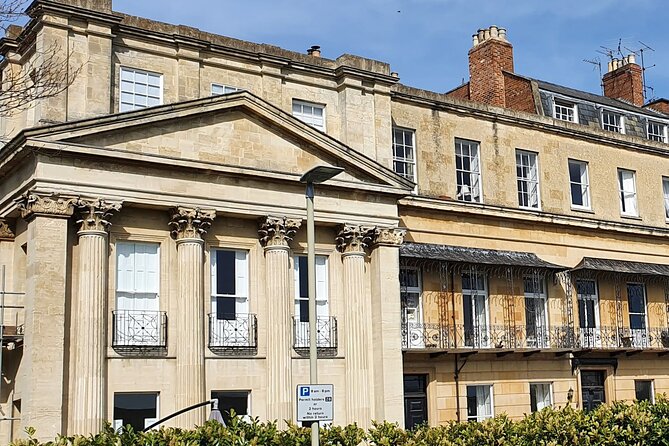
Next up is Royal Crescent, described in the tour as Cheltenham’s earliest important Georgian terrace. This is a great example of how a self-guided walk can teach you to read architecture.
From street level, a terrace can look like a pretty lineup of buildings. The narration helps you see it as something more specific: an early marker of Cheltenham’s growth during the period when the town became a destination for the well-to-do. You’ll be walking the terrace while the audio talks you through what makes it important.
If you like architecture, don’t rush this section. Even if you don’t stop for long, take quick looks upward and down the street to understand how the terrace frames the town.




Sophie Ryder’s Hare and the Minotaur: art as a town-history clue
You’ll then pass by Hare and the Minotaur by local sculptor Sophie Ryder. This is a clever kind of stop: it uses a public artwork as a doorway into Cheltenham history, not just as a photo moment.
Public sculptures can feel random if you don’t have context. With audio, the narration gives you a reason the piece matters to Cheltenham. The result is you’re walking with a storyline, not just ticking off landmarks.
If your group includes kids or people who get bored with pure history, a sculpture stop like this often keeps the walk lively.
Edward Wilson statue: learning a famous Cheltenham name
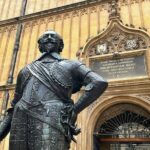
Next is the statue of Edward Wilson, one of Cheltenham’s most famous sons. The narration gives you his background as you move past the statue.
This kind of stop works because the statue becomes a memory hook. You walk away knowing a name tied to the town rather than only learning about buildings. It also helps connect Cheltenham’s identity beyond architecture, showing it as a place that produced notable people.
If you enjoy biography woven into place-based sightseeing, you’ll appreciate this.
Neptune Fountain: design, water source, and who made it
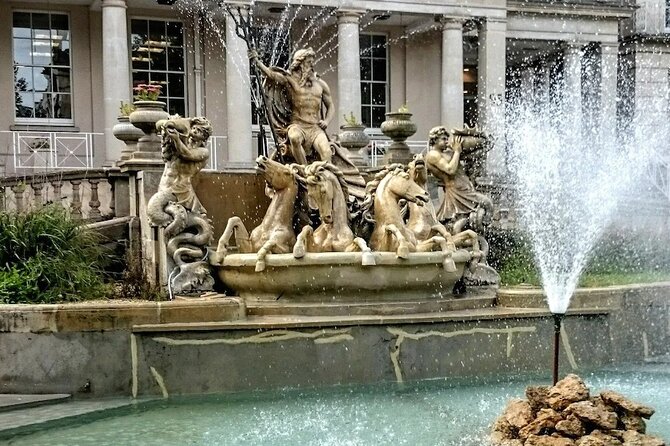
Then comes one of the most impressive moments on the route: the Neptune Fountain. The audio covers details such as who designed it, where its water comes from, and who made it.
This is exactly the sort of fountain trivia that makes the stop feel worth your time. A big fountain can be visually stunning, but it becomes memorable when you understand how it was planned and built.
Also, fountains often act like landmarks in themselves—so even if you’re moving quickly, you can use this as a mental checkpoint in the walk.
Cheltenham Town Hall: public space with a performance past
You’ll pass the Cheltenham Town Hall, and the audio explains how it has been used for entertainments—concerts, banquets, dances, and balls. That changes how you see the building.
A town hall isn’t only about governance. In places like Cheltenham, it often becomes a social engine when the town is thriving. Hearing about that helps you picture the building full of people, not just empty corridors and façades.
If you’re a photography person, the Town Hall area is a good place to slow down briefly—grand public buildings tend to give you strong angles from different street corners.
Imperial Gardens and the Sherborne-to-Imperial Spa story
From Town Hall you’ll move through Cheltenham’s Imperial Gardens. The narration explains that the gardens were once for the exclusive use of visitors to the Sherborne, later known as the Imperial Spa.
This stop gives you the “why Cheltenham grew” part of the story. The gardens make the spa-era tale tangible. Instead of only hearing that Cheltenham attracted visitors, you walk through the spaces that served those visitors.
It’s also a nice change of pace. Gardens are easier on the feet than constant street walking, and the tone of the narration fits a slower moment.
If you’re visiting with someone who wants a break, this is one of the better points in the route to take a few extra minutes before continuing.
Gustav Holst and music in the middle of a walking route
You’ll pass by a Gustav Holst statue and hear about Holst and his music. This is a second example of how the tour goes beyond buildings.
Cheltenham’s identity isn’t only “Regency façades.” Music links the town to a broader cultural story. The statue stop is short, but it gives you that satisfying feeling of learning something unexpected.
Queens Hotel and the joy of purposeful architecture
Next is Queens Hotel Cheltenham, described as one of the first purpose-built hotels in Europe. The audio points out interesting architectural features and adds background on the hotel.
Hotels can be forgettable if you only think of them as places to sleep. Hearing that it was built for a specific purpose, and that it’s historically significant, gives you a better read on the building’s design choices.
This is a good stop if you like how architecture signals lifestyle—how a town expected visitors to arrive, stay, and move through public space.
Montpellier Walk by William Hill Knight: shopping street with an architect’s signature
You’ll then walk through Montpellier Walk, designed by Cheltenham architect William Hill Knight. This part works well because it turns a retail street into something you can look at with fresh eyes.
Even if you don’t plan to shop, the audio makes it more interesting: you’ll be encouraged to pay attention to structure and design as you pass.
If you’re short on time, this section still feels worthwhile because you’re not forced to go inside anything. You simply walk and listen.
Cheltenham College Chapel by Henry Prothero, plus a famous day pupil
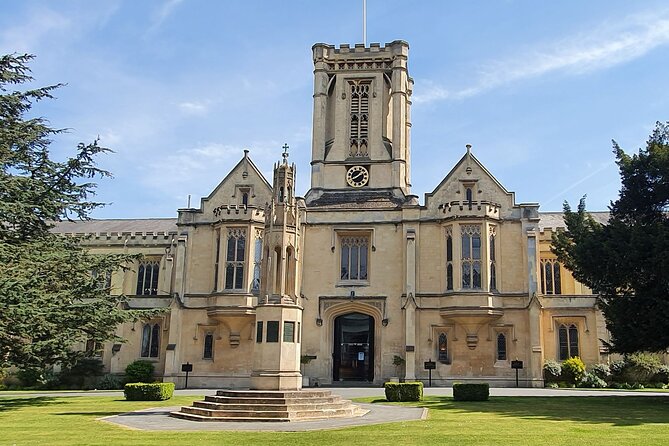
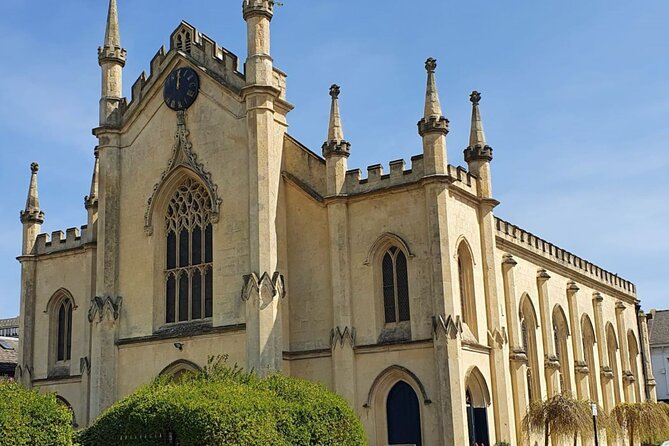
After that, the route passes Cheltenham College Chapel, designed by Henry Prothero. The narration also mentions a famous day pupil of the college.
This is a nice academic and architectural pairing. Colleges often have impressive buildings, but without context the details are easy to miss. Audio helps you notice what matters and ties it to a personal story through the mention of the day pupil.
Because the name of that day pupil isn’t provided in your tour details, I’d treat this as a “listen closely to catch the name” moment rather than something you already need to know.
Finishing in Montpellier Gardens: concluding the Regency story
The tour ends in Montpellier Gardens. The final track wraps up the walk with concluding remarks about Regency-era Cheltenham.
Ending in a garden is a smart design choice. By the time you arrive, you’ve been moving through church, crescents, fountains, and grand civic buildings. The gardens let you decompress, take photos without feeling like you’re still in the middle of an active lesson, and decide whether you want to keep strolling after the audio fades.
If you’ve timed your lunch or break well, this ending spot also makes it easier to transition into the rest of your day.
A few smart tips to make the audio actually work
Here are the practical things I’d do to avoid the common problems people run into with audio-GPS tours:
- Download first, preferably where Wi‑Fi is available. If your connection is weak mid-download, you can lose time right when you want to start enjoying the walk.
- Use reliable location settings on your phone. Give the app what it needs so it can match your position as you walk.
- Bring headphones and keep them comfortable. You’ll be listening through multiple stops, and you’ll enjoy it more if the sound is clear.
- Keep your pace human. Even though the audio is triggered with location, stopping often for short photos is totally fine.
When the tech is set up well, the tour feels like someone is walking beside you, only you control the speed.
Who should book this audio tour
I think this works best for:
- People who enjoy walking tours but don’t want the pace-control pressure of a group guided tour
- Travellers who like architecture, fountains, public art, and the “how this town grew” storyline
- Anyone who wants a straightforward 1.5–2 hour plan that covers a meaningful chunk of central Cheltenham
If you hate fiddly phone setups, this might feel like work. But with the download-and-location prep done ahead of time, it becomes an easy, low-stress way to learn while you stroll.
Should you book this tour or skip it?
Book it if you want a calm, self-paced way to understand Cheltenham’s key sights—especially if you’re interested in Georgian and Regency architecture, public monuments, and the story behind town landmarks. The lifetime access and offline setup are big advantages for repeat visits or for travellers who don’t want to risk spotty signal.
Skip it if you’re planning to travel with no headphones or no reliable smartphone setup. This experience depends on your device and your settings, so you’ll get the most out of it when you treat the tech step as part of your prep, not an afterthought.
FAQ
How much does the Cheltenham self-guided audio tour cost?
It costs $11.99 per person.
How long is the tour?
The tour takes about 1 hour 30 minutes to 2 hours.
Is the tour self-guided?
Yes. It is a self-guided audio walking tour, and only your group participates.
Does it work offline?
Yes. The tour includes offline access to audio, maps, and geodata.
What do I need to bring?
You’ll need your own smartphone and headphones. Food, drinks, and transportation are not included.
Where does the tour start and end?
It starts in front of The Wilson (Wilson Art Gallery and Museum), 51 Clarence St, Cheltenham GL50 3JT, UK, and ends in Montpellier Gardens, 24 Montpellier Spa Rd, Cheltenham GL50 1UL, UK.