REVIEW · OXFORD
Oxford Illusion Museum
Book on Viator →Operated by Oxford Illusion Museum · Bookable on Viator
Oxford flips your sense of up and down. At Oxford Illusion Museum, I really liked the upside-down room and the way staff help you get the best photos fast. Just note the experience is short, and on busy days you may hit some lines and crowded spots.
This is the kind of Oxford activity that works for kids and adults without feeling like it’s only for one age group. You’ll be trying illusions, moving between rooms, and posing for pictures for social media, usually in about 40–45 minutes.
If you’re the type who hates waiting or prefers slow, quiet galleries, go at a calmer time. The museum is interactive, so expect people to cluster around the big photo moments.
In This Review
- Key things to know before you go
- Oxford Illusion Museum: A fast, fun Oxford stop
- The upside-down room: where the best photos happen
- Infinity dodecahedron: the illusion you keep staring at
- Glowing wands and spell-play fun
- Inversion goggles: turning the world the right wrong way
- Why the staff support matters more than you expect
- Duration, pacing, and what to expect at 45 minutes
- Price in context: is $19.24 worth it?
- When to go in Oxford (and how to avoid the crowd stress)
- Getting there: Oxford location and practical comfort
- Who this illusion museum is best for
- Should you book Oxford Illusion Museum?
- FAQ
- How long is the Oxford Illusion Museum experience?
- How much does a ticket cost?
- Where is the Oxford Illusion Museum located?
- Do I get a mobile ticket?
- What are the opening hours?
- Is it suitable for children?
- Are service animals allowed?
- Is the museum near public transportation?
- What is the cancellation policy?
Key things to know before you go
- Upside-down room photo moments: Plan to spend time getting your angle right.
- Infinity dodecahedron: A standout visual illusion built for staring, snapping, and repeating.
- Glowing wand spell play: Hands-on fun that makes the museum feel like a game.
- Inversion goggles: One of the easiest ways to make the world look wrong in a good way.
- Staff who actively help with photos: Expect friendly coaching on where to stand.
Oxford Illusion Museum: A fast, fun Oxford stop

Oxford has plenty of classic sights, but this is a different kind of break: quick, playful, and very hands-on. The Oxford Illusion Museum experience is about 45 minutes (and many visits feel closer to 40), which makes it ideal when you’ve got only a small gap in your day or you want something low-effort that still feels special.
The ticket is priced at $19.24 per person, and the value comes from how much time you actually spend interacting. You’re not just walking through a hallway of signs. You’re doing things—going upside down, trying optical effects, and using illusion props that are made for “try it, pose it, repeat it” energy.
It’s also family-friendly by design. The big installations work well for kids (ages around 6 to 11 are a common match), yet adults still tend to enjoy the visual tricks once you’re standing in front of them instead of just watching from afar.
The only real downside is that it’s not meant to be a slow, lingering museum day. If you’re easily annoyed by waiting, pick a lighter time window.
You can also read our reviews of more tours and experiences in Oxford.



The upside-down room: where the best photos happen

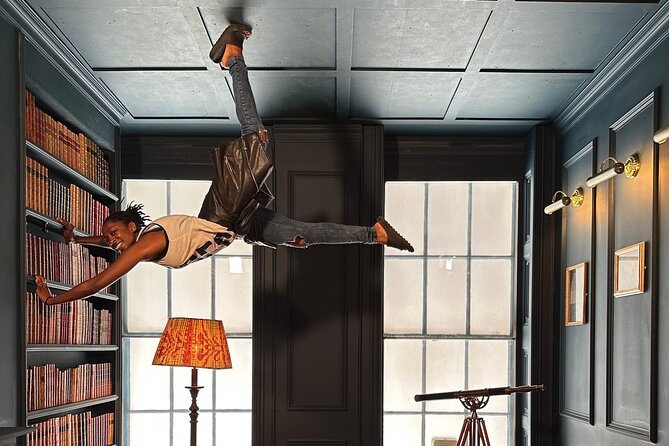
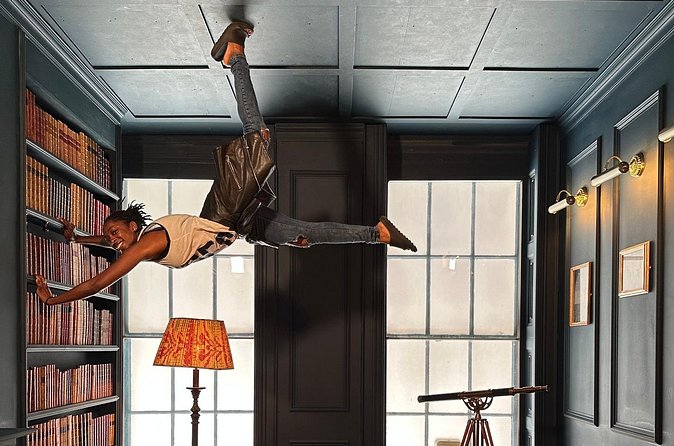
The centerpiece is the upside-down themed experience, and it’s built for instant wow. You’ll step into a room where everything feels inverted, and the fun comes from how your body tries to “make sense of it” while your eyes insist the world is wrong.
This is the part where staff assistance pays off. You’ll often see people move, adjust their stance, and re-try shots, and the museum’s team can help you position yourself for a cleaner illusion. That matters more than you’d think, because tiny changes in where you stand can change how convincing the effect looks in a photo.
If you’re taking pictures, aim to treat the first few minutes like practice, not perfection. Once you find your spot and angle, you’ll be able to crank out multiple variations quickly—standing straighter, changing your arm position, or swapping who is in the frame.
Busy moments can make this harder. On crowded days, lines and shoulder-to-shoulder movement can slow you down. If you want the most relaxed experience, choose a time that’s not peak.
Infinity dodecahedron: the illusion you keep staring at
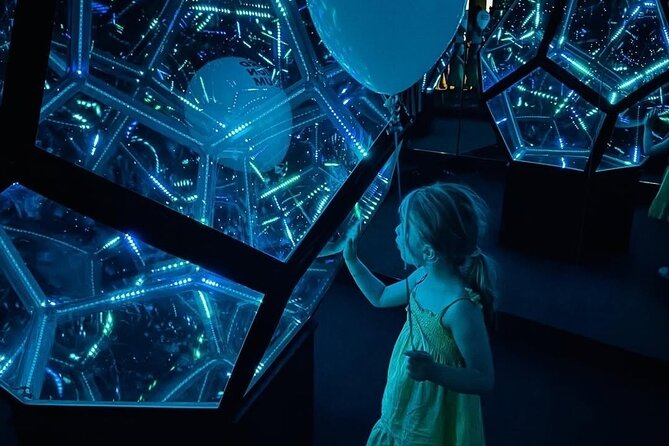
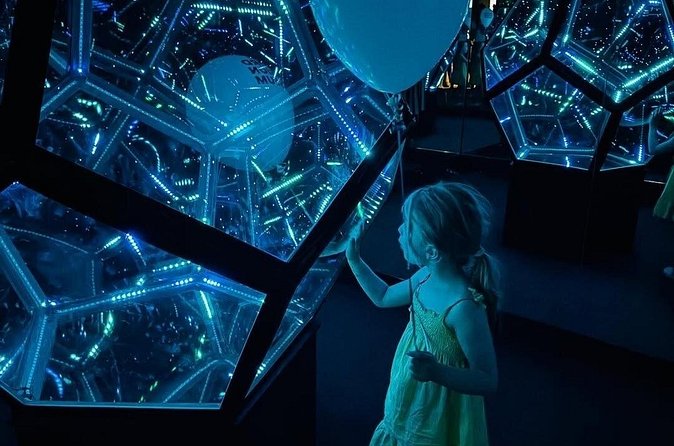
Next up is one of the museum’s most visually striking displays: the infinity dodecahedron. Even if you don’t know the term, you’ll understand the effect once you see it. It’s a geometry-based illusion that makes the space feel like it keeps going, which is why it’s such a natural photo subject.
Why I like this stop: it works without much explanation. You don’t need to read a wall label to enjoy it. You stand there, look, and your brain does that fun thing where it keeps trying to “solve” what you’re seeing.
It also plays nicely with different ages. Kids can enjoy it as a cool pattern that feels endless. Adults often like it more once you realize it’s a carefully designed setup, not just a gimmick.
If you plan to shoot video, this is a good place to do short clips from different angles. Change your viewpoint and the illusion can shift how it feels, which gives you more options later.
Glowing wands and spell-play fun
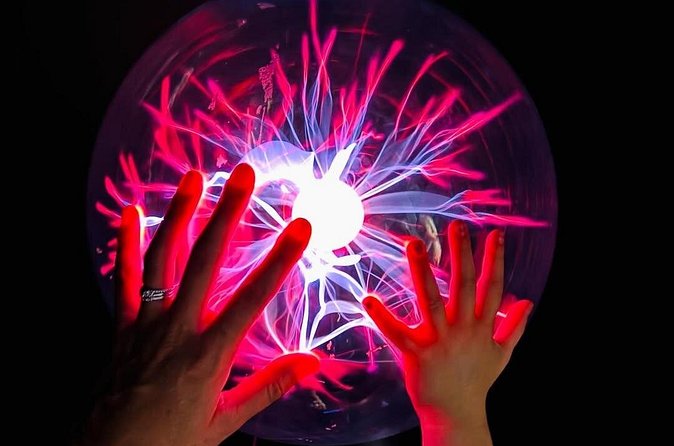
Another memorable piece is the glowing wand experience, where you interact with light-based effects. This is where the museum becomes less like a gallery and more like a toy you can actually use—carefully, of course, but still hands-on.
The appeal here is simple: you’re not just watching. You’re participating. That keeps attention better for kids, and it gives adults an easy entry point, too. You don’t have to be “good at illusions.” You just have to try.
If you’re visiting as a family, this is often the moment kids remember most afterward because it feels like an activity, not just an exhibit. Adults tend to enjoy it because the glow effects make photos look playful and a bit magical without needing fancy lighting skills.
If you’re short on patience, this is also a good place to go early, before the museum gets packed. When lots of people want the same moment, queues can form around interactive stations.
Inversion goggles: turning the world the right wrong way
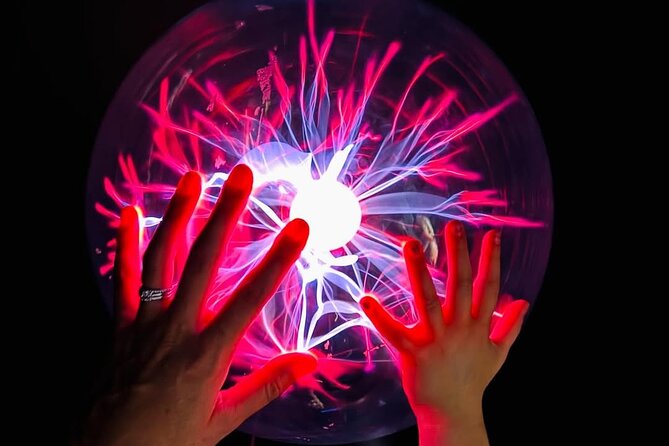
Then come the inversion goggles, which flip how the world looks. This is one of those experiences where you’ll instantly feel the difference. Put them on, look around, and your brain has to adapt quickly because the visual world you see doesn’t match what your body expects.
This is the kind of attraction that’s great for groups, because everyone’s reaction looks different. One person will grab their phone right away. Another will pause, laugh, and then try again with a different stance. The museum design encourages that repeat energy.
Photo-wise, inversion goggles can create entertaining shots, but the trick is to keep it simple. Don’t overthink it. Hold still, look toward the camera, and let the effect do the work.
If you’re bringing kids, this is often a highlight because they get immediate feedback. The illusion happens fast, so it doesn’t require long attention spans.






Why the staff support matters more than you expect
A common theme from people who enjoy this museum: the team helps you make the illusion work in your photos. That can be as small as showing you where to stand, or as practical as coaching you on timing so you don’t end up with a blurry shot during a busy moment.
This is worth your attention because illusion photography is picky. In a normal museum, you can take a picture from almost anywhere. Here, the setup is designed around specific positions and viewing angles.
So when you see staff offering quick guidance, take it. You’ll save time, get better results, and reduce the frustration of re-trying the same shot in the wrong spot.
It also makes the whole visit feel smoother. Instead of feeling stuck, you’ll feel like someone’s helping you get the most out of the time you have.
Duration, pacing, and what to expect at 45 minutes

At about 45 minutes, you’re not doing a full-day museum crawl. You’re doing a focused circuit. The museum’s structure works best if you treat it like a timed attraction: enter, try the biggest photo moments, and move on.
That short timeline is part of the value, especially if you’re sightseeing in Oxford with other stops. It’s easy to fit into a half-day plan, and you can still keep energy for other sights afterward.
The pacing also makes it suitable for different age groups. Kids often stay engaged because there’s constant novelty. Adults often like the quick progression because it doesn’t require endurance or long concentration.
Just remember: on a busy day, the museum can feel crowded around popular spots. If someone in your group needs more breathing room, build in a little buffer time, or be ready to swap who takes photos while others wait nearby.
Price in context: is $19.24 worth it?
Let’s talk value plainly. $19.24 per person is not a bargain ticket, but it doesn’t try to be one either. You’re paying for a short, interactive, photo-friendly experience with multiple installations built to work on camera.
The biggest “value driver” here is time and participation. You’re not paying for a long self-guided stroll. You’re paying to actively use illusion setups and get help to capture them well.
For families, this can feel like a fair trade because kids get a bunch of distinct activities—upside-down room, geometric infinity display, glowing wand play, and inversion goggles—within a single compact visit.
For adults going solo or as a couple, it can still be worth it if you like playful environments and you’re comfortable being a bit silly for a good photo. If you only want quiet, traditional art, you might prefer a slower museum experience.
The best way to maximize value: go with the mindset of “short stops, big photos,” and don’t waste time waiting to decide what to try next.
When to go in Oxford (and how to avoid the crowd stress)
The museum runs Monday to Friday from 10:00 AM to 5:00 PM based on the listed hours. Because it’s interactive and popular for photos, crowds tend to matter.
If you go when it’s busy, expect queues and more waiting around the busiest installations. That’s when the experience can feel cramped, especially where people are clustering for photo angles.
If you want a smoother time, pick a less hectic point in the day. Earlier in the day often means fewer people waiting around the main rooms, so you can move faster and spend more time actually doing the illusions.
Also, go in with a simple plan: decide which installation matters most to you, then treat everything else as bonus. That way, you don’t feel pulled in five directions when the museum gets crowded.
Getting there: Oxford location and practical comfort
The museum is in Oxford, England and it’s near public transportation, which makes it easier to connect with other stops. If you’re walking around central Oxford, this is also the kind of activity that doesn’t require special planning once you’re already in the area.
The experience notes a moderate physical fitness level. That doesn’t mean it’s strenuous, but you should be comfortable standing and moving between rooms for about 40 to 45 minutes.
Good to know for families: it’s described as fun for all ages, and the setups are designed so kids and adults can participate in the same spaces. If your group includes both, this can save time and energy compared with attractions that lean heavily one way.
If you’re traveling with a service animal, the museum allows service animals.
Who this illusion museum is best for
This is a strong pick for:
- Families with children who like hands-on activities
- Groups who want a quick, fun break from classic sightseeing
- Anyone who enjoys making photos and videos with clear, “pose here” setups
- Day-trippers who want an easy Oxford activity with a short time commitment
It may be less ideal if you:
- Hate waiting in lines
- Want a quiet, slow-paced museum setting
- Prefer traditional exhibits without interaction
Think of it as an activity, not a lecture. If you enjoy that style, you’ll have a good time.
Should you book Oxford Illusion Museum?
Yes, I’d book it if you want a short, interactive, photo-friendly Oxford stop that works for a mix of ages. The biggest reasons are the standout rooms—especially the upside-down experience—and the practical staff help that improves your photos without turning the whole visit into guesswork.
I’d pause and pick your timing carefully if you’re sensitive to crowds. The museum is compact, and popular photo spots can get busy.
Overall, for a half-hour-to-an-hour style of fun within a bigger Oxford itinerary, Oxford Illusion Museum delivers a lot of laughs per minute—and it’s one of the easiest places to get genuinely great, strange-looking pictures without needing special skills.
FAQ
How long is the Oxford Illusion Museum experience?
It’s approximately 45 minutes.
How much does a ticket cost?
The price is $19.24 per person.
Where is the Oxford Illusion Museum located?
It’s in Oxford, England.
Do I get a mobile ticket?
Yes, the tickets are mobile.
What are the opening hours?
Monday to Friday hours are 10:00 AM to 5:00 PM.
Is it suitable for children?
Yes. It’s described as fun for all ages, and it works well for kids around the 6 to 11 range.
Are service animals allowed?
Yes, service animals are allowed.
Is the museum near public transportation?
Yes, it’s near public transportation.
What is the cancellation policy?
Free cancellation is available, and you can cancel up to 24 hours in advance for a full refund.