REVIEW · CAMBRIDGE
Public Innovation Trail Tour in Cambridge
Book on Viator →Operated by Boston History Company · Bookable on Viator
Kendall Square feels futuristic at street level. This guided walk turns major labs and companies into a clear, human story—past ideas feeding today’s breakthroughs. You’re centered on Kendall Square and big-tech-to-biotech themes in about 90 minutes.
I especially like the way the guide connects the dots between invention and real-world impact. Two standouts for me: the tour is high-energy and interactive, and it keeps you moving through recognizable places like MIT’s museum and the Stata Center instead of making you sit through lectures. If your guide is someone like Jul or Julia, you’ll get that extra level of care in the details.
One consideration: most stops are about what you can see from the public side. Labs stay active, so you generally do not go inside buildings, and lobbies may have limited access depending on the day.
In This Review
- Key highlights before you go
- Why This Cambridge Innovation Trail Feels Fresh, Not Museum-Quiet
- Price and Timing: How $20 Buys You a Full Story Walk
- Walking Through Kendall Square: What the 13 Stops Really Mean
- Stop 1 and 2: Entrepreneur Walk of Fame + CIC Cambridge at 245 Main
- Stop 3 and 4: MIT Museum and the Cambridge Office of Google
- Stop 5: Stata Center’s Labs and the Student Hacks Exhibit
- Stop 6 and 7: The Broad Institute + Whitehead Institute and the Human Genome Project
- Stop 8 and 9: Biogen at 225 Binney + Akamai at 145 Broadway
- Stop 10 and 11: Draper Labs’ Apollo Guidance + Moderna’s mod-RNA
- Stop 12 and 13: LabCentral’s Maker-to-Lab Past + the Tootsie Candy Factory Stop
- What You Can Actually See: Lobbies, Hours, and Real Lab Reality
- Who This Tour Is Best For (and Who Might Want Something Else)
- Should You Book This Public Innovation Trail Tour in Cambridge?
- FAQ
- How long is the Public Innovation Trail Tour?
- What does the tour cost?
- Is it easy to join using a mobile ticket?
- Where does the tour start and end?
- Will I be able to enter the labs inside buildings?
- What should I bring and expect physically?
- Does the tour run in poor weather?
Key highlights before you go
- A tight 90-minute route through Kendall Square that feels efficient, not rushed
- An enthusiastic, talkative guide who keeps stories clear and easy to hear (even with larger groups)
- Stop-and-story pacing at MIT, Google, Broad, Biogen, Akamai, Draper, and more
- Big tech meets medicine: software, internet delivery, and gene science in one walk
- Smart viewing strategy: you learn what to notice even when you cannot enter labs
- A memorable human angle, including robotics connections (like Hugh Herr) and a moment tied to the Danny Lewin Memorial courtyard
Why This Cambridge Innovation Trail Feels Fresh, Not Museum-Quiet
This tour is built on a simple idea: the newest discoveries here didn’t appear out of nowhere. They grew from older inventions, experiments, and lessons—sometimes from places you wouldn’t expect, like engineering tools or the software behind real hardware.
What makes it work is that you’re walking through the geography where innovation is happening. Cambridge’s tech scene can feel abstract from the outside. Here, you get a guided framework that turns each stop into a chapter with names, goals, and consequences. You’ll walk away understanding why people in Boston and Cambridge keep reinventing the future instead of just selling it.
The route also mixes eras. You’ll hear stories that link decades of progress—robotics, internet infrastructure, spacecraft guidance, and biotech—without pretending everything is neat and linear. Science doesn’t move like a timeline poster. It moves like people testing ideas, correcting course, and trying again.
You can also read our reviews of more tours and experiences in Cambridge.



Price and Timing: How $20 Buys You a Full Story Walk
At $20 per person for about 1 hour 30 minutes, this is a value play for a guided, structured experience. You’re paying for the interpretation: an in-person guide who knows what’s worth noticing, what’s easy to misunderstand, and what details make each site matter.
Even better, the individual stops are presented as free to access from the public side, including the MIT Museum. So your spend is largely about the guide and the format—not paying for a bunch of separate admissions.
The tour runs from 2:00 pm and meets at 50 Broadway, Cambridge. It ends at the MIT Media Lab area (75 Amherst St). If you’re planning a Cambridge afternoon, this timing is handy because you can still stack another museum stop after if the day’s hours work out.
Two practical notes that matter:
- The experience is good-weather dependent, so a damp day can change plans.
- You’ll want moderate walking stamina. It’s not a workout, but it’s steady enough that comfortable shoes help.
Walking Through Kendall Square: What the 13 Stops Really Mean
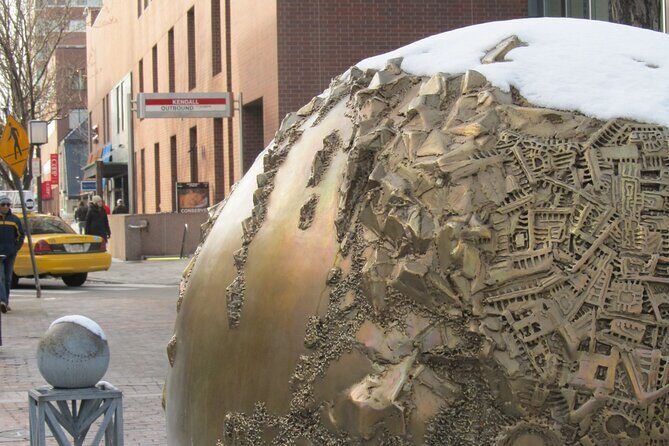
This is a public walking tour, capped at 25 travelers. That group size is big enough to feel social, but small enough that you’re usually not shouting over a crowd. One of the smartest things about the format is that the guide keeps you focused on short moments: look, listen, connect, move.
Most stops also come with a key expectation: you’re viewing what’s publicly visible (often exterior areas or lobbies where access is available), not touring secure or active lab spaces. In practice, that means the guide’s job becomes even more important. You’ll learn what to look for so you don’t feel like you’re just passing buildings.
Here’s how the story unfolds across the stops.
Stop 1 and 2: Entrepreneur Walk of Fame + CIC Cambridge at 245 Main
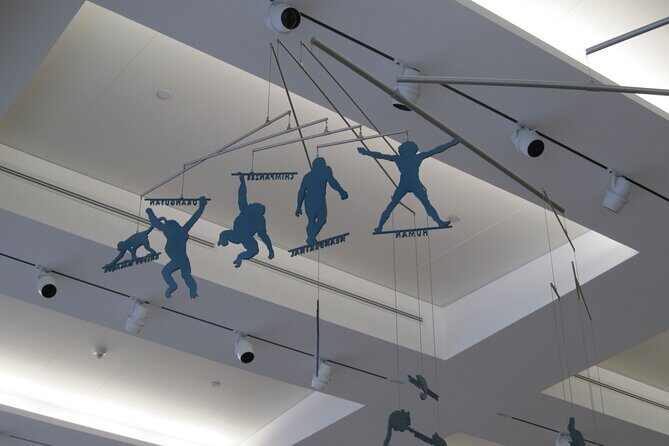
You start with an orientation stop at the Entrepreneur Walk of Fame. This is where the guide helps you “read” the neighborhood. Instead of treating Kendall Square as a generic cluster of offices, you learn the names and themes that repeat across Cambridge innovation.
Then you head to CIC Cambridge @ 245 Main, formerly the Cambridge Incubator. The emphasis here is on early-stage support—how ideas get runway time, mentorship, and structure. You’ll also hear about Tim Rowe, connected to the CIC’s founding as an MIT Business School graduate. The point is clear: innovation isn’t just laboratory science; it’s also the business ecosystem that helps teams survive long enough to build something real.
If you like tours where you leave with context, these first two stops are the setup. They make the later tech and biotech names feel less like a list.
Stop 3 and 4: MIT Museum and the Cambridge Office of Google
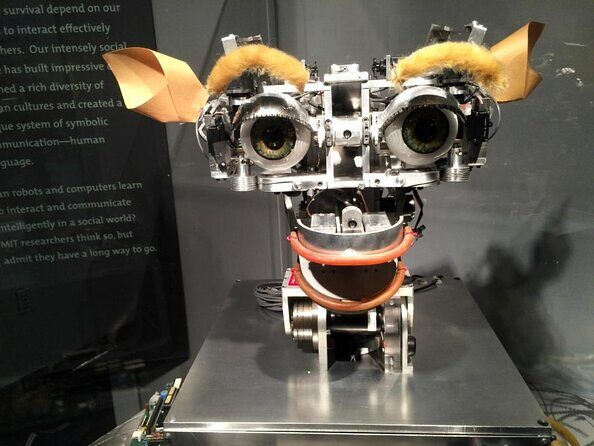
At the MIT Museum, reopened in October 2022, you get a reminder that innovation isn’t only happening behind lab doors. The museum frames MIT’s role as a place where technology and society intersect. Even if you don’t get long inside, the guide helps you understand what the museum is trying to do: connect innovation to the public.
Next is 355 Main St, the Cambridge office of Google. This stop is about relationship-building—how a major tech company fits into a city known for research culture. The tour connects that local presence to tech directions you’ll recognize, including Android. The value here is that you don’t just learn brand names. You learn why the geography and the research culture matter to how products evolve.
A good tip: during these first MIT/tech stops, pay attention to how the guide describes the difference between building technology and deploying it at scale. It’s a theme that keeps coming back.



Stop 5: Stata Center’s Labs and the Student Hacks Exhibit
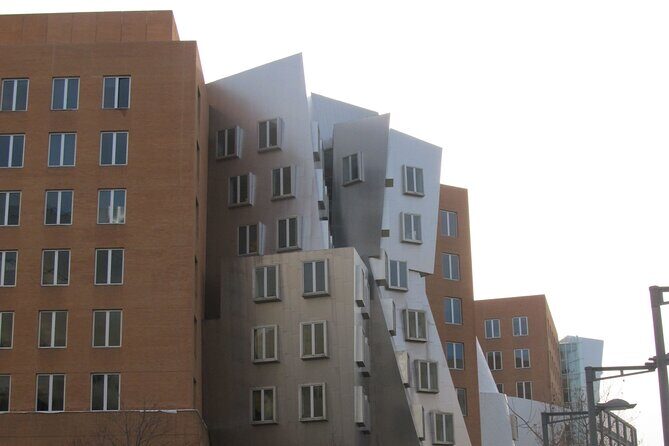
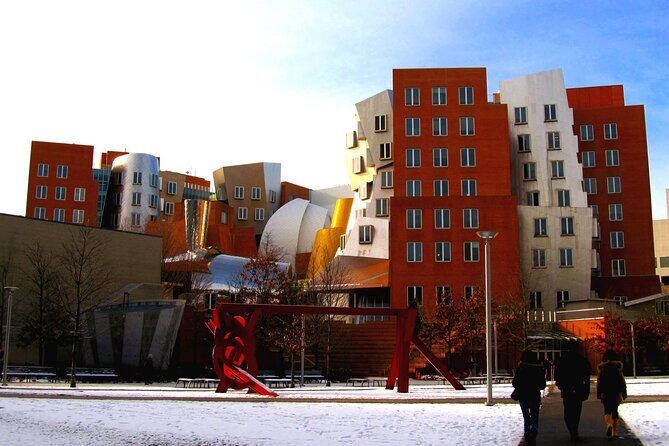
The Stata Center at MIT is where the tour leans into hands-on computing and robotics culture. You’ll hear about labs focused on computer science, artificial intelligence, and robotics, and you’ll get an iRobot connection—linked to the company behind the Roomba robotic vacuum cleaner.
One of the more fun moments is the mention of a small, ground-floor exhibit about student hacks—pranks and clever disruptions across the years. That adds a human layer. Not every breakthrough is born from a perfectly serious mood.
If you want one stop that makes Cambridge feel like an ongoing workshop rather than a historical landmark, this is a strong candidate.
Stop 6 and 7: The Broad Institute + Whitehead Institute and the Human Genome Project
After MIT’s tech focus, the tour shifts into medicine and biology with the Broad Institute of MIT and Harvard. The guide’s framing is practical: the Broad Institute aims to understand disease roots and narrow the gap between new biological insights and patient impact. In other words, it’s not just discovery for discovery’s sake.
Then you move to the Whitehead Institute connection, tied to the Human Genome Project. You’ll hear that Whitehead Institute was created in 1982 by philanthropist Jack Whitehead and MIT professor and Nobel Prize winner David Baltimore. What the guide emphasizes is the original vision: bring top biomedical researchers into one place and remove barriers—limited bureaucracy, ample funding, sophisticated lab equipment.
This matters for your understanding of Cambridge. People often think of innovation as individual genius. Here, you see how a built environment and organizational philosophy shape what researchers can actually do.
Stop 8 and 9: Biogen at 225 Binney + Akamai at 145 Broadway
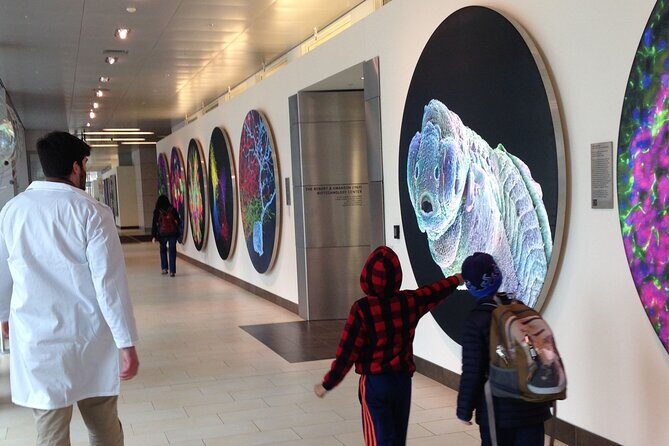
Biogen is the biotech story beat. At 225 Binney St, the focus is on its founding by two Nobel Prize winners and its innovation history. The guide uses this to show how scientific leadership and drug development timelines collide—slow, careful work that still produces world-changing outcomes.
Then you switch from medicine to the internet’s skeleton at 145 Broadway, meeting Akamai. This is where the tour gets especially interesting if you think you already know what the internet does. Akamai’s original idea was to place network servers around the world to cache content, storing it closer to where people access it. The result: faster loading and more reliable delivery.
The tour also highlights a memorable early large-scale demonstration in 1999—delivering a Star Wars: The Phantom Menace movie trailer and ESPN March Madness coverage. It’s a quick way to show how infrastructure innovation directly changes what users experience, even if they never think about server placement.
Stop 10 and 11: Draper Labs’ Apollo Guidance + Moderna’s mod-RNA
At Draper Labs (555), you’ll see the famous giant moon in the lobby. More importantly, you’ll connect that image to the lab’s achievements: guidance computers that helped Apollo spacecraft successfully travel and land on the moon.
This stop becomes a story about software engineering—especially through Margaret Hamilton, credited as one of the people who helped define software engineering. The tour ties her to software that ran the guidance computers. If you tend to think of space missions as hardware only, this will recalibrate that view.
A short walk later, Moderna enters the scene. Founded in 2010, it explored modified RNA molecules—often described as mod-RNA—to treat diseases or serve as a vaccine. This is a good place to notice how biotech innovation can be framed as platform thinking: changing how you approach the building blocks of medicine.
Stop 12 and 13: LabCentral’s Maker-to-Lab Past + the Tootsie Candy Factory Stop
At LabCentral (stop 12), you’re told it used to house Davenport Car Works, Walworth Manufacturing Company, and Polaroid. Today, it’s a home for labs—another reminder that innovation spaces evolve. The building isn’t static. It keeps being repurposed for whatever the next generation needs.
That theme continues at 810 Main St, where you learn about Cambridge’s last operating candy factory, owned by Tootsie Brands. This stop is especially useful because it includes expectations management: the company doesn’t offer tours, partly because candy makers rely on secretive equipment and processes. The guide’s framing makes it feel less like a missed opportunity and more like learning why some industries don’t show their full work.
Even without entering, you’ll get the scale: 26 million pieces of candy produced per day. The stop also connects local food history in a fun way—mentioning the Fig Newton cookie being invented in Cambridge in 1891, even though it’s named for Newton.
If you want variety in the tour—tech, medicine, and then something everyday—this ending angle works.
What You Can Actually See: Lobbies, Hours, and Real Lab Reality
Because the tour is about active innovation sites, it’s worth setting the right expectation upfront. You should plan for exterior views and public-facing areas. You generally won’t enter active lab spaces, and access to lobby areas can depend on the day and whether spaces are open to the public.
This matters most if you’re visiting on a weekend or a specific day when hours might tighten. On some Sundays, you may find lobby exhibitions closed. The upside is that the guide still supplies the story and context, and it often makes you want to return to the museum or other publicly accessible spots with fresh focus.
Also, since you’re walking from stop to stop, you’ll get better results if you treat it like a guided scavenger hunt. Each stop is a prompt: look for names, symbols, and the kind of work happening there. The guide helps translate what you’re seeing into a bigger idea.
Who This Tour Is Best For (and Who Might Want Something Else)
This works well if you:
- want a single, guided way to connect MIT and Cambridge biotech/tech without planning a full day of separate visits
- like science and tech stories explained in plain language, with real names behind the ideas
- enjoy walking and want an organized route rather than wandering Kendall Square on your own
- care about how innovation moves from research to product, medicine, and infrastructure
It might be less ideal if you’re looking for:
- a deep museum-style inside tour with long exhibits in multiple buildings
- guaranteed interior access to labs or restricted areas
- a very slow pace with long time at each stop
Should You Book This Public Innovation Trail Tour in Cambridge?
Yes, if you want an efficient, story-driven introduction to Cambridge’s innovation scene. For $20 you’re buying a skilled guide’s ability to make the stops click—MIT, Google, biotech firms, internet infrastructure, space technology, and modern RNA science all in one run.
I’d book especially if you like tours that explain why things exist, not just what’s famous. The best version of this experience is when you show up ready to listen to connections: software behind hardware, infrastructure behind convenience, and biology behind medicine you’ve heard of.
Just go in with one mindset: this is public viewing with smart context, not a lab walkthrough. If that’s your expectation, the tour delivers a lot.
FAQ
How long is the Public Innovation Trail Tour?
It lasts about 1 hour 30 minutes.
What does the tour cost?
The price is $20.00 per person.
Is it easy to join using a mobile ticket?
Yes, the tour uses a mobile ticket.
Where does the tour start and end?
It starts at 50 Broadway, Cambridge, MA 02142, and ends at the MIT Media Lab area at 75 Amherst St, Cambridge, MA 02139.
Will I be able to enter the labs inside buildings?
Most of these spaces are active labs, so you do not enter the buildings. You should expect public-side viewing and lobbies where access is available.
What should I bring and expect physically?
You should have a moderate physical fitness level, since it’s a walking tour. Comfortable shoes help.
Does the tour run in poor weather?
The experience requires good weather. If it’s canceled due to poor weather, you’ll be offered a different date or a full refund.