REVIEW · LONDON
Churchill War Rooms & Wartime London Walk – Exclusive Guided Tour
Book on Viator →Operated by Babylon Tours London · Bookable on Viator
War rooms feel close to today, on purpose. This exclusive London walk strings together Churchill’s world in real locations, from Parliament Square down to the Churchill War Rooms. You’ll start with context, then watch the story tighten as you go.
I really like the small group size, which keeps the pace human and makes it easier to ask questions. That guide-led format shows up in the way past guides like Guy, Laurence, Sheldon, Andy, Jamie, and Alex handle Q&A, trivia, and curiosity. One consideration: St Margaret’s Church is viewed from the outside only, even though it matters to Churchill’s personal story.
In This Review
- Key highlights to know before you go
- A Whitehall route built around Churchill’s turning points
- Meeting at Churchill’s statue: getting oriented fast
- Parliament Square and St Margaret’s Church outside views only
- Whitehall memorials: where WWI experience gets personal
- Earl Haig Memorial and the interwar pressure cooker
- Horse Guards Parade: quick photo break and the cavalry detail
- Churchill War Rooms: timed access and why the bunker format hits
- Why the guide makes the difference (and you can keep asking)
- Price and value: what $151.22 buys you in real terms
- Practical logistics that make or break the day
- Who this tour is best for
- Should you book this Churchill War Rooms & Wartime London Walk?
- FAQ
- How long is the Churchill War Rooms & Wartime London Walk?
- Where does the tour start and end?
- Is admission to the Churchill War Rooms included?
- What group size is the maximum?
- Is the tour private or exclusive?
- Do I need to provide a mobile phone number?
- Can I get a full refund if I cancel soon enough?
Key highlights to know before you go
- Max 8 people keeps the tour feeling personal without turning it into a lecture.
- Timed access to the Churchill War Rooms keeps you moving when security lines can slow others down.
- A route that tracks WWI to WWII using Parliament Square and Whitehall monuments as your timeline.
- Guide Q&A is the point, not an optional extra, and it works well even with younger history fans.
- The War Rooms take real time; you’ll finish with energy to stay and look around on your own.
A Whitehall route built around Churchill’s turning points
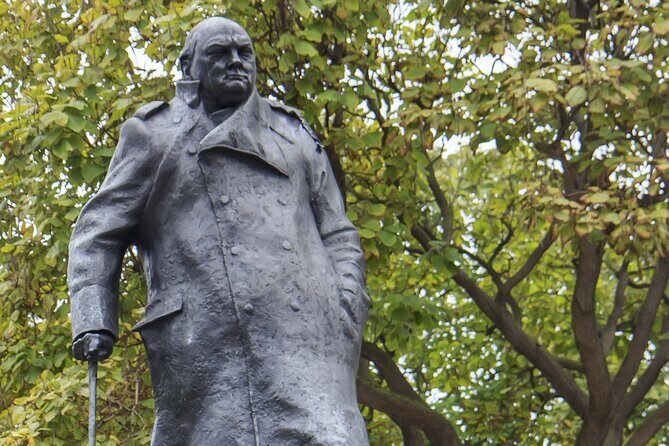
This tour works because it doesn’t treat Churchill like a statue. It treats him like a person moving through key moments, and it uses London streets to show how those moments connect. You’ll get the big picture, then you’ll get the details without drowning in them.
The format is simple: you walk a tight line of landmarks in and around Whitehall, you get short stops for context and photos, and then you spend the bulk of your time inside the Churchill War Rooms. With a group capped at 8, the guide can actually react to what you care about. If someone has a question, you’re not waiting until the end of the tour to hear the answer.
At $151.22 per person for about 2.5 hours, the best value isn’t just the sightseeing. It’s that your entry to the Churchill War Rooms is included, and you’re buying timed, guided access rather than trying to piece the day together yourself. In a city where schedules and lines can get annoying, that matters.
You can also read our reviews of more walking tours in London

Meeting at Churchill’s statue: getting oriented fast
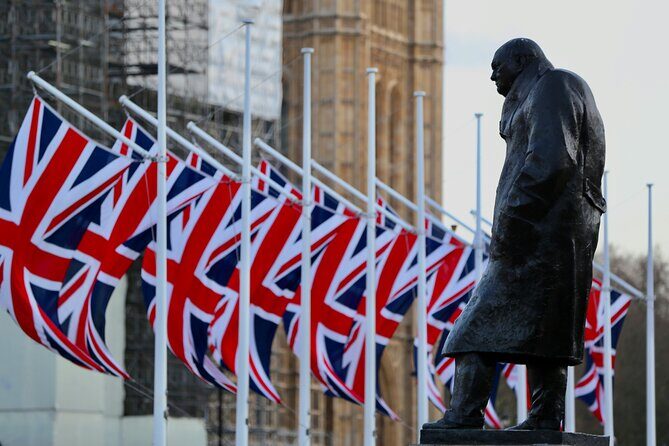
You meet at the Sir Winston Churchill statue at Parliament Square (Parliament Sq, London SW1P 3JX). The first stop is short—about 10 minutes—but it’s designed to get your bearings quickly. The guide introduces Churchill as your main character before you start hopping between different corners of power.
From there, you’re walking through places that feel like they should be background scenery, but they’re not. Parliament Square and the surrounding government buildings put you right in the atmosphere of decision-making. Even if you only know Churchill from school or films, the guide’s framing helps your brain attach the name to the setting.
If you like tours that start with story rather than trivia, this opening does that. If you dislike anything that feels too long before you see something concrete, don’t worry: you don’t linger.
Parliament Square and St Margaret’s Church outside views only
Next comes Parliament Square, with views toward the Houses of Parliament and St Margaret’s Church. St Margaret’s is a big deal to Churchill’s personal life, and the guide points out that the wedding took place there. The key detail for your expectations: you’re seeing the church from the outside only.
That outside-view approach is still useful because it keeps the tour moving and keeps you on the same Whitehall timeline. But if you were hoping to step inside the church, plan for the fact that you won’t on this specific tour.
This part of the walk is also where you start understanding what the guide is doing with your time. Short stops aren’t filler. They’re checkpoints in a story that’s about choices, politics, and pressure—so the locations matter even when you’re not going indoors.
Whitehall memorials: where WWI experience gets personal
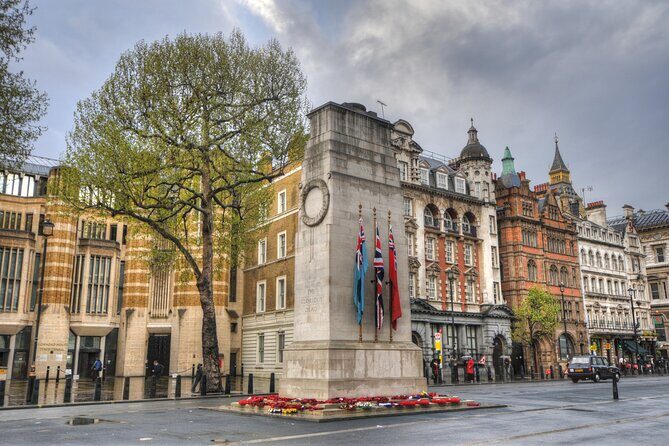
As you stand before a solemn monument to the fallen in Whitehall, the tour shifts into Churchill’s experiences in the First World War. This stop is about tone as much as it is about facts. The physical setting signals why the period isn’t just history homework—it’s grief, consequences, and leadership under strain.
You get another brief timing block here (around 10 minutes). That might sound short, but it works because you’re pairing your viewing with interpretation. You’re not just reading a plaque; you’re learning how the guide connects what you’re seeing to Churchill’s role and mindset at the time.
If you’re a slow walker or you like taking photos, you’ll still be fine, but keep one eye on the group pace. This is built as a sequence, and the tour is designed so the next stop lands with meaning.
Earl Haig Memorial and the interwar pressure cooker
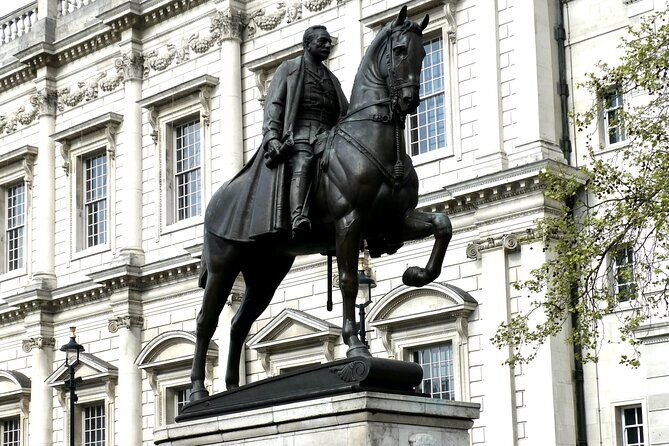
Then the tour points you toward the Earl Haig Memorial, surrounded by statues of Churchill’s advisors and generals. The focus here moves into the interwar period—how tensions rose, and how that rise set the stage for the next global conflict.
This is one of those moments where a sculpture garden can feel like decoration—until a guide gives you a map for what you’re looking at. The statues aren’t just art. They help you understand the network of people and power around Churchill and the military leadership of the era.
The stop is brief (about 5 minutes), but it’s packed with “look at this, now notice that” type guidance. If you’re the kind of person who enjoys reading faces in stone and trying to work out who’s who, you’ll likely enjoy this segment more than you expect.
You can also read our reviews of more guided tours in London



Horse Guards Parade: quick photo break and the cavalry detail
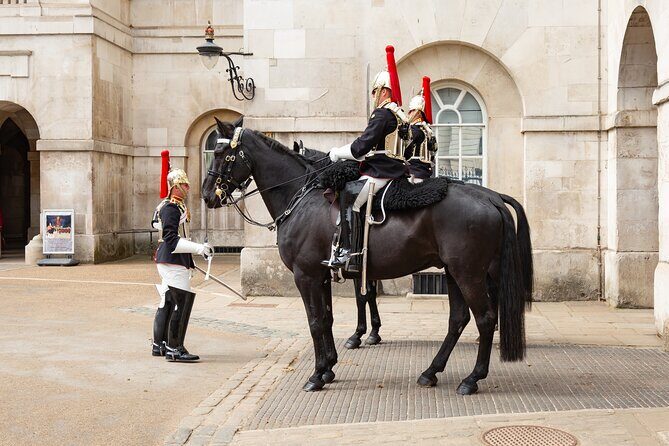
At Horse Guards Parade you get a quick moment to see the ceremonial setting by Whitehall and grab a photo. The tour also includes an interesting link: Churchill was a cavalryman, so this stop connects his wartime identity to the imagery of the parade.
This part lasts about 5 minutes, which is exactly right. It’s not meant to be a long detour. It’s a visual break that reinforces the theme: Churchill wasn’t only a wartime politician. He had a personal relationship with military life and its symbols.
If you’re sensitive to time, this stop is ideal. You’ll get the photo and the context, then you move on to the main event.
Churchill War Rooms: timed access and why the bunker format hits
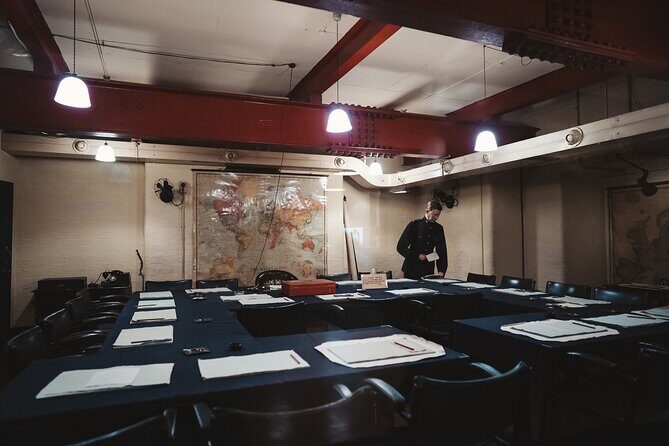
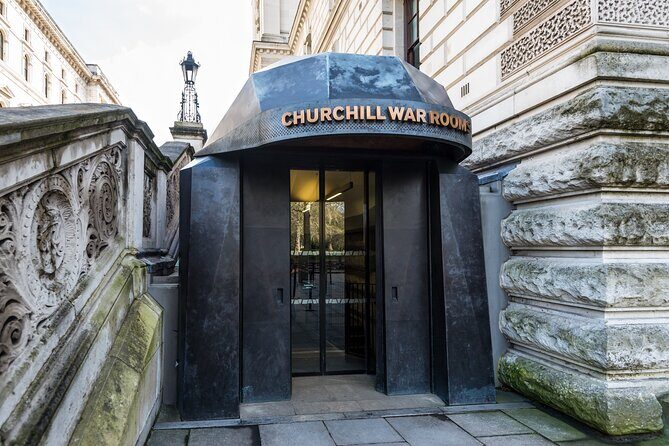
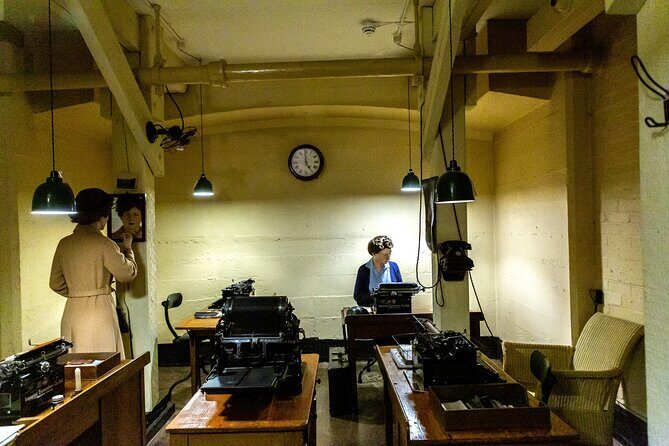
Now you get the highlight: Churchill War Rooms at King Charles St, London SW1A 2AQ. The guided portion inside runs about 1 hour 30 minutes, and that length matters. The War Rooms aren’t a quick museum stop where you tick off a room and move on. They’re arranged to make you feel how planning happened under pressure.
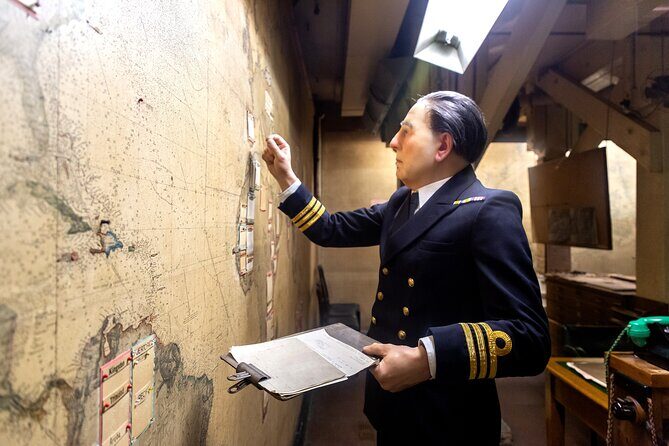
The guide brings the bunker to life as a time capsule where many wartime decisions were made. That is the heart of the experience: you’re not just looking at artifacts. You’re learning how the setting shaped the process, and how the space supported fast, high-stakes thinking.
One practical tip from past visitors: don’t skip the tunnels. People call them out as a worthwhile piece of history to see, and they help the War Rooms feel less like a static exhibit and more like a working system.
Also keep in mind museum-style rules. Some rooms may be quiet or limit speaking, so the guide will explain the important points before you go into areas where you’ll need to keep your voice down. That actually improves the experience. You hear less chaos and more meaning.
Why the guide makes the difference (and you can keep asking)
A major selling point is that this is guide-led and built for interaction. You can pick your guide’s brain as much as you like, and with a group of up to 8, the conversation stays realistic.
In the past, guides such as Guy and Laurence have been described as entertaining and able to handle questions without turning the tour into a debate. Other guides have been praised for connecting the material to kids and teens, including history fans who want more detail than typical adults.
That flexibility is what makes the tour feel more than a narrated walk. If you care about one war more than the other, you can steer the conversation. If you’re trying to understand Churchill as a character, you’ll get help connecting politics to personality. If you want trivia, you can ask for it, but you also get context so it doesn’t float away.
Price and value: what $151.22 buys you in real terms
At $151.22 per person, you’re paying for three things at once:
- a professional guide for the walking portion,
- admission included to Churchill War Rooms with timed access,
- and a private-style experience for just your group.
If you tried to do this independently, you’d likely spend time matching tickets, building a route, and then hoping the timing works with your preferred museum entry window. Here, you buy the structure, and that structure tends to save energy.
The group size cap is a value multiplier. A smaller group means fewer interruptions and faster momentum, especially when you’re waiting for entry and moving between landmarks. Even a short stop feels less rushed when you’re not squeezed into a larger crowd.
It also helps that the tour avoids hotel pickup, which keeps the price from swelling with transfer costs. Use a taxi or ride-share to get to the meeting point, and you’ll keep the day simple.
Practical logistics that make or break the day
The tour meets at Parliament Square and ends at Churchill War Rooms, so you’ll be walking from the government district into the museum area and then finishing there. It’s near public transportation, which is useful because you’ll likely arrive with train or tube routes in mind.
Bring a mobile phone number (including the country code) because you’ll need it for the mobile ticket flow. You’ll also want to keep your phone handy for museum entry and coordination.
Wear appropriate clothes for museum entry where required. Some sites have dress expectations, and security rules at museums matter. The tour notes that large bags and suitcases aren’t allowed inside some museum areas; you should plan for something like a small handbag or small thin bag pack for security.
Finally, expect that lines can form due to security measures. Even with fast entry perks, security can still slow things down. If you’re the type who gets stressed about timing, arrive a few minutes early at the meeting point so you start calm.
Who this tour is best for
This experience is great if you like political history that’s anchored to places. It’s also ideal if you’re a Churchill fan who wants the story traced from early experiences through the buildup to WWII.
It’s a good fit for families with older kids and teens who can handle a guided format with questions. Multiple past guide mentions point to patience and good engagement even when younger history fans ask lots of follow-ups.
If you prefer self-paced touring, you might find the walking portion short but purposeful, and the War Rooms portion structured enough that you’ll want to stay afterward to look at what caught your eye. The format sets you up to do that.
Should you book this Churchill War Rooms & Wartime London Walk?
Book it if you want more than museum facts. This tour helps you see how the setting in London connects to the decisions that shaped the war years. You’ll get timed access, a small group experience, and a guide who can answer questions in the moment.
Skip it (or consider a different style) if you only want deep museum time without any walking between landmarks. This one is balanced: landmarks set the context, then the War Rooms do the heavy lifting.
If you’re planning around limited time in London and want a day that feels focused, this is a strong use of it—especially because the War Rooms entry is part of the ticket, not something you have to figure out later.
FAQ
How long is the Churchill War Rooms & Wartime London Walk?
It runs about 2 hours 30 minutes.
Where does the tour start and end?
It starts at the Sir Winston Churchill statue, Parliament Sq, London SW1P 3JX, and ends at Churchill War Rooms, King Charles St, London SW1A 2AQ.
Is admission to the Churchill War Rooms included?
Yes. Full access, timed entry to Churchill’s War Rooms is included in the tour price.
What group size is the maximum?
A maximum of 8 people per tour is allowed.
Is the tour private or exclusive?
Yes. It is a private tour/activity, meaning only your group participates.
Do I need to provide a mobile phone number?
Yes. You must provide a mobile phone number, including the country code.
Can I get a full refund if I cancel soon enough?
Yes. You can cancel up to 24 hours in advance for a full refund. Canceling less than 24 hours before the experience start time is not refundable.