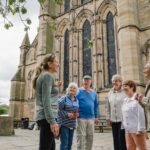
Stained glass in York comes with a plot twist. This guided walk links church art to how it survives, from 15th-century windows to modern conservation thinking, led by Madeline. You’ll move between seven landmark churches and a short stop at medieval ruins, with clear explanations as you look up.
I like how the tour makes the art feel human, not museum-distant. Two things stand out to me: the conservation history angle and the tight small-group pacing, capped at 10 people, so you can actually focus on details.
One thing to consider first: you’ll walk over a mile, and church surfaces can be uneven and slippery. Bring shoes with grip, and go slow on indoor stone and any damp steps.
In This Review
- Key things to know before you go
- How the York stained-glass walk flows (2–2.5 hours, up to 10 people)
- Starting at North Street Gardens: the best launch point for church-hopping
- Stop 1: All Saints Church and the Pricke of Conscience
- Stop 2: St. Olave’s Church and memorial + modern glass
- Stop 3: Museum Gardens and the St. Mary’s Abbey connection
- Stop 4: St. Helen’s Church (or St. Martins le Grand) and post-war reconstruction
- Stop 5: York Minster’s back stop for EPG and conservation
- Stop 6: Holy Trinity Church and existing medieval glass
- Stop 7: Parish of All Saints’ Pavement and finishing in Goodramgate
- Price and value: what $34.09 gets you
- What you’ll likely learn to notice (use this during the tour)
- Who this tour suits best
- Should you book Discover York’s Stained Glass?
- FAQ
- How long is the Stained Glass tour in York?
- How much does the tour cost?
- Where does the tour start and end?
- Is the tour in English?
- Is there an admission cost for the churches on the route?
- Will I need to walk a lot?
Key things to know before you go
- Seven stops, one theme: every church and pause ties stained glass to faith, memory, and preservation
- Madeline’s conservation lens: you’ll learn what window care looks like, not just what the windows depict
- Short, workable time on your feet: about 2 to 2.5 hours with a comfort break built in
- York’s churches close together: the route keeps transfers short, with few steps compared to what you might expect
- You’ll end in the city center: the tour finishes at Holy Trinity Church in Goodramgate, right where you can keep exploring
How the York stained-glass walk flows (2–2.5 hours, up to 10 people)
This is a guided church route designed for looking up, not speed-walking through York. Expect roughly 2 hours to 2.5 hours total, and a group size of no more than 10 travelers, which matters because you’re spending most of your time at specific points in each church. With a small group, the guide can pause for questions without turning the stops into crowd control.
The tour uses mobile tickets and runs in English. There’s also a built-in “comfort break” so you can grab a drink or use the bathroom during the walk. You’ll still cover a bit over a mile, and churches can be uneven or slippery, so I’d treat this as a walking tour with glass lessons, not a casual stroll.
The route has two big benefits for your day in York. First, the stops are planned so you’re not constantly traveling far between locations. Second, you end at Holy Trinity Church on Goodramgate, which drops you in the heart of the action for a quick follow-on wander afterward.
You can also read our reviews of more tours and experiences in York.

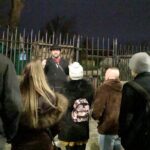
Starting at North Street Gardens: the best launch point for church-hopping
You meet at North Street Gardens, North St, York (YO1 6JD). This is a practical start because it puts you close enough to multiple central sights without needing long transfers. From there, the day is structured like a sequence of “look and learn” moments, with each stop giving you a new piece of the stained-glass puzzle.
At the end, you finish at Holy Trinity Church, Goodramgate (YO1 7LF). That matters more than it sounds. Instead of returning to the same meeting area, you get placed near shops, pubs, and the rest of York’s center. You can then keep going at your own pace, whether you want another look at the Minster area or just wander the streets.
Stop 1: All Saints Church and the Pricke of Conscience
The tour kicks off at All Saints Church, where you spend about 30 minutes focusing on its stained glass, including the 15th-century windows and how they’ve been conserved over time. If stained glass feels mysterious to you, this is a smart first stop. The guide’s focus isn’t only on what you’re seeing, but on what it takes to keep these windows readable for future generations.
One standout highlight here is the Pricke of Conscience window. It’s the kind of detail that makes you look twice, because it connects imagery to moral storytelling. Rather than treating the window like a static artifact, you’ll be pushed to notice how the glass communicates meaning.
A practical note: this is in a working church setting, and glass viewing can depend on lighting and where you stand. Give yourself permission to shift position to see the window clearly, and don’t be afraid to ask the guide what to look for next.
Stop 2: St. Olave’s Church and memorial + modern glass
Next is St. Olave’s Church, with about 20 minutes here. This stop leans into history and then breaks it down through the glass itself: you’ll hear about the site’s age, and you’ll look at memorial glass, modern glass, and the East Window described as of dubious creation.
That last phrase is more fun than it is cryptic. It signals that not everything you see in old churches is straightforward or “perfectly explained.” In other words, you’ll learn how stained glass can be tied to rumor, interpretation, or later additions.
Why this stop is valuable: it stops you from thinking stained glass is only medieval. York’s churches act like timelines. Memorial windows show remembrance. Modern glass shows continuation. Even the confusing bits teach you how to read the building as layers, not a single era.
Stop 3: Museum Gardens and the St. Mary’s Abbey connection
On the way to the next site, you pause at Museum Gardens, where the walk briefly turns into a “how the church complex worked” lesson. You’ll connect the ruins of St. Mary’s Abbey to medieval religion and how that fits into the bigger network of parish churches.
This stop is short, about 10 minutes, so it won’t feel like a full museum detour. Instead, it gives you context so the later stops make more sense. Stained glass is easier to understand when you know who would have seen it, worshipped around it, and lived with it as part of everyday faith.
If you’re someone who likes meaning over dates, this is a good moment. It’s also a good stretch break without losing the thread of the tour.



Stop 4: St. Helen’s Church (or St. Martins le Grand) and post-war reconstruction
Your next chunk is about 30 minutes at St. Helen’s Church, or alternatively St. Martins le Grand, depending on opening times and availability. This is where the tour shifts to a more recent chapter of stained glass: post-war reconstruction efforts in the city.
Even if you know little about stained glass, this stop helps you understand a key point: conservation is not only about preserving old work. It can also involve restoring, reworking, or rebuilding what was damaged, and doing it in a way that still respects the church’s identity.
This is also a nice change of pace. The earlier stops focus heavily on old windows and story imagery. Here, you get a sense of how communities rebuild their visual heritage after major disruption.
Stop 5: York Minster’s back stop for EPG and conservation
Then comes a quick visit to York Minster for roughly 5 minutes at the back of the building. It’s brief on purpose, and the tour uses that time to talk about EPG (Environmental Protective Glazing) and York Minster’s constant conservation work related to the East Window.
Even in five minutes, you’ll get the core takeaway: sometimes “glass” isn’t just decoration. Protective glazing is part of the conservation strategy. It’s a practical reminder that today’s viewing conditions are shaped by conservation decisions you’d never notice unless someone pointed them out.
Because this stop is short, don’t expect time to study every detail like a solo visit. Instead, use it to understand the logic behind what you’re seeing across York’s church windows.
Stop 6: Holy Trinity Church and existing medieval glass
At about 15 minutes, you’ll visit Holy Trinity Church, a tucked-away site that the tour uses to spotlight existing medieval glass and explain the church’s role in the center of York.
This stop feels like the tour’s “reward moment” because it puts you in a less obvious place compared to the Minster, then shows you that good stained glass isn’t only about the biggest draw. It’s also a reminder that York’s history sits in many smaller corners, not only the most famous landmarks.
If you care about craftsmanship and survival, this is one of the stops that helps everything click. You’ve seen conservation discussed. You’ve seen older and newer glass. Now you’re shown medieval work in a working city church context.
Stop 7: Parish of All Saints’ Pavement and finishing in Goodramgate
For the final stop, you’ll either visit Parish of All Saints’ Pavement or substitute it in tandem with the route depending on winter hours. It’s about 15 minutes, and it ties back into the idea of church space, parish life, and how stained glass fits into local worship patterns.
From there, the tour ends at Holy Trinity Church in Goodramgate, putting you right where you can continue the day. If you want to extend your stained-glass streak, this is a convenient finish point. If you just want food and a slow walk back through York’s center, you’re set up for that too.
Price and value: what $34.09 gets you
The price is $34.09 per person for around 2 to 2.5 hours, with tour and building access included. For York, that’s a strong value when you think about what you’re paying for: not just entry tickets, but a guided interpretation that teaches you how to look at stained glass as an evolving system of art, memory, and conservation.
You’re also getting a route with multiple churches rather than a single site. Even if each stop is short, the cumulative effect is big. Instead of seeing a handful of windows like a checklist, you’ll learn patterns: how memorial glass changes meaning over time, how modern glass can continue a visual tradition, and how conservation thinking affects what you experience today.
One practical trade-off: this isn’t designed to be a slow, all-day “stand and stare” session at one location. If you love spending long stretches in one church, you might want a separate solo visit after the tour. But if you want your first York stained-glass education to land fast and make future visits easier, the timing works.
What you’ll likely learn to notice (use this during the tour)
This kind of tour is most fun when you bring questions of your own. I’d keep these in mind as you go:
- What story is the window telling? (memorial, moral, community identity)
- How does the window change meaning over time? (old vs modern additions)
- What does conservation change about your viewing? (protective glazing concepts)
- Where is the glass in the building telling you something? (church role and parish connections)
Also, keep an eye out for the guide’s verbal signposts. Stops include both “big” names like York Minster and smaller or lesser-known churches, so your attention needs a little direction to avoid feeling scattered.
Who this tour suits best
This experience fits best if you enjoy art history but hate the wordy kind. It also works well if you’re visiting York for the first time and want a quick, meaningful thread through multiple sights.
It’s especially good for you if you’re:
- interested in stained glass conservation and how it affects what you see
- curious about how churches connect to faith and parish life over time
- traveling with someone who likes art as much as architecture
If you’re only looking for the most famous exterior views, this may feel too focused on interior look-ups. But if you’re happy trading a little scenery for stories you can read in glass, you’ll likely enjoy the format.
Should you book Discover York’s Stained Glass?
If you want a smart first education in York’s stained glass, I’d book it. The value comes from the sequence of stops and the conservation lens, which helps you see more during your own sightseeing later. The small group size and short pauses also make it realistic for a day in York rather than a half-day commitment that overwhelms you.
I’d skip it only if you don’t want a walk over uneven, possibly slippery church surfaces, or if you prefer spending your time at one site instead of moving through several. Otherwise, this is an efficient, thoughtful way to see York’s churches like a storybook written in glass.
FAQ
How long is the Stained Glass tour in York?
The tour runs about 2 hours to 2 hours 30 minutes.
How much does the tour cost?
It costs $34.09 per person.
Where does the tour start and end?
It starts at North Street Gardens, North St, York (YO1 6JD) and ends at Holy Trinity Church, Goodramgate, York (YO1 7LF).
Is the tour in English?
Yes, it’s offered in English.
Is there an admission cost for the churches on the route?
The tour includes tour and building access, and the stops are listed with admission ticket free for the church sections.
Will I need to walk a lot?
You’ll walk over a mile during the tour, and some church floors may be uneven or slippery.