Two hours, five art centuries, one smart guide. This National Gallery guided tour uses priority entrance to cut the waiting and pairs it with clear explanations of how paintings work. You’ll move through the gallery’s highlights from Renaissance to Impressionism, with commentary built for both first-timers and art fans.
I love the focused lineup of big names—Leonardo da Vinci, J.M.W. Turner, Claude Monet, and Vincent van Gogh—and how the guide points out techniques you can actually see. I also like that you’re encouraged to ask questions and share your own interpretations, not just stare quietly. One possible drawback: the route is time-tight, so if you prefer long, slow stops at one favorite work, this may feel a bit brisk.
You meet at Trafalgar Square (right by the National Gallery) and finish back at the same spot, which makes it easy to plug this into the rest of your London day.
In This Review
- Key highlights at a glance
- Why a Priority-Entrance National Gallery Tour Works
- Meeting at Trafalgar Square: What Your Start Looks Like
- The Inside Plan: A Guided Walk That Actually Makes Sense
- Renaissance to Impressionism: What You’ll See (and Why It’s Taught This Way)
- A quick note on “masterpieces”
- Da Vinci and the Art of Realism You Can Spot
- Turner, Monet, and Van Gogh: Watching Style Change in Real Time
- The Best Part: A Guide Who Makes It Fun
- How 2 Hours Feels: Smart Pace, Not Forever-Mode
- Price and Value: Is $24.91 Worth It?
- Included vs Not Included: Plan Around the Missing Stuff
- Who This Tour Fits Best
- Should You Book This National Gallery Priority Tour?
- FAQ
- How long is the National Gallery guided tour?
- What time does the tour start, and where do I meet?
- What does priority entrance include?
- How many people are in the group?
- What’s included in the price, and what’s not?
- Can I cancel for a full refund?
Key highlights at a glance
- Priority entrance helps you get into the National Gallery with less delay
- Small group size (max 15) keeps the tour feeling personal
- Renaissance-to-Impressionism flow gives you a clear sense of how style changes over time
- Hands-on art commentary focuses on techniques and stories you can connect to what you see
- Question-friendly format makes it work for newcomers, not just serious collectors
Why a Priority-Entrance National Gallery Tour Works
The National Gallery is popular. So the “first hurdle” is rarely the art—it’s the line and the wandering before you even get inside.
This tour solves that with priority entrance tickets. In practice, that means you’re more likely to start your 2-hour experience on time and spend your energy on paintings, not logistics. For a museum that can swallow an entire afternoon, that’s real value.
Also, paying for a guide here isn’t just about facts. It’s about interpretation. You’ll hear what to look for in composition, light, brushwork, and subject matter. That changes the whole museum experience, especially if you’re the kind of visitor who thinks, I like art, but I don’t always know what I’m seeing.
You can also read our reviews of more guided tours in London


Meeting at Trafalgar Square: What Your Start Looks Like
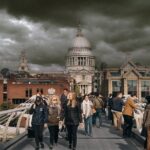
The meeting point is at the National Gallery, Trafalgar Square, London WC2N 5DN. The start time is 10:30 am, and the tour runs about 2 hours.
Why that matters: starting at late morning is often a sweet spot for central London. You avoid the earliest crowd crush, but you still get a full day rhythm. And since the tour ends back at the meeting point, you can keep exploring nearby without playing catch-up.
You’ll be in a maximum group of 15, so you shouldn’t feel lost in a crowd. It’s big enough to keep things efficient, but small enough that you can actually ask a question and have it make it into the conversation.
The Inside Plan: A Guided Walk That Actually Makes Sense
This is not a museum “run through everything” experience. It’s a guided highlights route designed around major eras and techniques.
The core idea is simple: the guide connects what you’re looking at to how artists developed their craft over time. You’ll focus on masterpieces spanning the Renaissance through Impressionism, which helps you see art as something evolving instead of a pile of separate masterpieces.
You’ll also have room for back-and-forth. The tour is described as question-friendly, and the reviews line up with that vibe. One 5-star comment notes the guide felt art-focused and genuinely cared about the whole experience, which usually shows in the way questions are handled: you don’t get rushed off with a one-liner.
Renaissance to Impressionism: What You’ll See (and Why It’s Taught This Way)
The tour highlights include major artists such as Leonardo da Vinci, Michelangelo, J.M.W. Turner, Claude Monet, and Vincent van Gogh. That lineup isn’t random. It’s a guided way to compare approaches across centuries.
Here’s what that comparison helps with:
- You start to notice how artists treat human figures and realism in earlier work.
- Then you begin seeing how later artists push mood, light, and visual effect more aggressively.
- Finally, you can understand why Impressionist work often feels like a new language, not just “pretty scenes.”
The guide’s commentary on technique and story is where the value really lands. When someone explains what you’re seeing—rather than just naming the painter—you’re more likely to leave with a mental hook you can use in future galleries too.
A quick note on “masterpieces”
You’ll encounter iconic works by those listed artists, but the provided details don’t specify exact painting titles. So I’d plan to experience the art as a guided route through key works, not as a guaranteed checklist of specific named canvases.
You can also read our reviews of more museum experiences in London


Da Vinci and the Art of Realism You Can Spot
Leonardo da Vinci shows up as one of the big anchors on this tour. Even if you know his name already, a guided focus helps you see the techniques behind the reputation.
What I find helpful in this kind of stop: you’re usually encouraged to look past the obvious subject and notice how the artist builds the image—how forms look dimensional, how details are shaped, and how attention is guided through the painting.
Da Vinci is also a great teaching tool because his work often sits at the crossroads of science, observation, and artistry. When a guide points out these technique choices, the painting can shift from “famous” to “understandable.”
Turner, Monet, and Van Gogh: Watching Style Change in Real Time
Once you move forward in time, you’re essentially doing a visual experiment. Same museum building, different artistic goals.
J.M.W. Turner is often a turning point in conversations because he’s linked with dramatic effects—light, atmosphere, and motion. Even without a title list, the guide’s technique commentary should help you catch what makes his approach distinct.
Then comes Claude Monet, where brushwork and the look of light can feel like the whole point. This kind of guidance matters because Monet can look “looser” than earlier realism. With the right explanation, you realize the style isn’t sloppy—it’s intentional.
Finally, Vincent van Gogh tends to feel like the guide’s last big personality shift. His work can be intense, expressive, and emotionally direct. When the guide ties technique to the story behind the piece, you get a clearer sense of why his paintings look the way they do—and what that look is trying to communicate.
The tour’s structure—Renaissance to Impressionism—means you’re not jumping randomly from favorite to favorite. You’re comparing eras with a guide pointing out what changed and why.
The Best Part: A Guide Who Makes It Fun
Here’s what stood out in the reviews: the guide had a strong art history background and genuinely loved art, and it showed in how the tour felt.
That’s more than compliments. A guide who cares usually does two things well:
- They explain things in plain language instead of hiding behind jargon.
- They keep the group engaged with questions and room for interpretation.
So if you’ve ever felt intimidated in museums, this format is built to help. You’ll be invited to look, ask, and respond. That’s a big reason this tour earns a 5/5 rating in the provided feedback.
How 2 Hours Feels: Smart Pace, Not Forever-Mode
This is a compact tour: about 2 hours with ticketed entry included. The benefit is focus. The trade-off is pacing.
In a time-limited route, you won’t be treating the experience like a slow stroll. You’ll likely move from work to work as the guide keeps the story flowing across eras.
That’s great if you want:
- a strong overview of the National Gallery’s major highlights
- technique-focused explanations
- a low-stress way to understand what you’re seeing
It can be less ideal if you want:
- long lingering at one painting
- lots of quiet time with minimal talking
- a fully self-paced museum visit
If you’re the type who always wants “one more look,” plan to add free time after the tour. The guide experience is your jumpstart; the extra time is where you take ownership.
Price and Value: Is $24.91 Worth It?
At $24.91 per person, you’re paying for a bundle:
- a 2-hour guided tour
- priority entrance tickets
- expert commentary on art history and techniques
Whether that’s a good deal depends on what you’d do otherwise.
If you’d otherwise wander without a plan, a guided hour or two can easily be the difference between art that feels confusing and art that feels like you understand what you’re looking at. The guide’s explanations are the “product,” not just access to the rooms.
If you already know the museum well and you prefer self-guided pace, you might feel the price is less useful. But for most people—especially first-timers—the value is in turning the National Gallery from a list of famous names into a connected experience across time.
Included vs Not Included: Plan Around the Missing Stuff
The tour includes priority entrance and the guided component. It does not include food and drinks or transportation to and from the gallery. Tips are also not included.
So I’d treat this as an art block, not a half-day meal plan. If you’re starting at 10:30 am, you might want a snack or plan for lunch afterward. Central London is full of options, but you don’t want to spend your tour thinking about hunger.
Also, since the meeting is in a very transit-friendly area (it’s listed as near public transportation), build your route to arrive a little early. You’ll settle in faster and get better photo and viewing time around the gallery entrance before the group moves inside.
Who This Tour Fits Best
This guided National Gallery tour is designed for all art lovers, and it fits best if you match one of these profiles:
- You’re new to the National Gallery and want a guided “best of” that explains what matters.
- You love art history but want it made practical—techniques and story, not just dates.
- You prefer small-group movement and the chance to ask questions.
- You want iconic names like da Vinci, Michelangelo, Turner, Monet, and Van Gogh connected into one coherent route.
It also notes that service animals are allowed, and it says most travelers can participate. If you have mobility needs, the tour format is standard museum walking, so it’s worth planning your comfort and timing.
Should You Book This National Gallery Priority Tour?
If you want a structured, efficient way to see the National Gallery’s major works with guidance on art history and techniques, I’d book this. The priority entrance is a real convenience, and the 2-hour length is perfect for visitors who don’t want to spend the entire day playing “which painting should I start with?”
I’d skip it (or add extra time for your own pace) if you’re the kind of visitor who needs long stops at individual paintings and dislikes guided timing.
My call: this is a smart choice when you want high-quality commentary and minimal wasted minutes. You’ll come out seeing more than names—you’ll see how the art works.
FAQ
How long is the National Gallery guided tour?
It’s about 2 hours.
What time does the tour start, and where do I meet?
The start time is 10:30 am. You meet at the National Gallery, Trafalgar Square, London WC2N 5DN, UK.
What does priority entrance include?
The tour includes priority entrance tickets, plus the guided portion and expert commentary.
How many people are in the group?
The tour has a maximum group size of 15 travelers.
What’s included in the price, and what’s not?
Included: priority entrance tickets and a two-hour guided tour with expert commentary. Not included: food and drinks, transportation to and from the gallery, and tips.
Can I cancel for a full refund?
Yes. You can cancel for a full refund if you cancel at least 24 hours before the experience’s start time. Free cancellation applies based on local time.