REVIEW · BRISTOL
Guided Walking Tour of Bristol Old City and Harbour
Book on Viator →Bookable on Viator
Walking Bristol connects the dots fast, and this guided Old City and Harbour route helps you tick off the big sights in one afternoon. I love the clear audio receivers that keep Mike’s commentary understandable even near crowds, and I also love the small-group size, capped at eight, so questions stay in the mix.
One consideration: it is a proper walking tour with steep streets like Baldwin Street and a lot of steps, so comfortable shoes really matter. Plan to bring water and dress for the weather, because it is an outdoor route.
In This Review
- Key highlights at a glance
- Why this Old City and Harbour walk is such a smart intro
- Price and timing: what $29.86 buys you in real terms
- The audio receivers make the tour work on real streets
- The walking math: what to expect from the pace and the steps
- Stop-by-stop: from the Cathedral to the docks and back into the Old City
- Bristol Cathedral and the busy details around College Green
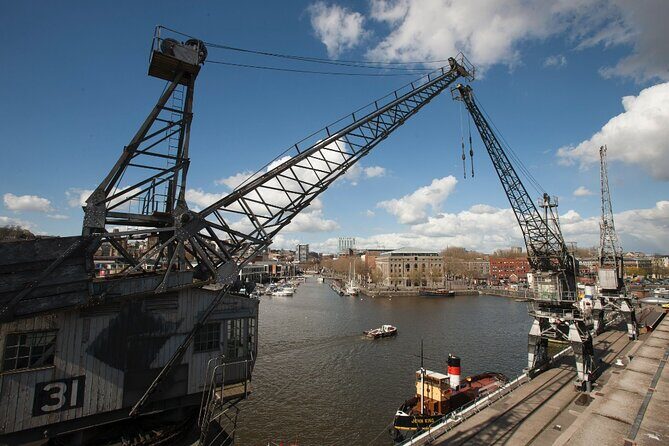
- Canon’s Marsh: the harbour machinery and shipping views
- Bristol City Docks: Pero’s Bridge and medieval trench ideas
- Prince Street Bridge: M Shed, Container Village, and the Old Prison Ruins
- Bathurst Basin: old mill pond, historic houses, and churches
- Queen Square: King William, the American Consulate, and Treasure Island lore
- Bristol Old Vic: theatre, streets, and the Welsh Back area
- Baldwin Street (R11): Saxon origins, markets, and the Old City slope
- St John on the Wall: a gate that’s still here, plus conduit and street art
- Edward Colston statue and the end back at the Marriott
- What to wear, bring, and how to get the most from it
- Who this tour suits best
- Should you book this tour? My practical verdict
- FAQ
- What is the duration and start time for the tour?
- Where do I meet the guide, and does it end nearby?
- How many people are in the group?
- Is the tour in English, and do I get any equipment?
- Are the stops free to view?
- What happens if the weather is poor?
Key highlights at a glance
- Audio receivers for clear directions and stories in busy areas
- A maximum of 8 people, which keeps things personal and interactive
- Ten major stops from Bristol Cathedral to the Edward Colston statue
- Harbour-and-Old-Town connection, so the city’s layout starts making sense
- Street art included, including where to spot Banksy murals
Why this Old City and Harbour walk is such a smart intro
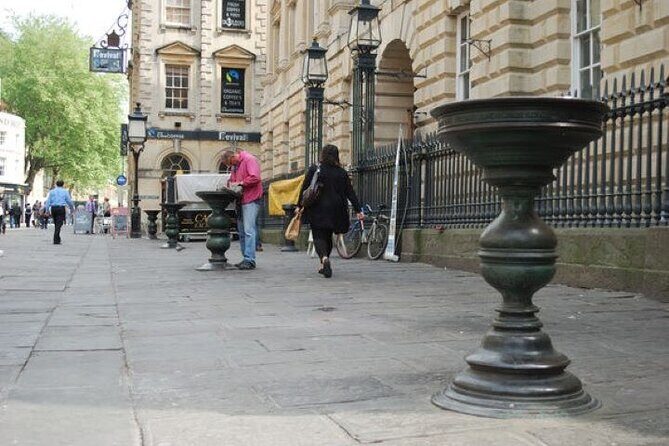
If Bristol is on your list and you only have a short stay, this tour is a very efficient way to get oriented. You cover the cathedral area, the harbour docks, and the old streets in one continuous loop back to the start.
What I like most is that the walk feels like a storyline. You’re not just collecting photos; you’re learning why these places sit where they sit, and how today’s Bristol grew out of the port and the old neighborhoods.
And because the group stays small, Mike can actually follow the questions you’re asking. That matters on a walking tour where people usually just shuffle and lose the thread.
You can also read our reviews of more walking tours in Bristol



Price and timing: what $29.86 buys you in real terms
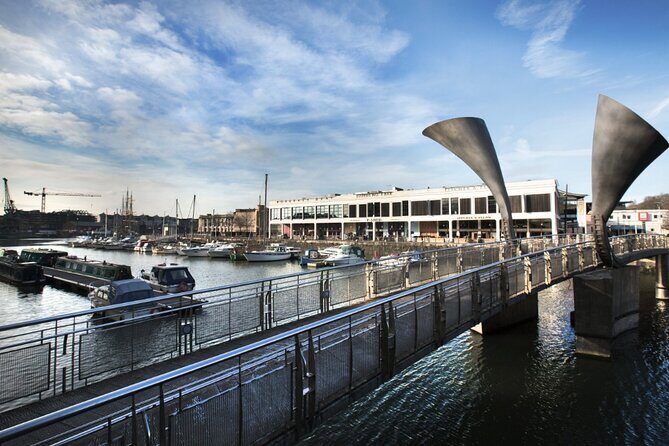
This tour costs $29.86 per person and runs about 2 hours 15 minutes. For that money, you’re paying for guided interpretation across multiple landmarks, plus audio receivers for every participant.
It also helps that the key stops are presented as walk-up viewpoints. Admission is listed as free for the stops along the way, so you’re not paying extra just to stand and look.
One practical detail: it starts at 2:00 pm and ends back at the Bristol Marriott Royal Hotel (College Green). If your evening plans are flexible, this is the kind of afternoon activity that can set up the rest of your stay.
Also worth noting: this one gets booked well ahead on average. If you’re traveling in peak season, it’s wise to lock in an early slot rather than gambling on availability.
The audio receivers make the tour work on real streets
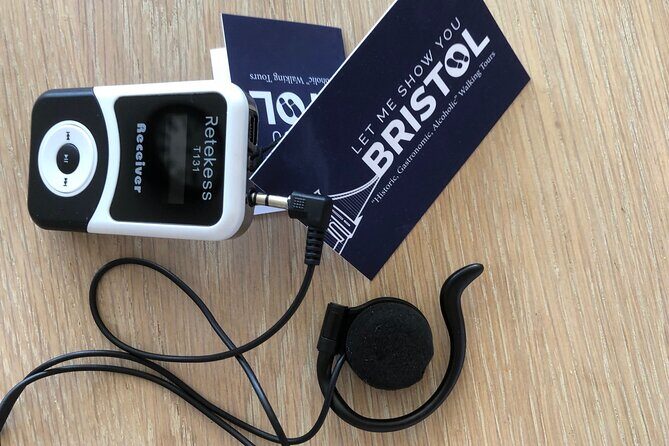
Bristol can get noisy around the docks and in the central areas. This tour solves that with audio receivers so you can hear the guide clearly while you walk.
That matters more than it sounds. Without headsets, you end up constantly turning around, missing key details, or asking strangers to repeat themselves. With the receivers, you can keep moving and still catch the stories.
I also liked that Mike uses his material in ways that make changes over time easier to understand. You’ll hear about how Bristol evolved, and in the process you start spotting patterns that you would usually miss while sightseeing solo.
The walking math: what to expect from the pace and the steps
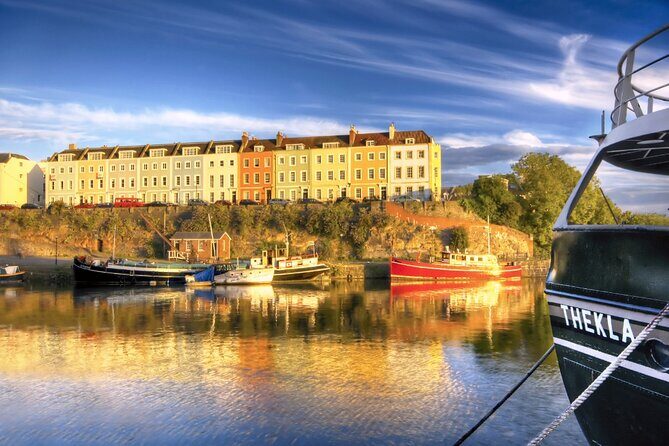
This is not a sit-and-watch tour. You’re out on foot through central Bristol, moving from site to site in roughly 10-minute segments, plus a slightly longer stop around Queen Square.
In terms of effort, plan for a big walking day. Mike has mentioned it can add up to about 12,000 steps, and one review flagged the pace as fast enough that you need to keep up.
If you’re someone who likes sightseeing at a relaxed stroll, bring your patience. The route is designed to cover a lot of ground, and the reward is that you’ll come away with a mental map of how the harbour and old streets connect.
Stop-by-stop: from the Cathedral to the docks and back into the Old City
You can also read our reviews of more guided tours in Bristol





Bristol Cathedral and the busy details around College Green
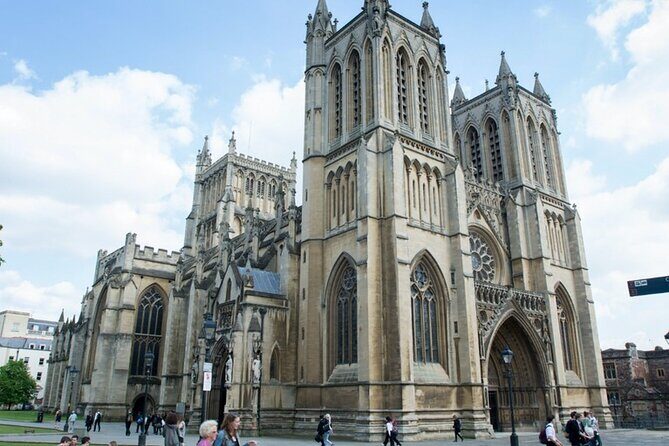
You start near the Bristol Marriott on College Green, and the first stop is Bristol Cathedral. The tour is focused on what you can admire right there: the Cathedral itself, plus nearby landmarks like the Well Hung Lover and St Marks.
You’ll also pass by major civic architecture in the area, including the Council House and Park Street. This early stretch is good because it anchors the walk in the part of Bristol that feels most “core” and recognizable.
If you’re the type who likes learning the meaning behind the buildings rather than just taking pictures, this opening works well. You’re not waiting long before the tour starts explaining why things look the way they do.
Practical tip: go into the first few minutes with comfortable expectations. You’ll get the big impressions quickly, then the guide will connect them to broader Bristol themes as you move on.
Canon’s Marsh: the harbour machinery and shipping views
Next, you head to Canon’s Marsh. Here the focus shifts from stone and civic buildings to the working waterfront.
You’ll look out toward Oporto Quay and Limekiln Dock, plus the cranes and shipping scenes that define this side of Bristol. It’s a clean change of pace and it sets up the next parts of the walk, where the harbour history becomes more specific.
This is one of those stops where the value is in the commentary. The scenery is impressive on its own, but the tour helps you read what you’re seeing: ports don’t just exist; they shape how cities grow.
Bristol City Docks: Pero’s Bridge and medieval trench ideas
At Bristol City Docks, you’ll walk out toward the medieval trench and cross over Pero’s Bridge. Then you’ll reach Arnofini, an important arts-and-waterfront landmark in the docks area.
Even if you don’t know Bristol’s dock layout yet, the guide’s pacing is designed to teach it to you as you go. You’re building a sense of place while still seeing major highlights.
This stop also reinforces one theme the tour returns to: Bristol’s identity is tangled up in its waterfront. The dock setting isn’t just a scenic backdrop; it’s a key part of the city’s story.
Prince Street Bridge: M Shed, Container Village, and the Old Prison Ruins
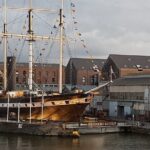
At Prince Street Bridge, you’ll get a strong overview across the waterfront. This is where the tour becomes very visually rich, with views of the M Shed, the Matthew, and the Container Village.
You’ll also see the Old Prison Ruins from here. That’s a useful contrast point, because it reminds you this area isn’t only about commerce and ships—it also held punishment and power.
If you like bridges because they offer both movement and perspective, this section will feel like a highlight. You’re elevated enough to take in the layers, and the guide helps you connect each structure to its role in the city.
Bathurst Basin: old mill pond, historic houses, and churches
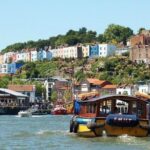
Bathurst Basin is another dock-side concentration of specific sights. You’ll see the Old Mill Pond and Guinea Street, and the walk brings you past places such as A House Through Time.
You’ll also pass the Slave Captains Houses and Redcliffe Church. Even when you don’t go inside anything, the naming alone gives you a clue that this is where Bristol’s maritime past leaves visible marks on the built environment.
This stop works best if you enjoy architecture and storytelling side by side. You’ll learn how the city’s economic life shaped its streets and buildings—and how that life still shows up in what you can see today.
Queen Square: King William, the American Consulate, and Treasure Island lore
Queen Square is where the tour leans into central-city landmarks around the docks. You’ll circle past the King Williams Statue and learn about the American Consulate in the area.
There’s also a fascinating pop-culture note: you’ll hear about the Spy Glass Inn from Treasure Island. That’s the kind of detail that turns a normal walk into a more memorable one, because it gives you a cultural handle for what you’re looking at.
This stop is also a bit longer, giving time to absorb the square and catch the guide’s connections between Bristol’s residents, institutions, and seafaring influence.
Bristol Old Vic: theatre, streets, and the Welsh Back area
The next shift takes you to Bristol Old Vic. You’ll see the Old Vic itself, then move through the King Street area and toward Welsh Back.
This segment helps balance the docks with something more human-scale. Ships, warehouses, and bridges are huge. A theatre sits in a different lane, tied to community life and culture.
If you’ve only ever thought of Bristol as a port city, this is a good reminder that it also built identity through arts and public life.
Baldwin Street (R11): Saxon origins, markets, and the Old City slope
Baldwin Street is the wow-factor stop on the route. The tour points out the origins of Bristol as a Saxon settlement and then uses the street to explain how you move into the Old City.
This is also where you’ll connect several landmarks in the same sweep: Castle Park, churches, law courts, and merchants trading haunts. You’ll also pass the Corn Exchange and hear about Nails & Guilds meeting places.
And yes, Baldwin Street is steep. Reviews and the guide’s own comments make it clear that it is part of the fun and part of the effort. If you’re okay walking uphill in short bursts, you’ll love how it changes your view of the city.
St John on the Wall: a gate that’s still here, plus conduit and street art
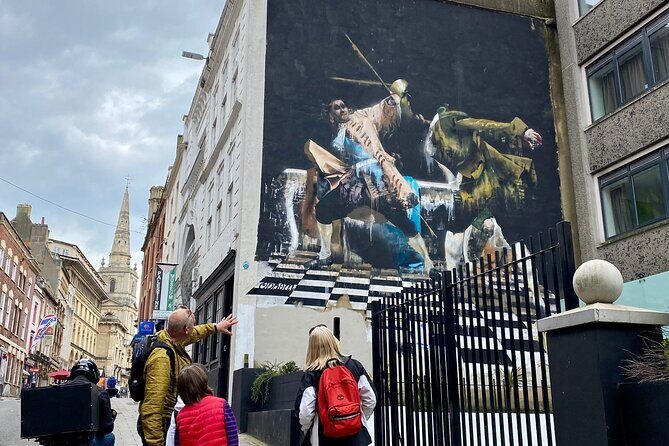
St John on the Wall is one of the old-city anchors on the walk. You’ll walk through one of the remaining city gates and get a view of the conduit and street art.
This is a great place to notice street art as part of the city’s texture rather than something random. Mike weaves in the topic of Banksy murals and shows you where street art fits into Bristol’s story of residents and place-making.
If street art is your interest, I’d treat this stop as a must-pay-attention moment. You’ll come away with directions for where to look again on your own later.
Edward Colston statue and the end back at the Marriott
The tour finishes at the Statue of Edward Colston area, with the cenotaph nearby. Then you return to the Marriott where you started.
This ending choice is smart because it lands the walk in a place where civic memory is literally in view. Even if you’re not shopping for politics, you’ll appreciate that Bristol’s identity isn’t only made of buildings and ships—it also comes from people and debates.
What to wear, bring, and how to get the most from it
This tour is all about moving, so dress for walking. Comfortable shoes are non-negotiable here, especially if you’re not used to hills.
Bring water. It’s not an “every stop refreshes you” tour. The route also depends on weather conditions, since it is outdoors.
I’d also plan to arrive a few minutes early and get settled at the meeting point so you can start listening immediately. When the audio receiver is handed over and you’re lined up, the tour goes quickly.
Who this tour suits best
I think this one is ideal if you’re:
- visiting Bristol for the first time and want a fast map of the city
- interested in how the docks shaped everyday life and modern Bristol
- the kind of person who enjoys architecture plus stories, including street art
It also works well for mixed ages, as long as everyone can handle steady walking. The tour notes that most travelers can participate, and the maximum group size keeps things manageable.
If you hate crowds or dislike headsets, it might not be your style. But if you like guided walking with a bit of humor and lots of storytelling, this is a strong match.
Should you book this tour? My practical verdict
Book it if you want a simple, high-value way to understand Bristol beyond postcards. The combination of audio receivers, a small-group size, and a route that links the cathedral area to the docks and back into the Old City makes this an efficient use of afternoon time.
I’d think twice only if you have limited mobility or you want a very slow pace. The steep parts and step count can be a lot, even though the stops are short and the tour design keeps it moving.
If you do book, I’d also plan a little extra time after the walk. Mike has recommended a Clifton Bridge area visit as a great add-on, and it fits naturally with what you learn about Bristol’s geography and viewpoints.
FAQ
What is the duration and start time for the tour?
It runs for approximately 2 hours 15 minutes and starts at 2:00 pm.
Where do I meet the guide, and does it end nearby?
You meet at Bristol Marriott Royal Hotel, College Green, Bristol BS1 5TA, UK. The tour ends back at the same meeting point.
How many people are in the group?
The tour has a maximum of 8 travelers.
Is the tour in English, and do I get any equipment?
It is offered in English, and you receive audio receivers.
Are the stops free to view?
Admission is listed as free for the stops included on the route.
What happens if the weather is poor?
This experience requires good weather. If it is canceled due to poor weather, you will be offered a different date or a full refund.