REVIEW · LONDON
Jack the Ripper and Victorian London Beyond the Shadows
Book on Viator →Operated by Loudman Tours · Bookable on Viator
Jack the Ripper feels real at night. This 2.5-hour walk takes you through London’s East End with Ten Bells and Goulston Street key stops, plus everyday places like Brick Lane and Spitalfields. It’s the mix that makes it work: crime story energy, but grounded in what life looked like for ordinary people.
I like the way Nick brings a fact-first, victim-respecting tone to the murders, and he keeps the story moving with a true local feel for the neighborhood. I also like that you don’t just get the case facts; you get East End street life in between stops, so 1888 doesn’t feel like a museum exhibit.
One thing to plan for: this is a walking tour, so comfy shoes matter if you want to enjoy every stop without rushing.
In This Review
- Key things that make this tour worth your evening
- Jack the Ripper’s East End route: what you’ll feel on the streets
- Braham Street meetup at 7:30 pm: timing and getting oriented
- Brick Lane stop: 1888 struggles and the East End’s later change
- Spitalfields Market: food, clothes, and music between the darker chapters
- Ten Bells pub visit: why this location matters in the Jack the Ripper story
- Goulston Street walk: Elizabeth Stride, Catherine Edowes, and the riots of 30 September 1888
- The guide factor: Nick’s storytelling style and the emphasis on victims
- Price and value: is $24.98 for a night East End walk worth it?
- Practical tips for a 2.5-hour East End evening
- Should you book this Jack the Ripper and Victorian London tour?
- FAQ
- How long is the Jack the Ripper and Victorian London tour?
- What time does the tour start and where is the meeting point?
- Where does the tour end?
- What does it cost, and do I receive a mobile ticket?
- Is the tour offered in English?
- What is the maximum group size?
- Is there free cancellation?
Key things that make this tour worth your evening
- Brick Lane at night connects 1888 street conditions to what changed in later decades
- Spitalfields Market stop shows how locals and visitors still fill the streets for food, clothes, and music
- Ten Bells pub visit ties the case to a famous location that keeps appearing in media
- Goulston Street link to 1888 events brings together the murders and the riots that followed
- Guides who tell the story interactively and keep it engaging, with examples from iPad photos
- Small group size (max 40) helps you actually hear the details on a night walk
Jack the Ripper’s East End route: what you’ll feel on the streets
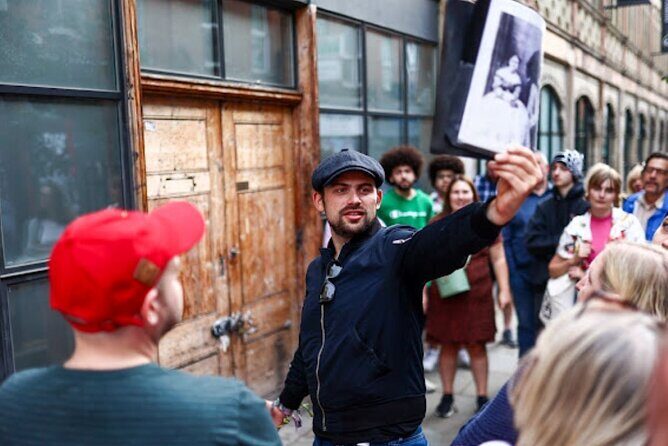
If you care about true crime but hate when it turns into gossip, this tour hits a sweet spot. You’re moving through real London streets where the past isn’t just a backdrop—it shapes the way the neighborhood developed. The story doesn’t sit only on one famous name. It stays with the people affected, including the women whose lives were cut short.
What I like most is the balance. You get the darkness of the case, yes, but you also get the East End as a living place. That matters because it’s easy to forget that the Victorian streets weren’t all horror. They were work streets, market streets, family streets—and the same neighborhoods that produced fear also built community.
This is also one of those tours where the time of day helps. Starting at 7:30 pm, you’re in evening light when the streets feel tighter and the mood lands fast. You’ll understand the history faster if you let the neighborhood set the pace for you.
You can also read our reviews of more tours and experiences in London.


Braham Street meetup at 7:30 pm: timing and getting oriented
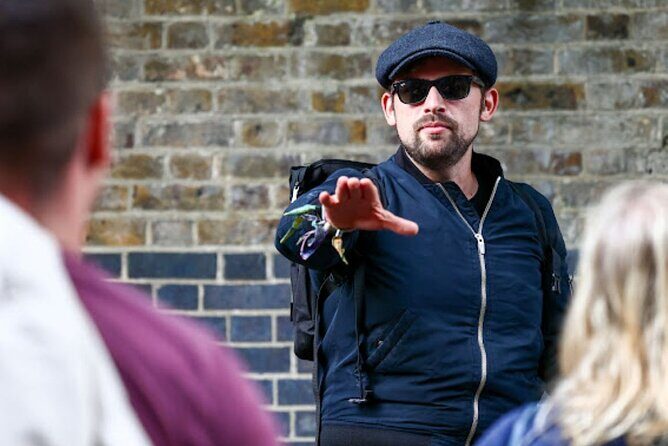
You start on Braham Street (Braham St, London E1) at 7:30 pm. If you’re arriving from elsewhere in the city, build in a little buffer so you can find your group without stress. The tour uses a mobile ticket, so have your phone ready.
The meeting location is in East London, and the tour is described as near public transportation. That’s a big deal on a night walk. You’ll have an easier exit option if you need to hop back onto the Tube before the end.
The tour runs about 2 hours 30 minutes, and the pace is a typical walking tour pace. Most people can participate, but you’ll want to bring energy for a sustained evening outside.
Brick Lane stop: 1888 struggles and the East End’s later change
The first major stop leans into Brick Lane and the social reality around 1888. You’re not just hearing spooky names. You’re getting how poverty, work, and day-to-day survival shaped the streets. It’s the kind of context that makes the later case details feel less like a headline and more like a human situation.
This is where the tour’s “beyond the shadows” angle shows up. Brick Lane isn’t treated like a theme park set. You’re guided to understand the economic pressures that shaped the area, and then how the area developed over time. That shift is useful, especially if you’ve only ever seen the East End through crime stories or old photos.
Practical tip: Brick Lane is also a place where streets can feel busy, even at night. Take a moment early in the tour to get your bearings so you can follow the group cleanly to the next stop.
Spitalfields Market: food, clothes, and music between the darker chapters
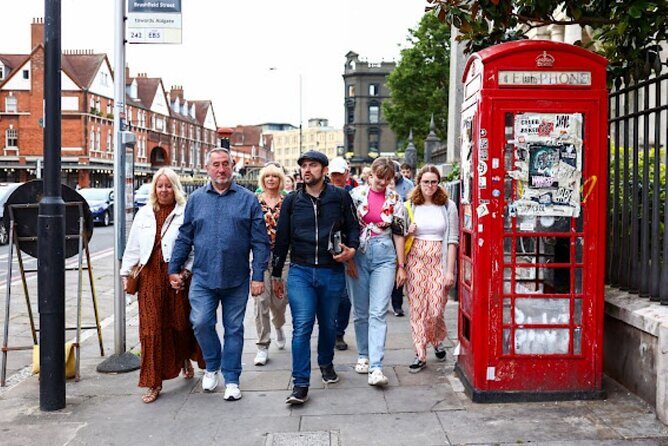
Next comes Spitalfields Market, a location that helps the tour breathe. Here, the East End moves from narrative to daily life. The market is described as a place locals and visitors share for food, clothes, and musical finds, with excitement around many corners.
This stop is smart for two reasons. First, it prevents the tour from staying emotionally flat. You get a break from the heavy case details. Second, it reinforces what you learned earlier: this neighborhood isn’t frozen in 1888. It’s active, changing, and culturally layered.
If you’re trying to decide whether to eat before or after this stop, don’t overthink it. You’re on a schedule, so plan a simple meal timing that keeps you comfortable during the walk.
Ten Bells pub visit: why this location matters in the Jack the Ripper story
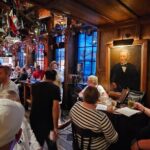
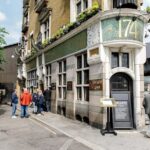
The tour includes a visit to the historic Ten Bells pub, linked to the ripper case. This is one of those stops where a building becomes part of the storytelling machine. It’s shown as a location that has appeared in documentaries and films, which helps explain why people recognize the name even if they don’t know the details.
What I like here is the way the guide uses the pub stop to anchor the story without turning it into pure spectacle. You’re not just taking a photo and moving on. You’re learning how the case sits within the neighborhood’s social geography—where people gathered, how communities functioned, and why certain places became part of public memory.
A consideration: pub stops can involve noise and crowds, depending on the evening. The tour is scheduled and guided, so you’ll still get the story, but you’ll want to stay attentive while keeping your place in the group.




Goulston Street walk: Elizabeth Stride, Catherine Edowes, and the riots of 30 September 1888
The final walk turns sharper and more intense. You head to Goulston Street, with connections to both the case and the riots of 1888 that followed after the double murders of Elizabeth Stride and Catherine Edowes on 30 September 1888.
This is the part where the tour becomes more than a murder mystery. The guide connects how fear, anger, and public reaction can spread through a community fast—especially when the events are personal and widely felt. It’s not just what happened to two victims. It’s also what the neighborhood endured afterward.
I appreciate that this segment doesn’t treat the victims like plot devices. Multiple guides in recent groups emphasize a victim-focused approach, and it changes how the story lands. You’ll likely find yourself thinking more about survival, vulnerability, and the social forces surrounding the women’s lives.
The guide factor: Nick’s storytelling style and the emphasis on victims
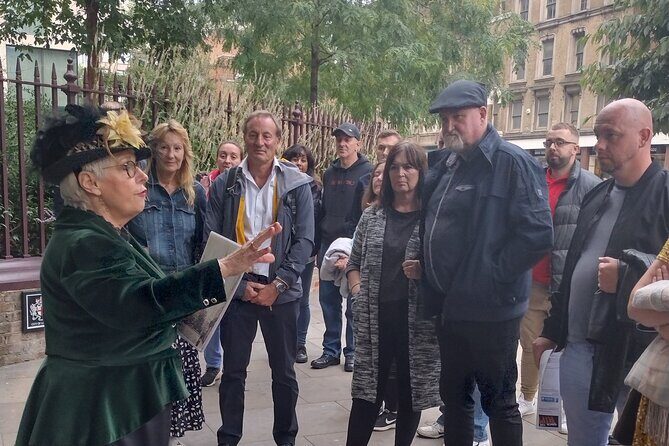
A major reason this tour earns standout marks is the guide quality. Nick is the name that shows up repeatedly, and he’s described as a trained historian who tells the story with a factual, respectful approach. The tone matters. It keeps the conversation grounded in real human lives instead of treating the victims as footnotes.
One detail that sounds small but makes a difference: Nick uses a tablet/iPad with real photographs during the walk. That helps you picture what you’re being told without relying only on imagination. It also supports that fact-first vibe that people tend to love.
In at least one group example, another guide named Matt led the tour and brought deep Victorian-era context alongside the ripper material. That suggests the company’s style isn’t only about one person’s personality; the approach is built for clarity and engagement.
If you’re the type who likes to ask questions, this is a good fit. You’re encouraged to stay involved, and the guide works to keep everyone included, not just the loud talkers.
Price and value: is $24.98 for a night East End walk worth it?
At $24.98 per person for about 2 hours 30 minutes, you’re paying for more than a route. You’re paying for interpretation—someone turning streets and names into a connected story.
Here’s what you’re getting for the money, based on the tour details:
- A guided walk that ties together case locations and Victorian context
- Stops at specific places you can’t easily connect on your own without research
- A small group cap of 40 people, which matters on a walking tour
- A mobile ticket and an evening start that makes the experience feel like London at work, not daytime sightseeing
Compared with a quick, generic walking tour, this is longer and more narrative-heavy. Compared with an all-day museum plan, it’s cheaper and more human-scale. If you’re a true crime fan or a history buff, the cost starts to make sense because the guide is doing the hard part for you: organizing facts, connecting events, and keeping the story respectful.
Also, this tour is often booked about 63 days in advance on average, so it has some momentum. If you have a specific date in mind, don’t treat it like a last-minute idea.
Practical tips for a 2.5-hour East End evening
Keep a few simple things in mind so you enjoy the walk instead of just surviving it.
- Wear comfortable shoes. This is a walking tour, and you’ll be on your feet for the full duration.
- Bring your phone for the mobile ticket. The tour uses a mobile format.
- Plan for public transport access. The start and end points are near transit, which helps you manage your evening.
- Go in with questions. The guide’s approach is interactive, and the story benefits from curiosity.
- Expect an English tour. The experience is offered in English.
One more note: service animals are allowed. If that’s relevant for you, it’s good to know in advance.
Should you book this Jack the Ripper and Victorian London tour?
Yes—if you want a night walk that takes the East End setting seriously and keeps the focus on the victims and the surrounding social context. I’d book it if you’re tired of ripper stories that treat people like headlines. This experience leans into survival, poverty, public reaction, and how the neighborhood’s story continues into today.
I’d think twice if you hate walking tours or want a very light, comedy-style outing. This is engaging and sometimes playful in delivery, but the subject matter is heavy. If you’re okay with that trade-off, you’ll likely find it worth every minute of the 2.5 hours.
If you’re torn between “just reading about it” and “seeing it in the streets,” pick the streets. You’ll understand the case faster when you can stand where the story’s echoes happen.
FAQ
How long is the Jack the Ripper and Victorian London tour?
The tour lasts about 2 hours 30 minutes.
What time does the tour start and where is the meeting point?
It starts at 7:30 pm, meeting at Braham Street (Braham St, London E1, UK).
Where does the tour end?
The tour ends at Spitalfields Market (65 Brushfield St, London E1 6AA, UK).
What does it cost, and do I receive a mobile ticket?
The price is $24.98 per person, and the tour includes a mobile ticket.
Is the tour offered in English?
Yes, it’s offered in English.
What is the maximum group size?
The maximum group size is 40 travelers.
Is there free cancellation?
Yes. You can cancel for a full refund up to 24 hours in advance of the experience start time.