REVIEW · LONDON
Lights, Camera, London: The Movie Locations Walking Tour
Book on Viator →Operated by Where Now Tours · Bookable on Viator
London gets a second storyline here.
This walk strings together famous movie locations with real street-level context, from the crowds of Piccadilly Circus to the food-and-pub finish at Borough Market. I love the way it turns ordinary landmarks into scenes you can actually picture, and you’ll get photo-friendly stops along the way.
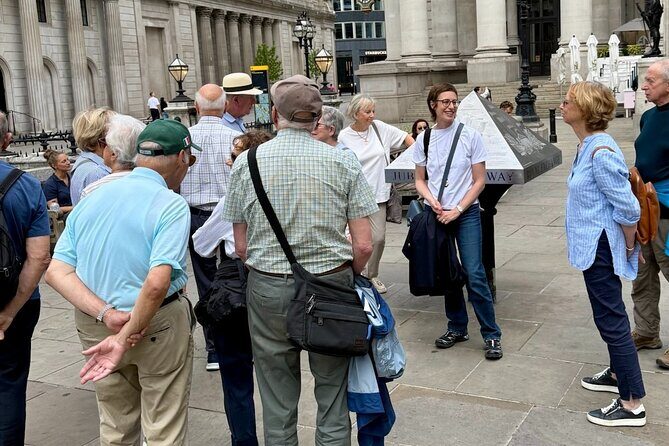
What really makes it click is the tablet with video clips that match what you’re seeing on the pavement. You’ll also get lots of chances to ask your guide questions as you walk, which is ideal if you want the why behind the visuals, not just the where.
One possible drawback: it’s a walking tour, and the pacing is still on London time. If you’re sensitive to crowds around Piccadilly Circus or you prefer a slower, sit-down tour, you might want to plan for that.
In This Review
- Key things to know before you go
- Entering London’s Movie Locations, One Street at a Time
- What you’ll actually do for about 2 hours
- Piccadilly Circus and Leicester Square: lights, crowds, and filming tradeoffs
- Cecil Court and Goodwin’s Court: narrow streets with big film stories
- Trafalgar Square and Scotland Yard: blockbuster scale at street level
- Corinthia London and The Blackfriar: architecture and pub legends
- St Paul’s and the Millennium Bridge: the city’s angles that cameras love
- Tate Modern, the bridge chase vibe, and Tom Cruise–level momentum
- The Anchor, The Globe Tavern, and Borough Market: ending with edible London
- The guide (and that tablet) make it feel like a guided screening
- Price and value: about $18.67 for a film-themed walking tour
- Logistics that affect your comfort
- Who this tour fits best
- Should you book Lights, Camera, London?
- FAQ
- How long is the Lights, Camera, London walking tour?
- Where does the tour start and end?
- What’s included in the ticket price?
- Is there an admission ticket fee for the movie locations?
- Is London Underground fare included?
- Can I get a full refund if my plans change?
Key things to know before you go
- Small-group size (max 15) means your questions don’t get lost in the crowd
- Tablet stop-by-stop clips help you connect each filming location to the movie moment
- Photo opportunities include Leicester Square and the energy around Piccadilly Circus
- Classic London variety: West End streets, alleyways, landmarks, bridges, and pubs
- End at Borough Market so you can roll right into food and sightseeing after the tour
Entering London’s Movie Locations, One Street at a Time
If you like movies, London can feel like an endless set. This tour gives you a guided path through that feeling, linking big, recognizable landmarks with filming stories you can spot instantly once you know what to look for.
I like tours that don’t just point at buildings. This one helps you read the city like a film map, with the guide explaining how the streets, angles, and crowds work on screen. And because it’s small-group, it stays conversational instead of turning into a lecture.
You can also read our reviews of more walking tours in London
What you’ll actually do for about 2 hours
The timing is straightforward: about 2 hours on foot, with short stops that keep things lively. You’re not expected to sprint between locations, but you should plan on a steady walking rhythm through central areas.
You’ll also want to be ready for two kinds of “movie energy.” First, the always-busy streets near Piccadilly Circus and Leicester Square. Second, the quick-but-meaningful detours down alleyways and courtyards that can be easy to miss when you’re sightseeing on your own.
Piccadilly Circus and Leicester Square: lights, crowds, and filming tradeoffs
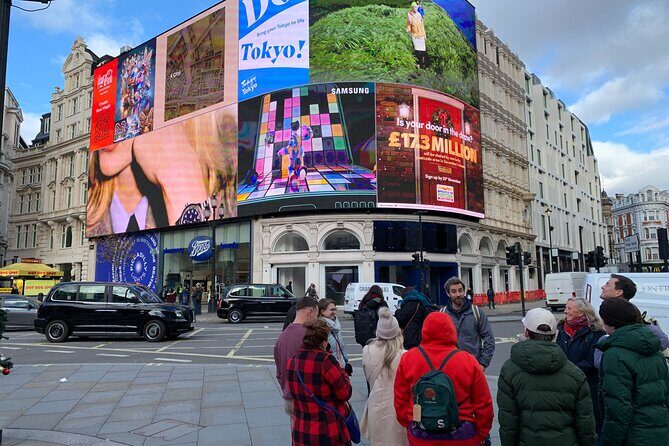
You start at Piccadilly Circus (W1J 9HP), where the glow and foot traffic make it the easy place to understand why filmmakers love it. The guide sets the scene with film connections, including locations used in movies that were reportedly difficult to get permission to film in at that specific spot. It’s a useful reminder that the movie magic often comes with real-world friction.
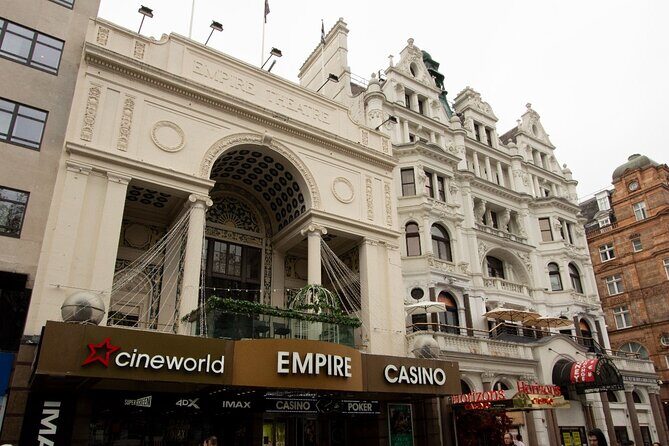
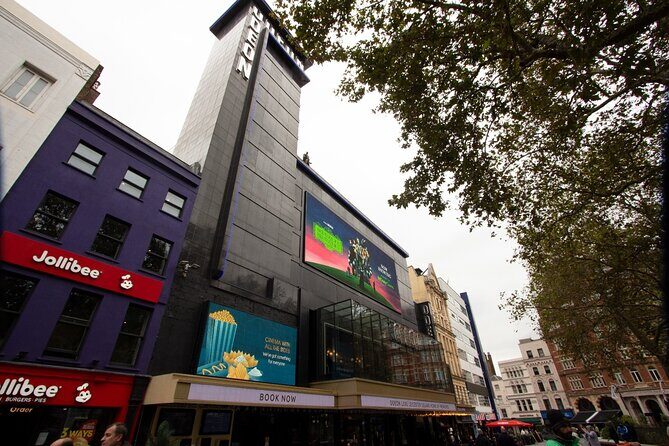
From there, you head to Leicester Square, the cinema district where premieres have been happening for decades. This is one of the best parts for photos, because the whole place is built for that “Hollywood in the middle of London” feeling. Even if you’re not a nonstop cinema-goer, it’s hard not to get pulled into the atmosphere.
Practical note: both areas can get crowded. If you’re visiting during peak times, keep your phone/camera accessible, but don’t let gear slow you down. The guide moves you at a pace where you still get angles without getting stuck.
Cecil Court and Goodwin’s Court: narrow streets with big film stories
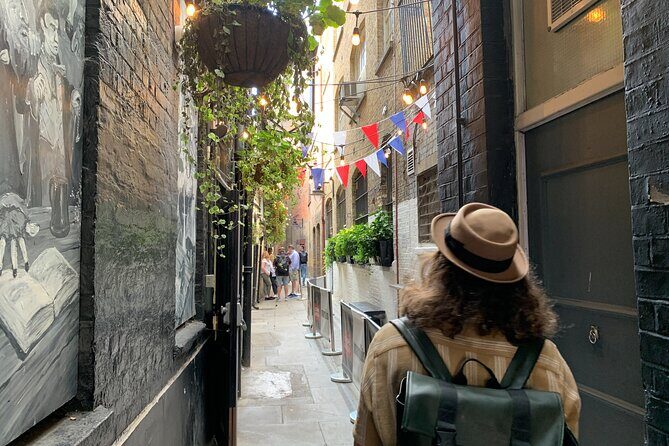
Next up is Cecil Court, a Victorian alley that feels like a quiet pocket tucked into the louder city. You’ll hear stories tied to the early days of film, including the first motion picture projector and camera, plus a conspiracy-style thread that makes the topic more fun than it might sound on paper.
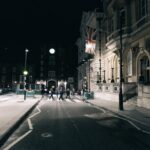
Then comes Goodwin’s Court, a smaller street where the vibe is darker and more mysterious. The point here is not just that films were shot nearby. It’s that filmmakers used the architecture and atmosphere to build a mood fast—something you can feel immediately when you stand in the right spot for a few minutes.
If you’re the type who likes noticing details (doorways, corners, sight lines), this is where you’ll start seeing London like a director. And if you’re more of a casual movie fan, you’ll still leave with a better sense of why certain streets get reused again and again.
Trafalgar Square and Scotland Yard: blockbuster scale at street level
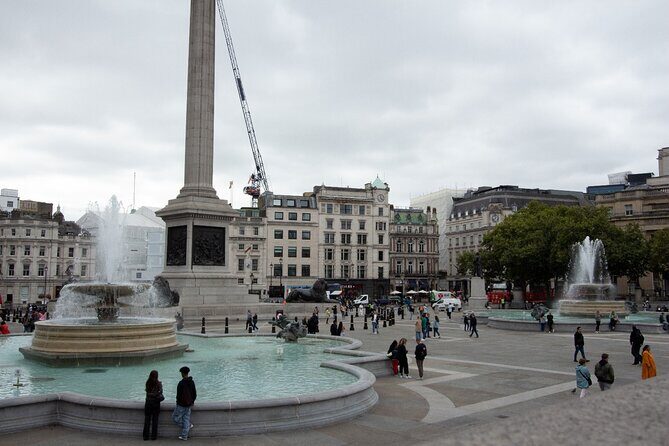
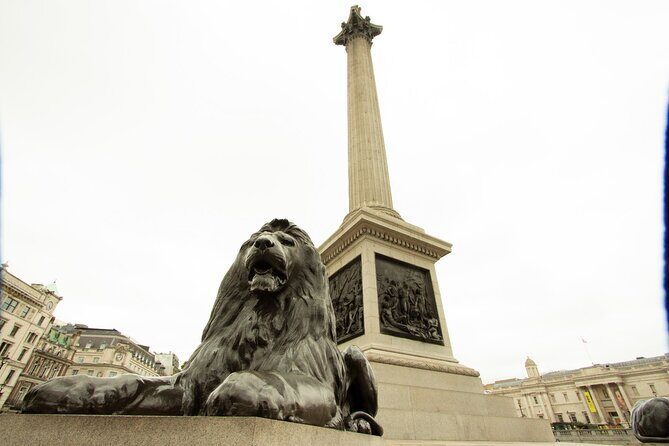
At Trafalgar Square, you get one of the most recognizable city icons in the UK. The tour connects it to movie genres across the board—action, fantasy, sci-fi—and even points to a Disney live-action remake link. This stop works because the square is both visually dramatic and practical for film setups: open space, landmark views, and a built-in sense of scale.
Then you move to the Metropolitan Police / Scotland Yard area, a tucked-away pocket connected to the 19th-century headquarters story. The tour explains how that more discreet setting has also shown up in major productions, including the Harry Potter universe. What I like about this stop is the contrast: you’re standing in a place that feels official and controlled, yet it’s been used to create film-world tension.

Corinthia London and The Blackfriar: architecture and pub legends
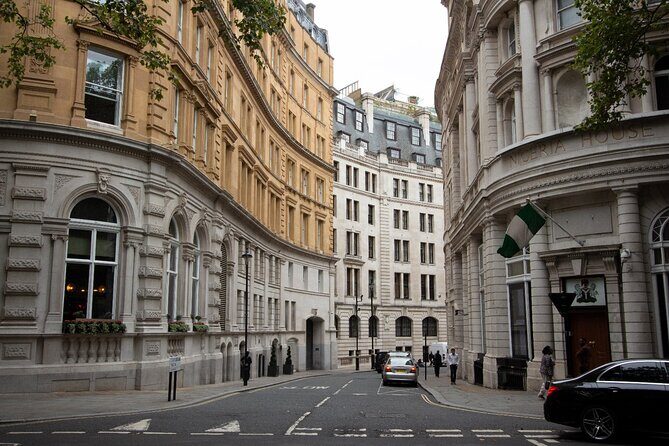
Corinthia London is the next shift in tone—more polished, more celebrity, more “this could be a premiere backdrop.” The tour points out how its architecture has appeared on screens, and it’s easy to see why. Hotels like this are designed for entrances, impact, and that instant sense of status that film wants on day one.
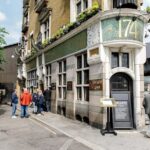
Then you step into The Blackfriar, a pub that survived a war and later redevelopment. The guide adds a story thread about a possible secret agency dealing with otherworldly matters, which is exactly the kind of narrative hook that keeps the tour playful while you’re moving through real neighborhoods.
One of the best things about mixing landmarks with pubs is that it breaks the “all monuments all the time” pattern. It also makes the movie talk feel less like trivia and more like street storytelling.
St Paul’s and the Millennium Bridge: the city’s angles that cameras love
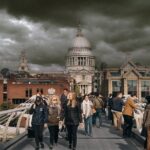
St. Paul’s Cathedral is next, and yes, it’s famous for a reason. The tour focuses on the film-friendly qualities: narrow corridors, gothic interiors, and winding stairways. Even if you’ve seen St Paul’s from the outside, this kind of guidance helps you imagine how filmmakers stage movement and atmosphere inside.
After that, you cross to the Millennium Bridge, a structure locals love to argue about. The tour explains how it’s been used to show a more modern London on screen—something that makes sense once you’ve got a clear view of how the bridge frames people and perspective in motion.
If you’re a photo person, this section is where you’ll appreciate the guided pacing. Bridges and cathedral areas can swallow your time if you wander. The tour keeps you planted long enough for good sight lines and then moves you on.
Tate Modern, the bridge chase vibe, and Tom Cruise–level momentum
You then reach Tate Modern, a former power station that’s become a natural film-stage for contemporary stories. Right outside, you’re also connected to a major “chase” type of moment involving Tom Cruise and Henry Cavill, set across the Blackfriars bridge area.
Even if you’ve never seen the exact scene, the tour does a good job helping you understand what the filmmakers were likely chasing: dramatic scale, movement, and the way the Thames corridor reads on camera. It’s not just about name-dropping. It’s about connecting the city geography to what viewers feel in a fast-moving sequence.
The Anchor, The Globe Tavern, and Borough Market: ending with edible London
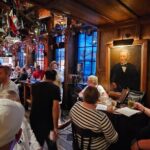
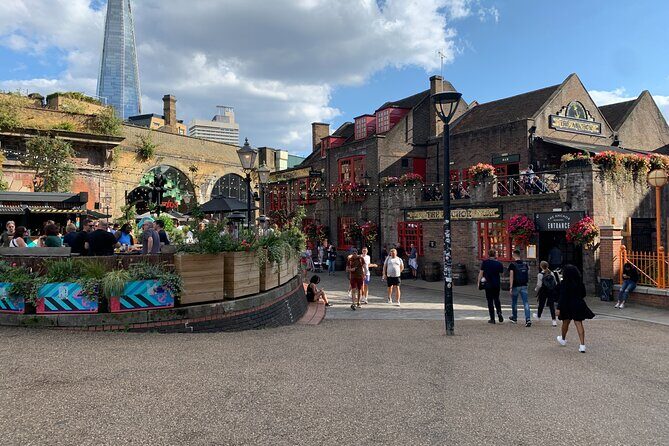
The final stretch leans into movie London through pubs. The Anchor is tied to the first Mission: Impossible film, and the guide also mentions another movie reference with controversy around it. This is one of those moments where you realize filming locations aren’t just scenic—they’re also about personality and the right “slice of life” vibe.
Then you move to The Globe Tavern, near Borough Market, which the tour links to a Bridget Jones character. This works because it feels human. You’re not just looking at famous structures; you’re finishing in a neighborhood where people actually eat, talk, and linger.
Finally, you end at Borough Market (18 Stoney St, SE1 9AD). The guide brings you into London’s oldest food market feel, plus historic pub options nearby. There’s also a bit of a tease at the end—your guide hints at a very magical pub moment connected to the area—so it’s a satisfying wrap-up if you like a last-minute storyline.
The guide (and that tablet) make it feel like a guided screening
This is the kind of tour where the guide’s enthusiasm actually matters. One guide you may have heard about is Ryan, who is noted for being sweet, knowledgeable, and very good about bringing the stops to life. His style includes showing movie videos as you reach the locations, so you’re not just hearing a story after the fact.
The tablet element matters for value. Without it, you’d rely on your memory of scenes, and London is big. With it, you get a quick match-up between what’s on screen and what you’re standing in front of. It also makes the tour easier if you’re doing it early in your London trip, because it helps you start recognizing “film angles” right away.
Price and value: about $18.67 for a film-themed walking tour
At $18.67 per person, this is priced like a budget-friendly activity, not a premium tour. And for that money you’re getting an English guide, a tablet, and a small-group format designed for interaction.
You’ll also notice that the listed stops are ticket-free for your on-foot visit. The only cost you’ll likely add is getting there and moving through the city, since London Underground fare isn’t included. If you already have a transit pass, that’s usually painless.
Is it worth it? If you care about movies and you enjoy learning how real streets become film sets, it’s a strong value. If you mostly want classic London architecture and you don’t care about film connections, you might feel like the tour is more niche.
Logistics that affect your comfort
A few practical points can make or break your experience.
Wear comfortable shoes. You’re walking for about two hours, and some streets are uneven in the way London streets tend to be.
Bring a camera plan. Piccadilly and Leicester Square are the photo-friendly “easy wins,” but the alleyways and courts reward quick, patient shots.
Expect crowd levels. Piccadilly Circus is Piccadilly Circus. Plan your photos so you don’t lose your group.
Also, the tour has a moderate physical fitness level, and it’s capped at 15 travelers, which usually helps pacing and overall comfort. Service animals are allowed too.
Who this tour fits best
This walk is ideal if you’re:
- A movie buff who likes recognizing locations in real life
- A first-time London visitor who wants a themed way to see the core sights
- Someone who enjoys Q&A and short, focused stops instead of a long museum-style day
It’s less ideal if you want a quiet, minimalist sightseeing day or if crowds around Piccadilly Circus stress you out. The tour spends real time in high-traffic zones, and that’s part of the point.
Should you book Lights, Camera, London?
Book it if you want a fun, efficient way to connect London streets to the films you already love. The mix of landmarks (Trafalgar Square, St Paul’s, Millennium Bridge) with smaller streets and pub stops gives you variety without feeling scattered. And the tablet clips make it more than just a walk with trivia.
Skip it if you’re not interested in movie locations at all, or if you prefer a more traditional London sightseeing style with longer stops and fewer quick transitions.
Either way, plan for comfortable walking shoes. London’s film magic is best enjoyed one step at a time.
FAQ
How long is the Lights, Camera, London walking tour?
It lasts about 2 hours.
Where does the tour start and end?
It starts at Piccadilly Circus (W1J 9HP) and ends at 18 Stoney St, London SE1 9AD near Borough Market.
What’s included in the ticket price?
You get a tablet and an English guide.
Is there an admission ticket fee for the movie locations?
The stops listed are marked as ticket-free.
Is London Underground fare included?
No. London Underground fare is not included.
Can I get a full refund if my plans change?
Yes. You can cancel up to 24 hours in advance for a full refund.