REVIEW · LONDON
London Blitz Walking Tour: Explore City of London Wartime History
Book on Viator →Operated by Urban Saunters · Bookable on Viator
London can feel like it moves at highway speed. This walk slows you down and connects WWII bomb damage to the streets you can still see today. You start at St. Paul’s, a survivor that became a symbol of defiance, then you move through quiet churchyards and major sites tied to the Blitz.
I especially love that the route is built around specific places instead of general lectures, and the guide keeps the stories clear and human. I also like that it’s a small group walk, so you’re not stuck listening from the back while everyone else moves on.
One thing to consider: some of the stories are heavy. You’ll hear about civilian death and the terror of air-raid shelters, so if that’s tough for you, plan your own pace.
In This Review
- Key Highlights Worth Marking on Your Map
- A London Blitz Walking Tour That Actually Matches the Street
- Meeting at the National Firefighters Memorial: A Clear Starting Point
- From St. Paul’s to the Tower: Your Stop-by-Stop Route
- Stop 1: St. Paul’s Cathedral and the Idea of Defiance
- Stop 2: Christ Church Greyfriars Ruins in a Memorial Garden
- Stop 3: Bank Station and the Reality of Shelter
- Stop 4: St. Dunstan-in-the-East Ruins as a Garden of Healing
- Stop 5: All Hallows by the Tower and a Place of Refuge
- Stop 6: The Tower of London and Josef Jakobs, WWII Espionage at the End
- What Makes the Guides Matter on This Walk
- Who Should Book This (and Who Might Skip It)
- Price and Value: Is $38.83 a Good Deal?
- Practical Tips So Your Walk Lands Well
- Should You Book the London Blitz Walking Tour?
- FAQ
- How long is the London Blitz walking tour?
- What is the price per person?
- Where does the tour start and end?
- When does the tour start?
- Is this tour guided, and what language is it in?
- Are admission tickets included?
- How big is the group?
- Is food included?
- What if I need to cancel?
Key Highlights Worth Marking on Your Map
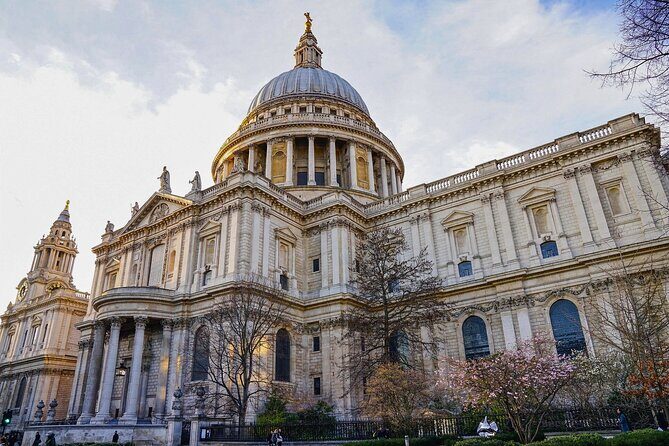
- St. Paul’s Cathedral as a living WWII landmark, including the role of firefighters
- Greyfriars ruins turned into a peaceful memorial space you can actually walk through
- Bank tube bombing site and how sheltering underground didn’t always mean safety
- Two bomb-damaged churches rebuilt into calm gardens: St Dunstan-in-the-East and All Hallows by the Tower
- Tower of London espionage story, including Josef Jakobs and the Tower’s wartime role
- A guided small-group format (max 20) that helps you keep up without feeling rushed
A London Blitz Walking Tour That Actually Matches the Street
If you’ve ever looked at an old London building and wondered why it survived—or why it didn’t—this is the tour for that exact itch. You get a mapped route through the City of London where WWII isn’t just in books. It’s in ruins, memorial gardens, and the places where people tried to hide during bombing raids.
The smartest part is that this doesn’t feel like a checklist of famous sights. It’s built like a story you can follow on foot: start with a public symbol, move to smaller memorial spaces, then land on major sites tied to real raids and real decisions.
And since it’s run as a small group (up to 20), you can ask practical questions when the guide stops. That matters because some locations are better understood by listening to the “why,” not just looking at the “what.”
You can also read our reviews of more walking tours in London



Meeting at the National Firefighters Memorial: A Clear Starting Point
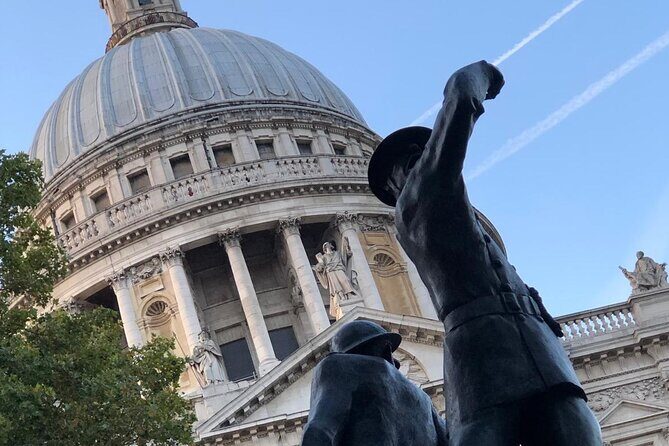
Your tour starts at the National Firefighters Memorial on Carter Ln near Peter’s Hill (EC4V 5EY). It’s a solid central meeting spot, and it sets a thoughtful tone right away: London’s wartime story isn’t only about bombers and politics. It’s also about the people who kept running toward danger.
You’ll begin at 9:45am, and the walking time is about 1 hour 30 minutes. With six stops and around 15 minutes per stop, the pacing is designed to give you context without dragging. It’s enough time to understand what you’re seeing, but not enough time to wander off and get lost—so bring a curious, on-track mindset.
The tour also uses a mobile ticket, and it’s offered in English. If you need to get to the meeting point easily, it’s near public transportation, which helps when you’re planning a busy day in London.
From St. Paul’s to the Tower: Your Stop-by-Stop Route
This route is mostly in the City of London and it’s built around contrasting kinds of reminders: big, famous landmarks; then quieter churchyards; then a major transport site tied to one of the Blitz’s most tragic moments. The route also walks you past the Tower of London area, even when the Tower itself is the final stop.
You’ll want to keep your eyes up at street level. Many of these places are easy to overlook if you’re only looking for postcard angles.
Stop 1: St. Paul’s Cathedral and the Idea of Defiance
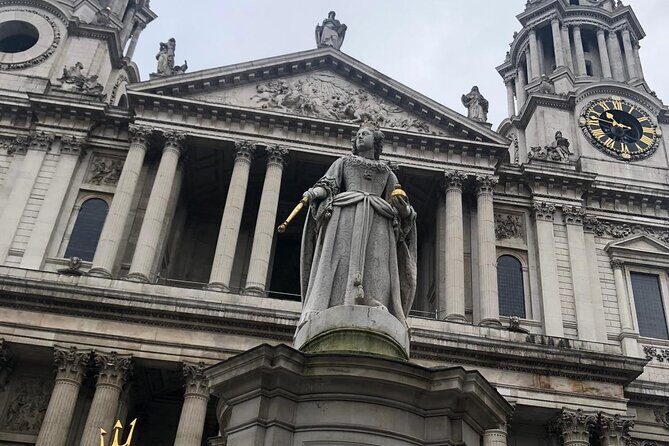
You begin at St. Paul’s Cathedral, one of London’s most iconic buildings. It’s also a WWII story anchor because it took direct hits during the Blitz and still remained a visible symbol overhead.
What makes this stop feel more than “famous building trivia” is the human angle. The narration focuses on the bravery of firefighters who worked hard to protect the cathedral and what that meant to Londoners watching the city get attacked night after night. In other words, the cathedral wasn’t just standing; it was communicating.
Practical note: admission to St. Paul’s is not included. You’ll still get the WWII context from outside and around the site, which is often what you need on a walking tour, but don’t assume you can go inside without planning.
Stop 2: Christ Church Greyfriars Ruins in a Memorial Garden
Next is the Christchurch Greyfriars Church Garden. Here you see the ruins of Christ Church Greyfriars, a church destroyed during the Blitz. The remnants are preserved, and today they sit in a calmer setting that turns the past into a memorial you can walk through.
This is one of those stops where silence helps. You’re not just hearing that damage happened. You’re seeing a space that was intentionally kept as a reminder. That makes the story stick, especially after the heavier atmosphere of the first stop.
This stop is free, and the visit segment is short (about 15 minutes), so it works well even if you’re not a big museum person. It’s also a great reset break for your brain before you move toward the more shocking transport-site story.
You can also read our reviews of more city tours in London





Stop 3: Bank Station and the Reality of Shelter
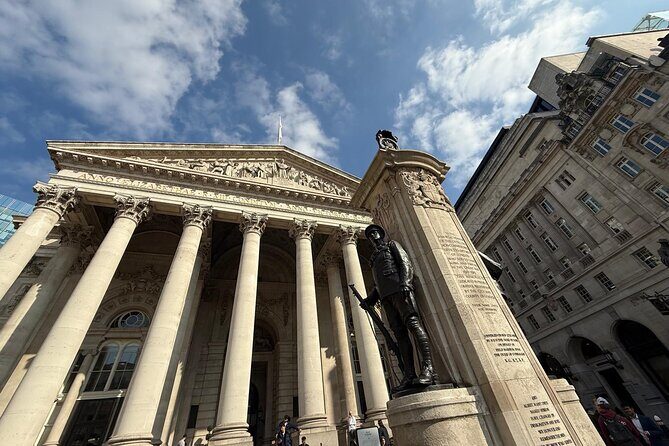
Then you head to Bank Tube Station. This stop is the Blitz story at its most brutal: on January 10, 1941, a bombing raid hit the area, and the station—used as an air-raid shelter—took a direct hit. The explosion killed dozens of civilians seeking refuge underground.
This is where the guide’s job matters, because you have to hold two truths at once: people were doing what they were told to do, and still the danger found them. The narration emphasizes that many victims were workers who had gone down to shelter from nightly bombings. That detail makes it feel less like a headline and more like a timeline of ordinary lives interrupted.
It’s also a reminder that wartime safety was never guaranteed. You’ll feel that theme echo later at the churches too—different buildings, same risk, different kinds of hope.
Stop 4: St. Dunstan-in-the-East Ruins as a Garden of Healing
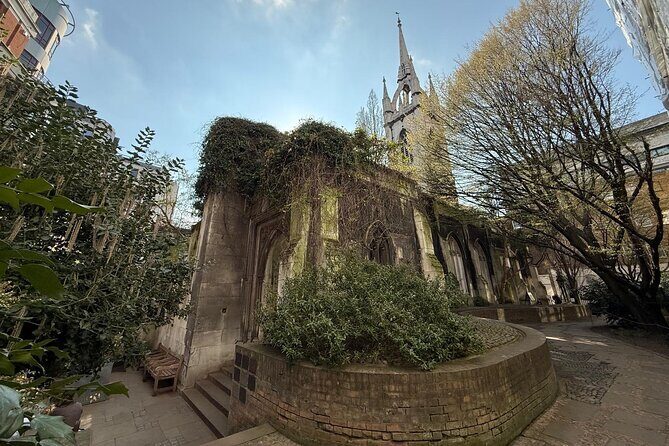
After Bank, you’ll visit St. Dunstan-in-the-East, a church severely damaged by bombing in 1941. Only the ruins were left, and what you see now is a tranquil garden shaped from what remained.
This stop is valuable because it shows what happens after the emergency phase. London had to keep going—physically and emotionally. The ruined church becomes a place where people can reflect on devastation while still moving forward.
It’s free to visit during the tour, and the time you spend is intentionally limited. You’ll get enough context to understand why the site was kept, not erased.
Stop 5: All Hallows by the Tower and a Place of Refuge
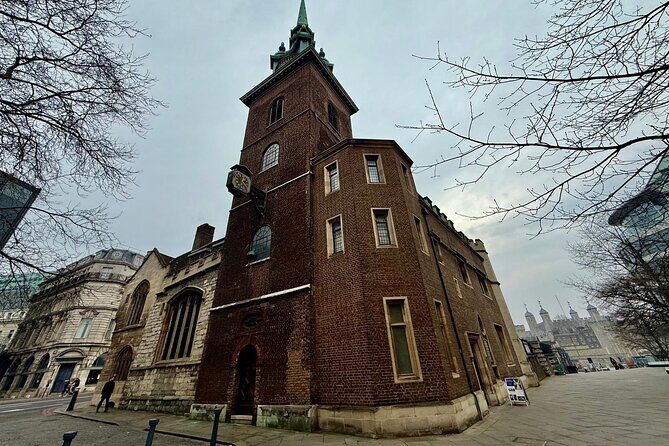
Next is All Hallows by the Tower, one of the oldest churches in London that miraculously survived the Blitz. The story here centers on refuge—this church was a shelter during air raids, offering sanctuary amid destruction.
It’s easy to see why this stop lands well after the ruin-and-healing moments. You get a different emotional note: not only damage, but also survival and protection. The guide explains how the building’s endurance turned it into a visible sign of hope.
If you’re the type who likes churches because they feel “rooted,” this one makes the wartime connection very direct. It’s also free during the tour segment, so you’re not juggling ticket decisions.
Stop 6: The Tower of London and Josef Jakobs, WWII Espionage at the End
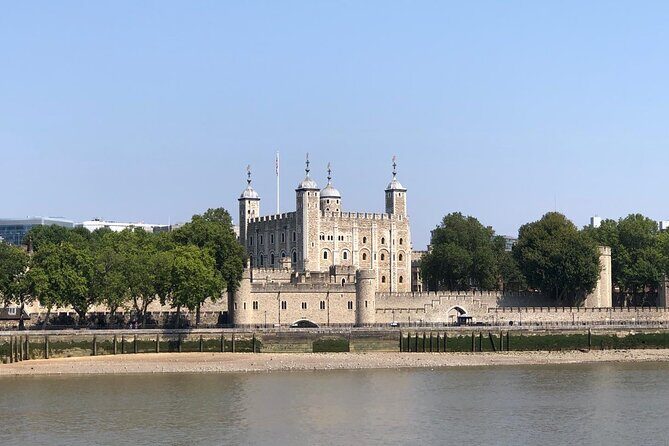
You finish at the Tower of London area and hear the gripping story of Josef Jakobs, the last person executed at the Tower. He was a German spy who parachuted into Britain in 1941, was arrested, and later executed by firing squad.
This is a smart closing stop because it widens the frame from bombing raids to intelligence and espionage. The Tower wasn’t only a dramatic landmark—it played a real wartime role as a prison for spies, enemy agents, and high-profile figures. You end with the idea that the Blitz wasn’t the whole war. It was part of a wider struggle happening at street level and behind closed doors.
Admission isn’t included for this stop as noted, so you should treat this segment as guided storytelling focused on what’s meaningful to the route rather than a full museum day.
What Makes the Guides Matter on This Walk

This is the kind of tour where the guide’s voice can make or break the experience. The strongest moments are when the narration connects WWII events to what you’re standing near.
I also like that the guides use modern tools to make the past readable. In particular, Nathan has been praised for bringing a useful book of photographs that helps make the narration feel relevant to what you can see in the present. Francis is another example of a guide who can make history feel current, even when you’re walking through centuries-old streets.
And if Babs is your guide, expect a strong sense of storytelling energy. Her approach is described as passionate and highly informed, with pacing that keeps you engaged rather than overloaded.
One more practical plus: multiple guides are known for going at your pace. That matters with a route that includes short stops and very focused themes.
Who Should Book This (and Who Might Skip It)
This tour fits best if you like real places with real context. If you’re the type who reads war history but wants it anchored to where the events happened, you’ll appreciate the route design.
You’ll also enjoy it if you want a compact tour. This is about 90 minutes, not an all-day commitment, and the stops are paced so you can keep your energy.
On the other hand, if you hate emotional subject matter, or you prefer light, sunny sightseeing, you might find the bombing and shelter details difficult. The same goes if you need nonstop visuals and very little talking—this is a narrated history walk.
Physical note: it’s marked for moderate fitness. You’re walking through central areas and you’ll have brief stop-and-listen segments, so wear shoes you trust. You don’t want sore feet when you’re trying to absorb heavy stories.
Price and Value: Is $38.83 a Good Deal?
At $38.83 per person, this isn’t a bargain-basement tour, but it also isn’t priced like a big attraction ticket. You’re paying for a small-group guide and a structured route that covers multiple meaningful sites in a short time.
Here’s how the value adds up:
- You get a planned walk with stops at major and lesser-known wartime sites.
- You get narration tied to what you’re seeing, which is where DIY walks often fall short.
- You don’t pay for food, and you don’t have to figure out the story yourself.
The only meaningful “extra cost” angle is admission at St. Paul’s, since it’s specifically noted as not included. If you plan to go inside St. Paul’s on top of the tour, you’ll want to budget for that separately. Otherwise, most of what you’ll need is built into the walking experience itself.
Also, this tour is typically booked about 24 days in advance on average, which is a sign it’s popular. If you’re traveling during peak season, booking early is a smart move.
Practical Tips So Your Walk Lands Well
A few small things can make a big difference on this kind of tour.
Bring:
- Water if it’s warm. The tour doesn’t include food or drink.
- Comfortable shoes for a city walk with short stop durations.
- A phone with offline maps if you like checking where you are between stops (the route starts and ends at the meeting point, which helps).
Plan your mindset:
- Expect serious WWII content, including the tragic consequences of bombings on civilians.
- Use the short stops as mini reflection breaks, not just photo opportunities.
If you’re traveling with a service animal, that’s supported, which is great for a tour where you’ll be on your feet for the full duration.
Should You Book the London Blitz Walking Tour?
Yes—if you want WWII to feel grounded in the real City of London. This walk gives you a tight, well-sequenced route: St. Paul’s as defiance, church ruins as memory, Bank as the terror of shelter, then ruined gardens and surviving refuge, and finally the Tower and espionage.
I’d skip it only if you want a light, casual sightseeing day. This is a history walk with emotional weight. But if that’s your cup of tea, you’ll likely come away with a sharper sense of how London adapted, how it mourned, and how it kept going.
One last deciding question: do you prefer knowing what you’re looking at? If yes, book it. This tour is built to explain the city while you’re standing in it.
FAQ
How long is the London Blitz walking tour?
The tour lasts about 1 hour 30 minutes.
What is the price per person?
The price is $38.83 per person.
Where does the tour start and end?
It starts at the National Firefighters Memorial on Carter Ln, Peter’s Hill, London EC4V 5EY, and it ends back at the same meeting point.
When does the tour start?
The start time is 9:45am.
Is this tour guided, and what language is it in?
Yes, it’s a small-group guided tour with an English-speaking local expert guide.
Are admission tickets included?
Admission is not included for St. Paul’s Cathedral, and it’s free for the other listed stops. You should plan accordingly if you want to enter St. Paul’s.
How big is the group?
The maximum group size is 20 travelers.
Is food included?
No, food and drink are not included.
What if I need to cancel?
Free cancellation is available up to 24 hours before the experience’s start time for a full refund. If you cancel less than 24 hours before, you won’t receive a refund.