REVIEW · LONDON
London: Churchill & World War 2 Walking Tour
Book on Viator →Operated by See The Sights Tours · Bookable on Viator
Churchill still lives in London’s stone and streets. This 2–3 hour walk ties his wartime decisions to the places where Britain argued, planned, and remembered. You’ll get a guided storyline through Westminster and WWII landmarks you can actually see, not just read about, plus professional context that makes the government buildings feel personal instead of abstract.
What I love most is how the tour links Churchill to real locations like the favorite pub-style stop near his circle of life and major political sites around Downing Street and Parliament Square. I also like that the walk doesn’t stay stuck on Churchill alone; it gives you a wider picture of how wartime Britain ran—people, policy, and public morale—through memorials like the Women of World War II Memorial and the Cenotaph.
One key consideration: the Churchill War Rooms portion is exterior only, and the inside museum entry tickets are not included. If you want the underground exhibits, you’ll need to plan that separately.
In This Review
- Key highlights at a glance
- Why Churchill and WWII still make sense in Westminster
- Getting there: Embankment meeting point and an easy 2–3 hour pace
- The full route: what you see at each WWII and Churchill stop
- Churchill War Rooms: the nerve center, seen from the surface
- Downing Street: power in plain view
- Winston Churchill statue (Parliament Square): courage made into bronze
- Battle of Britain Memorial: pause and read the names
- Houses of Parliament: where wartime speeches kept going
- Women of World War II Memorial: a more complete war picture
- Cenotaph: remembrance you can feel in the spacing
- Ministry of Defence (MOD): defense policy as a place
- St Margaret’s Church on Parliament Square: Churchill’s wedding site
- HM Treasury: money, admin, and survival
- The Churchill War Rooms warning: exterior only means plan ahead
- Memorial stops that feel more than symbolic
- Government buildings as a story: how Westminster becomes WWII
- Value check: does $19.01 make sense for central London?
- Who this tour fits best
- Should you book this Churchill and World War 2 walking tour?
- FAQ
- How long is the London Churchill and World War 2 walking tour?
- Where do I meet, and where does the tour end?
- Is admission to the Churchill War Rooms included?
- What stops are included besides the Churchill War Rooms?
- What language is the tour offered in?
- Is this tour suitable for strollers or guests with mobility issues?
- Can I get a full refund if I cancel?
Key highlights at a glance
- Exterior-only Churchill War Rooms stop, with nearby context you can’t get from a map
- Downing Street and Houses of Parliament explained in plain, human terms
- Battle of Britain Memorial and the names on the bronze you can pause to read
- Women of World War II Memorial for the parts of the war story you might miss elsewhere
- Cenotaph stop for Remembrance Day scale and meaning
- Small enough group size (max 25) so you’re not stuck behind a wall of people
Why Churchill and WWII still make sense in Westminster
London can feel like a museum you walk through fast. This tour slows that down on purpose. Instead of treating World War II like a single story, you watch how it played out in decisions, communication, and public-facing leadership—then you stand in the places that still carry those meanings.
Churchill is the thread, but the tour also helps you see the machinery behind the man. You’ll look at where leadership operated, where the country spoke out loud (literally in Parliament), and where Britain chose to honor sacrifice afterward. That mix is why this works well for both history fans and first-timers: you get facts, but you also get the “why do these places matter?” translation.
There’s also a practical payoff. Westminster is packed. Without a guide, you’d see buildings, plaques, and statues. With a guide, you understand what to notice: which areas were tied to wartime administration, what each memorial is designed to teach you, and how the story of the war became part of the city’s public identity.
You can also read our reviews of more walking tours in London

Getting there: Embankment meeting point and an easy 2–3 hour pace
The tour starts at Embankment station (Embankment Pl, WC2N 6NS) at 1:30 pm. It ends in front of the Churchill War Rooms on King Charles St (SW1A 2AQ), and from there you can choose your next step—coffee, another museum stop, or simply keep walking.
The duration is listed as 2 to 3 hours, which is a sweet spot for a focused theme without turning your afternoon into a slog. The group size is capped at 25, so the guide can usually keep things moving while still answering questions.
You’ll want to be comfortable on foot. This experience is not suitable for guests with walking or mobility difficulties, and it’s also not suitable for prams or strollers. If you’re good with urban sidewalks and a steady walking pace, you’ll be fine.
One more small but important detail: you’ll use a mobile ticket, and you should receive booking confirmation at the time you reserve. With Westminster-level foot traffic, having your ticket ready before you meet helps the start feel calm instead of chaotic.
The full route: what you see at each WWII and Churchill stop
This is a “see it and understand it” walk. You won’t spend a long time inside buildings on this one—most of the most important parts happen as you gather at key corners, look outward, and let the guide connect the dots.
Churchill War Rooms: the nerve center, seen from the surface
You begin with the Churchill War Rooms area. The war rooms are an underground complex that served as the nerve centre for British operations during World War II. The tour visit here is exterior only, about 10 minutes, and entrance tickets are not included.
Even from outside, you get the point: this wasn’t just a residence or an office. It was a protected command setup designed for bombings and fast decisions. That context matters later when you stand near other government buildings and realize how many functions were built to keep working during raids.
Downing Street: power in plain view
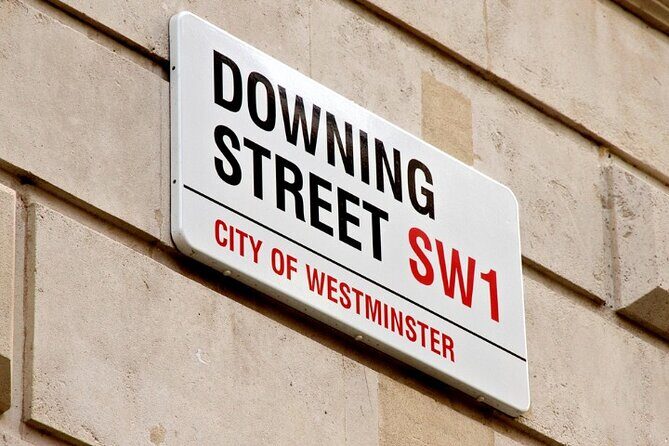
Next you’re at 10 Downing Street, with about 10 minutes at the stop. The guide frames it as the famous hub of government tied to the Prime Minister and adjacent leadership (the Chancellor is associated with No. 11). Downing Street can be hard to interpret just by looking at it—too iconic, too photographed, too easy to treat as a symbol only.
On this walk, it becomes a working backdrop. You connect it to leadership during wartime and to the idea that decisions had to travel quickly and survive scrutiny. You’re looking at leadership space, not just a postcard spot.





Winston Churchill statue (Parliament Square): courage made into bronze
You’ll pause near the Winston Churchill statue in Parliament Square for about 5 minutes. The bronze figure shows Churchill in a determined pose, overcoat, leaning on a cane. It’s set near the Houses of Parliament, so the message is visual: wartime leadership and democratic persistence in the same frame.
This is one of those stops where you can take in the surrounding architecture too. The guide’s job is to help you read what the city is communicating through positioning.
Battle of Britain Memorial: pause and read the names
Then it’s the Battle of Britain Memorial, with another short stop (listed as free and about a few minutes). This monument honors the Royal Air Force pilots who defended Britain during the air campaign. The bronze monument includes a frieze with scenes from the battle and the names of airmen who served.
What I like about this kind of stop on a walking tour is that it gives you a pause point. You can stand, look at the scenes, and focus on the names rather than rushing onward. If you want a moment that feels quiet but meaningful, this is that moment.
Houses of Parliament: where wartime speeches kept going
You’ll get about 10 minutes at the Houses of Parliament. The guide connects the building to WWII resilience, including the fact that it was targeted in air raids and damage occurred to the Commons chamber in 1941. You also hear about how parliamentary sessions continued, and that Churchill delivered some of his most iconic wartime speeches there.
In other words: it’s not just an architectural stop. It’s a statement about continuity. Britain didn’t stop its democratic process just because bombs fell.
Women of World War II Memorial: a more complete war picture
Next is the Women of World War II Memorial, with about 5 minutes. This is a bronze figure of a woman in overalls, representing the many roles women took on in civil defense, military services, and wartime industries.
This stop is valuable because it corrects a common imbalance. WWII is often told as if it happened mostly on battlefields and in the top command rooms. Here, the tour centers contributions that kept Britain running.
Cenotaph: remembrance you can feel in the spacing
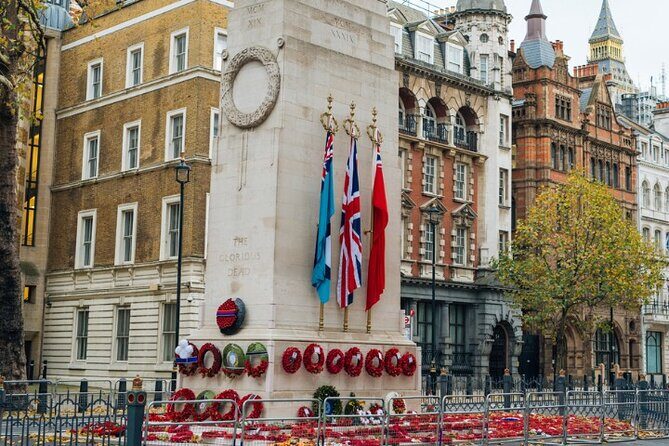
You’ll stop at the Cenotaph for around 5 minutes. It’s a solemn war memorial for British and Commonwealth soldiers who died in both World Wars and later conflicts. The guide points you to its role in the November 11 Remembrance Day ceremony.
What makes this stop hit is the setting around it. You don’t need a huge explanation to understand the mood—standing near it, you feel why ceremonies matter and why names and dates remain in public space.
Ministry of Defence (MOD): defense policy as a place
The tour includes a stop at the Ministry of Defence for about 5 minutes. You’ll learn what the department does today—defense and national security—and you’ll connect it to the WWII context through the building’s historic presence as part of the state’s defense framework.
This is a good example of how the tour bridges past and present without pretending history is the same as today. You get a “this is what it looks like now” anchor, then the guide frames how wartime structures shaped that path.
St Margaret’s Church on Parliament Square: Churchill’s wedding site
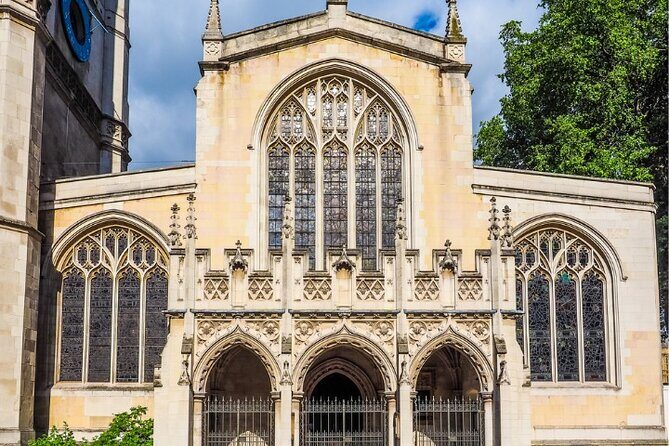
You’ll visit St Margaret’s Church for around 10 minutes. This church has a special Churchill connection: it’s the site of his wedding to Clementine Hozier in 1908. The church is tied closely to Parliament figures and dates back to the 12th century, so it’s not only about WWII. It’s about the longer thread of Churchill’s life alongside the political life of the city.
This stop works well because it adds a human scale. If your only focus all afternoon is command decisions, you can leave feeling like history is all machinery. This brings the personal back in.
HM Treasury: money, admin, and survival
Finally you’ll stop near HM Treasury for about 10 minutes. During World War II, it was part of Britain’s wartime finance and administration—helping manage the war economy and resources for both military and civilian needs. The basement served as an emergency hub during air raids, protecting officials.
That detail matters. Wars are fought with weapons, yes, but they’re sustained with logistics, budgets, and constant coordination. This is one of the stops that quietly teaches you the full shape of “wartime Britain.”
The Churchill War Rooms warning: exterior only means plan ahead
This is the big practical note. The Churchill War Rooms stop includes Churchill War Rooms (Exterior Only) and the entrance tickets are not included. The tour ends in front of the War Rooms entrance, so you’re positioned perfectly to decide what to do next.
So ask yourself: do you want to just get the storyline through the building’s role? Or do you want the underground exhibits themselves? If your goal includes seeing the interior displays, schedule a separate ticket for later, or check hours ahead of time so you’re not stuck deciding on the spot.
Also, keep realistic expectations about time. A walking tour can’t replicate a full museum visit. You’ll get the setting and context. The deeper museum experience needs its own ticket and time buffer.
Memorial stops that feel more than symbolic
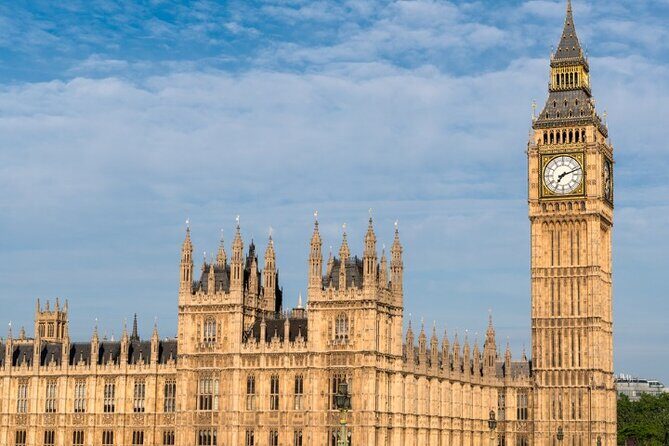
Some tours race from landmark to landmark. This one includes memorial moments that are built for stopping, looking, and thinking.
The Battle of Britain Memorial gives you the chance to connect the campaign to names and scenes in bronze. The Women of World War II Memorial changes the tone by shifting focus toward the work that kept the country intact. Then the Cenotaph adds national-scale remembrance, especially because it’s where Remembrance Day ceremonies play out each year.
If you like history that’s emotional but not sentimental, this sequence works. You go from leadership and government spaces into the human cost and the ways Britain chose to honor it.
And yes, because the stops are outside, the experience is weather-dependent. Bring a light layer if it’s cool, and have a simple rain plan. On a walk like this, it’s less about comfort and more about keeping your energy for the full route.
Government buildings as a story: how Westminster becomes WWII
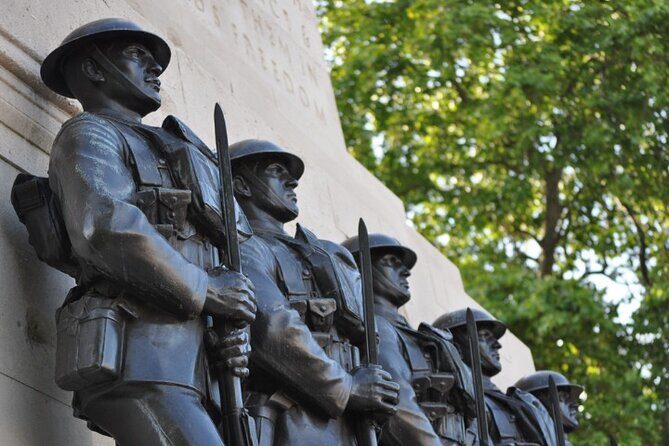
The tour does a smart thing: it uses government architecture as a way to understand wartime governance.
You stand at or near:
- Downing Street as a symbol of political leadership
- Houses of Parliament as a place where speeches and sessions continued despite raids
- Ministry of Defence as the defense-policy side of national security
- HM Treasury as the backbone of wartime finance and administration
When you connect those stops in your mind, WWII stops feeling like distant events. It becomes a map of how decisions moved and how institutions kept functioning. That’s the value for visitors who want more than dates—they want the shape of how Britain stayed together.
Value check: does $19.01 make sense for central London?
At around $19.01 per person, this is priced like a low-cost entry to a high-value theme walk. You’re paying for a guided experience plus a route that hits major Westminster landmarks and multiple memorials.
Most of the stops are effectively outside viewing with explanations, and the itinerary includes places like Downing Street, Houses of Parliament, Parliament Square statue, the Battle of Britain Memorial, the Women of World War II Memorial, the Cenotaph, the MOD area, St Margaret’s Church, and HM Treasury. The Churchill War Rooms interior is the one exception where entry isn’t included.
So the value depends on your goals:
- If you want the guide’s connections and context, this price is a strong deal.
- If you specifically want an inside War Rooms museum experience, add the cost of tickets and plan extra time.
Either way, you’re getting a tight slice of London’s WWII identity without needing multiple separate bookings to make it work.
Who this tour fits best
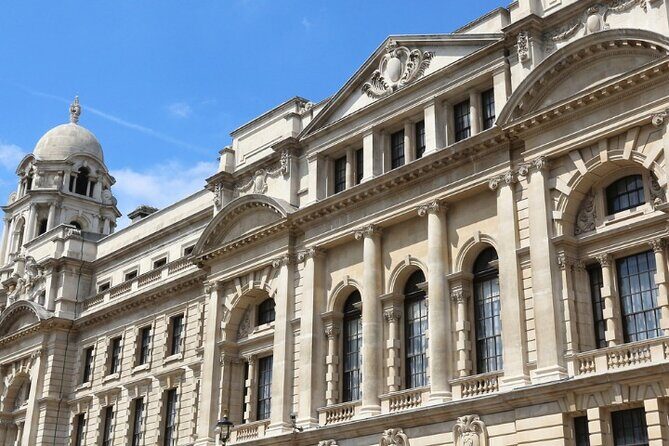
This walk is ideal if you:
- Want a Churchill-centered route that also explains the wider wartime government picture
- Like learning that makes landmarks meaningful, not just sight-seeing
- Are comfortable walking for about 2 to 3 hours on city streets
You should think twice if you:
- Need accessibility support for mobility, because it’s not suitable for guests with walking or mobility difficulties
- Need to use a stroller/pram, because it’s not suitable for prams, buggys, or strollers
- Want a full museum visit to the Churchill War Rooms, because the tour covers the exterior only
Should you book this Churchill and World War 2 walking tour?
If you want London to feel like it has a spine—and you want WWII explained through the places where leadership and remembrance happen—this is an easy yes. The price is fair, the pacing is reasonable, and the route gives you a storyline that connects Churchill to the workings of government and the memorial landscape that followed.
The only reason to skip is if your main goal is the Churchill War Rooms interior exhibits. In that case, book this for the context and plan a separate War Rooms visit, so you get both the exterior story and the underground details.
FAQ
How long is the London Churchill and World War 2 walking tour?
It runs for about 2 to 3 hours.
Where do I meet, and where does the tour end?
You meet at Embankment station (Embankment Pl, London WC2N 6NS). The tour ends in front of the Churchill War Rooms entrance on King Charles St, London SW1A 2AQ.
Is admission to the Churchill War Rooms included?
No. The Churchill War Rooms portion is exterior only, and entrance tickets are not included.
What stops are included besides the Churchill War Rooms?
The tour includes stops at 10 Downing Street, the Winston Churchill statue near Parliament Square, the Houses of Parliament, the Battle of Britain Memorial, the Women of World War II Memorial, the Cenotaph, the Ministry of Defence, St Margaret’s Church on Parliament Square, and HM Treasury.
What language is the tour offered in?
It is offered in English.
Is this tour suitable for strollers or guests with mobility issues?
No. It is not suitable for guests with walking or mobility difficulties, and it is not suitable for prams, buggys, or strollers.
Can I get a full refund if I cancel?
Yes. There is free cancellation, and you can cancel up to 24 hours before the experience start time for a full refund.