REVIEW · LONDON
London’s Alternative History: A Self-Guided Audio Tour
Book on Viator →Operated by VoiceMap Audio Tours · Bookable on Viator
There’s a kinder way to learn London’s weird side. This self-guided audio tour strings together GPS-tagged storytelling from Covent Garden to the Savoy, so you hear the right clue right where you’re standing. I also like the lifetime access setup, because you can repeat the walk later without paying again.
My favorite part is how practical it feels on foot. The VoiceMap app gives turn-by-turn guidance and lets you pause and restart easily, which keeps the walk from turning into a stressful navigation puzzle. One thing to consider: you need a smartphone to run the app, and the tour includes no transit tickets or entry fees—so plan your day around walking time and any add-ons you want.
In This Review
- Key highlights at a glance
- Why this London alternative history walk works (and for whom it’s perfect)
- Price, time, and what you’re really getting
- Your walk: from Covent Garden to the Savoy
- Stop 1: Convent Garden and the name behind the square
- Stop 2: The Actors’ Church, memorials, and a first recorded punch-up
- Stop 3: An oldest theatre site, ghosts, and the Man in Grey
- Stop 4: Trials and quirky legal history
- Stop 5: The Lion King, theatre production, and early electric lighting
- Stop 6: Somerset House—from palace to Navy office to postal system
- Stop 7: The Thames riverside—construction, diversion, and hidden secrets
- Stop 8: The Ladies’ Bridge—built by women during WWII
- Stop 9: The Victorian gas lamp powered by sewer gas
- Stop 10: The Savoy—electric lighting, luxury guests, and notorious parties
- How to get the most from it (without turning your day into tech support)
- Who should book this London alternative history audio tour?
- Should you book it?
- FAQ
- What is London’s Alternative History?
- How long does the tour take?
- How much does it cost?
- What language is the audio available in?
- Do I need an internet connection?
- What do I need to bring?
- Where do I start and end the route?
- Is this tour private?
- What is the cancellation policy?
Key highlights at a glance
- GPS-based audio that tells you what to notice at each stop
- Offline access for audio, maps, and geodata through the VoiceMap app
- Self-paced timing (about 1 to 1.5 hours) with lots of freedom to linger
- Lifetime access so you can revisit the route when it suits you
- A route packed with oddball topics: theatre ghosts, wartime bridges, sewer gas
Why this London alternative history walk works (and for whom it’s perfect)
London can feel like a museum of straight lines—tube stops, big monuments, fast photos. This tour takes a different angle. Instead of rushing you through famous landmarks, it builds a walk from one story to the next: how places got their names, where the theatre crowd gathered, and how technology (and human behavior) changed what London looked like.
You’ll walk a compact stretch in central London, starting in Covent Garden and finishing at the Savoy area by the Strand. That means you can fit it into a busy itinerary without treating it like a full-day project. And because the audio is GPS-based, you’re not stuck reading directions or trying to match landmarks with tiny map pins.
Best of all, the pace is designed for real walking. In the feedback I’m drawing from, people call out that the narration is easy to follow and the timing feels right—so you can keep your eyes moving instead of constantly hunting for what to do next. If you’ve ever had navigation apps pull your attention away from the street scene, this solves that problem with guidance that tells you where to look and when to turn.
Who should book this? It’s ideal if you:
- like stories that feel slightly offbeat rather than textbook
- want a walk that doubles as sightseeing and “fun facts”
- prefer self-guided flexibility over a fixed-group schedule
- are okay using your phone as your main tool for directions
You can also read our reviews of more guided tours in London



Price, time, and what you’re really getting
At $9.99 per person and around 1 to 1.5 hours, this is a strong value for a central-London experience—especially because the tour includes lifetime access. That changes the math. You’re not just paying for one afternoon; you’re buying a route you can replay when you want something low-effort and interesting.
It’s also a “low cost, high payoff” format. You’re not paying for museum tickets, and the audio does much of the heavy lifting. You still may choose to pay for something along the way (if you decide to add an attraction), but the core experience is built to stand on its own.
The tour is offered in English, is private to your group, and runs daily (the listed schedule is essentially all day). That matters because you can pick the time that matches your energy level—either a calm walk earlier in the day or a more atmospheric stroll later on.
Two practical considerations:
- The tour doesn’t include transportation or tickets/entrance fees. If you want to step into places, you’ll need to plan that separately.
- You must bring your smartphone. The app and offline downloads rely on it.
Your walk: from Covent Garden to the Savoy
Think of this as an audio-guided stroll through a chain of curiosities. You’ll start at The Piazza, 1–7 Covent Garden, London WC2E 8HD, and finish at the Savoy, Strand, London WC2R 0EZ.
You’ll move location to location and hear a story tied to what’s around you. The itinerary is built like a sequence of “wait—what?” moments, and that’s what keeps it fun. Below is what each stop is setting you up to notice.
Stop 1: Convent Garden and the name behind the square
You begin in the Covent Garden area and learn the origin behind the place name. The tour ties it back to the medieval era, when the area was known as the Convent Garden because of its connection to a convent’s garden.
Why this stop matters: it’s a fast way to anchor the entire route. Once you understand that London’s labels often hide older land uses, the rest of the walk feels less random. Even if you’ve visited Covent Garden before, hearing how the name connects to the past makes the modern streets feel like they’re sitting on layers.
What to watch for: keep your eyes up and around you rather than treating this like a photo-only stop. It’s the type of story that pays off when you’re looking at the street-level setting.
Stop 2: The Actors’ Church, memorials, and a first recorded punch-up
Next you’ll find a church associated with acting—referred to as the Actors’ Church. The tour shares two standout angles: memorials for famous actors, and the claim that it was the site of London’s first recorded punch-up.
Why you’ll like this stop: it mixes “celebrity” and chaos in a way that feels very London. It also changes how you think about churches. This isn’t only a spiritual site in the story—it’s also a social one, tied to who worked where, and how reputations were remembered.
Possible drawback: churches are still working spaces. If you stop for long, keep it respectful and don’t block entrances or foot traffic.
You can also read our reviews of more historical tours in London






Stop 3: An oldest theatre site, ghosts, and the Man in Grey
After that, you’ll head to an old theatre site in London described as the oldest theatre site in the city, with performances stretching back through the centuries. The tour also brings in the spooky side, including ghost stories and a specific mention of the Man in Grey.
This is where the walk leans hard into theatre lore. London has plenty of historic stage buildings, but not every one comes with a ready-made set of chilling tales. If you enjoy legends that feel half-true and half-people-remember-it, you’ll probably grin during this section.
What to watch for: the story works best if you slow down a little and let the scene sink in. A quick walk-by turns it into a detour; a slower look turns it into a mini show.
Stop 4: Trials and quirky legal history
The tour then shifts tone to the legal side—cases and famous trials tied to the theatre-area setting. It frames this as the quirky side of London’s law, which is a fun way to make history feel less like a list of dates and more like human drama.
Why it’s valuable: legal history is often taught as dry rules. Here, it’s treated like conflict and consequence. That keeps the route from feeling like the same genre over and over.
Practical tip: plan for this stop to be a short one. It’s best as a listen-and-look moment, not a long reading session.
Stop 5: The Lion King, theatre production, and early electric lighting
Next you’ll hear about the kinds of productions tied to a major West End theatre—explicitly including The Lion King. The tour also connects this world to early electricity in theatre lighting, linking what’s on stage with what’s happening behind the scenes in technology.
Why you’ll appreciate this: it’s a reminder that modern London magic didn’t appear fully formed. Lighting is one of those everyday upgrades you don’t think about until it’s taken away, and early electric lighting changed what theatre could do for audiences.
Possible drawback: if you’re visiting when the theatre is closed to the public (or you just don’t want to enter), the most you’ll get is the exterior view plus the audio story. That’s still fine, but it’s good to know the experience is designed to be primarily street-based.
Stop 6: Somerset House—from palace to Navy office to postal system
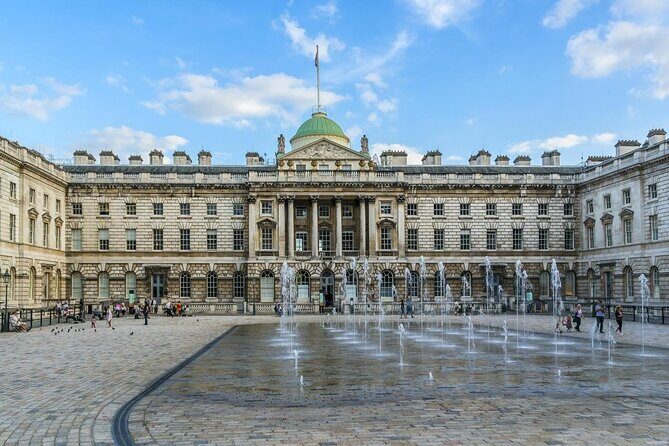
The next major stop is a grand building tied to Somerset House. The tour explains its transformation from a Tudor palace into a Navy office, and it highlights a role in the development of the British postal system.
This is a classic “London power center” story: how one big building can morph as the country’s needs shift. If you like the idea of institutions changing shape over time—government, communication, industry—this is your payoff stop.
What makes it work on foot: Somerset House is the kind of location where you can still sense the building’s scale from the street. The audio helps you read that scale as history, not just architecture.
Stop 7: The Thames riverside—construction, diversion, and hidden secrets
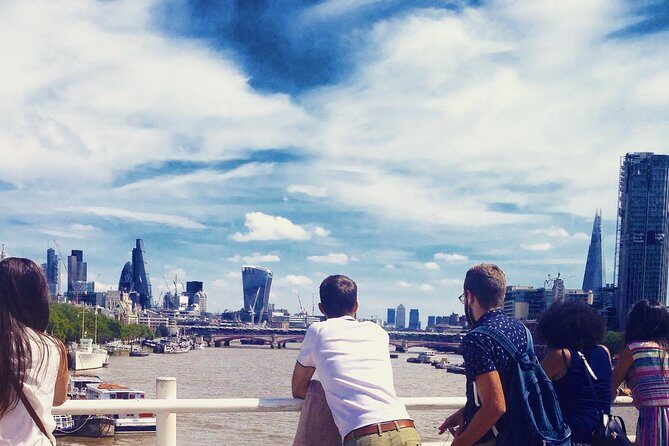
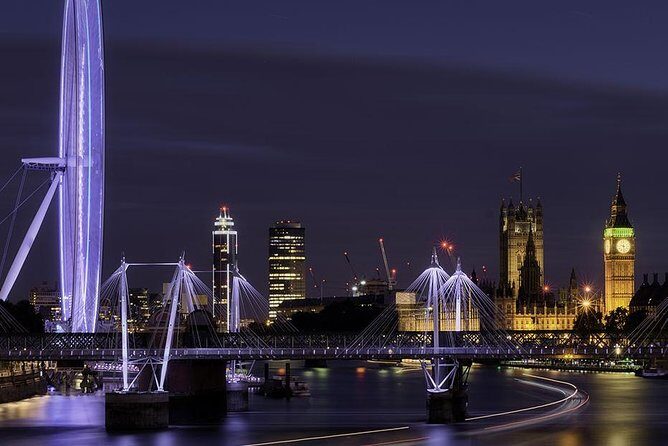
From there you walk along the riverside promenade. The tour tells you about construction along the Thames, including the fact that diverting the river was part of the work—and that it revealed hidden river secrets.
Why this is such a good “alternative history” stop: it shows London as engineering. Streets and buildings look permanent, but the city’s relationship with water has been shaped by choices made long ago. Hearing that the river was diverted reframes everything you see along the banks.
Tip for your walk: if you like photos, this is one of the best segments for skyline and water views. Just don’t let photo time kill your momentum—pause when you’re ready, not when the best audio beats are already happening.
Stop 8: The Ladies’ Bridge—built by women during WWII
Then comes the Ladies’ Bridge. The tour explains that it was largely built by women during World War II, and that it offers spectacular views of London.
This stop is about work, not just landmarks. It’s the kind of story that adds depth to a cityscape: you see the bridge and the view, but the emotional point is that the city’s infrastructure was shaped by specific people at a specific moment.
Where this shines: on clear days, the views add a lot. If the weather is poor, you’ll still get the story, but the payoff from the scenery will be smaller.
Stop 9: The Victorian gas lamp powered by sewer gas
Next you’ll search out a distinctive bit of street oddness: the last remaining Victorian gas lamp in London, powered by sewer gas. The tour gives it the nickname The Lamp that Lights Itself.
This is one of those “only London” ideas that’s perfect for an alternative history walk. It also shows how Victorian-era infrastructure wasn’t just about grand buildings—it was about systems and byproducts, too.
Practical consideration: don’t expect a huge, dramatic landmark. This is a small, quirky feature. Let the audio explain why it’s special so you notice it properly.
Stop 10: The Savoy—electric lighting, luxury guests, and notorious parties
You finish near the Savoy Strand with the story of a notable public building lit entirely by electricity. The tour also connects it to luxurious guests and infamous parties.
The ending works because it ties together themes you’ve been hearing all along: names, places changing over time, and technology that transformed everyday life. Ending on electricity feels like a neat final chapter—modernity as a story, not just a fact.
If you want a great last impression: pause at the end point and listen to the final section before you rush off to your next plan. It helps the whole walk feel like a complete arc.
How to get the most from it (without turning your day into tech support)
This kind of audio tour is simple, but a little prep makes it smoother.
1) Download early
Because offline access is part of the package, download the audio and maps before you start walking. That way, you’re not dependent on spotty signal while you’re moving.
2) Use a comfortable headset setup
You’ll be listening while walking, so keep the volume at a safe level you can still hear traffic with. If your headphones isolate you too much, you’ll end up more stressed than curious.
3) Pause when the story needs it
The route is self-paced by design. If a stop turns into a short conversation with a friend or you want extra minutes at a view, pause and restart. The audio format is built to handle that rhythm.
4) Let the guidance do the work
One of the biggest strengths of VoiceMap is that it can guide you with audio directions so you’re not constantly checking your phone map. If you’ve struggled with standard walking directions before, this is the format to try.
Who should book this London alternative history audio tour?
Book it if you want a walk that feels like a string of short stories rather than a checklist of sights. It’s especially good for:
- solo travelers who like their own pace
- couples or small groups who want something shared but flexible
- visitors who already saw the top big-ticket attractions and want something more character-based
- people who enjoy theatre lore, legal oddities, and engineering surprises
Skip it (or at least lower your expectations) if you’re looking for a guide who explains everything live or for museum-style interior access. This experience is built around listening while you walk, and many of the stops are about noticing what’s outside or nearby.
Should you book it?
Yes, if you like London stories that are slightly sideways—names with surprises, theatres with legends, and city infrastructure with human drama. For $9.99 and about 1 to 1.5 hours, it’s an easy win in value: you get GPS-guided audio, offline support, and lifetime access to replay the route.
I’d book it when you have a bit of walking room in your day and when you’ll actually take the time to listen. If you do that, you’ll finish with facts you can tell people immediately—and a different view of the city than the one you get from landmarks alone.
FAQ
What is London’s Alternative History?
It’s a self-guided, GPS-based audio tour in London that connects a series of offbeat historical stories to specific locations.
How long does the tour take?
Plan on about 1 hour to 1 hour 30 minutes.
How much does it cost?
The price is $9.99 per person.
What language is the audio available in?
The tour is offered in English.
Do I need an internet connection?
Offline access is included for the audio, maps, and geodata in the VoiceMap app.
What do I need to bring?
You need a smartphone to use the VoiceMap application. Transportation, food or drinks, and any museum or attraction tickets are not included.
Where do I start and end the route?
You start at The Piazza, 1–7 Covent Garden, London WC2E 8HD, and end at the SavoyStrand, London WC2R 0EZ.
Is this tour private?
Yes. It’s private to your group only.
What is the cancellation policy?
You can cancel for a full refund up to 24 hours before the experience starts. If you cancel within 24 hours of the start time, no refund is given.