London’s history hides in alleys.
This private tour is a smart way to see the City’s secret layers without slogging through the main tourist routes. I like that it’s truly customizable for your interests, and I like how the guide ties each place to stories you’ll recognize. One thing to plan for: there’s moderate walking, and you won’t get food included.
You start near Embankment and end by the Monument, so the route has a clean flow through centuries. I also like the local, story-first guiding—it’s not just dates, it’s what happened there and why that corner of London still matters. If you’re hoping for long museum time or lots of sitting, you might want to bring breaks into your day.
Expect quick stops, good context, and a guide who can point out what most people miss. The upside is that you leave with a map in your head: Roman street layouts, medieval crypts, Dickens-era pubs, and the exact geography of the Great Fire. The only real drawback is that admissions are not the same at every stop, so double-check what’s included versus what’s optional.
In This Review
- Key Highlights You’ll Actually Feel on the Walk
- Why This Private City Walk Feels Different From the Usual London Circuit
- Getting Started at Embankment and Ending by the Monument
- Middle Temple: Where Legal London Meets Shakespeare and Ancient Courtyards
- St Bride’s Church Crypt Museum: Great Fire Footprints and WWII Archaeology
- Ye Olde Cheshire Cheese: A Dickens-Friendly Pub with Cellars That Remember 1300s London
- Smithfield Market: Oldest Meat Market Energy with Executions and Literature Roots
- Postman’s Park: A Calm Bench Stop for Memorials and Real People
- Guildhall and the City’s Trial Ground: From Romans and Saxons to Trials
- Bank of England and the Royal Exchange: Devils, Ghosts, and Threadneedle Street
- Dickens’ George and Vulture and Leadenhall Market: Literature London with Real Architecture
- The Monument to the Great Fire: Where the Fire Started and What Survived
- Price and Value: What $267.48 Buys You (and What It Doesn’t)
- Who Should Book This Tour (and Who Might Skip It)
- Should You Book This Private Hidden History Walk?
- FAQ
- How long is the London’s Hidden Gems and Secret History Private Guided Tour?
- Is this tour private or shared with other groups?
- What is the tour price and group size?
- Where does the tour start and end?
- What time does the tour begin?
- Does the price include hotel pickup and drop-off?
- Is admission included at stops?
- Are food and drinks included?
- Is the tour offered in English?
- Is the walking easy or moderate?
- Can I cancel for a full refund?
Key Highlights You’ll Actually Feel on the Walk
- Middle Temple first: inns of court, Shakespeare connections, and a 300-year tea shop stop
- St Bride’s Crypt Museum: Great Fire and WWII damage turned into archaeology lessons
- Ye Olde Cheshire Cheese: Dickens-era atmosphere plus stories like Polly the Parrot and the Hellfire Club
- Smithfield Market area: meat-market London tied to executions, Fagin’s world, and Holmes-and-Watson links
- Postman’s Park memorials: a quieter pause focused on London’s unsung heroes
- The Monument zone: finish at the Great Fire starting point, with an optional climb for views
Why This Private City Walk Feels Different From the Usual London Circuit

Most London tours run on the same handful of big stops. This one takes you through the City of London’s older streets and side passages, where the street grid goes back toward Roman times. That shift matters because the City feels different from Westminster: it’s tighter, older, and far more layered.
The format is also a big part of the value. You get a professional guide, private pacing, and hotel pickup and drop-off. That means you can spend your energy looking at the places instead of losing time figuring out how to get between them.
And the stories aren’t bolted on. At every stop, you’re given a reason the location matters—legal history at Middle Temple, press history at St Bride’s Church, Dickens and literary London around the historic pubs and markets. The result is that you start seeing London like a set of connected clues.
You can also read our reviews of more guided tours in London



Getting Started at Embankment and Ending by the Monument
The tour starts at Embankment station (Embankment Pl, London WC2N 6NS) at 10:00 am, then it winds its way through the City and finishes at Monument Station (King William St, London EC4R 9AA). The walking is described as moderate, so you’ll want comfortable shoes and a plan for short legs of walking followed by brief stops.
Hotel pickup and drop-off is included, which is especially helpful if you’re staying central and don’t want to juggle transit times. You’ll also want to know that the end of the tour is close to the Monument, where you can choose to climb for views—though that climb is not included in the price.
If you’re the kind of traveler who likes to be back at your hotel at a reasonable hour, the 3 to 4 hour window works well. It’s long enough to feel like you saw something real, but not so long that you’re wiped out before dinner.
Middle Temple: Where Legal London Meets Shakespeare and Ancient Courtyards
Your first stop is the Honourable Society of the Middle Temple. Starting at Temple Station is a smart move because you get away from the heavy tourist flow fast. From there, you step into inns of court—an area used by the legal profession for centuries, but normally not on most visitor routes.
This is where the tour’s “you could never find this alone” advantage shows up. You’ll be shown hidden alleys and quiet corners where the street layout connects back toward Roman-era London. Then it turns up the story volume with a few big-name links.
You’ll hear about the place associated with Shakespeare’s first performance of Twelfth Night, plus a fountain said to have inspired Charles Dickens. The stop also points you toward the English headquarters of the Knights Templar, which gives the whole area a medieval shadow even when you’re standing in modern London.
One extra touch that’s very practical: you visit a shop that has sold tea for over 300 years. It’s a good way to reset while still staying in the historical mood. Admission here is free, which helps keep your budget under control.
What to watch for: Middle Temple is outdoors and within a living area, so weather matters. If it’s cold or wet, bring a layer and consider having a small snack before you start—this tour doesn’t include food.
St Bride’s Church Crypt Museum: Great Fire Footprints and WWII Archaeology
St Bride’s Church is often called the Cathedral of The Press, thanks to its long connection to Fleet Street newspapers. That press connection gives you a fresh angle: you’re not just touring London’s famous churches, you’re touring a site tied to how the city tells its own stories.
You’ll also get a lesson in London’s resilience. The church was damaged in the Great Fire of London, remodeled by Sir Christopher Wren, and later hit again in World War II when a bomb destroyed the roof. Here’s where it gets really interesting: the WWII damage opened up access for archaeologists, and that’s how the crypt museum exists in the form you’ll see today.
In the crypt, you’ll find a hidden medieval chapel, charred remains from the Great Fire of 1666, and Roman pavements. That combination is rare. It’s one of those stops where you’ll look down at the floor and suddenly understand how different time periods overlap in the same spot.
The admission is included for this stop, so you won’t need to think about extra ticket costs. You’ll also hear about another famous claim associated with the church, but the key value is how the tour uses the place to connect multiple centuries in one compact area.
What to watch for: Crypt spaces can feel cool and dim. If you’re sensitive to low light or uneven steps, take your time and let your guide know so you can move comfortably.
Ye Olde Cheshire Cheese: A Dickens-Friendly Pub with Cellars That Remember 1300s London

Next comes Ye Olde Cheshire Cheese, one of the most famous names in historic pub London. It can claim to be London’s oldest pub when you consider the cellars dating back to the 13th century. Above that, the upper rooms were rebuilt in 1667, so even the layout carries serious age.
This stop is also a very good reminder that you don’t have to choose between history and atmosphere. Once your eyes adjust to the wood-paneled, candlelit interior, the place feels like a time capsule. It’s the kind of stop that makes you slow down, not because someone tells you to, but because the room holds you.
You’ll hear Dickens connections tied to the fireplace and details from the era, plus stories like Polly the Parrot, the Hellfire Club, and the rather naughty tiles said to have appeared in the 1960s. These bits aren’t random trivia. They show you how London folklore sticks to buildings.
Admission is free here, which makes this one of the easiest stops to enjoy without worrying about cost. It also gives you a social break without turning the day into a pub crawl.
What to watch for: Pub lighting and tight corners mean you’ll want to take care with footing, especially if you’re wearing bulky shoes or carrying a bag.
You can also read our reviews of more private tours in London



Smithfield Market: Oldest Meat Market Energy with Executions and Literature Roots
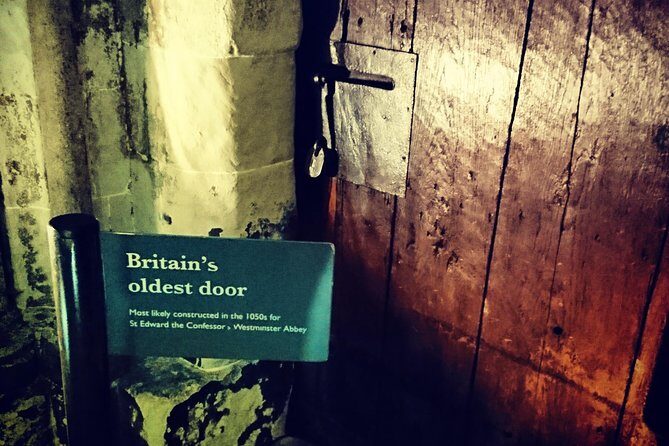
Smithfield Market is next, and it’s a stop that leans into the darker side of London. Smithfield is described as London’s oldest market still used for its original purpose—selling meat. If you’re used to markets as shopping streets, this will feel more grounded, more old-school, and a bit more intense.
The surroundings are part of the story. This is the area where the Great Fire of London finally extinguished, which matters because it shows how close the disaster came and how unevenly it spread. You’ll also hear about Bloody Mary’s executions by burning people at the stake, and the execution of William Wallace, the man connected with Braveheart.
Then the tour turns to the literature side. You’ll be pointed toward the den connected to Fagin, and you’ll also get a link to Sherlock Holmes meeting Doctor Watson at nearby St Barts hospital.
The tour includes time to show two surviving buildings that escaped the Great Fire of 1666, which is a huge deal in London. When so much has burned or been rebuilt, those survivors become anchor points for the city’s memory.
Admission is free for this stop, so you’re paying for the guidance, not an extra ticket. Time here is brief, about 20 minutes, but it’s packed.
What to watch for: If you dislike heavy history topics, tell your guide. You can usually adjust how much emphasis you want without missing the rest of the route.
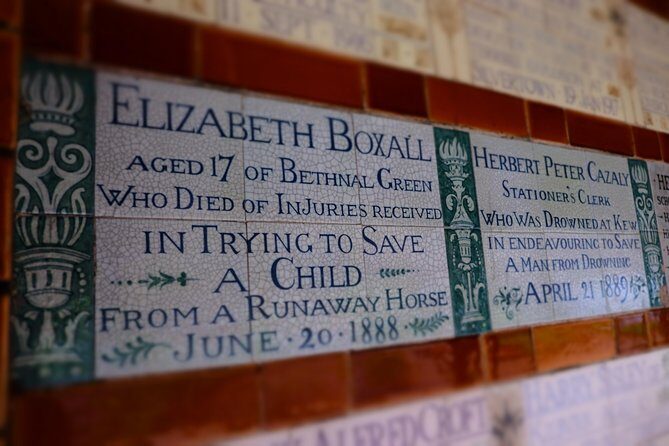
Postman’s Park: A Calm Bench Stop for Memorials and Real People
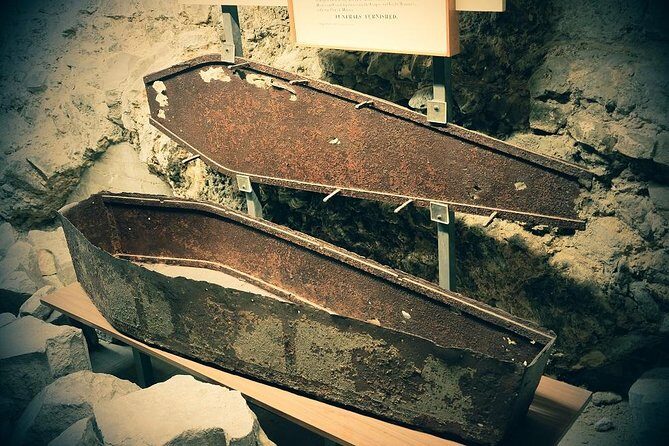
After Smithfield’s intense stories, Postman’s Park feels like a breath of fresh air. It’s located next to the Old General Post Office, and the park became known as Postman’s Park because postal workers enjoyed their lunch here.
You’ll also learn that it began as the burial ground for St Botolphs Church. That’s the kind of detail I love on this tour style: it keeps places from being just pretty parks. This one is tied to work, to routine, and to memory.
The focus here is a memorial to unsung heroes of London. You’ll be invited to find a park bench so the guide can walk you through the place’s meaning rather than rushing you through it. Even though this stop is only about 10 minutes, it changes the emotional tone of the tour.
Admission is free, so it’s a low-cost, high-impact pause. If your feet are getting tired, this is a great spot to sit and regroup.
What to watch for: It’s a small stop, so arrive ready to listen. If you’re checking your phone a lot, you’ll miss the point.
Guildhall and the City’s Trial Ground: From Romans and Saxons to Trials
Then you move to Guildhall, which is one of the best ways to understand the City of London in one place. This is described as essentially the Town Hall of the City of London Corporation.
What you’ll appreciate here is how time layers build on time. The Romans had an amphitheater on the site, the Saxons built a hall where people paid taxes, and during the medieval period it was first recorded as a guildhall. The present building dates to around 1411, and the crypts are thought to date back to the 13th century.
This is a strong stop for anyone who wants London history that feels structural—taxes, governance, community rules—rather than only monuments and palaces. You’ll also hear about famous people tried here, which keeps the place from becoming abstract.
Admission is free for this stop. It’s also short—about 10 minutes—so think of it as a high-quality overview point that gives you a better lens for everything you saw before.
What to watch for: Because it’s brief, don’t expect deep museum-style time. If you want extra time here, ask your guide to slow down a bit.
Bank of England and the Royal Exchange: Devils, Ghosts, and Threadneedle Street
Now you step into the Square Mile’s ancient heart—the financial district with serious old-world bones under it. You’ll be shown highlights like the Bank of England, the Royal Exchange, and the Cornhill Devils.
One fun detail you’ll hear is a ghost link connected to Christmas storytelling at the Royal Exchange. Another is the origin of the nickname Old Lady of Threadneedle Street, which tells you why the Bank of England got that name.
This is another “story + place” stop. It doesn’t just say finance exists; it shows you that the City’s identity has always mixed practical power with symbolism and folklore.
Admission is free for this stop too, and it’s about 10 minutes. If you’re a history buff who also likes humor, this part tends to land well because the details are memorable.
What to watch for: Banks and exchanges can be busy from a foot-traffic perspective. Wear a watchful pace, keep your group close, and be ready for quick photo moments.
Dickens’ George and Vulture and Leadenhall Market: Literature London with Real Architecture
George and Vulture is a Charles Dickens favorite chop house, mentioned over 20 times in the Pickwick Papers. The interior is described as almost unchanged from Dickens time, which is the sort of thing you can’t replicate in a modern restaurant.
The guide also points out atmospheric alleyways and courts nearby. This is one of those areas where the City’s “you’re actually in the right streets” feeling becomes real. Even if you don’t care about Dickens, you’ll still appreciate the architecture mood.
Admission is free here, and the stop lasts about 10 minutes.
Then you go to Leadenhall Market, one of London’s oldest and prettiest markets. It sits on the site of a Roman cross road, and that Roman connection gives the market extra weight. The tour also mentions that Leadenhall Market has appeared in famous movies and novels, including the Harry Potter films, and it’s tied to the Christmas story setting where Scrooge sends a boy to get the biggest turkey.
Admission is free and the stop runs about 15 minutes. That extra time helps because markets are visual. You’ll want a bit of room to look up and around instead of only listening.
What to watch for: Markets mean people. If you’re prone to claustrophobia or hate crowded lanes, ask your guide where to stand so you can see comfortably.
The Monument to the Great Fire: Where the Fire Started and What Survived
You end at the Monument to the Great Fire of London, near Monument Underground Station. This is where the Great Fire of 1666 started, destroying 80% of the old city of London.
The guide adds value here by showing you areas that survived, not just the tragedy itself. That difference matters: it turns a disaster story into a geographic story. You start understanding how London’s rebuilding choices shaped what you can still see.
Your tour ends here after about 15 minutes. The Monument climb—311 steps for views—is an optional add-on and is not included. If you have energy and weather is good, it’s a nice finish because it gives you a bird’s-eye view of the city grid you’ve been learning about.
Admission for this stop isn’t included for the climb, and that’s worth planning for. If you don’t climb, you can still get a lot from standing close to the Monument and listening to the story of what burned.
What to watch for: If the weather is rainy or windy, climbing can feel unpleasant. You can still enjoy the setting without the stairs.
Price and Value: What $267.48 Buys You (and What It Doesn’t)
The price is $267.48 per group, up to 1 person, and the tour runs about 3 to 4 hours. That might sound steep at first glance, but private guiding in the City often costs more, especially when hotel pickup and drop-off are included.
What makes the value clearer is what’s included:
- Professional guide
- Private tour
- Hotel pickup and drop-off
What you don’t get:
- Food and drinks
That matters because London can be expensive, and the guide won’t build meals into the schedule. If you tend to get hungry fast, plan a snack before the tour or buy something simple nearby on your own.
Also, the tour uses many stops where admission is free or included, which helps stretch your total budget. You’re mostly paying for access to interpretation—someone who can connect the Roman layout, medieval crypts, Dickens-era places, and the Great Fire into a single walk you can actually remember.
If you’re visiting London for a short stay, this kind of route can also help you avoid wasted time on planning. It doesn’t replace big-ticket attractions, but it adds depth to your whole trip.
Who Should Book This Tour (and Who Might Skip It)
This tour is a great fit if you:
- Like the City of London more than the big classic sights
- Love Dickens, newspaper history, and mystery-flavored London stories
- Want a private guide who can shift emphasis based on your interests
- Appreciate archaeology clues and the idea that London keeps rebuilding on top of itself
It may not be the best fit if you:
- Want a mostly seated tour with long indoor museum time
- Hate walking even when it’s moderate
- Need food included in the plan
If you’re a first-timer, this tour works best when you pair it with at least one landmark day. Use this as your “older London” contrast day.
Should You Book This Private Hidden History Walk?
I’d book it if you want London that feels off the main track, with a guide who makes connections instead of reciting facts. The balance of inns of court, crypt archaeology, literary pub and market stops, and the Great Fire geography is exactly the kind of mix that makes a short trip feel fuller.
If you’re okay with moderate walking and you’re happy to handle snacks on your own, this is a strong use of time. The hotel pickup and drop-off also remove friction, which makes the whole experience easier to enjoy.
If you want, tell me your travel dates and what you most care about—Dickens, Roman London, church history, or darker Tudor stories—and I’ll suggest which parts of this route to lean into when you book.
FAQ
How long is the London’s Hidden Gems and Secret History Private Guided Tour?
It runs about 3 to 4 hours.
Is this tour private or shared with other groups?
It’s a private tour, so only your group participates.
What is the tour price and group size?
The price is $267.48 per group, up to 1 person.
Where does the tour start and end?
It starts at Embankment station (Embankment Pl, London WC2N 6NS) and ends at Monument Station (King William St, London EC4R 9AA).
What time does the tour begin?
The start time is 10:00 am.
Does the price include hotel pickup and drop-off?
Yes, hotel pickup and drop-off are included.
Is admission included at stops?
Admission is listed as free or included for multiple stops (for example, Middle Temple tea shop and Ye Olde Cheshire Cheese are free, and St Bride’s Church admission is included). The optional Monument climb is not included.
Are food and drinks included?
No. Food and drinks are not included.
Is the tour offered in English?
Yes, it’s offered in English.
Is the walking easy or moderate?
The tour involves moderate walking. You should inform the provider if you have mobility issues.
Can I cancel for a full refund?
You can cancel for a full refund up to 24 hours in advance of the experience’s start time.