REVIEW · LONDON
Medieval London Walking Tour Oxford PhD Historian Guide
Book on Viator →Operated by Historic Tours of England · Bookable on Viator
Medieval London feels close on this walk. Led by Dr Geoff, an Oxford PhD historian, I liked how the stories connect big events to the exact stones you’re standing by, and I loved the survival angle at Temple Church and St. Bartholomew the Great. One catch: it’s an outdoor walking route, and it runs best with good weather.
You start at St. Paul’s Cathedral, near the grand stairs at the west end, and finish in the garden at Temple Church. The tour runs about 2 hours 30 minutes, and it’s designed as a private group experience, with Dr Geoff wearing a blue lanyard for easy spotting.
In This Review
- Key points that make this tour worth your time
- Starting at St. Paul’s: why the Great Fire story matters
- William Wallace memorial: a quick stop with a bigger lesson
- St. Bartholomew the Great: Norman bones that kept surviving
- Newgate Street and London’s entry points: from walls to the Old Bailey
- Temple Church: Templars, vaulted stone, and the Blitz that didn’t win
- Price and what you really get for $122.18
- The walking route: timing, transit, and what to pack
- Who this tour suits best (and who might want a different day)
- Tips to make the most of Dr Geoff’s style
- Should you book this medieval London walking tour?
- FAQ
- How long is the Medieval London walking tour?
- Where does the tour start and end?
- Is pickup offered, and how do I find the guide?
- Are tickets included for the churches?
- What happens if the weather is poor?
- Is the tour private and in English?
Key points that make this tour worth your time
- Dr Geoff (Oxford historian) sets the medieval context fast, including how 1666 changed London and why that matters for what you see today
- St. Bartholomew the Great is 12th-century and heavily survived, including the Great Fire, Reformation, Civil War, and WWII (yes, all that)
- Newgate Street connects medieval walls to courts and prisons, and it ties into the Old Bailey area still in use
- Temple Church brings the Knights Templar into the street-level story, with a stone vaulted ceiling that survived the Blitz
- The walk links sites with the same “who built what” thread, so nothing feels random—even the quick stops
- Some admissions are handled for you, including St. Bartholomew the Great and Temple Church
Starting at St. Paul’s: why the Great Fire story matters
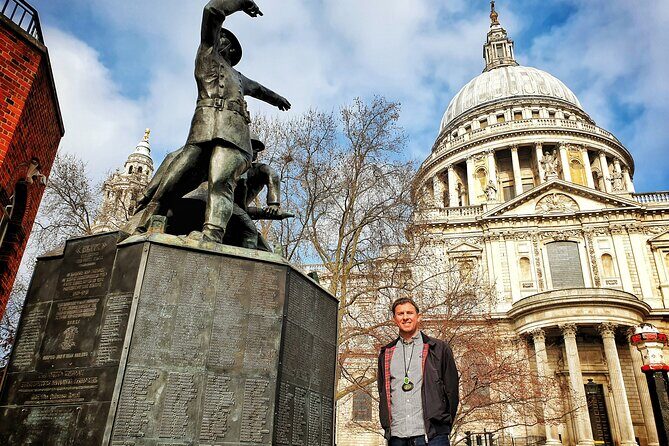
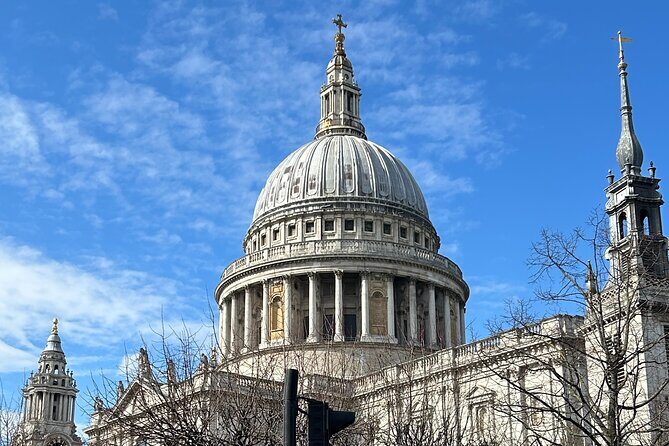
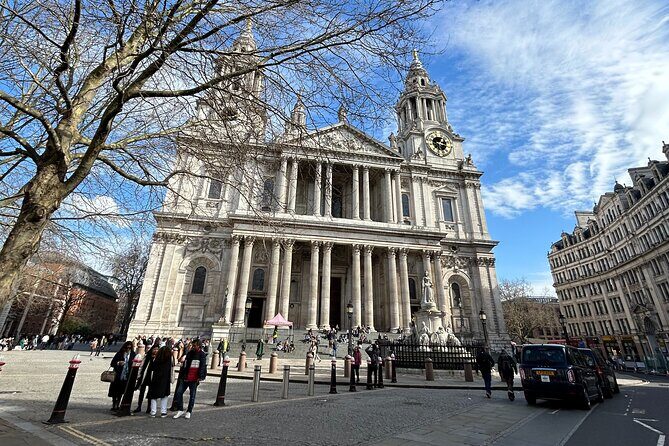
The tour begins at the west end of St. Paul’s Cathedral, near the grand stairs. This spot is more than a meeting point. St. Paul’s was built by Sir Christopher Wren after the Great Fire of 1666, and that event is the line in the sand for medieval London.
Here’s what I like about the approach: you don’t just jump from one landmark to the next. You get the before-and-after picture first. The Great Fire destroyed most of medieval London, but plenty of older traces survive nearby. Once you understand that, the rest of the route clicks into place.
You’ll also get oriented to the guide’s style right away. Dr Geoff, identifiable by that blue lanyard from Historic Tours of England, is clearly used to answering questions and connecting dots. That matters because the route mixes architecture, religion, crime, and military history—different subjects, same geographic thread.
The pacing is walk-friendly but real. The route includes an 18-minute walk to St. Bartholomew the Great, so wear shoes you trust.
You can also read our reviews of more walking tours in London



William Wallace memorial: a quick stop with a bigger lesson
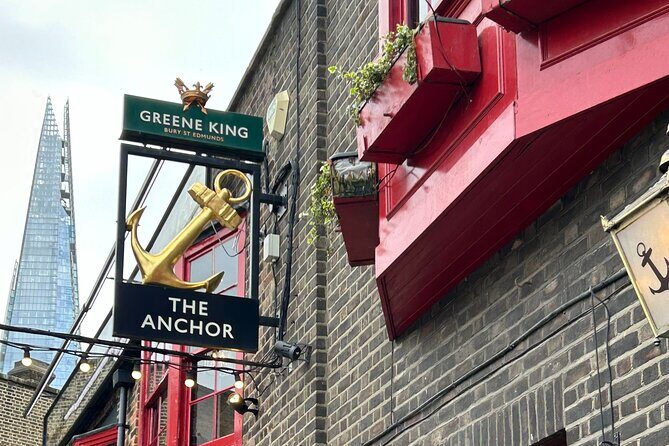
On the way toward St. Bartholomew the Great, you stop at the memorial to William Wallace. It’s a short 10 minutes, and admission is free.
This stop works best as a palate cleanser. You’re moving through a “medieval London” route, but you’re also reminded that the medieval story isn’t only English inside English walls. Wallace represents Scottish independence and resistance, and it gives Dr Geoff a chance to broaden the lens before you get deep into London churches.
Even if you already know the headline version of Wallace, a guided stop helps you look at the memorial as part of the city’s long memory—how Britain remembers older fights, not just what the sites once were.
St. Bartholomew the Great: Norman bones that kept surviving
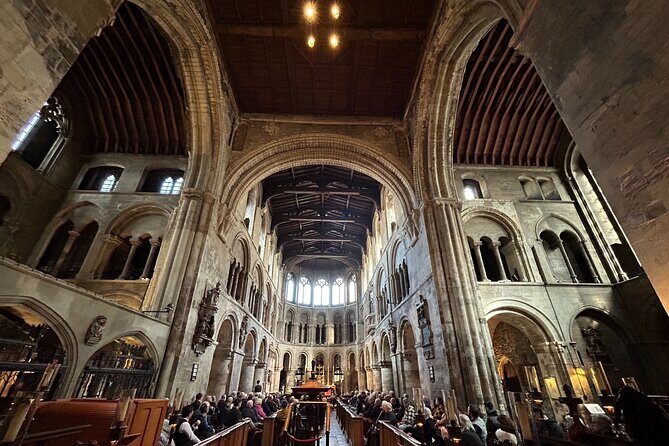
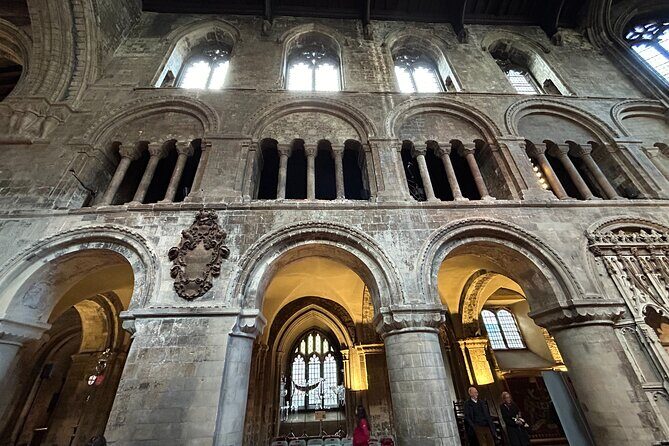
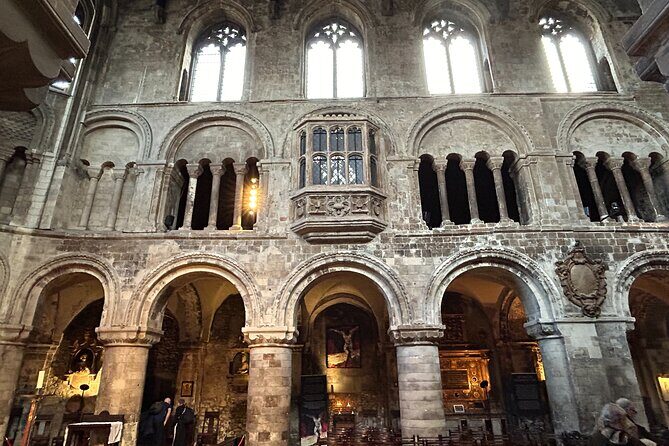
Next comes Church of St. Bartholomew the Great, and this is one of the main reasons to choose this tour. The church is 12th-century, and it’s the kind of place where you can feel time layers without needing to be an expert.
Admission is included, and you spend about 45 minutes here. Much of the structure survived not only the Great Fire of 1666, but also the Reformation, the Civil War, and the Blitz of WWII. That’s not a trivia flex—it’s a practical way to see history as a long process, not a single dramatic moment.
What to watch for while you’re inside:
- The eastern side of the church holds stunning arches, columns, and tombs
- The church is early Norman, which makes it a useful comparison point as you move into later medieval centuries
Dr Geoff’s Oxford research background shows up most in how he points to architectural cues and explains why certain features matter. You don’t just hear what happened; you learn what to notice and why it survived.
Possible consideration: churches mean you may need to stand and look for long stretches. If you prefer sit-down sightseeing, build in breaks as you can during the walk.
Newgate Street and London’s entry points: from walls to the Old Bailey
After St. Bartholomew’s, you head to Newgate Street for another short, focused stop. You’ll spend about 10 minutes here, and admission is free.
Dr Geoff uses this spot to talk about medieval London walls and how entry points shaped movement and control. Then you stop at Newgate, an old entry point that later became known as a prison area. It’s also tied to the Old Bailey—London’s criminal court—where the Old Bailey was built and still remains in use.
Why this part matters: it turns medieval London from “cool old buildings” into a working system. Walls weren’t decorative. They guided who could enter, where people moved, and where justice played out.
And Newgate Street gives you a street-level lesson. It’s easier to grasp the purpose of fortifications when you’re near the actual historical edges and can picture how people would have approached the city.
Temple Church: Templars, vaulted stone, and the Blitz that didn’t win
Temple Church is the other big anchor of the tour. If St. Bartholomew is about Norman survival, Temple Church is about medieval power and symbolism—then about how that power got tested by later centuries.
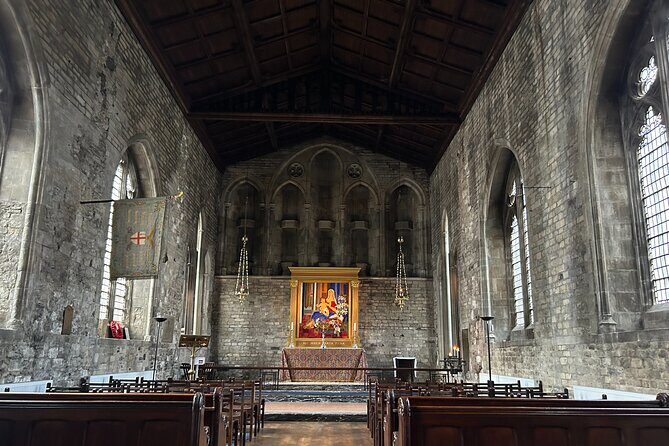
You spend about 45 minutes here, and admission is included. This is the church associated with the Knights Templar: medieval monk-knights who were wealthy and connected to Crusader history. The church dates to the 12th century, and it survived the Great Fire too.
Here’s where Temple Church gets especially interesting in a “hold-on, really?” way. Dr Geoff points out that the Victorian restorers did much of the damage, but the stone vaulted ceiling still survived the Blitz. Bombs falling nearby couldn’t topple that part of the structure—meaning you’re seeing medieval engineering that lasted through modern warfare.
What about that US connection you hear people talk about? Temple Church also has a link to the Founding Fathers of the United States. Dr Geoff ties that into the story without turning it into a random detour, which is harder than it sounds. You walk away understanding why the connection belongs in the Temple Church narrative rather than feeling tacked on.
You end the tour in the garden at Temple Church, which gives you a calmer finish than the busy streets.
You can also read our reviews of more guided tours in London






Price and what you really get for $122.18
At $122.18 per person for a tour around 2 hours 30 minutes, you’re paying for three things more than just a route:
1) A private, historian-led experience
2) An expert guide who can explain architecture and historical context
3) Included admissions for two major stops
The churches you visit have admissions included, which helps offset some of the cost. St. Bartholomew the Great and Temple Church both fall into that category. The quick stops—the William Wallace memorial and Newgate—are free.
Value also comes from the private format. This isn’t a “walk behind the loudest voice” kind of tour. With a private guide, Dr Geoff can shape the pace and answer questions without it turning into a frantic Q-and-A sprint.
So, is it worth it? If you like medieval London as a system—fire, rebuilding, religion, courts, and architecture—and you appreciate expert interpretation, the price feels reasonable. If you want only iconic, postcard views, you may feel the time spent on churches and historical entry points is more than you planned.
The walking route: timing, transit, and what to pack
The schedule is built around a steady but manageable walk. You meet at 10:00am and the total duration includes walking from the meeting point until the end point.
A few practical points you’ll thank yourself for:
- Bring water, since the route is outdoors between major stops
- Wear comfortable shoes for uneven pavement and church steps
- If you rely on transit, the meeting point is near public transportation
Because the experience requires good weather, don’t plan this as a “must-do no matter what” day if your forecast is shaky. If it’s canceled due to poor weather, you’re offered another date or a full refund.
Service animals are allowed, and most people can participate. That said, it’s still a walking tour, so you’ll want a comfort plan if you’re sensitive to time on your feet.
Who this tour suits best (and who might want a different day)
This one really fits you if:
- You’re a history lover who likes specifics—who built what, what survived, and what changed
- You care about architecture and want help reading churches instead of just looking at them
- You want medieval London with a narrative thread, not a list of sites
It’s a great choice for first-time London visitors too, as long as you’re open to a less touristy London story. You’ll see top historic landmarks, but the focus stays on medieval layers and survival through major events.
You might want to skip it if:
- You dislike guided walking tours and prefer to roam independently
- You want mostly modern neighborhoods and quick photo moments
- You’re planning the day around lots of sitting time, because you’ll spend real effort walking and standing inside churches
Tips to make the most of Dr Geoff’s style
One reason this tour gets strong feedback is how Dr Geoff connects facts to what you see. To get the most out of it:
- Ask what to look for in each church before you walk in
- If you like details, don’t be shy about questions—he’s comfortable answering and staying on topic
- Pay attention to the contrasts: early Norman church elements versus later medieval centuries, and medieval structures versus later rebuilding
Also, keep your phone camera handy, but don’t treat it as the main activity. The best part is hearing what each feature means and then spotting it yourself.
At the end, some people like to pair the tour with a casual pub lunch nearby to keep the day social and easy. If you want that option, you can ask Dr Geoff for a practical nearby suggestion once you finish at the Temple Church garden.
Should you book this medieval London walking tour?
Book it if you want medieval London explained the way you’d want it explained: by an Oxford PhD historian, focused on real places, with admissions included at the two biggest stops. You’ll walk away with a clearer understanding of how 1666 reshaped the city—and why medieval survivals like St. Bartholomew the Great and Temple Church still matter.
Skip it if you’d rather spend your time in museums only, or if you can’t handle outdoor walking on a schedule-based itinerary.
If your goal is authentic city layers—fire, walls, court justice, Templars, and churches that actually made it through centuries—this is a strong bet.
FAQ
How long is the Medieval London walking tour?
It runs for about 2 hours 30 minutes (approx.). The total duration includes the walking from the meeting point to the end point.
Where does the tour start and end?
You meet at St. Paul’s Cathedral, St. Paul’s Churchyard, London EC4M 8AD, near the grand stairs at the west end. The tour ends at Temple Church in Temple, London EC4Y 7BB, in the garden.
Is pickup offered, and how do I find the guide?
Pickup is offered. Dr Geoff will be at the meeting point with a blue lanyard showing Historic Tours of England.
Are tickets included for the churches?
Yes. Admission tickets are included for Church of St. Bartholomew the Great and Temple Church. The William Wallace memorial and Newgate are listed as free stops.
What happens if the weather is poor?
This experience requires good weather. If it’s canceled due to poor weather, you’ll be offered a different date or a full refund.
Is the tour private and in English?
Yes. It’s a private tour/activity, so only your group participates. It’s offered in English. Service animals are allowed, and it’s near public transportation.