REVIEW · LONDON
Private Highlights Tour of the British Museum
Book on Viator →Operated by The Museum Guide · Bookable on Viator
Big museum, real focus. This private British Museum Highlights Tour turns a massive collection into a route you actually understand, built around your interests. You’ll get an expert guide who talks through the strange and controversial corners of human history, not just the easy highlights.
I especially liked two things: the customization at the start (the guide shapes what you see based on what you care about), and the honest way the tour handles tough topics behind iconic objects. One thing to consider: at around 3 hours, it’s a highlights sprint—amazing for seeing a lot and getting context, but not ideal if you want slow, in-depth study of only one artifact.
In This Review
- Key things I’d plan around
- Why a private British Museum highlights tour is smarter than wandering
- Montague Place meet-up and getting inside the museum
- The short pre-tour chat that turns a highlights list into your tour
- Rosetta Stone to Lewis Chessmen: the logic of the highlights
- Rosetta Stone: how translation changes everything
- Lewis Chessmen: art, status, and the weird charm of old tech
- Sutton Hoo and Vindolanda Tablets: power in text and objects
- Greece, Assyria, and Mesopotamia: controversy and empire in one route
- Parthenon Sculptures (Elgin Marbles)
- Assyrian Guards
- Standard of Ur
- Egypt: mummies, Ramesses II, and what people feared and revered
- Egyptian mummies
- Ramesses II
- Portland Vase
- “Across the world” highlights: Aztec serpent to Hoa Hakananai’a
- Aztec double-headed serpent
- Statue of Tara
- Ife Head
- Hoa Hakananai’a
- FeeJee Mermaid
- What you’ll actually experience during the walk (and what might be limited)
- Price and value: $468.78 per group up to 10
- Who should book this tour?
- Should you book the Private Highlights Tour of the British Museum?
- FAQ
- How long is the Private Highlights Tour of the British Museum?
- Is the tour private?
- What’s the group size limit?
- What language is the tour offered in?
- Does the tour include museum admission?
- Where does the tour start?
- Where does the tour end?
- Will the guide tailor the tour to my interests?
- Are service animals allowed?
- Can I get a refund if I cancel?
Key things I’d plan around
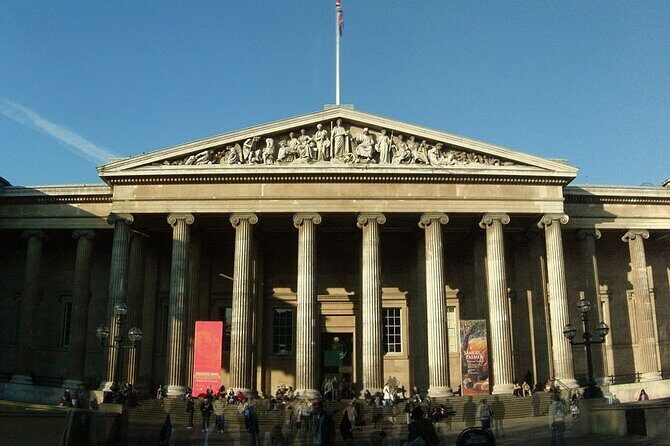
- Private group up to 10 people with a guide leading the whole time
- Advanced-degree guide in Cultural Heritage and Museum Studies
- Your interests first: the route shifts to match what you want to learn
- Highlights with controversy like the Parthenon Sculptures and other debated stories
- Free museum entry via a lesser-known entrance (no separate admission to worry about)
- Real engagement for mixed ages, including teens, as shown by past groups guided by Jessica
Why a private British Museum highlights tour is smarter than wandering
The British Museum can feel like you’re in a warehouse of wonders. That’s fun for about ten minutes. Then you realize you could spend a whole day and still leave with half the collection feeling like random eye candy.
This tour solves that problem with a simple idea: you don’t just get to the big-name objects—you get the story that makes them click. The guide starts by asking what you’re into, then works through the museum’s major areas with an eye toward context. You also get a comfortable format for tackling the stuff that often gets softened in group tours: what people fought over, how objects traveled, and why some items still cause debate.
And yes, the tour hits the famous checklist—Rosetta Stone, Elgin Marbles/Parthenon Sculptures, Egyptian mummies—so you won’t feel like you missed the essentials. But what you gain is the connective tissue between them: how writing, empire, religion, trade, and power show up across continents and centuries.
The best part for me is the pacing with a purpose. You’re not trying to navigate museum geography while also trying to remember dates and names. A good guide makes the building manageable.
You can also read our reviews of more private tours in London


Montague Place meet-up and getting inside the museum
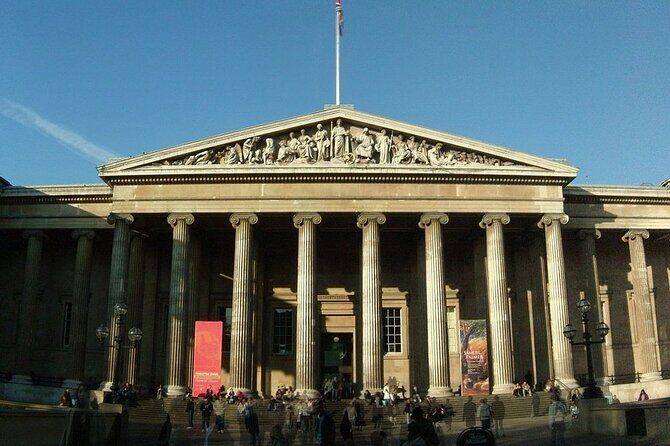
You meet at Montague Pl, then the tour ends inside the museum at Great Russell St (so you don’t have to figure out your exit plan at the end). The experience includes a mobile ticket, which makes it easier to show up and get moving without extra paper.
A small but helpful detail: you enter through a lesser-known entrance as part of the tour. That matters because the British Museum isn’t small, and every minute spent trying to find the right door is a minute you could use for stories.
Because this is a private group (just your group is included), you’re not competing with dozens of unrelated agendas. If someone needs extra time near a display, the guide can usually adjust on the fly. That’s a real quality-of-life upgrade in a museum where “highlights” can easily turn into “where did everyone go?”
Bring the basics you’d bring to any major museum: comfortable shoes and a willingness to look up as well as straight ahead. You’ll be walking, but the tour is designed so you’re moving as you learn, not learning while standing still forever.
The short pre-tour chat that turns a highlights list into your tour
This is where the tour earns its name.
At the beginning, the guide asks about your interests. That can mean major themes (Egypt, ancient writing, empires, “spooky artifacts,” sculpture), or it can mean you’re curious about how museums present contested history. Then the guide builds a route through the British Museum that reflects what your group wants to make sense of.
The result is a tour that feels personal even though the museum is the same for everyone. One group might want more time on ancient texts like the Vindolanda Tablets. Another might want more about power and rule, like Ramesses II. If you’re interested in religion and symbolism, you’ll likely hear more about objects such as the Statue of Tara.
The guide also signals early that tougher topics won’t be ignored. That’s important for objects with political baggage—especially items like the Parthenon Sculptures. A good museum guide can explain why something is famous without pretending the history around it is simple.
One more practical point: because your interests guide the route, it helps to decide what your group is most curious about before you meet. Even two or three ideas give the guide enough to tailor the walk in a way you’ll actually notice.
Rosetta Stone to Lewis Chessmen: the logic of the highlights
The tour focuses on big, recognizable objects, but the way they’re explained makes them feel connected, not random.
Rosetta Stone: how translation changes everything
You’ll see the Rosetta Stone among the core highlights. The real value here isn’t just the object’s fame—it’s what the guide helps you understand: why the ability to read inscriptions can unlock entire histories. It’s one of those moments where the museum stops being “cool” and starts being useful.
You can also read our reviews of more museum experiences in London




Lewis Chessmen: art, status, and the weird charm of old tech
From there, the Lewis Chessmen bring a different flavor: everyday-like games, made with artistry and linked to social life. Chess isn’t just entertainment in ancient worlds; it can reflect leisure, learning, and status. This is also a display where the guide’s storytelling style makes the objects feel less distant.
Sutton Hoo and Vindolanda Tablets: power in text and objects
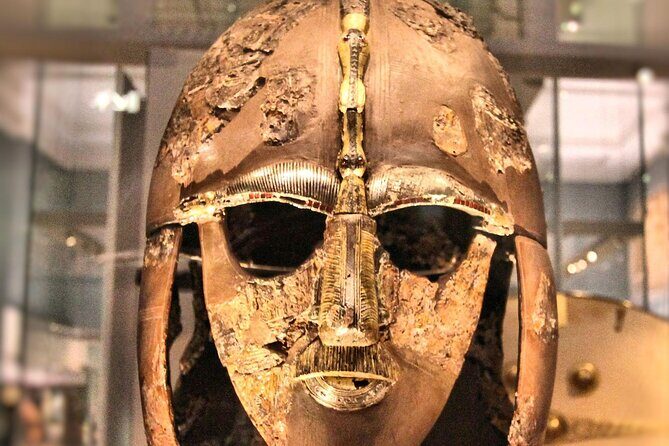
If you’re drawn to how people recorded their lives, you’ll get plenty of grounding in objects like Sutton Hoo and the Vindolanda Tablets. These help show that history isn’t only kings in grand monuments. It’s also letters, routines, and the physical residue of a world that was lived in—not just admired.
Here’s the balance I’d keep in mind: in a 3-hour tour, you won’t read every label like a textbook. Instead, the guide points you to what matters most, so you leave knowing what to follow up on if you return later.
Greece, Assyria, and Mesopotamia: controversy and empire in one route
One of the tour’s strong points is how it connects major civilizations without treating them like separate museum islands.
Parthenon Sculptures (Elgin Marbles)
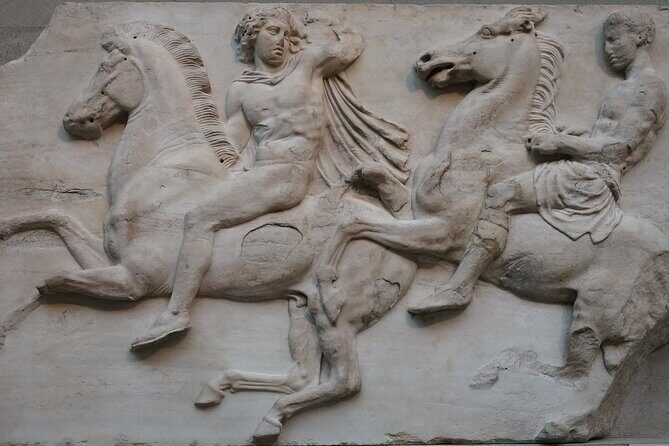
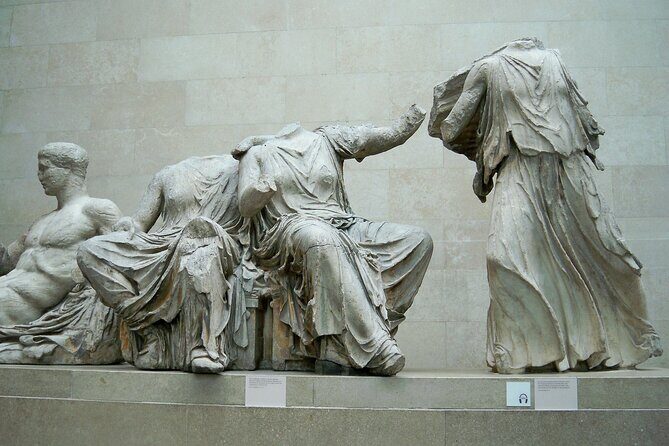
The Parthenon Sculptures are a centerpiece. The tour includes them specifically, and the guide doesn’t shy away from the controversy behind their presence in London. That doesn’t mean the guide only repeats slogans. It means you get enough context to understand why people argue about them, and why that argument still matters today.
Assyrian Guards
Then you’ll move through Assyrian Guards—where art is doing political work. These figures aren’t just decoration. They’re part of how empires project control and deterrence. Seeing them with a guided lens helps you notice the intention behind the style.
Standard of Ur
The Standard of Ur adds another layer: Mesopotamia through an object that feels almost intimate compared to giant monuments. It’s a great example of how craftsmanship and story-telling travel together—what people chose to preserve says as much about them as what they created.
And if you’re wondering how all these fit, the guide ties them together with themes you can carry with you: empire, belief, and how rulers used objects to shape public memory.
Egypt: mummies, Ramesses II, and what people feared and revered
Egypt is a magnet in the British Museum. This tour treats it as more than a single “Egypt room.” It’s a set of connected ideas: identity, afterlife beliefs, and how rulers tried to make themselves last.
Egyptian mummies
The mummy displays are among the highlights, and yes, they can feel intense. With a guide, they become less like shock value and more like anthropology. You’ll get context for what mummification meant in that world, and why modern eyes might misread it if they only look at surface details.
Ramesses II
Ramesses II brings in the ruler angle. The guide helps you see how a great name connects to power structures and public messaging. Even if you’re not an Egypt specialist, this kind of guided framing makes the object feel like evidence rather than just a label in a glass case.
Portland Vase
The Portland Vase shifts the mood. It’s a reminder that ancient history includes design, technical skill, and storytelling through materials. This is a nice stop if your interests go beyond war and religion and you want to understand how people built meaning into art.
If you like when a tour doesn’t pick a single lane, Egypt here is a good example of range.
“Across the world” highlights: Aztec serpent to Hoa Hakananai’a
The tour is built to traverse continents, and the object list reflects that. These are the kinds of stops that can turn a museum visit into a worldview check.
Aztec double-headed serpent
This kind of symbol-heavy object is perfect for a guide-led explanation. You’re not meant to “guess” what it means. You get interpretive context so you understand why such imagery mattered.
Statue of Tara
The Statue of Tara is also included as a highlight, and it’s especially valuable if you’re interested in how spiritual concepts show up as art. Instead of treating it as decoration, you’ll get help interpreting what the figure is doing culturally and religiously.
Ife Head
The Ife Head adds another strong artistic story: skill, identity, and representation. A guided explanation helps you see how style choices carry meaning, even when your first reaction is simply wow.
Hoa Hakananai’a
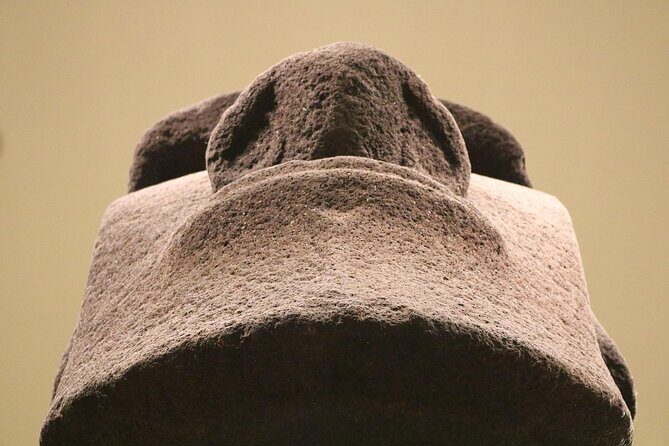
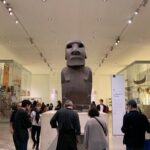
Hoa Hakananai’a is one of the most talked-about Polynesian objects in the museum, and it’s included here as a highlight. With a guide, you’ll get the interpretive frame you need so it doesn’t feel like a random famous piece. This is where the tour’s promise of covering the real context starts to show.
FeeJee Mermaid
And then there’s the FeeJee Mermaid—one of those objects that sits at the intersection of curiosity, storytelling, and misinformation. It’s not there just for laughs. A good guide uses it to show how people in different eras constructed myths and how museums can preserve those myths alongside the evidence.
If you’re the kind of person who likes when a museum tour has a sense of humor without losing accuracy, this section does that job well.
What you’ll actually experience during the walk (and what might be limited)
This is a private highlight tour with a total duration of about 3 hours. That’s long enough to see major galleries and hear substantial explanations, but not long enough to sit with one object until you could write a paper about it.
So here’s what to expect in practical terms:
- You’ll move from object to object with guided interpretation.
- The guide’s style means you’ll likely remember fewer dates, but more “why this matters” moments.
- The object list covers famous items across regions, but your group’s interests can shift emphasis.
The guide is also able to take on tough history topics. That’s a big part of why people rate the experience so highly. In one past group, Jessica guided a party of 10 families members including teens, and the standout detail was how her storytelling kept everyone engaged while staying balanced.
If your group has teens or mixed ages, that matters. Museums can be a grind for younger people. A guide who can explain big themes without talking down makes the visit feel like a real conversation.
Price and value: $468.78 per group up to 10
Let’s talk numbers in a way that helps you decide.
The tour costs $468.78 per group, for up to 10 people. That means the value depends on how full your group is. If you book with 10 people, the cost works out to roughly $47 per person. If it’s fewer than that, the per-person cost climbs.
Here’s what you’re paying for, beyond the museum itself:
- A fully guided, expert tour in English
- A route tailored to your interests
- Insider knowledge and museum context
- Free entry to the British Museum through the included approach
Admission is part of the experience, which simplifies things. You’re not paying separately for entry, and you’re getting the benefit of a professional guide through a huge site.
So if you like structured learning, have kids/teens who need engagement, or you’re the kind of person who wants to understand what you’re seeing instead of just collecting photos, this price starts to look fair fast.
If you’re visiting the British Museum alone and only want a quick glance at the most famous items, a guided tour might cost more than you need. But if your group includes several people who want direction and context, private can be a smart move.
Who should book this tour?
This private highlights format works especially well if you fit one of these profiles:
- You want the British Museum’s top objects, but you don’t want to piece the meaning together yourself.
- You care about how museums handle controversial history, especially around famous works like the Parthenon Sculptures.
- Your group includes teens who need a guide who can keep attention.
- You prefer learning with a conversation and a plan, rather than wandering and hoping the museum “clicks” on its own.
- You’re visiting London and want a high-impact cultural stop in a short window.
It’s also ideal for history buffs who like variety: you’ll go from writing and empires to symbolic art and objects that tell messy stories.
Should you book the Private Highlights Tour of the British Museum?
If your goal is to see the British Museum’s best-known treasures and leave with real context, I think this tour is worth serious consideration. The combination of customization, a guide comfortable with tough topics, and a tight 3-hour plan is exactly what most people need inside a museum this big.
Book it if you:
- want a guide-led explanation of major highlights like Rosetta Stone, mummies, and the Elgin Marbles
- want a route that matches your group’s interests
- are traveling with a mixed group (including teens) and want attention to stay focused
Skip it only if you already know what you want to see down to the gallery level and you prefer a self-guided pace with lots of time at fewer objects. Otherwise, this is a strong way to turn the museum into a set of connected stories you can remember.
FAQ
How long is the Private Highlights Tour of the British Museum?
It runs for about 3 hours.
Is the tour private?
Yes. It’s a private tour/activity, and only your group participates.
What’s the group size limit?
The tour is priced per group for up to 10 people.
What language is the tour offered in?
The tour is offered in English.
Does the tour include museum admission?
Yes. Admission is free as part of the experience, and entry is included via a lesser-known entrance.
Where does the tour start?
The meeting point is Montague Pl, London.
Where does the tour end?
The tour finishes inside the museum at The British Museum, Great Russell St.
Will the guide tailor the tour to my interests?
Yes. The guide asks about your interests at the start and customizes the highlights accordingly.
Are service animals allowed?
Yes, service animals are allowed.
Can I get a refund if I cancel?
Yes. There’s free cancellation up to 24 hours in advance for a full refund.