REVIEW · LIVERPOOL
Private Liverpool Self-Guided Tour
Book on Viator →Operated by Pandemic Tours · Bookable on Viator
Beatles and architecture, walked at your speed. This Liverpool self-guided tour lets you follow a clear GPS route through major landmarks, with audio commentary focused on the Beatles and the waterfront. You’re not trying to keep up with a group; you’re choosing when to pause, read, and look closer as the stories roll in.
I also like that you get three weeks of unlimited access, so you can redo parts on a second pass (or switch the order if your day changes). My only real caution: some stops involve your own payments, especially Cavern Club entry, plus occasional event fees where the app recommends going inside museums and galleries.
In This Review
- Key takeaways before you go
- How this self-guided Liverpool tour actually works
- Start at St George’s Hall: your walk gets meaning fast
- William Brown Street: Liverpool’s cultural quarter in one line
- Liverpool Central Library and the World Museum: where to spend your attention
- St John’s Gardens: a park stop with real weight
- Williamson Square, the Playhouse, and St John’s Beacon
- Cavern Club area: Beatles history and the one paid stop
- Castle Street and Exchange Flags: the commerce-to-controversy thread
- Pier Head: Three Graces, Liver Birds, and the Beatles monument
- Royal Albert Dock and the Museum of Liverpool: plan your next steps
- Price and value: $12.35 for 3 weeks of direction
- Who this is best for (and who might want something else)
- Final call: should you book this Liverpool self-guided tour?
- FAQ
- How long is the Liverpool self-guided tour?
- Where does the tour start and end?
- Is the tour available in English?
- What’s included with my booking?
- Are attraction entrance fees included?
- Does the tour require an in-person guide?
- Is it refundable if my plans change?
Key takeaways before you go
- Instant confirmation and app activation by email so you can start planning right away
- Jenny’s human-style audio (no computer-generated voice) with Beatles and Pier Head focus
- GPS route and stop-by-stop directions that keep you from wandering in circles
- Free-to-enter sights called out along the way, with a few paid exceptions
- A strong “why this matters” thread, from maritime Liverpool to the Hillsborough Disaster memorial context
How this self-guided Liverpool tour actually works
This is not a bus tour and it’s not a live guide walking beside you. It’s a self-guided experience on your phone, built for you and your group only—so there’s no group herding, no waiting at corners, and no awkward slow-walk vs fast-walk debate.
After you book, you’ll get an email with instructions to activate your tour in the app. The tour includes a map, directions, and a GPS route with listed stops, plus audio, pictures, videos, and story content at each point. The audio guide is delivered by Jenny, and the tour materials are designed so you can pause and move at your own pace.
The practical benefit is simple: if the weather is good, you speed up. If it’s raining or you want extra photos, you slow down. I find this style works best in city centers where streets are walkable and you want to choose your own timing.
You can also read our reviews of more guided tours in Liverpool


Start at St George’s Hall: your walk gets meaning fast
You begin at St George’s Hall (St George’s Pl, Liverpool L1 1JJ). Even if you’ve never heard of Liverpool’s older civic buildings, this stop gives you the city’s “frame.”
You’ll learn how Liverpool’s origins are tied to a tidal pool near the River Mersey, before it became a founded town in the 13th century. Then the tour turns to the building itself: St George’s Hall is a Grade I listed landmark on an elevated podium, designed so it dominates the surroundings. That’s the kind of detail that makes you look up at the stonework and symmetry instead of just snapping a picture and moving on.
What to watch for here: give yourself a few extra minutes if you care about architecture. The stop is listed as short, but the story is the sort that makes the next streets feel connected rather than random.
William Brown Street: Liverpool’s cultural quarter in one line

Next you’re sent to William Brown Street, the spine of Liverpool’s major public buildings and its principal cultural quarter. This is the street named after William Brown—a merchant turned MP and philanthropist—who donated land for cultural purposes in 1860.
The app points you toward a set of heavy-hitters you can’t really miss, including the Walker Art Gallery, the Central Library, the World Museum Liverpool, and other notable structures along the conservation area. It’s a good stretch for photos too, because the buildings form a kind of architectural corridor rather than scattered one-offs.
One smart way to use this segment: pick one building to “go a bit deeper” in your mind. You don’t have time to museum-hopper all day, so choose what you want most—art, science/natural history themes, or local storytelling.
Liverpool Central Library and the World Museum: where to spend your attention
This part of the route focuses on Liverpool Central Library and World Museum Liverpool, which share the same building (a Grade II listed structure with classical style).
The app guides you through what the area is about and gives practical tips on what to look for inside. Entrance is described as free for both, though it notes that events can sometimes add a fee. That matters because it helps you avoid the common travel frustration of planning around the “free museum” assumption and then hitting a paid exhibit.
If you’re short on time, treat this stop like a choose-your-own-adventure:
- If you love city context, skim the parts that connect the library and museum to the neighborhood.
- If you want specific exhibits, follow the app’s guidance on which rooms to enter.
St John’s Gardens: a park stop with real weight

From the civic buildings, the tour shifts to St John’s Ornamental and Memorial Gardens next to St George’s Hall. The park sits on the former Great Heath area, and the content here is not just about flowers and statues.
This is where the tour brings in the Hillsborough Disaster story and explains why it still matters to Liverpool—especially for football fans across teams. It’s a reminder that “landmarks” aren’t only about pretty views. In a city shaped by sport, working-class community, and public memory, this stop gives the background that turns names into meaning.
How to handle this emotionally: take the extra minute to read what you can. This is one of those stops where speed can feel a little disrespectful, even if you’re only on foot.
You can also read our reviews of more private tours in Liverpool






Williamson Square, the Playhouse, and St John’s Beacon

Then you move to Williamson Square, a central city square known for its fountain and colorful lights. Behind it all is Liverpool Playhouse, a heritage theatre tied to notable British actors and actresses.
The tour also covers the Radio Tower, formerly known as St John’s Beacon. The app’s role here is helpful because it gives context: the tower’s past, its reception locally, and why it’s now revived and loved. This is exactly the sort of story that makes an unfamiliar skyline feature feel personal.
Pro tip for this section: stand with your back to the square and look outward. You’ll catch the relationships between the theatre, the tower, and the surrounding streets, and that helps the “route logic” click.
Cavern Club area: Beatles history and the one paid stop
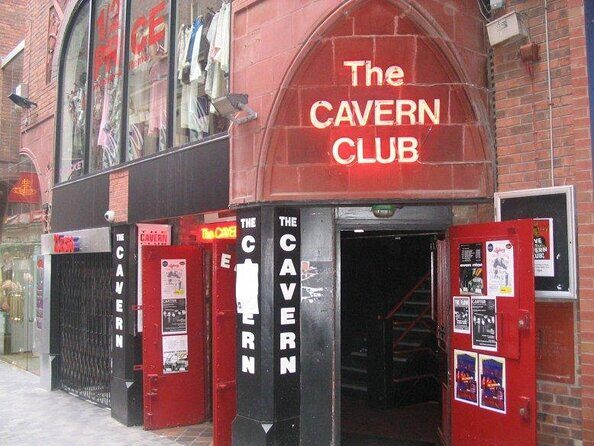
At The Cavern Club area, the tour shifts from architecture and civic memory into the living, noisy part of Liverpool. This neighborhood is described as a web of pubs, clubs, and live-music venues, and the app positions it as the epicenter of the city’s live scene.
Here’s the key detail: the app explains the area and its Beatles connections, including why Cavern Club became a rock-and-roll hub in the early 1960s. But you have to pay for Cavern Club entrance, and the tour is clear about that.
If you’re on a budget, you can still enjoy the street atmosphere without paying—listen for the audio stories, then decide on the spot whether you want the inside experience. If you do go in, plan it as a timed add-on, not something to “maybe later” drift into.
Castle Street and Exchange Flags: the commerce-to-controversy thread
From Cavern Club, the route heads to Castle Street, described as part of Liverpool’s World Heritage site and one of the original ancient streets dating back to the 13th century. The app highlights major Grade I buildings along the street, including the Town Hall and the former Bank of England, plus many Grade II listed structures.
After your stroll, you’re guided to Liverpool Exchange Flags Square, where the tour turns to Liverpool’s past of commerce, war, and slavery—and it also gets into the main characters involved. It’s not only naming history; it’s teaching you how to interpret Nelson’s bronze monument and the controversies around it.
This is one of the more thought-provoking parts of the walk. If you’re the kind of traveler who likes historical context (without turning it into a debate), use the audio prompts here as your anchor. It keeps you from treating the square like a photo backdrop only.
Pier Head: Three Graces, Liver Birds, and the Beatles monument
Pier Head is where the walk becomes postcard-level dramatic. You stroll around the waterfront at Pier Head, focusing on the “three graces”—the Royal Liver Building, Cunard Building, and Port of Liverpool Building. The app explains these buildings as part of Liverpool’s maritime heritage tied to the former UNESCO-designated Maritime Mercantile City.
The audio gives you stories around the Liver Birds, including local legends and why the bird symbol shows up in the city’s coat of arms. If you’ve ever wondered why those birds became an identity marker, this is where you’ll get the why.
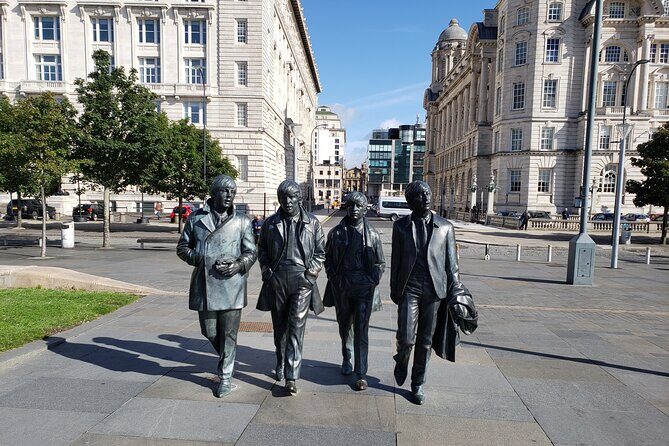
The tour also includes info on the Pier Head Beatles monument and stories about the Fab Four that may not be the usual headline facts. This matters because it gives you a way to connect music history to place, not just to dates.
What I recommend here: spend your time on viewing angles. Each building has a slightly different “read” depending on where you stand along the waterfront edge. Move a bit. Let the audio play, but also let the skyline answer back.
Royal Albert Dock and the Museum of Liverpool: plan your next steps
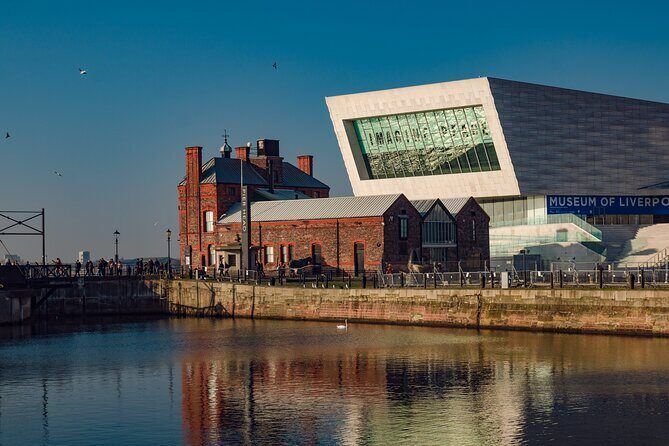
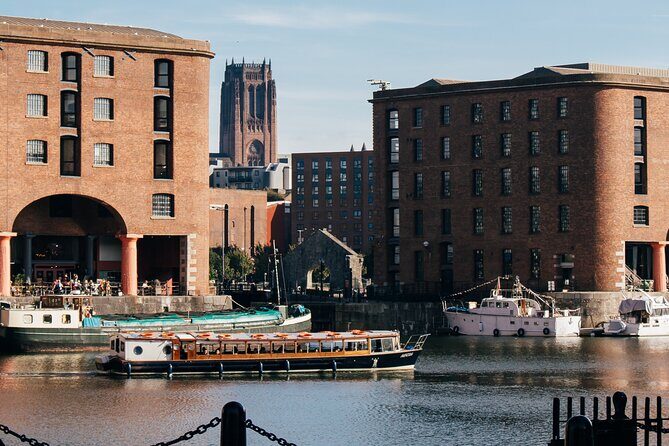
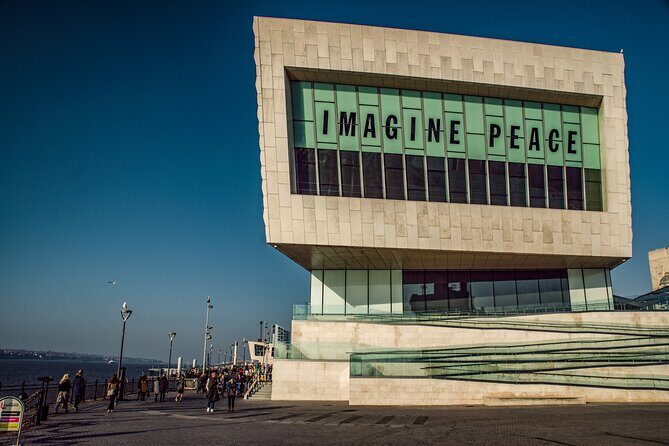
The route continues to Royal Albert Dock Liverpool, shifting from maritime commerce to culture. The app walks you along the waterfront and points out the docks’ role before and after World War II, including how the Titanic connects to the city. It also explains why so many museums were built there, including the Museum of Liverpool, the Beatles Story, and the Merseyside Maritime Museum.
You end with a suggested list of recommendations—what to do and where to eat—so your afternoon doesn’t end at the final audio track. That’s a small thing, but it’s very practical when you want your time to feel planned rather than accidental.
Then you get Museum of Liverpool guidance: what to expect, where to go inside, and what you’ll see. The stop notes that the museum began as the Derby Museum, built from the 13th Earl of Derby’s natural history collection. That bit of origin storytelling helps you understand why certain parts of the museum experience might feel like they have layers—science, local identity, and Liverpool’s changing industries.
Price and value: $12.35 for 3 weeks of direction
At $12.35 per person, this is one of those deals that only makes sense when you look at usage. You don’t pay for a two-hour window and then lose access. Instead, you get three weeks of unlimited access to the self-guided tour content in the app.
That changes the value math. If you take one walk and you nail the main landmarks, great. If you do it slower and want to replay a section after dinner, even better. If you come back to Liverpool later in the trip, you don’t need to repurchase directions.
Also, the audio and route planning are doing real work. A common problem in big cities is paying for a guided tour and then still walking wrong streets later. Here you’re getting the route structure built in, plus stories that explain what you’re looking at.
Do still budget for your own entrances where needed. The app is clear that entrance fees aren’t included, and it highlights that Cavern Club requires payment.
Who this is best for (and who might want something else)
This tour fits you best if you:
- want Beatles + Pier Head stories without a fixed group schedule
- like architecture and city design as much as famous names
- travel solo or as a small group and want control over pacing
- are walking in a day where weather could change your plans (it’s set up for pause-and-go)
You might want a different format if you strongly prefer a live guide who can answer questions on the spot, or if you hate paying extra for must-see interiors like Cavern Club.
Final call: should you book this Liverpool self-guided tour?
If you want an efficient first-timer route that still feels personal, I’d book it. The GPS route + audio combo is built for clarity, and the content touches both fun (Beatles, the Cavern area) and meaning (Hillsborough context, Exchange Flags history, memorial interpretation). At this price, you’re mostly paying for direction and storytelling—and that’s exactly what this delivers.
If you’re the type who only wants fully free attractions, plan for one or two paid moments. But for many visitors, that trade-off is worth it because the route stitches together a lot of Liverpool in a way that feels coherent, not random.
FAQ
How long is the Liverpool self-guided tour?
The tour is listed as about 2 to 4 hours.
Where does the tour start and end?
It starts at St George’s Hall (St George’s Pl, Liverpool L1 1JJ) and ends at Royal Albert Dock Liverpool (Liverpool L3 4AD).
Is the tour available in English?
Yes, it’s offered in English.
What’s included with my booking?
You get 3 weeks of unlimited access in the app, plus a map with GPS route and stops, and audio guided by Jenny, along with pictures, videos, and stories. You’ll also receive an email with activation instructions (your booking reference is not the code).
Are attraction entrance fees included?
No. Entrance fees for attractions mentioned on the tour are not included.
Does the tour require an in-person guide?
No. It’s self-guided, so there’s no in-person guide included.
Is it refundable if my plans change?
No. The experience is non-refundable and cannot be changed for any reason. If you cancel, you won’t get your money back.