REVIEW · LIVERPOOL
The Story of Liverpool 2-Hour Walking Tour
Book on Viator →Operated by LiverpoolGO · Bookable on Viator
Liverpool has a way of mixing tragedy with brick-and-steel pride. This 2-hour walk through the docks and city-center edge gives you an organized feel for the place, with easy pace and sharp Liverpool history stops. I like how the route points out landmarks (like the Royal Liver Building) and also the uncomfortable threads of Liverpool’s past, including wealth tied to the slave trade. One thing to consider: the tour is weather-dependent, and you’ll be outside for the whole loop.
If you want a quick orientation that also makes you look twice at what you see, this is a strong pick. The guide experience matters here—names like Wendy show up for being especially accommodating—and the small group size (max 12) keeps it from feeling like a hurry-up parade. Bring a rain layer, though; even when the plan is solid, Liverpool rain can show up at the wrong moment.
In This Review
- Key highlights worth your attention
- What this 2-hour Liverpool walk really does for you
- Starting at the Marine Engine Room Heroes memorial (and the Titanic facts people remember)
- From the church by the Pier Head to slave-trade connections you can’t unsee
- Tithebarn Street and the unofficial Confederate Embassy angle
- Liverpool Town Hall: carved trade symbolism in stone
- Royal Liver Building: iconic shape, plus a clear explanation of what came first
- Albion House and the White Star Line balcony for Titanic’s name-reading moment
- Pier Head: Mersey Tunnel engineering and the Three Graces lineup
- Albert Dock: why this area mattered in peacetime and wartime
- Salthouse Dock and Canning Dock: old stones, reused docks, and graving work
- Thomas Steers Way: the outline in the pavement and a glass viewing window
- Liverpool Water Street: the Bank of Liverpool and currency notes
- Price and pace: is $40.22 for 2 hours worth it?
- Weather and comfort tips for Liverpool’s outdoors
- Should you book this tour?
- FAQ
- How long is the Story of Liverpool 2-Hour Walking Tour?
- Where does the tour start and end?
- Is the tour in English?
- How big is the group?
- Is the tour canceled due to bad weather?
- Can I cancel for a full refund?
Key highlights worth your attention
- Titanic engineering memorial that explains why wireless and lights failed so late in the sinking
- Our Lady and St Nicholas Church where the river once reached the steps before dock expansion
- Town Hall frieze carvings tied to the trade that financed its construction
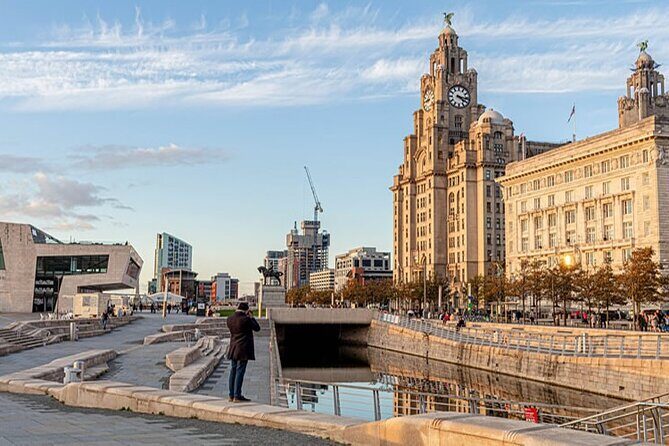
- Three Graces views with the Royal Liver Building, Cunard Building, and Mersey Docks and Harbour Board
- Albert Dock and wartime use, plus pointers toward museums you can add afterward
- Old dock traces at Thomas Steers Way, including a glass window view of history
What this 2-hour Liverpool walk really does for you
This isn’t a “sit and hear stories” tour. It’s a structured walk that turns Liverpool landmarks into a timeline you can actually hold in your head. You start by the waterfront and work through key points tied to shipping, engineering, and merchant wealth. Along the way, the guide doesn’t just name buildings. You learn what those buildings were for—and who benefited.
The value is in the blend: iconic sights (the Royal Liver Building and the Pier Head) plus darker context (Liverpool’s role in the slave trade and related commerce). If you’ve only got a day or two in town, this kind of overview helps you decide what to research next.
You can also read our reviews of more walking tours in Liverpool


Starting at the Marine Engine Room Heroes memorial (and the Titanic facts people remember)
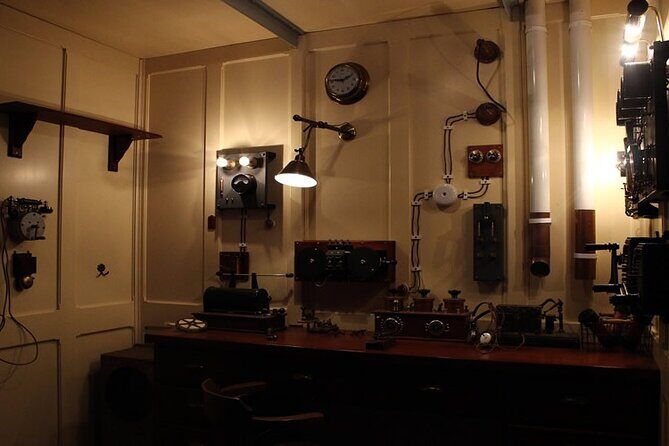
The tour begins at the Memorial to the Marine Engine Room Heroes at St Nicholas Pl, Canada Boulevard area. This opening sets the tone fast: Liverpool’s connection to the Titanic isn’t treated as Hollywood trivia. You’re given the engineering problem the ship faced—how the failure of lights and wireless communications made help and lifeboat lowering far harder at the end.
You also learn a key sequence: power for wireless was maintained until about ten minutes before the sinking, then lights failed just two minutes before she went down. It’s a memorial built around people who didn’t survive, and the guide uses it to show how technology, not just luck, shaped the outcome.
Practical note: this is a walking tour, so you’ll be outside immediately. If weather looks iffy, plan your layers before you arrive at the start.
From the church by the Pier Head to slave-trade connections you can’t unsee
Next up is the Church of Our Lady and St Nicholas at the Pier Head area, one of Liverpool’s oldest church buildings in this zone. The tour gives you a strong geographic trick: the River Mersey used to lap the church steps at high tide before land reclamation for George’s Dock. In other words, the waterfront you see now is the result of major reshaping over time.
Then the guide brings in names and burial connections tied to slave traders, including Bryan Blundell. It’s not dropped as shock value. It’s presented as part of the local fabric—how worship, commerce, and status all overlapped in real lives.
That can be a lot for a short tour, but that’s also why this stop hits. You leave with a more honest map of Liverpool’s past.
Tithebarn Street and the unofficial Confederate Embassy angle
At Tithebarn Street, the story shifts from slavery-era commerce to another period where Liverpool merchants influenced international events. When the American Civil War broke out, Britain stayed neutral on paper, but Liverpool’s merchant community leaned toward the Confederacy. The guide points out the unofficial Confederate Embassy feel of the area and connects it to a company that functioned as unofficial banking for the Confederate states.
This stop is a good reminder that ports aren’t just about ships arriving. They’re also about money moving and political pressure forming. You’ll likely walk away thinking about how “neutral” policy can look different when you’re watching business up close.
Liverpool Town Hall: carved trade symbolism in stone
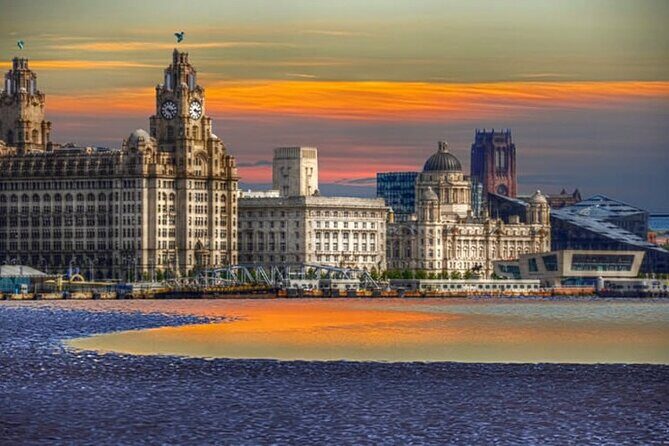
One of the most impressive stretches is at Liverpool Town Hall. The guide frames the building as a showpiece funded by merchants who spared no expense. The Town Hall’s interiors and architectural details are part of the point, but the most memorable part for many people is the carved frieze work around the building.
You’ll see carvings tied to the trade networks behind Liverpool’s wealth—elephants and camels, African people, ivory, and other flora and fauna. It’s the kind of decoration that can look purely ornamental until someone explains what it’s referencing.
The drawback here: if you’re the type who prefers purely scenic sights, the stop can feel heavier. If you’re the type who likes understanding why a city looks the way it does, it lands well.
A few more Liverpool tours and experiences worth a look


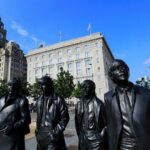
Royal Liver Building: iconic shape, plus a clear explanation of what came first
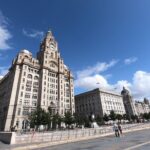
Then you move to the Royal Liver Building, the one people instantly recognize on Liverpool postcards. This is where the tour balances “famous building” with “how it happened.” You learn how it was constructed and—importantly—what was on the land before the building went up.
That last detail matters. Without it, you can end up admiring the skyline without noticing the replacement story beneath it: old waterfront and dock space shifting into new landmark architecture. The Royal Liver Building is loved by locals and visitors, and this stop helps you appreciate it as more than a photo op.
Albion House and the White Star Line balcony for Titanic’s name-reading moment
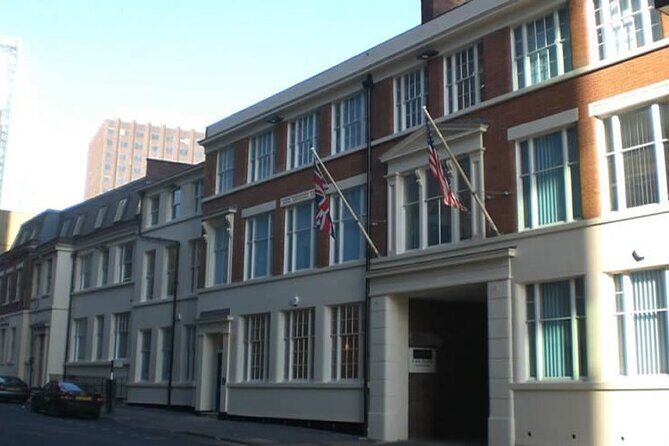
As you head back toward the waterfront, you see Albion House, headquarters of the White Star Line. If you’ve seen Titanic-related film versions, the guide may connect the setting to that broader story—then bring you back to the real place and what it did in 1912.
The key image here is the balcony where staff read out the list of names of those who had died in the disaster. It’s a sobering, human-scale detail that keeps the tour from staying abstract.
This is also a smart stop if you like when a tour gives you one vivid scene to anchor the whole narrative.
Pier Head: Mersey Tunnel engineering and the Three Graces lineup
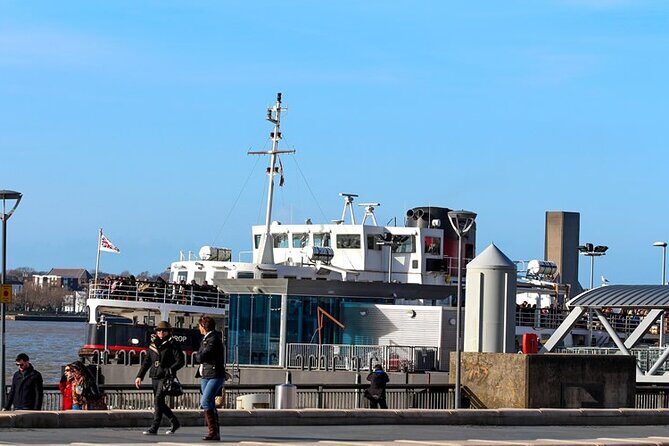
At the Pier Head, you get a wider waterfront view and the tour expands from individual buildings into the big shipping-and-infrastructure picture. The guide covers the Mersey Tunnel and the engineering feat behind it—exactly the kind of practical context that makes this area feel like a working system, not just scenery.
Then the route finishes the “Three Graces” cluster with the Cunard Building and the Mersey Docks and Harbour Building (with the Royal Liver Building already addressed earlier as the third). Seeing them in sequence helps you clock how Liverpool uses symmetry and height to tell a shipping story.
If you’re a skyline person, this segment is a good photo window. If rain hits, you’ll want to keep your camera accessible but protected.
Albert Dock: why this area mattered in peacetime and wartime
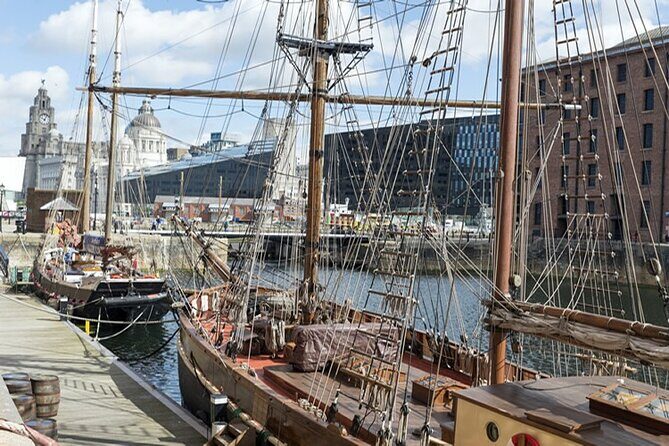
Passing through Albert Dock, you’re led through what made the site special in the first place, including how it was designed and built. The tour also covers the role Albert Dock played during the Second World War, which gives the dock a second life beyond shipping in the public imagination.
As you walk, the guide points out nearby options if you want to go further: Tate Gallery, the Maritime Museum, and the International Slavery Museum. The tour doesn’t require you to enter any of them, but it gives you enough context to choose wisely later instead of wandering.
If you’re short on time, this stop is where you can decide: do you want art, maritime stories, or the slavery-and-trade angle?
Salthouse Dock and Canning Dock: old stones, reused docks, and graving work
The tour continues along the Salthouse Dock and Canning Dock area. Here the guide brings up the reuse story: some massive stones from Liverpool Castle were used in construction. You’re not just hearing about “docks”—you’re seeing evidence of how Liverpool recycled materials and built upward from its own past.
Then comes a darker detail at the graving docks: ships were refurbished following transatlantic travel, then prepared for the trading process again, including returning to Africa. Again, it’s not a general “slavery happened” mention. It’s tied to specific dock functions.
This part can feel intense in a two-hour window. If you’re sensitive to that topic, pace yourself, step back when you need a breather, and keep your headphones off so you can hear the guide clearly when the story turns.
Thomas Steers Way: the outline in the pavement and a glass viewing window
At the end stretch, you arrive at Thomas Steers Way. This is one of the neatest ways to “read” a city on foot. In the pavement, you can see the outline of the Old Dock, and there’s also a glass viewing window that lets you view a section of the dock through the ground.
It’s a clever closing move: instead of ending at a monument, the tour ends by showing you how Liverpool literally preserves infrastructure in plain sight. Even if you’re not a history buff, you’ll likely remember this kind of tactile visual proof longer than a spoken list.
Liverpool Water Street: the Bank of Liverpool and currency notes
The last stop is Liverpool Water Street, where you learn that the Bank of Liverpool existed and even produced its own currency notes. The tour points out the building that still stands, so the story ends with something you can physically recognize later on your own.
This is a great final note because it connects everything: merchant wealth, shipping, banking, and the way global trade shaped daily life. It also makes the tour feel more “complete,” because you’ve moved from ships and docks into the financial machinery behind them.
Price and pace: is $40.22 for 2 hours worth it?
At $40.22 per person for about two hours, you’re paying for a short, focused package: a professional guide, a small group format (max 12), and a route packed with landmark stops you’d otherwise need multiple visits to piece together. You also get a mobile ticket, which is convenient if you’re already juggling museum tickets and transit cards.
The pace is built for a walk that’s easy to keep up with. The stops are short (often around 5 to 15 minutes), so you get variety without long waits. That structure is also a value point: you’re less likely to lose time deciding where to go next.
The main “cost” isn’t money. It’s mental attention. The tour covers both pride and harm in Liverpool’s past. If that’s something you can handle, the price is reasonable for the amount of context you get in one sitting.
Weather and comfort tips for Liverpool’s outdoors
This experience requires good weather. That’s not a minor note; the tour is outside most of the time. If rain is in the forecast, I’d treat it like a certainty. Bring a waterproof layer and consider waterproof shoes or at least grippy soles.
One more practical thing: wear something you can move in. You’ll be walking between multiple waterfront and city-center points, and the whole point is that you’re getting a “map in your legs,” not just learning from a screen.
Should you book this tour?
Yes, if you want a fast, structured orientation that takes you from famous views (Three Graces, Royal Liver Building) into the less comfortable parts of Liverpool’s trading story. This is especially worth it when you’re short on time and want a route that makes your later choices easier—whether you want to add a museum visit or simply wander smarter.
Skip it only if you strongly prefer light, purely scenic sightseeing and don’t want context about the slave trade and related commerce. This tour treats those topics as part of the city, not as optional background.
FAQ
How long is the Story of Liverpool 2-Hour Walking Tour?
It lasts about 2 hours.
Where does the tour start and end?
It starts at Memorial to the Marine Engine Room Heroes, St Nicholas Pl, Canada Blvd, Liverpool L3 1QW, UK. It ends at Thomas Steers Way, Liverpool L1, UK.
Is the tour in English?
Yes, it’s offered in English.
How big is the group?
The tour has a maximum of 12 travelers.
Is the tour canceled due to bad weather?
It requires good weather. If it’s canceled because of poor weather, you’ll be offered a different date or a full refund.
Can I cancel for a full refund?
Yes. You can cancel up to 24 hours in advance for a full refund.