REVIEW · LONDON
Private Rock ‘n’ Roll Music Tour of Central London
Book on Viator →Operated by Tours Of The UK · Bookable on Viator
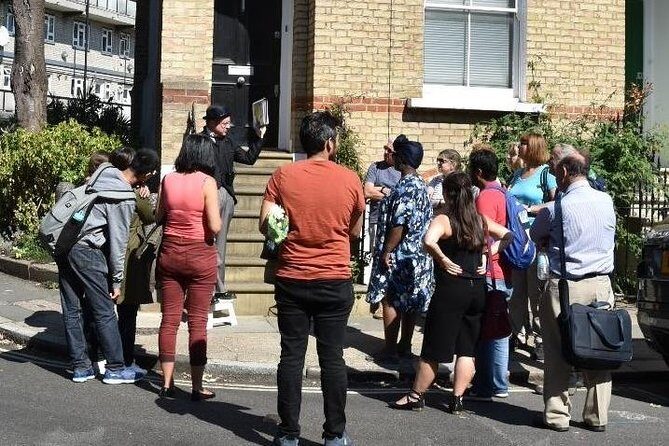
One street at a time, you get the stories behind rock legends. This private, half-day walk connects major sites across Central London, with stops tied to the Beatles, David Bowie, the Rolling Stones, and even punk and jazz.
I especially like the private format—you can ask questions as you move between places, not just listen at set-pieces. I also love that the route balances music fame with music business, so you hear how radio, publishing, studios, and fashion helped shape what you hear today.
One thing to consider: it’s a lot of ground covered in about 3 hours, with most stops focused on exterior landmarks and short photo moments, so you’ll want to enjoy the walk itself, not expect long indoor visits everywhere.
In This Review
- Key Highlights You’ll Care About
- Price and Value for a Private Group (Up to 15 People)
- Route Reality Check: 3 Hours, Lots of Stops, Central London Pace
- London Palladium and Broadcasting House: Where Pop Entered the Mainstream
- Carnaby Street, Kingly Street, and Heddon Street: Fashion, Pubs, and Glam Photo Mythology
- 3 Savile Row, Cordings, and Hotel Café Royal: The Beatles’ Office Life to Ziggy’s Exit Party
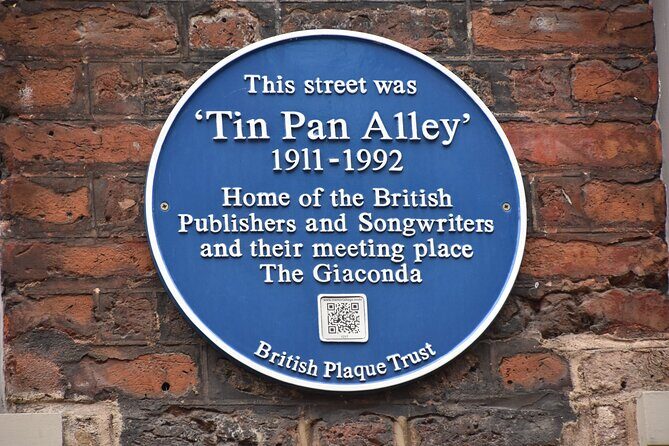
- Wardour Street to Soho Square: The Marquee, The Ship, Trident Studios, and Publishing Power
- Ronnie Scott’s, ODEON Covent Garden, and Foyles: Jazz Spotlight and Punk’s First Gig
- Denmark Street Finale: Publishing Deals, First Albums, and John Lydon’s Wall Markings
- Who This Tour Is Best For (and Who Should Pair It With Something Else)
- Should You Book This Private Rock ’n’ Roll Tour?
- FAQ
- How long is the tour?
- How much does the tour cost and how many people can be in a group?
- Where does the tour start and finish?
- What languages is the tour offered in?
- Do I need paper tickets?
- Are admissions included at each stop?
- Is this tour a private experience?
- FAQ
- Is there free cancellation, and how late can I cancel?
- What if I cancel less than 24 hours before the start?
- Is the tour near public transportation?
- Is the tour physically demanding?
- Are service animals allowed?
- When will I get confirmation after booking?
- How far in advance do people usually book?
Key Highlights You’ll Care About
- Private group up to 15: get a tailored pace and room for questions
- 3 hours, many landmark stops: quick-hit sites tied to Beatles, Bowie, Stones, punk, and jazz
- Photo-history stop at Heddon Street: learn about the Ziggy Stardust cover shoot and recreate the vibe
- Mix of venues and influence: theatres, BBC radio, studios, record shops, pubs, and publishing offices
- Guide energy matters: one group’s guide, Michael, was described as seriously entertaining with story-level detail
Price and Value for a Private Group (Up to 15 People)
At $205.67 per group (up to 15), this is priced for groups who want a shared experience rather than paying per person. For a family, a small friends crew, or a small music club, that can feel like good value because you’re buying time with a guide plus a curated route through Central London’s most famous music mile markers.
The other value angle is that you’re not paying extra for each stop’s “thing.” The tour includes guiding throughout, and most listed stops are free to view at street level. A couple of stops note admission is not included, which is common in walking tours, but it means you still get the main storytelling without a long ticket-buying process.
If you’re traveling solo, the private cost can look steep at first. But if you can team up with even a few people, the per-person math gets friendlier fast. Also, the tour is offered in English and uses a mobile ticket, so you don’t need extra paperwork to make it work.
You can also read our reviews of more private tours in London
Route Reality Check: 3 Hours, Lots of Stops, Central London Pace
This is a 3-hour walking tour through Central London, starting outside London Palladium on Argyll Street and finishing on Denmark Street. The walking pace is best matched to people with moderate physical fitness. It’s still central London, so expect typical city conditions: sidewalks, crossings, and the occasional jostle.
Each stop is short—many are around 5 to 15 minutes—so the format is built for momentum. That can be a plus if you love moving, spotting details, and hearing fast-moving stories. If you prefer slow museum-style time, you may want to pair this with one or two longer add-on activities later.
Good news: it’s private, so only your group participates. That usually makes it easier to keep the pace consistent and not lose people when the group stops for a photo. And because the tour is near public transportation, you can usually design your day around it without building in a ton of extra transit time.
London Palladium and Broadcasting House: Where Pop Entered the Mainstream
The tour kicks off outside London Palladium, a theatre tied to big-name performances and to the TV world that helped mainstream popular music. You’ll hear about the famous Sunday Night at the London Palladium connection and how the stage became part of the wider pop culture machine. The story leans into the moment when Beatlemania hit Britain—and the little bits of attitude that made the Rolling Stones feel like they didn’t play by everyone else’s rules.
Next up is Broadcasting House, the BBC headquarters and home base for major radio stations. This stop matters because rock and pop didn’t just happen on stages; it also fought for airtime. You’ll visit a wing named after John Peel, and you’ll learn that the BBC’s relationship with rock and pop music wasn’t always smooth. If you like understanding why certain sounds spread—and others struggled—this is the stop that gives you that behind-the-scenes angle.
Drawback to know: both places are landmark exteriors. So you’re here for the storytelling and street-level context, not for a long guided inside tour.
Carnaby Street, Kingly Street, and Heddon Street: Fashion, Pubs, and Glam Photo Mythology
From the Palladium and BBC side of pop culture, the tour slides into the London that people picture: street scenes where style and music fed each other.
Carnaby Street is your swinging-London fashion snapshot. You’ll hear why it turned cool and how its wardrobe energy linked to bands known for style as much as sound, including the Small Faces, The Who, and the Rolling Stones. Don Arden’s role as a notable music promoter and manager also comes up, which helps you connect what you see on a street to who managed the momentum behind the scenes.
Then it’s Kingly Street, at the former Bag O’Nails site. This is a strong stop for pure music nerds: the area is tied to the Jimi Hendrix Experience, The Who, The Animals, and Tom Jones. One of the most charming details here is the personal-life angle—at least three musicians met their future wives here, including Paul McCartney meeting Linda in 1967. That human scale makes the London legend feel more real.
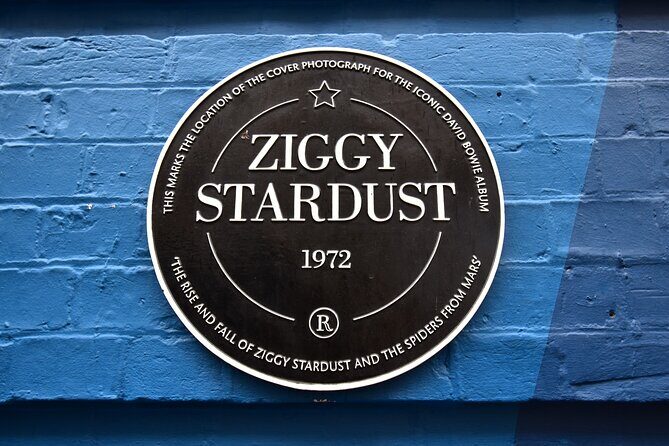
Finally, Heddon Street brings the tour into Bowie territory. This is described as the place tied to the front and back cover of The Rise and Fall of Ziggy Stardust and the Spiders From Mars. You’ll get a chance to recreate the iconic photo look, along with the context of that cold and wet January night in January 1972. If you like “where the picture was taken” moments, this stop is the kind that makes your photos look like part of the story.
3 Savile Row, Cordings, and Hotel Café Royal: The Beatles’ Office Life to Ziggy’s Exit Party
Now the tour shifts from clubs and fashion streets to the offices, investments, and theatrical events behind the scenes.
At 3 Savile Row, you’re at the former office connected to the Beatles and to their legendary rooftop concert. The tour frames this as part of the Beatles’ final performance period and also as the headquarters of Apple, with an emphasis on how the building attracted Beatles fans worldwide. It’s a great stop for anyone who thinks pop history is only about performance—you’ll see how it was also about where decisions got made.
Next: Cordings Ltd, a famous clothing store tied to Eric Clapton. The tour story is simple and effective: Clapton window-shopped as a teenager, then later became a regular customer, invested in the business, and eventually served as design director. If you like the “music changes everything” theme, this is a clean example of a musician shaping commerce directly.
Then comes Hotel Café Royal, which began as a cafe in 1865. This stop is pure Bowie narrative: it’s where Bowie retired the Ziggy Stardust character in a star-studded bash in 1973. The tour also connects that event to the hotel’s later Ziggy Stardust cocktail bar concept, giving you a direct line from landmark pop moment to modern-day branding.
One practical note: these stops are atmospheric, but they can still feel quick. If you’re hoping for a long, inside look, plan for that expectation going in—you’re paying for the route and guide, not a full museum pass.

Wardour Street to Soho Square: The Marquee, The Ship, Trident Studios, and Publishing Power
This part of the tour is where Central London feels like a living timeline of music scenes. You’ll hit venues tied to the rough-and-real edges of fame: clubs, studios, and the small streets where big records got made.
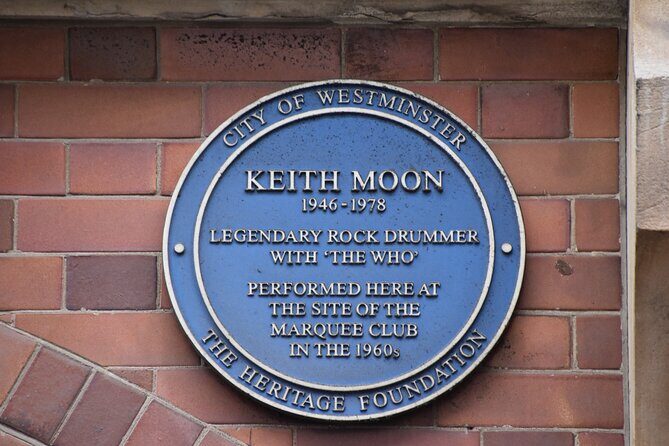
Wardour Street is about the Marquee Club and its long run—open for 26 years. You’ll learn why it mattered for launching early careers of acts like The Who and David Bowie. The story even points out a dusty plaque to Keith Moon over the door, which is the kind of detail that makes you want to look closer at the street itself.
Then it’s The Ship in Soho. The tour explains that when the Marquee lost its alcohol licence, people shifted their drinking to The Ship, and musicians followed. Outside the pub, you’ll hear about the drunken antics of rock legends who drank there and why the pub became part of the scene’s myth.
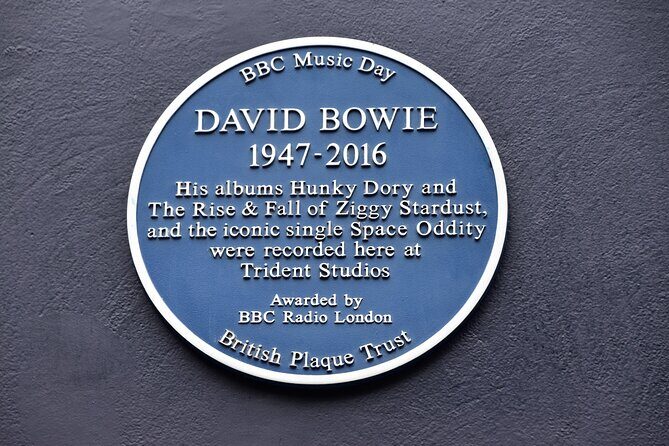
After that, there’s a Trident Studios plaque tucked away in a tiny alley near The Ship. This is the “invisible architecture” stop: between 1968 and 1981, Trident was a major studio space with records by David Bowie, The Beatles, Queen, Elton John, Rolling Stones, and Black Sabbath. You’re not touring a studio floor, but you are learning how those records connect to actual corners of London.
Next comes Soho Square, connected to MPL – McCartney Publishing Limited and Paul McCartney’s music publishing empire. The tour ties publishing to his wealth, including the idea that it played a role in making him the richest of the Beatles. That’s a useful shift: it reminds you that music history isn’t only cultural—it’s legal, financial, and business-driven too.
Ronnie Scott’s, ODEON Covent Garden, and Foyles: Jazz Spotlight and Punk’s First Gig
The tour doesn’t stop at rock and pop nostalgia. It stretches into jazz and punk territory, which helps make the whole route feel more complete.
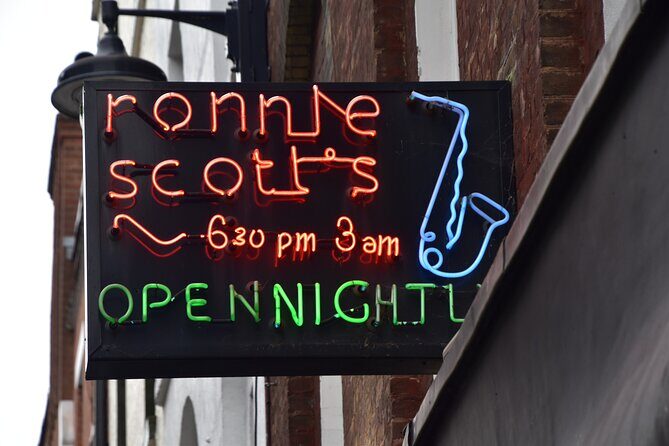
At Ronnie Scott’s Jazz Club, the story covers the move to Frith Street in 1965. You’ll learn about famous names who played there, including a surprise performance by Lady Gaga, plus the final performance of Jimi Hendrix. Admission isn’t included here, so you’re mostly taking in the landmark context and the story rather than planning a ticketed sit-down.
Then you head to ODEON Covent Garden, where in 1966 Brian Epstein decided to buy a theatre. This stop is about what he planned, what happened there, and how it connected to the wave of legendary artists. Admission isn’t included, so treat it like a “talk + context” stop.
Finally, you reach Foyles Bookshop, which is famous in its own right now, but the tour focuses on its earlier university-building past. Here, the tour connects the stop to the Sex Pistols’ first gig, Malcolm McLaren’s early management idea of only booking them for student gigs, and the practical detail of Steve Jones getting their guitars from there. This is a strong end-to-end reminder that punk history often started with constraints and clever workarounds—not just attitude.
Denmark Street Finale: Publishing Deals, First Albums, and John Lydon’s Wall Markings
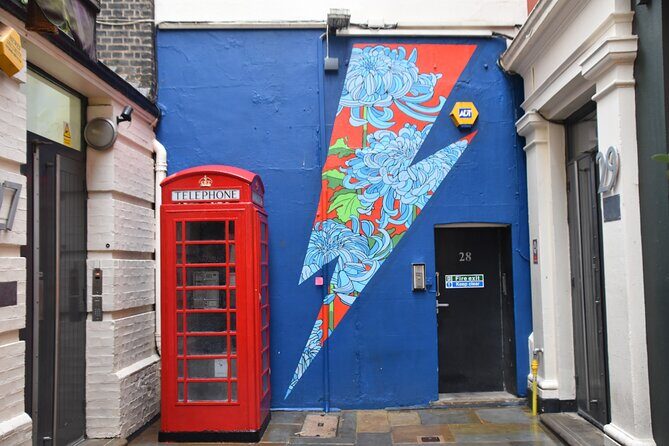
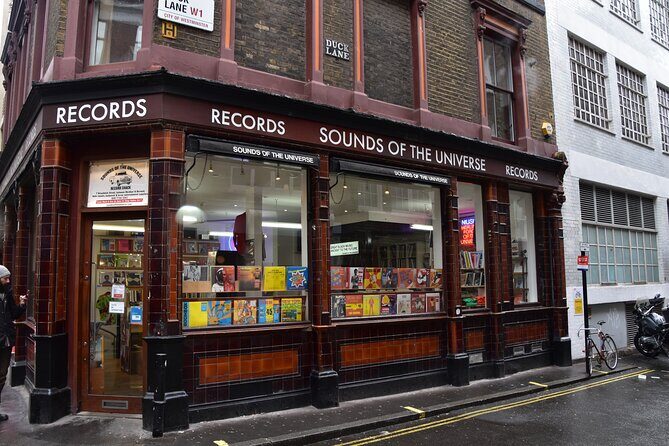
The tour ends on Denmark Street, which the route frames as a key site for British 20th-century music. It’s a fitting finale because Denmark Street is where “industry” becomes physical. It’s now known for guitar shops and music-related venues, and the tour ties that present-day feel back to key early moments.
You’ll hear about the Beatles’ first music publishing deal happening here, the Rolling Stones recording their first album, and the Sex Pistols crashing, rehearsing, and leaving behind rude drawings by John Lydon on walls that are apparently still visible. The tour also connects the street to early steps for Elton John and David Bowie.
The practical upside: if you finish here, you often have an easy next move. Even if you just want a drink, a snack, or to browse a guitar shop, you’re in the right kind of neighborhood for music-geek wandering.
Who This Tour Is Best For (and Who Should Pair It With Something Else)
This is ideal for you if:
- You love music history but prefer it in street-level form, not as a long museum day.
- You want a private guide so you can ask follow-ups as the stories connect from venue to venue.
- You’re interested in not just fame, but the mechanics—radio (BBC), studios (Trident), publishing (MPL), and the business sides of pop.
It may be less ideal if:
- You need lots of indoor access and long ticketed stops. A lot of the value here is what you can see and learn outside.
- You get restless with short segments. There are many landmarks, each with a tight time window.
If you’re coming with kids, teens, or mixed tastes, it can still work well because you’re hitting broad cultural touchpoints: theatres, pubs, fashion streets, studios, and bookshops. You’ll just want to keep expectations focused on stories and short photo moments.
Should You Book This Private Rock ’n’ Roll Tour?
I’d book it if you want a high-effort guide-led route through Central London that turns famous music names into real places you can point to. The private pricing makes the experience feel particularly worth it for groups, and the route covers more than one lane of music culture—stage fame, radio, recording studios, and publishing.
Book sooner if you can. The tour’s average booking window is about 51 days in advance, which suggests it gets scheduled by people who plan London days carefully. Also, the tour uses a mobile ticket and keeps things simple with free-guidance coverage throughout.
If your main goal is a quiet walk with lots of sitting, or if you specifically want long, ticketed entry to multiple venues, you might want a different format. But if you want a tight, story-rich walk where the city feels like part of the soundtrack, this is a strong pick.
FAQ
How long is the tour?
The tour is about 3 hours (approx.).
How much does the tour cost and how many people can be in a group?
It costs $205.67 per group, and the group size is up to 15 people.
Where does the tour start and finish?
It starts outside London Palladium at 8 Argyll St, London W1F 7TF, and finishes on Denmark Street at Denmark St, London WC2H.
What languages is the tour offered in?
The tour is offered in English.
Do I need paper tickets?
No. You get a mobile ticket.
Are admissions included at each stop?
Many stops are listed as free, while some—such as Ronnie Scott’s Jazz Club, ODEON Covent Garden, and Denmark Street—note that admission is not included.
Is this tour a private experience?
Yes. It’s a private tour/activity, and only your group participates.
FAQ
Is there free cancellation, and how late can I cancel?
Yes, cancellation is free. You can cancel up to 24 hours in advance for a full refund.
What if I cancel less than 24 hours before the start?
If you cancel less than 24 hours before the experience starts, the amount you paid will not be refunded.
Is the tour near public transportation?
Yes, the tour is noted as being near public transportation.
Is the tour physically demanding?
You should have a moderate physical fitness level for the walking pace.
Are service animals allowed?
Yes, service animals are allowed.
When will I get confirmation after booking?
You should receive confirmation at the time of booking.
How far in advance do people usually book?
On average, it’s booked about 51 days in advance.