REVIEW · LONDON
Private Shoreditch Street Photography Workshop
Book on Viator →Operated by London Photo Tours and Workshops · Bookable on Viator
Street photos don’t get better than East London. This private Shoreditch and Brick Lane workshop turns real streets and real people into a short, focused training session led by fine art photographer Lou Smith. You walk, shoot, and then get practical feedback so you come away with images you can actually build on.
I like that it’s hands-on: you’re not just watching, you’re actively photographing with short assignments built for candid results. I also like the last step, the review of your photos, because feedback is where most street-photography outings fall flat. One thing to consider: even though it’s private, the experience may still feel like a guided photo class if you don’t share what you want to improve (your style, your camera setup, or your comfort level) early.
In This Review
- Key things I’d pin to the top before you book
- Meeting at Liverpool Street Station and setting up for a productive 4 hours
- Shoreditch street art and cobbled backstreets: learning to see quickly
- Brick Lane photo walk: how short assignments create story photos
- Color mood and black-and-white practice: choosing the right look
- Composition and focusing tips for street subjects that won’t pose
- Photo review and skill growth: why the feedback step matters
- Price and value: what $337.03 buys you (and what you should watch for)
- Who this Shoreditch and Brick Lane workshop is best for
- What to bring and how to get better results fast
- Final verdict: should you book this workshop?
- FAQ
- Where does the private Shoreditch Street Photography Workshop start?
- How long is the workshop?
- Who leads the workshop?
- Is the tour really private?
- What should I bring with me?
- Is this suitable for beginners?
- Is lunch included?
- Are service animals allowed?
- What’s the cancellation policy?
Key things I’d pin to the top before you book
- Private guide coaching with Lou Smith for street-focused instruction and encouragement
- Short shooting assignments designed to keep you capturing what’s happening, not overthinking
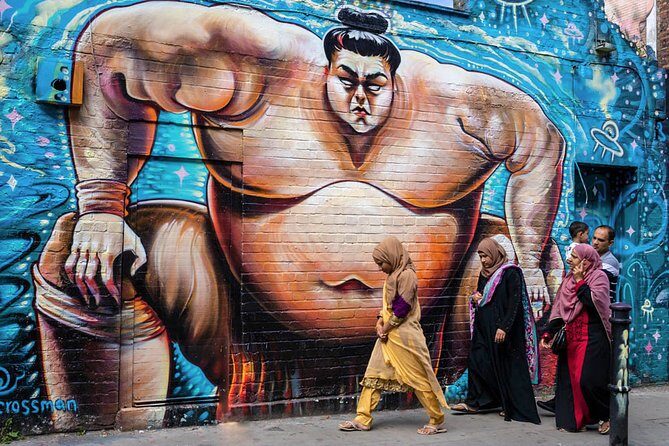
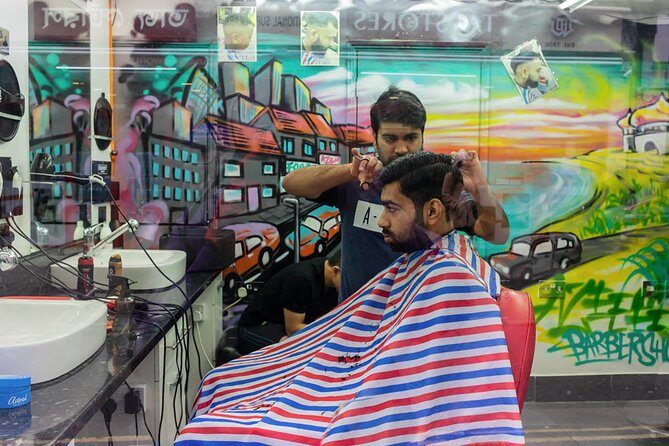
- East End variety: street art, small shops, and small cobbled backstreets
- Black-and-white and color exercises so you learn to choose mood, not just subjects
- Camera and focusing techniques for moving street scenes (the stuff that usually breaks first)
- Photo review with skill-building guidance so the workshop keeps paying off after you go home
Meeting at Liverpool Street Station and setting up for a productive 4 hours
You start at Liverpool Street Station (EC2M 7QA), and the tour ends back there. That matters because you can treat the session like a clean “camera sprint” rather than an all-day wandering plan. It also means you’ll likely spend most of your time shooting, not negotiating transit or chasing a complicated meetup.
Since you’re working in fast-moving streets, show up ready. Bring your own camera and make sure the battery is fully charged. The workshop is set up for all types of digital cameras, including smart phones, so you don’t need specialized gear to start. If you have a particular camera you love (or a phone you use most), use it. You’ll learn techniques that transfer, no matter what body you carry.
You can also read our reviews of more private tours in London
Shoreditch street art and cobbled backstreets: learning to see quickly
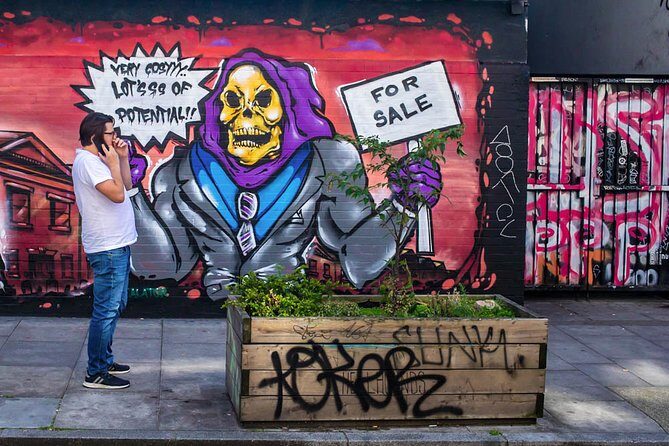
The core of the walk happens through Shoreditch and Brick Lane, where the East End look is part of the lesson. You’ll be surrounded by street art, small cozy shops, and those tighter side streets with cobbles that make foot traffic and textures feel more real. This is the kind of environment where composition happens fast, and where learning to respond beats waiting for a perfect moment.
Here’s what the workshop is really training you to do: build a habit of noticing. Your guide sets up short assignments so you can practice seeing, framing, and capturing while the scene is unfolding. That’s a big advantage over casual street walks, where you end up taking the same safe shots over and over because you don’t know what to focus on.
And yes, you’ll have plenty of corners to work with. The point is not to “find one landmark.” It’s to learn how to treat ordinary street moments as photo opportunities.
Practical tip before you get moving: pick one or two goals for the first stretch. For example, decide you’ll focus on faces, or focus on signage and storefront details. That way, when an assignment starts, you instantly know what to prioritize.
Brick Lane photo walk: how short assignments create story photos
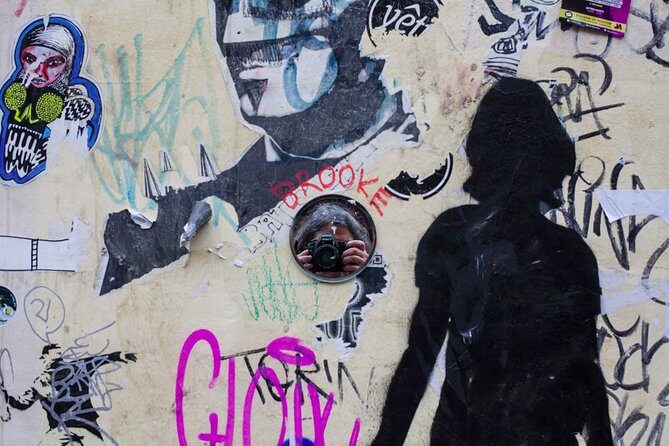
Brick Lane is where the workshop’s pace really makes sense. Instead of one long, vague stroll, you’ll get guided prompts that keep you photographing with intention. Those short assignments are meant to pull you out of the usual street-photo trap: the urge to wait, look, wait again, and then leave with nothing but “nice scenery” shots.
You also learn how to add narrative to your images. That can mean different things depending on your style, but the workshop is clearly aiming for photos that feel like they’re connected to what happened a few seconds before and after the frame. Street photography lives in that micro-story.
One more useful angle: framing and composition for quick moving subjects. People pass, bikes roll by, shop doors open and close, and street scenes change. The guide helps you build confidence so your framing doesn’t fall apart the second something moves.
If you’re hoping for a totally customized route or a deep, personal style critique, keep your expectations aligned with the structure: you’ll get private coaching, but the workshop is still designed as a planned teaching experience through these specific neighborhoods. If you want extra personalization, bring it up right away—tell Lou what you shoot, what you struggle with, and what kind of photos you want more of.
Color mood and black-and-white practice: choosing the right look
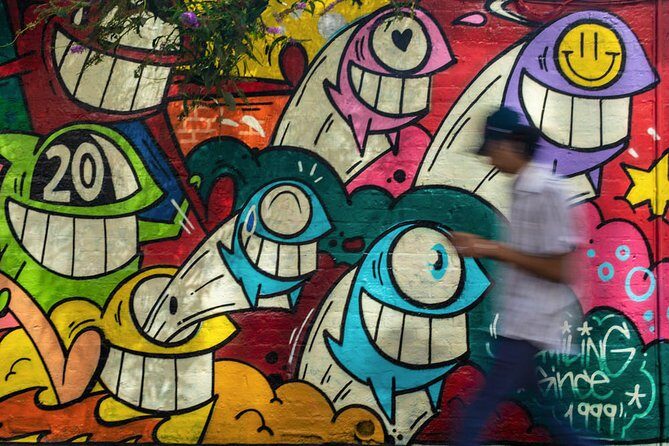
A lot of street workshops focus on “take photos.” This one adds a deliberate style layer. You’re encouraged to explore black and white captures and also learn how to use colour to create mood and atmosphere.
That’s more practical than it sounds. Color isn’t just decoration on the street—it changes the emotion and pacing of your photo. Bright tones can feel loud and energetic. Muted tones can feel quiet and reflective. Black and white simplifies the scene so shapes, contrast, and gesture become the main story.
So you’re not only collecting images; you’re learning how to think like a photographer. When your goal is narrative, the choice of black-and-white vs color becomes another tool for storytelling, not just a post-processing habit.
If you edit later (or even if you don’t), try to shoot with the look in mind. Decide early whether you’re collecting evidence for a color set, a black-and-white set, or both. That makes the photo review afterward more meaningful.
Composition and focusing tips for street subjects that won’t pose
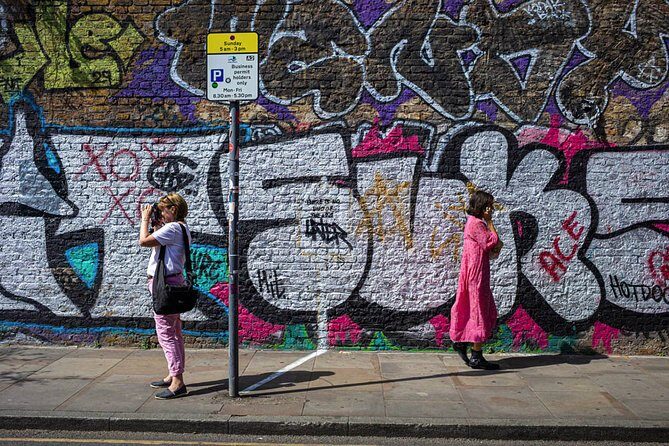
Street photography is its own physics problem: subjects move, light changes, and your time with any moment is short. That’s why the workshop includes guidance on focusing techniques specifically for street photography and how to set your camera for street photography.
The goal is confidence. You learn how to frame and compose quick moving subjects, rather than hoping you’ll nail it by luck. Even if you’re using a smart phone, focusing and timing still matter, because the hardest part is rarely the camera—it’s reacting fast enough to capture what matters.
A few ways this training pays off:
- You’ll get better at selecting what to include in the frame (people, signage, street art, shop details).
- You’ll learn to integrate the environment, so your photos aren’t just portraits or just architecture shots.
- You’ll practice the balance of people and city scenes, which is often where street work feels most alive.
You can also expect emphasis on how to capture the true feel of Shoreditch and Brick Lane. That “feel” is partly technical and partly observational: keeping your frames grounded in the street textures and cues that tell viewers where they are.
You can also read our reviews of more photography tours in London


Photo review and skill growth: why the feedback step matters
A key included element is a review of photographs and how to develop skills. This is where the workshop typically becomes more than a nice walk. When you review your own shots with instruction in mind, you start noticing patterns: what you did right, what you repeated, and what to adjust next time.
The workshop is led by Lou Smith, and she’s described as having extensive teaching experience as a professional fine art photographer. You’ll also have instruction from a professional photographer who knows a multitude of cameras. That pairing matters if your group has mixed gear, since the lessons can be translated across devices and settings.
In practice, a photo review should help you answer questions like:
- Which compositions actually worked under real street timing?
- Did your focusing choices match the moving scene?
- Were you emphasizing environment or story—or accidentally doing neither?
Even if you leave with a handful of great photos, the real value is what you learn to repeat. Street photography improves when you turn lessons into a workflow.
Price and value: what $337.03 buys you (and what you should watch for)
At $337.03 per person for about 4 hours, this isn’t a cheap casual photo walk. So ask yourself what you want most: scenery time, or instruction time.
You’re paying for:
- a private tour experience for your personal group
- hands-on street photography tuition from Lou Smith
- short shooting assignments that structure practice
- camera and focusing guidance suited to moving subjects
- a photo review that helps you develop skills
If you want to learn street photography mechanics—composition, focusing, camera setup, and how to add narrative—this price can make sense because the session is tightly designed. If you’re hoping for a purely exploratory wandering day with no teaching emphasis, you may feel less satisfied. One review feedback point also hinted that the experience can feel like a group class if it doesn’t click with your expectations of customization. That’s not a reason to avoid it; it’s a reason to go in prepared.
To get better value, come with a simple plan:
- Tell your guide your experience level and camera (or phone).
- Share what you want more of: people moments, street art details, or street-life storytelling.
- Ask one direct question early about what’s holding you back.
Those small moves can turn a good workshop into a great one.
Who this Shoreditch and Brick Lane workshop is best for
This works well if you’re an art lover or if you want a unique London experience that’s more than sightseeing. It also suits all skill levels, because the workshop is built for learning and practice rather than testing.
You’ll likely enjoy it most if you:
- want practical coaching on street photography rather than tips from a distance
- like East End streets with street art, shopfronts, and real character
- want to shoot with purpose using short assignments
- appreciate both technical guidance (focusing, camera setup) and creative direction (color mood, black and white)
It may feel less satisfying if your main goal is to collect a bunch of landmark-style photos with minimal instruction, or if you expect your entire route and lesson plan to be redesigned around your personal preferences with no structure.
What to bring and how to get better results fast
This workshop is refreshingly straightforward on preparation. Bring your own camera and a fully charged battery. The experience is designed for all types of digital cameras, including smart phones, so you can keep it simple.
A couple of practical additions (not required, but helpful):
- Bring a charged second battery if you have one. Street sessions move quickly.
- If you’re using your phone, make sure you know how to switch to the camera mode you prefer.
- Wear shoes you can walk in for the full 4 hours and handle changing pavement (cobbled backstreets can be slow if you’re in the wrong footwear).
Most of all, be ready to shoot repeatedly. The workshop’s style is practice-first, so bring a willingness to try, not just observe.
Final verdict: should you book this workshop?
I’d book this if you want street photography coaching in Shoreditch and Brick Lane, and you’ll take advantage of the short assignments and the photo review. The combination of Lou Smith’s fine art teaching approach, technique practice, and feedback is where the value lives.
Skip it (or adjust expectations) if you want a fully unstructured wandering day with no teaching rhythm, or if you need highly customized content and won’t be proactive about sharing your goals upfront. If you communicate your skill level and what you want to improve early, you’ll set yourself up for a better match.
If you’re serious about learning how to make street photos with narrative and mood, this is a focused way to spend a half-day in East London.
FAQ
Where does the private Shoreditch Street Photography Workshop start?
It starts at Liverpool Street Station in London (EC2M 7QA), and the tour ends back at the same meeting point.
How long is the workshop?
The duration is about 4 hours.
Who leads the workshop?
The workshop is led by fine art photographer Lou Smith, and you also have professional photography instruction during the session.
Is the tour really private?
Yes. It’s a private tour/activity, and only your group participates.
What should I bring with me?
Bring your own camera and make sure your battery is fully charged. The workshop also supports smart phones.
Is this suitable for beginners?
Yes. It’s suitable for all skill levels.
Is lunch included?
No. Lunch and light refreshments are not included.
Are service animals allowed?
Yes, service animals are allowed.
What’s the cancellation policy?
You can cancel for a full refund up to 24 hours in advance of the experience’s start time. Cancellation is free.