REVIEW · LONDON
Private Sightseeing Walking Tour of The City Of London
Book on Viator →Operated by Tours Of The UK · Bookable on Viator
London’s City on foot tells a secret story. This private 3-hour tour links Roman traces, Great Fire sites, and Wren-era icons with a local guide, and you’ll see 16+ standout landmarks without feeling rushed.
I love the way the route makes the City feel logical end-to-end. You start around The Monument and work your way toward St Paul’s Cathedral, with memorable photo stops like St Dunstan in the East and Leadenhall Market along the way. I also like how the guide turns famous buildings into real stories, including the Merchant Navy memorial at Trinity Square and the Tower of London’s many lives as a palace, prison, and secure fortress.
One watch-out: this is designed as an overview, so you don’t go inside the Tower of London, and St Paul’s entry isn’t included. If you want lots of time indoors at both, plan to add extra visits after.
In This Review
- Key things you’ll notice on this City of London walk
- The City of London on foot: Roman traces and Wren echoes
- Turning $171.09 per group into value
- Meeting at The Monument and pacing a 3-hour loop
- Trinity Square: UN inaugural reception and the Merchant Navy’s legacy
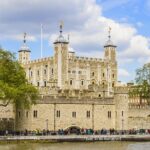
- Tower of London from the outside: palace, prison, and hard security
- St Dunstan in the East: photo ruins at the heart of the City
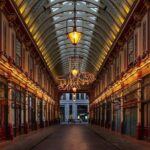
- Leadenhall Market: Roman roots and film-friendly atmosphere
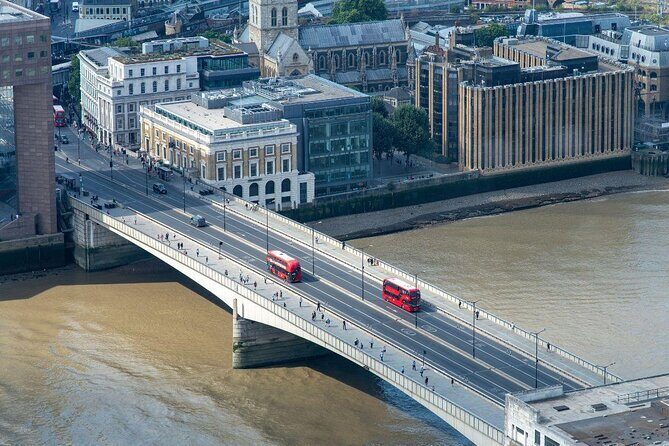
- London Bridge: a bridge with Roman origins and real river views
- The Monument to the Great Fire: the rebuilding story in stone
- St Magnus the Martyr: Wren rebuild, Dickens links, and a London Bridge replica
- The London Stone: the ancient object people almost ignore
- Oxford Court and Mansion House: medieval drama meets City power
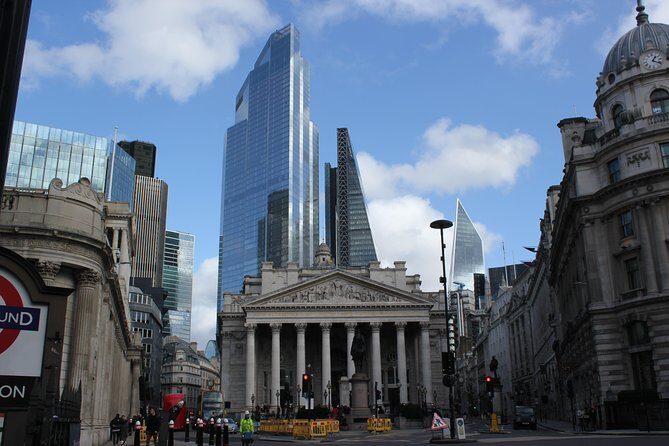
- Royal Exchange and the Bank of England: how money shaped the streets
- Ye Olde Watling to One New Change: quick bites, then skyline views
- College of Arms: a genealogy stop with film connections
- St Paul’s Cathedral finish: what you get and what you buy later
- Who should book this private City of London tour
- Should you book this private City of London walking tour?
- FAQ
- How long is the Private Sightseeing Walking Tour of the City of London?
- How many landmarks will we see?
- Is this tour private, and how many people can be in a group?
- Does the tour include entry to the Tower of London?
- Is St Paul’s Cathedral admission included?
- Where does the tour start and where does it finish?
Key things you’ll notice on this City of London walk
- A private guide for your group of up to 15, so you can ask questions and get the pace right
- Roman Londinium to Wren to wartime London, all in one pass through the City
- Trinity Square and the Port of London Authority, including the UN inaugural reception viewpoint
- Leadenhall Market and St Dunstan in the East, two very different stops that are perfect for photos
- The Great Fire trail, with The Monument and a few churches tied to the rebuild
- Sky views from One New Change before you finish outside St Paul’s
The City of London on foot: Roman traces and Wren echoes
The City of London has a way of feeling like a separate world from the rest of London. Here, you get the vibe of old streets, money-making power, and layers of history stacked right under your feet.
This tour is built for people who want the big landmarks and the meaning behind them. You’ll hear how London rebuilt after disaster, how power worked in past centuries, and how the financial district became what it is today—without needing to study a guidebook for hours.
You can also read our reviews of more walking tours in London


Turning $171.09 per group into value
The price is $171.09 per group up to 15 people. That’s the key thing to think about: this isn’t priced like a per-person ticket where it always hurts your budget.
If you’re traveling with family or friends and you can fill part of the group capacity, the cost per person can drop fast compared with many standard walking tours. If you’re solo or a couple, it may feel more like a premium experience—and in that case, it’s worth it mainly for the private attention and the chance to hit lots of key sites in a short time.
Meeting at The Monument and pacing a 3-hour loop
You’ll start at The Monument, 18 Fish St Hill, London EC3R 6DB and finish outside St Paul’s Cathedral at St Paul’s Churchyard. The total time is about 3 hours, so the day is structured like a guided highlight reel.
Most stops are quick—often around 10 to 20 minutes—so this works best if you like brisk walking and on-foot orientation. Also, you’ll want moderate physical fitness for the pacing through central London streets, and you’ll find the start near public transportation.
Trinity Square: UN inaugural reception and the Merchant Navy’s legacy
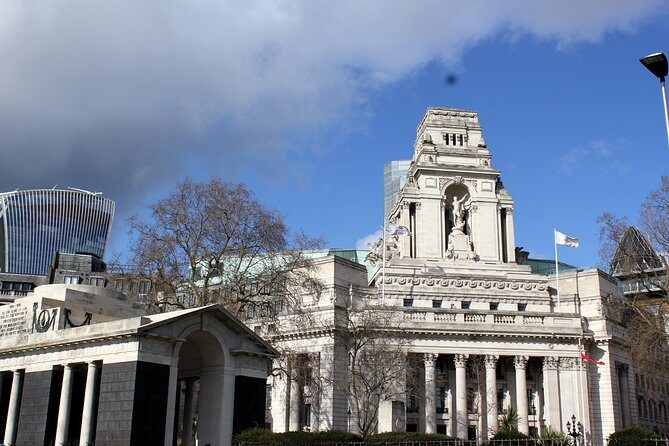
Your first viewpoint is Trinity Square, where you can see 10 Trinity Square. It was the former home of the Port of London Authority—built when London was one of the busiest ports on Earth—and it’s also connected to a notable UN moment: the UN held its inaugural reception here.
While you’re in the area, you’ll also stop at the memorial dedicated to the Merchant Navy. This is a powerful chance to talk about how Britain survived wars through shipping and supplies—then connect that to how trade still matters today.
If you enjoy history that explains systems (not just dates), this stop sets the tone well. It’s not only about monuments; it’s about how goods, people, and power moved through the Thames.
Tower of London from the outside: palace, prison, and hard security
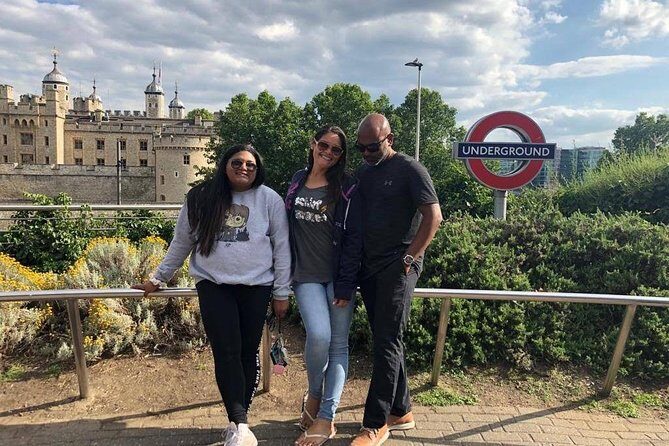
Even though you’re not going inside, you still get a guided Tower of London story. Your guide explains why the Tower became a royal palace, then a place of execution and jail, and later a high-security location tied to precious valuables.
You’ll also hear outside-the-walls connections that make the Tower feel strangely varied: links to London Zoo, the infamous Kray Twins (among the last people imprisoned there), and how Deputy Fuhrer Rudolf Hess ended up imprisoned there during WWII.
This is ideal if you’re visiting the City for the first time and want a proper mental map before you decide whether to book separate Tower tickets later.
You can also read our reviews of more city tours in London




St Dunstan in the East: photo ruins at the heart of the City
Next up is St Dunstan in the East, a quiet pocket of ruins in the middle of the City. It began as a 12th-century church, then got a tower added in the late 17th/early 18th century by Sir Christopher Wren.
The best part here is how the place lets you see London’s survival story in pieces. You’ll get to take photos among the ruins and hear how fires, floods, and bombings shaped what London became.
This stop is also free to enter, which makes it a high return for your time. If you want something more atmospheric than shopping streets and office towers, this is it.
Leadenhall Market: Roman roots and film-friendly atmosphere
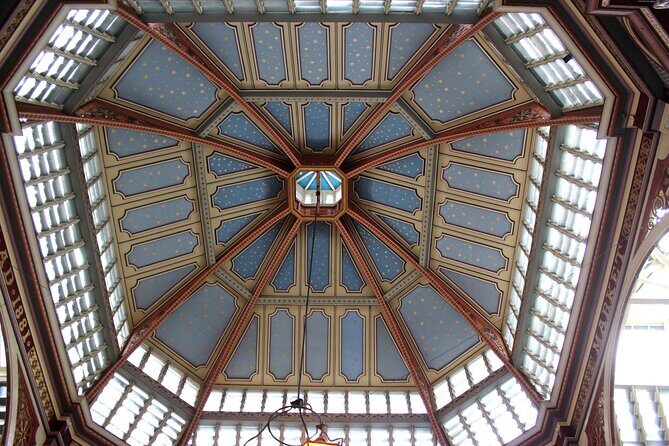
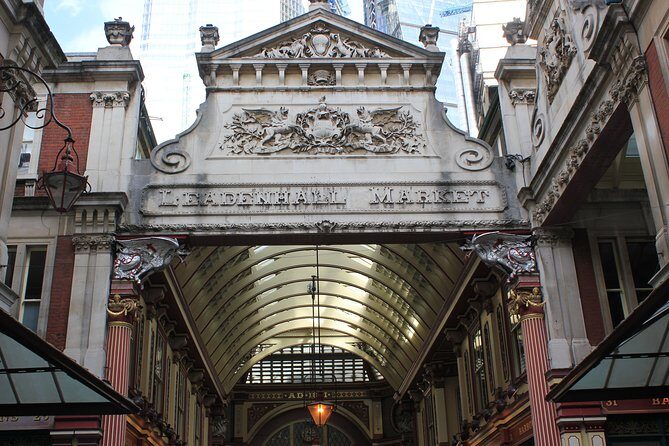
Leadenhall Market sits where the old Roman forum stood in Londinium. Today, it’s a striking neo-Gothic market hall with a rich color palette—crimsons, greens, golds, and silvers.
You’ll learn the meaning behind its name, too, including the lead roof that used to stand on the site. And if you’re a Harry Potter fan, the building is a known filming location for The Philosopher’s Stone, and your guide will point out how it was used.
It’s a short stop, but it’s one of those places where your brain goes quiet for a second because it feels so old and so specific at the same time.
London Bridge: a bridge with Roman origins and real river views
At London Bridge, you’ll learn how it was the only bridge across the Thames for centuries. The origins go back even earlier, with the idea that a pontoon bridge helped the Romans invade.
You’ll also hear a fun theory tied to driving on the left: the bridge is believed to be one reason that the UK drives on the left. Whether you treat that as fact or folklore, it gives the stop a sense of cause-and-effect.
Your guide will use the river views to connect landmarks across the water—like the Tower of London and Tower Bridge. You may also see HMS Belfast, a former Royal Navy cruiser that saw action during D-Day landings and the Korean War, plus why it’s included in the UK’s Historic Fleet.
The Monument to the Great Fire: the rebuilding story in stone
The Monument to the Great Fire of London marks the 1666 fire and the long rebuilding that followed during the reign of Charles II. Here, your guide will explain why the fire took hold, what made the spread so severe, and the complicated role planning played during the rebuild.
You’ll also hear about conspiracy theories tied to the fire. And because London history loves a hook, you’ll learn one of the famous nursery rhymes connected to the Great Fire.
This stop is quick, but it helps you understand London as a city that keeps restarting itself—often with design choices that still show up in today’s layout.
St Magnus the Martyr: Wren rebuild, Dickens links, and a London Bridge replica
St Magnus the Martyr was rebuilt after the Great Fire under master mason George Dowdeswell, supervised by Sir Christopher Wren. It’s named in literary works, and it’s one of the churches mentioned in Dickens’ Oliver Twist.
Inside the church, there’s a replica of the old London Bridge. That matters because the guide’s explanation makes the old bridge’s layout feel more real, including why navigating it was so difficult.
If you’re the type who wants your sightseeing to come with “why it mattered,” this church does that without a lecture vibe. It’s also an admission-free stop.
The London Stone: the ancient object people almost ignore
The London Stone is one of those things you pass without knowing it’s important. It’s said to be the oldest surviving treasure of London and originally sat at the heart of Roman Londinium, where proclamations were made.
You’ll also hear the legends that grew around it, including the older idea that it was the stone linked to Excalibur and how safe-keeping of it supposedly mattered to prosperity. It’s been a tourist attraction for centuries, and today it’s kept behind glass.
This is a perfect stop for curiosity. It’s short, free, and it turns a quick glance into a story you’ll remember.
Oxford Court and Mansion House: medieval drama meets City power
At Oxford Court, you’ll learn about the site where St Swithin’s Church once stood. The garden memorial there connects to Edmund Mortimer’s wife (and daughter of Owain Glyndwr), who was held with her children until she died in 1413.
Your guide ties that story to a bigger theme: how London, as the capital of England and the UK, pulled in people from across the nations of the kingdom and beyond.
Then you move to Mansion House, one of the City of London’s finest Georgian palaces. It’s home to the Lord Mayor and the place where the Chancellor of the Exchequer gives an annual Mansion House speech. The interior is off-limits, but the exterior is still a beautiful, dignified sight.
Royal Exchange and the Bank of England: how money shaped the streets
From Mansion House, you’ll get views and explanation of the Royal Exchange, opened by Elizabeth I. It was one of the oldest stock exchanges in the world and is often described as an early shopping-and-commerce hub—still going strong today in its own way.
Then comes the Bank of England. You’ll learn about its gold vaults and how massive its holdings are. Your guide also shares two vault stories: one about the vault being broken into by accident, and another about how the vault is locked using both older and newer technology.
This part of the tour works especially well if you want to understand why the City feels so solid and serious. It’s not only buildings—it’s systems.
Ye Olde Watling to One New Change: quick bites, then skyline views
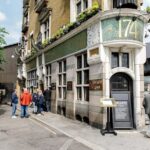
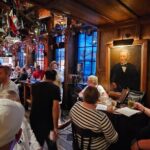
At Ye Olde Watling, you’ll stop at a 17th-century pub built for the workers on nearby St Paul’s Cathedral. There’s also an association with Sir Christopher Wren, including the idea he had a drawing-room there and that he may have helped build the pub.
It’s a short, easy stop and a nice reset before you climb into more iconic sights.
Then you reach One New Change—a shopping mall with a free roof terrace. From up top, you can get impressive views including St Paul’s and other major landmarks such as The Shard, Tate Modern, The Globe, and the River Thames. Your guide also gives you time for a group photo, which is a small thing that still feels worth it when everyone’s together.
College of Arms: a genealogy stop with film connections
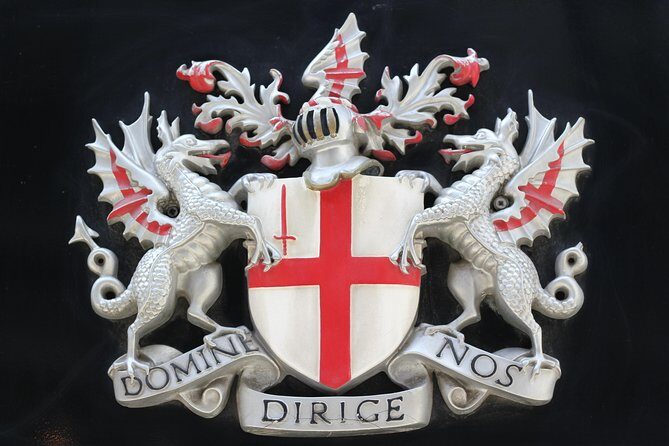
Your next highlight is the College of Arms, the oldest heraldic college in the world. It was founded by Richard III, and it focuses on genealogical research and the creation of coats of arms.
You’ll learn how the college creates coats of arms for new peers. And if you enjoy pop-culture crossovers, the building has a role in the James Bond film On Her Majesty’s Secret Service, plus nearby streets that show up in film and TV locations like James Bond, Doctor Who, Mission Impossible, and Harry Potter.
This stop is short, but it adds color. It also gives you a sense of how identity and institutions worked long before modern passports and databases.
St Paul’s Cathedral finish: what you get and what you buy later
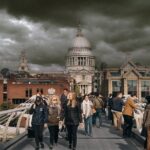
You end at St Paul’s Cathedral, designed by Sir Christopher Wren. The tour time here is about 20 minutes, and the important practical note is simple: St Paul’s admission isn’t included.
So you can treat this finish two ways. If you’re happy with an exterior look and a feel for the scale, you’re set. If you want to see inside, plan to buy your own ticket and either stay longer or add a separate visit so the cathedral doesn’t feel like an afterthought.
Who should book this private City of London tour
This works best if you want an efficient introduction to the City’s big names—St Paul’s, London Bridge, key churches, the Great Fire memorial, and the power centers like the Bank of England—while still hearing stories that connect the dots.
It’s also a great fit for groups of up to 15 who can split the cost. Since it’s private, you’ll get the guide’s attention, and you can ask for small changes to pacing.
The main people to think twice are those who want a deep Tower of London experience. This route is designed as an overview, and you won’t go inside the Tower during the tour.
Should you book this private City of London walking tour?
Yes, if your goal is to get your bearings fast in the City and learn what matters behind the landmarks—especially the Roman-to-Wren-through-disaster storyline. You’ll get a smart mix of viewpoints, free admission stops, and photo-friendly sites, all with the advantage of private, group-focused guiding.
If you already know you want to do the Tower of London and St Paul’s Cathedral in depth, consider booking this anyway as your “prequel.” Then add separate ticketed visits afterward when you can take your time indoors.
One more tip: with a tour like this, comfortable walking shoes and a small water plan make the experience feel effortless. You’re covering a lot of meaningful ground in a short window, and you’ll enjoy it most when you can keep your pace steady.
FAQ
How long is the Private Sightseeing Walking Tour of the City of London?
It lasts about 3 hours.
How many landmarks will we see?
You’ll see at least 16 London landmarks during the guided walk.
Is this tour private, and how many people can be in a group?
Yes, it’s private, and the group size can be up to 15 people.
Does the tour include entry to the Tower of London?
No. The tour is an overview and does not have time to go into the Tower of London, though the guide explains its history from outside.
Is St Paul’s Cathedral admission included?
No. St Paul’s Cathedral admission is not included, though the tour ends outside the cathedral.
Where does the tour start and where does it finish?
It starts at The Monument (18 Fish St Hill, London EC3R 6DB) and finishes outside St Paul’s Cathedral (St Paul’s Churchyard, City of London, London EC4M 8AD).