REVIEW · LONDON
Private Tour, World War 2 London, including entry to Churchill War Rooms
Book on Viator →Operated by Let me show you London · Bookable on Viator
WWII London hits different underground. This private route pairs the Churchill War Rooms with Whitehall memorials, guided by a Blue Badge expert. You get a tight, personal pace with a clear story arc: how wartime decisions were made, and what the city still remembers.
I especially like that the most important ticket—admission to the War Rooms—is built into the price. And I like how the tour doesn’t just name-drop landmarks; it points you to specific places around Parliament Square, Whitehall, Embankment, and the Battle of Britain area so you don’t miss the meaning. One caution: at this price point, you may be picky about presentation style—some guides can be more engaging than others.
In This Review
- Key highlights that make this tour worth your time
- A Private, 3.5-Hour Churchill and Whitehall Route
- Entering the Churchill War Rooms Bunker (and why a guide matters)
- From War Rooms to Parliament Square: memorials with hidden context
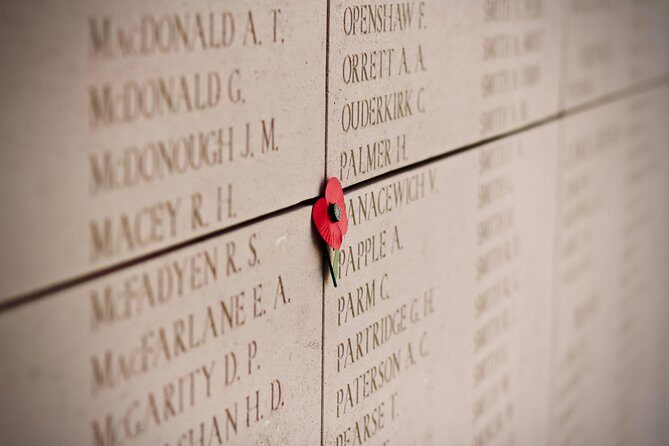
- Whitehall and the Cenotaph: the war remembered in plain sight
- Embankment Station and the Chindits: small plaque, big impact
- Tracking the Battle of Britain Monument: where the story turns
- Price and value: what you’re really paying for
- Getting the most out of it: pace, shoes, and question time
- Should you book this WWII London private tour?
- FAQ
- Is admission to the Churchill War Rooms included?
- How long is the private tour?
- What time does the tour start, and where do we meet?
- Where does the tour end?
- What language is the tour offered in, and do I get a mobile ticket?
- Is this a private tour or a group tour?
- Is there any fitness level requirement, and can children join?
- Are food and drinks included, and can I cancel for a refund?
Key highlights that make this tour worth your time
- Churchill War Rooms entry included so you don’t have to sort tickets mid-itinerary
- Private, one-group experience with a Blue Badge guide, not a big herd moving on rails
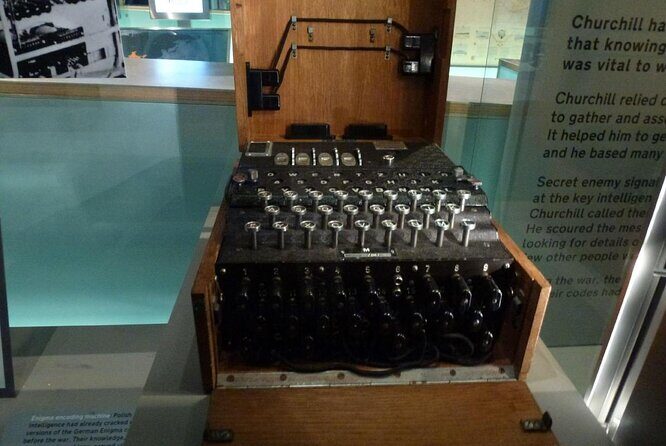
- Cryptography and wartime decision-making covered inside the bunker rooms
- Whitehall memorial walk with the Cenotaph in focus and local context on the empty tomb area
- Memorial stop-by-stop storytelling, including the Chindits and the Battle of Britain monument
A Private, 3.5-Hour Churchill and Whitehall Route
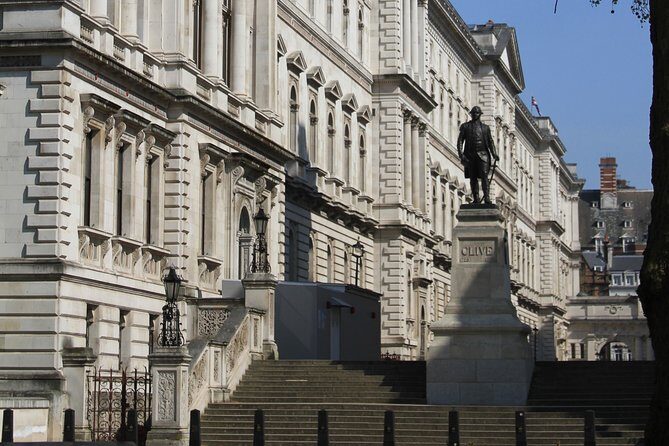
This is a private tour (only your group), running about 3 hours 30 minutes and starting at 2:00 pm at Clive Steps, London SW1A 2AH. You’ll finish at Trafalgar Square (WC2N 5DS), which is handy if you want to keep walking afterward on your own.
The pace suits most people with moderate physical fitness. You will be outside at times and walking between key sites, so dress for all weather conditions. It’s also offered in English, and you’ll have a mobile ticket.
If you’re short on time in London but want the war story in a straight line, this format is efficient. It saves you from piecing together scattered history stops across several neighborhoods, and it puts the big context where you need it: right at the source inside the bunker.
You can also read our reviews of more private tours in London

Entering the Churchill War Rooms Bunker (and why a guide matters)
The tour begins with the Churchill War Rooms, where you go underground into the bunker that housed the British war department headquarters. It’s one thing to see photos online; it’s another to stand in the spaces where daily wartime operations happened.
What makes this stop special is that many rooms have been left unchanged, so your guide can connect what you see with how people worked there. You’ll hear stories about the atmosphere and the way certain roles were viewed as essential and important—details that turn the building from a set of rooms into a real working environment.
A standout theme here is cryptography: your guide explains revolutionary advances in codebreaking and how that shaped the war. Even if you’re not a tech person, the impact lands, because it’s framed as a practical wartime advantage, not a trivia topic.
You’ll also get the Churchill angle. Part of the site functions as a museum dedicated to Winston Churchill, built around both his leadership role and personal side. Expect details that cover his personality beyond politics, including that he was a writer and artist. There’s even a wanted note tied to a £25 reward connected to his escape from prison during the Boer War—exactly the kind of human detail that makes history feel less distant.
In the experiences described by different guides, the best moments tend to come when the War Rooms are explained as a story rather than a checklist. One guide named Galina was praised for bringing Churchill into focus through clear, personable explanations. Marina was also singled out for making the museum feel alive for a family, which tells you the narration style can matter a lot here.
What to watch for: the War Rooms can feel a little packed. If you want time to linger in each room, a private format helps, but you’ll still move through multiple spaces in a limited window.
From War Rooms to Parliament Square: memorials with hidden context
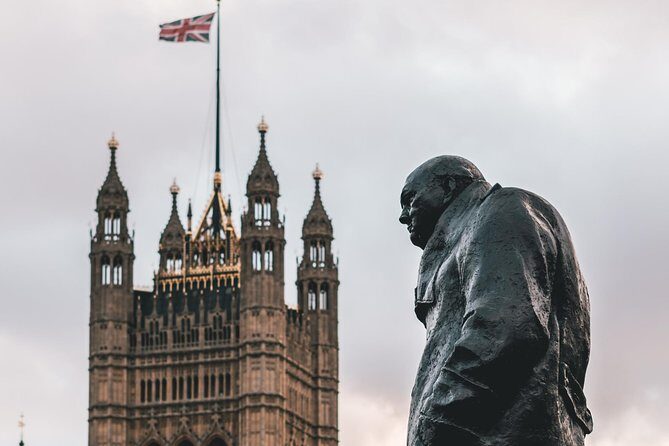
After the bunker, you move toward Parliament Square, where the area around Whitehall is thick with memorials and monuments. The difference on a guided tour is that you’re not just seeing big names; you’re also being shown some of the smaller or less obvious references tucked near ministerial buildings.
This stop is short—around 20 minutes—but that’s part of the value. You’re getting orientation: what each monument is pointing to, and how this part of London ties into the larger war remembrance landscape.
Parliament Square here is also a “tone shift” moment. You’re leaving a controlled underground environment and re-entering daylight, street life, and modern Westminster. Your guide’s job is to bridge that gap so the memorials don’t feel like random stone.
A practical plus: the stops around Parliament and Whitehall are listed as having free admission, so your money stays focused on the guided narrative rather than more ticket costs.
Whitehall and the Cenotaph: the war remembered in plain sight
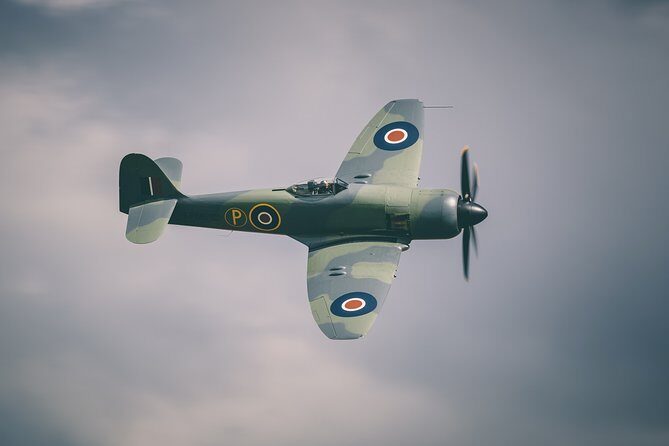
Next comes Whitehall, one of those London areas where history is physically present in the architecture and the memorial placement. Your route includes time around the Cenotaph and the area described as the empty tomb.
The timing note that matters: Whitehall plays host to a grand military parade each year commemorating both World Wars. Your guide helps you connect what you see on the streets to what Britain performs and remembers publicly.
This is another stop where context improves everything. Without explanation, the Cenotaph can feel like a statue surrounded by traffic and tourists. With a guide, it becomes part of an ongoing ritual of remembrance rather than a single day artifact.
This section is about 30 minutes. That’s long enough to absorb the meaning, but not so long that it drags. It’s also free admission, so the experience leans heavily on guidance and pacing.
Potential drawback: if you’re the type who wants maximum free time for photography or slow wandering, you may feel slightly scheduled. This tour is designed to tell a war story tightly, not to let you roam freely across every possible side street.
Embankment Station and the Chindits: small plaque, big impact
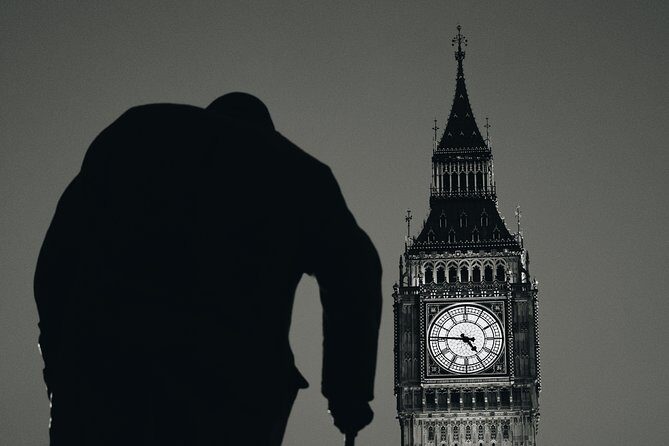
Walking along Embankment, you visit memorials dedicated to specific military groups involved in the conflict. This is where the tour gets more specialized and, honestly, more interesting if you like learning names you don’t already know.
The Chindits are the featured example here. You’ll learn who they were and why they mattered, including their operation deep behind Japanese lines in Burma. The tour emphasizes that their commemorative plaque can look small compared with larger monuments—but your guide explains the real significance of their actions and how they influenced future styles of military operation.
This kind of stop is valuable because it resists the usual “only the famous battles” approach. World War II is huge, and most visitors only skim the surface. A guided memorial walk like this helps you understand that the war was made of many different campaigns, units, and kinds of courage.
Expect around 20 minutes at this stage. You’re moving, reading, and getting guided interpretation rather than spending hours inside a museum. That makes it a good complement to the War Rooms, which is immersive and indoor.





Tracking the Battle of Britain Monument: where the story turns
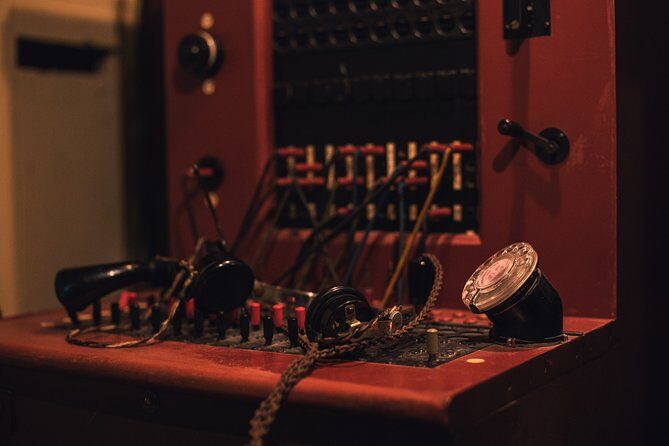
The final featured landmark is the Battle of Britain Monument, reached during a 20-minute stop. The key point isn’t just that the monument exists—it’s that your guide helps you find it and understand what it represents.
You’ll hear about the pivotal effect of the Battle of Britain on the path of the war. This matters because the battle often gets talked about as a standalone event, when it’s really a turning point in how the conflict unfolded. A guide can connect the dots between air defense, resilience, and the bigger strategic picture.
If you’ve only visited one or two WWII sites before, this last stop can be the moment where your brain “clicks” the narrative into place. It gives the earlier underground decision-making and cryptography context a forward direction—what those efforts contributed to later.
At the end of the tour, your guide can also suggest other museums you may want to see in London, or help with suggestions for the rest of your stay. That’s useful when you’re working with limited time and want to avoid wandering into ticket lines for things that won’t match your interests.
Price and value: what you’re really paying for

The cost is $349.35 per person, for about 3 hours 30 minutes with a private guide and included access to the Churchill War Rooms. That’s not cheap, so it’s worth asking what makes it feel fair—or not.
Here’s the value equation as it works on this route:
- You’re paying for private guiding, including a Blue Badge guide and professional tour support.
- The War Rooms admission is included, which removes one variable and ensures you’re not scrambling to add tickets last-minute.
- You’re getting multiple major sites—War Rooms plus key memorial areas across Whitehall, Embankment, and the Battle of Britain monument—so you’re effectively buying time and narrative structure.
Where it may fall short for some people is pure presentation style. A private tour is only as strong as the guide’s storytelling rhythm. One experience mentioned the guide being knowledgeable and accommodating but not hitting the kind of story energy they expected for this price. That doesn’t mean the tour is weak—it means the “wow factor” can depend on who’s leading your group.
Food and drinks are not included, so you’ll want to plan a stop before or after. Also, the itinerary is set up for walking and short stops rather than long museum time at multiple locations, which is great for efficiency but not for slow pacing.
Overall, I’d treat this as a good value if:
- You want WWII context in a guided, chronological way
- You care about seeing the War Rooms with interpretation, not just admission
- You like memorial walks that teach you names and meaning, not just photos
I’d think twice if:
- You’re very budget-minded and could create a self-guided version with only one paid entry
- You’re sensitive to storytelling style and want a certain kind of performance from a guide
Getting the most out of it: pace, shoes, and question time
This tour is designed to move through a few key zones without wasting time. That means you’ll get fewer chances to go back for seconds, so arrive mentally ready to take notes in your head and ask questions.
Because it runs in all weather, wear shoes you trust and bring layers. London can switch moods fast—rain, wind, and cold can change comfort levels quickly, especially outdoors between memorial stops.
Since the War Rooms are a structured museum environment, it helps to show up with at least a basic baseline of who Churchill was in WWII. You don’t need a deep study guide. Just knowing the timeline makes your guide’s cryptography and command-room explanations easier to follow.
One practical tip: this route is ideal for families only if kids can handle museums and walking for a few hours. The tour data says children must be accompanied by an adult, and some guide approaches (like the family-friendly experience described with Marina) can make a real difference.
If you’re traveling with a mix of interests—one person loves military details, another just wants the human story—private guiding helps. You can steer the focus toward the parts you care about most, and your guide can adjust the narrative emphasis.
Should you book this WWII London private tour?
Book it if you want a high-context, time-efficient WWII orientation anchored by the War Rooms. This is especially smart if you only have a half day and you’d rather spend it with a guide who can translate what you’re seeing into what it meant.
Skip it or compare alternatives if price is the deciding factor and you’re hoping for a self-contained museum experience. A DIY day can work if you’re comfortable reading plaques and building context on your own. But if you want the War Rooms to feel like a story with cryptography, command decisions, and Churchill as a character—not just a building—this private format is exactly the right match.
My final take: at $349.35 per person, the “value” hinges on your expectation for guided storytelling. If you’re the kind of traveler who likes being taught while you walk, this tour is a strong bet. If you mainly want free wandering and minimal narration, you’ll likely feel the cost more sharply.
FAQ
Is admission to the Churchill War Rooms included?
Yes. Churchill War Rooms admission is included in the tour cost.
How long is the private tour?
The duration is about 3 hours 30 minutes.
What time does the tour start, and where do we meet?
The tour starts at 2:00 pm. The meeting point is Clive Steps, London SW1A 2AH, UK.
Where does the tour end?
The tour ends at Trafalgar Square, London WC2N 5DS, UK.
What language is the tour offered in, and do I get a mobile ticket?
The tour is offered in English and includes a mobile ticket.
Is this a private tour or a group tour?
It’s a private tour. Only your group participates.
Is there any fitness level requirement, and can children join?
The tour says travelers should have moderate physical fitness. Children must be accompanied by an adult.
Are food and drinks included, and can I cancel for a refund?
Food and drinks are not included. The experience offers free cancellation up to 24 hours in advance for a full refund.