REVIEW · LONDON
Roman & Medieval London: Private Half-Day Tour in a Black Cab
Book on Viator →Operated by Black Cab Heritage Tours · Bookable on Viator
Roman London has a way of showing up in the most unlikely places. This private half-day in a black cab strings together Roman walls, medieval courts, and iconic churches, with quick stops that add up fast. I especially like the personalized itinerary and the chance to skip the worst of traffic and crowds by hopping through back streets. One thing to consider: you’re covering a lot of ground in short visits, so it’s not the best fit if you want long, slow time inside museums or palaces.
What makes this tour feel different is how much your guide can shape the route around your interests. The day I’m describing here can move “medieval first, then Roman,” or lean more Roman depending on what you care about—one praised guide named Greg was known for adapting that way, and Mark was noted for listening and adjusting on the fly. Many key stops are also listed with free admission, which helps keep the day’s costs from creeping upward.
The one possible drawback is pacing. With lots of stops that are timed at about 5 to 15 minutes each, you’ll get strong “see it and learn it” moments, not hours of unbroken time at any single site.
In This Review
- Key Points You’ll Care About
- A Black Cab That Makes History Feel Close
- Price, Time, and How the Group Size Changes the Day
- Where the Day Starts: Embankment and Easy Pickup
- Guildhall Art Gallery: Roman Walls, an Amphitheatre, and Magna Carta
- The Tower of London Area: Dead Man’s Hole and Tower Hill
- St Paul’s Cathedral and the Great Fire: Wren’s Changes Still Matter
- Old Bailey and Guildhall: Courts, Gallows, and a Medieval Hall
- The Thames Side: Palaces and Royal Power Without the Crowds
- Charterhouse and Plague Memory: 1348 to the Black Death
- Smithfield Market, Wallace Connections, and Execution-Era London
- Medieval Survivors You Can Miss: St. Bartholomew the Great and Holy Sepulchre
- Prospect of Whitby, St. Bartholomew’s Hospital Museum, and the Human Side of the City
- Roman Wall at Cooper’s Row and Norman Power at St Mary Le Bow
- Winchester Palace Remains, Clink Street, and the Prison-to-Story Connection
- Southwark Anglican Cathedral and All Hallows by the Tower: Two Survivors
- Pacing, Walking, and What to Expect in a Short Visit Day
- Safety and Comfort in the Private Cab
- Should You Book This Roman and Medieval London Black Cab Tour?
- FAQ
- How long is the private Roman and Medieval London black cab tour?
- How many people are included per group?
- Where does the tour start and end?
- Is pickup available from hotels or the Tube?
- Is the tour in English?
- Are admission tickets included for all stops?
Key Points You’ll Care About
- Private black cab transport keeps the pace high and the walking manageable for many people
- Customized route means your guide can steer the day toward Roman or medieval themes
- Free admission at many stops cuts down on extra ticket purchases during your four hours
- City-center pickup and drop-off makes the start easy, especially if you’re staying near Embankment
- Darkly themed stories (executions, prison sites, and notorious corners) show the human side of history
- COVID-era safety practices include sanitised vehicles, hand sanitiser, open-air presentation stops, and a partition screen
A Black Cab That Makes History Feel Close
London’s Roman and medieval layers can be hard to stitch together on your own. This tour solves the problem with a simple idea: you get a private ride in a black cab for the transitions, and you get a guided narrative when you stop. That mix matters, because Roman London isn’t just one museum stop—it’s walls you can spot in street-level remnants and stories tied to specific corners.
I like that the format encourages quick context. You’re not just told what a building is; you’re told what it used to mean and why it matters now. And because it’s private, you can ask follow-ups without feeling like you’re holding up a group tour machine.
The black cab itself also changes your odds of having a smooth day. Your route is designed to avoid the worst congestion and crowd pressure where possible, which makes the experience more relaxed than a classic “fight for position” sightseeing crawl.
You can also read our reviews of more private tours in London


Price, Time, and How the Group Size Changes the Day
This is priced at $542.15 per group, for up to 6 people, for about 4 hours. That group pricing is the big value lever. If you’re traveling solo, it’s not cheap. But if you have a small crew—two, three, four, or six—then the cost starts to feel more like what you’d expect for a private guide and a private vehicle, split across your group.
Short timing also affects what you’ll get. Most stops are set for brief windows (often 5 to 15 minutes). That’s great for collecting highlights—Roman wall sections, the Tower area, and a sweep across several major historic sites. It’s less great if you want to linger. If you’re the type who needs 45 minutes inside one place to really absorb it, you’ll want to plan an extra visit later on your own.
Where the Day Starts: Embankment and Easy Pickup
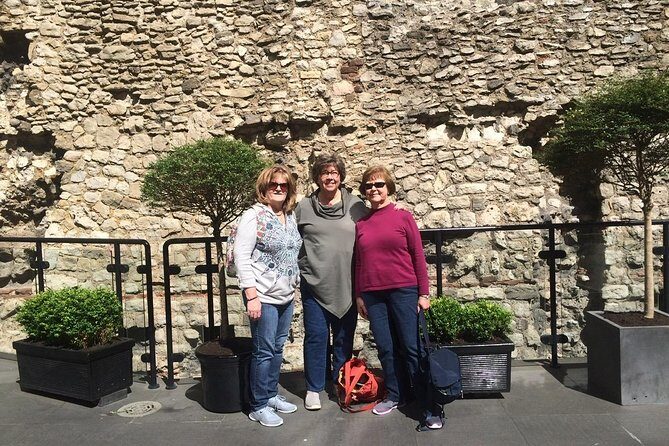
The meeting point is Embankment (WC2N 6NS), and pickup is also offered from any Central London Vacation Residence and Embankment Tube Station. Starting near Embankment is helpful because it puts you in the core sightseeing zone without needing a long commute across town.
You’ll also end back at the meeting point. That matters more than it sounds—when your day is packed with timed stops, a clean return makes the evening plan easier.
Guildhall Art Gallery: Roman Walls, an Amphitheatre, and Magna Carta
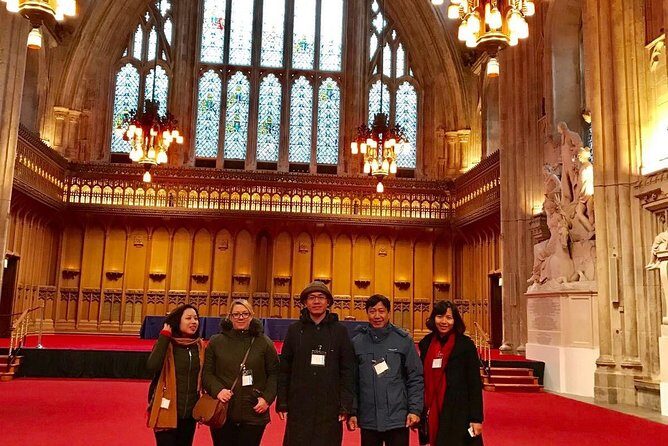
Your first Roman punch often comes at the Guildhall Art Gallery, where the story jumps straight to Roman London. This stop is built around a Roman wall experience and a special visit to the Roman Amphitheatre ruins within the gallery. It’s the kind of place that works well even in a short time, because the physical setting does half the explaining.
Another highlight here is the Magna Carta connection, tied to the City Corporation. The tour notes it as an 800-year-old document. Even if you don’t usually care about medieval paperwork, it’s a strong anchor: you can see how political power and everyday life were linked, not treated as separate topics.
Watch your expectations with this one. It’s not a full museum marathon. It’s a guided “get the big idea fast” stop, then you move on.
The Tower of London Area: Dead Man’s Hole and Tower Hill
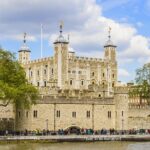
Next comes one of the most intense stretches in London: the Tower of London and the surrounding streets. The tour includes the in-your-face history angle, including Dead Man’s Hole. The guide frames it as a story moment and keeps it from feeling like a gimmick.
Then you shift to Tower Hill, where the emphasis turns to executions and the language people use even today. The tour playfully points toward where the phrase can I hang with you? comes from, tying street sayings to literal gallows history. If you’d rather keep your sightseeing light, this is where you might want to mentally brace.
Two practical tips help here:
- Wear shoes that handle cobblestone streets.
- If your party has any sensitivity around gruesome topics, tell your guide early. The tour is private, so you can steer the tone.
A few more London tours and experiences worth a look




St Paul’s Cathedral and the Great Fire: Wren’s Changes Still Matter
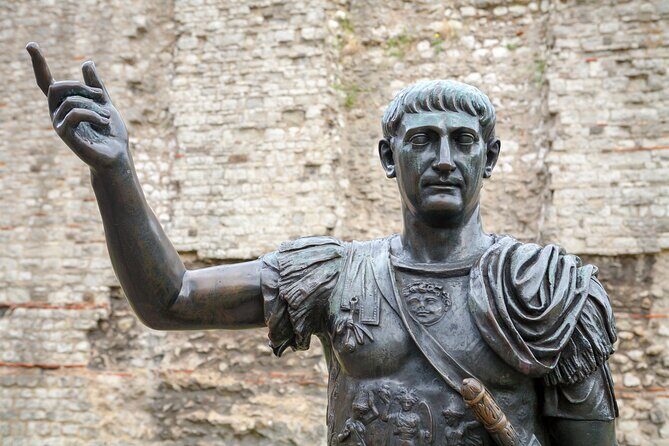
From the harsher past, you head toward St. Paul’s Cathedral, and the guide connects the dots to the Great Fire of London. The key point here is replacement: the cathedral is presented as what replaced the earlier place of worship destroyed in that fire.
A fast stop works best when you’re aiming for orientation. In about the time you have here, you should be able to walk away understanding why Sir Christopher Wren matters and how disasters can reset entire city plans. If you’re already familiar with Wren, you’ll still likely enjoy the tour’s angle on rebuilding.
One drawback: because the visit time is short, it’s not the same as a full cathedral visit where you can take in every detail slowly. Think of it as a guided compass.
Old Bailey and Guildhall: Courts, Gallows, and a Medieval Hall
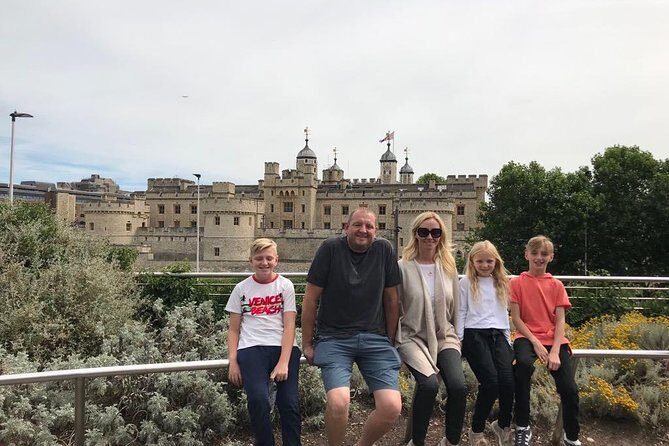
You get a stop at Old Bailey, tied to the gallows of Old Newgate Prison. This is another quick, story-driven stop. Even if you’ve seen the courthouse in photos, hearing the legal and prison context can change how you read the building’s purpose.
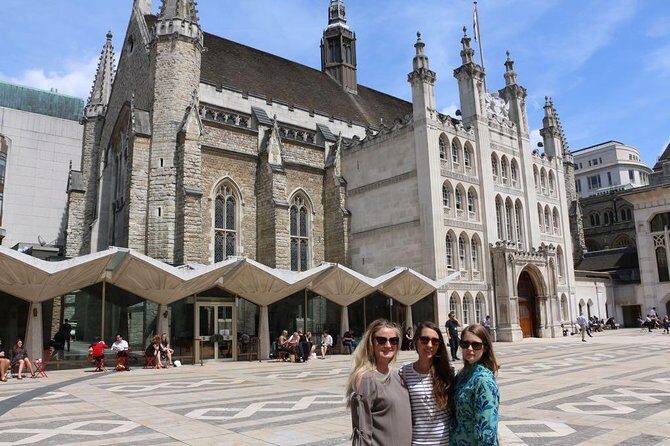
Then you shift back to Guildhall, where the highlight is the Medieval Great Hall—not just a pretty room, but a survivor through major events like the Blitz in World War Two. It’s a reminder that history isn’t only centuries old; London’s survival stories are ongoing.
Because the day includes Guildhall Art Gallery twice—once for Roman London and once for more Roman London visible in the basement—you get a “then and now” rhythm. The second visit strengthens the sense that Roman London isn’t locked away; it’s still part of the city’s bones.
The Thames Side: Palaces and Royal Power Without the Crowds
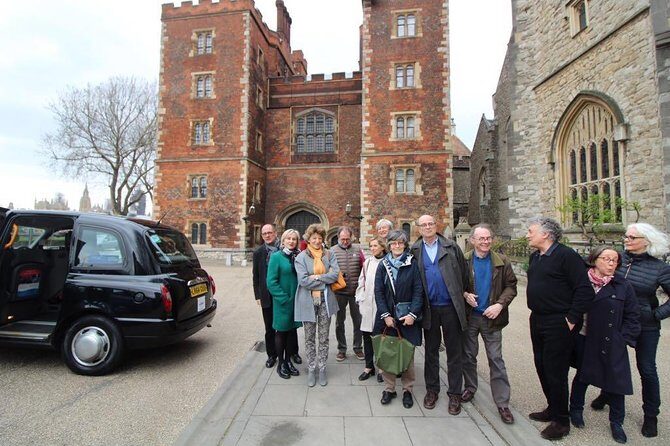
A big advantage of the black cab format is that you can get stops on the South Bank and near royal sites without the same crowd bottleneck. The tour includes Lambeth Palace on the south bank (noted as Tudor) and St. James’s Palace, tied to Henry VIII.
You’ll also hear about other royal associations along the route, including a stop that references the former hunting ground of Henry VIII, plus a mention of one of London’s oldest thoroughfares. The point isn’t to name-drop streets; it’s to show how power used the city’s geography.
One note: some of these palaces are marked as admission not included. That usually means you’re getting exterior viewing and guided context rather than a full-ticket visit experience. If you strongly want to go inside, plan for separate arrangements.
Charterhouse and Plague Memory: 1348 to the Black Death
The tour includes The Charterhouse, described as living the nation’s history since 1348, and as a former monastery in the heart of the City of London. The time window is short here, so you’ll likely get the essential storyline: religious institutions, later transformations, and why the site keeps showing up in London’s historical record.
Then Charterhouse Square delivers a darker detail: it’s linked to a plague pit connected to Black Death victims. This isn’t the kind of stop you can skim without feeling something. It turns “public health history” into a place, which is exactly why guided tours help.
Smithfield Market, Wallace Connections, and Execution-Era London
At Smithfield Market, the tour focuses on executions, including Sir William Wallace—with the note that he appears in the Braveheart film. Even if you care more about the legend than the logistics of medieval Scotland, the guide uses it to explain how power and control were displayed in public.
This is one of those stops where you might feel like you’ve passed it a hundred times without knowing what it meant. In a short time window, that realization is the whole payoff.
Medieval Survivors You Can Miss: St. Bartholomew the Great and Holy Sepulchre
The tour visits Church of St. Bartholomew the Great, described as a truly majestic medieval survivor hidden away in secret London. Because the stop is brief and admission isn’t included, you’re likely focusing on exterior or limited viewing plus guide context.
Then Holy Sepulchre Church brings in a famous phrase—for whom the bell tolls—and ties it to the old graveyard and even mentions body snatchers. That’s not just spooky storytelling; it’s a way of explaining how London’s attitudes toward death, burial, and medicine shaped life.
If you’re traveling with teens or older history fans, these stops tend to land well because they connect language and modern references to specific sites.
Prospect of Whitby, St. Bartholomew’s Hospital Museum, and the Human Side of the City
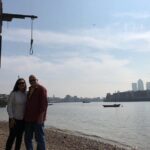
A stop at Prospect of Whitby connects Tudor-era pub history with something that sounds like it came from a stage prop: a hanging noose on the river’s edge. The tour uses the pub as a lens for how everyday places coexisted with extreme events.
You also visit the St. Bartholomew’s Hospital Museum, noted as the oldest hospital in London with origins traced back to the 11th century. This is a different tone again—less execution, more the long arc of care and institutions.
Even though museum time is short, you should leave with a better sense of how London treated sickness and how hospitals evolved. If you want more, this is a good candidate for a return visit on another day.
Roman Wall at Cooper’s Row and Norman Power at St Mary Le Bow
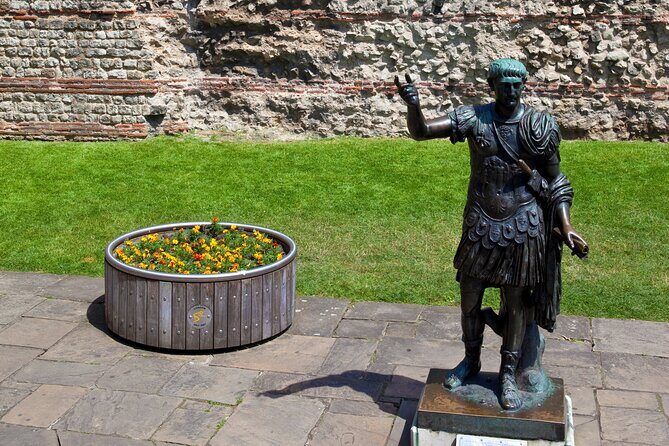
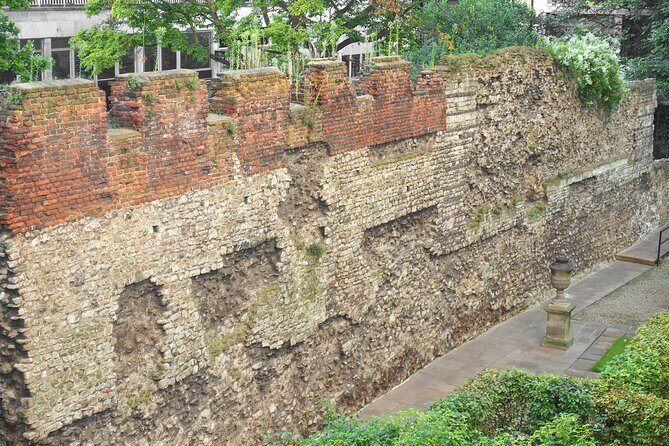
At Cooper’s Row, you’ll see the best remaining section of the old Roman Wall, built nearly 2,000 years ago. A short stop can still be powerful here because Roman wall sections are tactile evidence—you see the scale and realize this city was built with long-term thinking.
Then comes St. Mary Le Bow Church, described as a place of worship since Norman times, on a street once connected to the route of monarchs. That combo—Roman remains plus Norman-era continuity—creates a neat through-line: London keeps layering authority, ritual, and civic life in the same general areas.
Winchester Palace Remains, Clink Street, and the Prison-to-Story Connection
Near the end of the day, you’ll find Pickfords Wharf, described as remains of Old Winchester Palace, one of the largest and most important buildings in medieval London. The framing is important: it’s not just “ruins exist,” it’s “this is where major life and power were concentrated.”
Then Clink Street pulls you into the Clink Prison, described as a former residence of the mad, the bad, the sad. This kind of storytelling works best when you treat it as a window into urban crime and punishment rather than pure shock value. With a guide, it becomes a way to understand what people feared and how the city dealt with it.
Southwark Anglican Cathedral and All Hallows by the Tower: Two Survivors
On the Southwark side, the tour includes Southwark Anglican Cathedral, described as a place of worship since the 7th century, with interior architecture worth noting.
Then you finish with All Hallows by the Tower, noted as the oldest surviving church in London, and presented as surviving both the Great Fire of London and the Blitz. This is a great “closing” stop because it connects the day’s theme—survival—to a single building that genuinely outlasted multiple catastrophes.
Again, time is short, but the story gives your eyes something to look for.
Pacing, Walking, and What to Expect in a Short Visit Day
Because the stop times are tight, you should treat this tour like a high-quality sampler platter. You’ll see a lot of named sites and hear strong context, but you won’t be doing deep, unhurried reading at each location.
Plan for:
- Short museum/church windows rather than long stays
- Quick photo moments outside
- A guided narrative that moves on even if you’re still taking everything in
The good news is that the black cab reduces the “dead time” of transit. One praised guide named Greg was specifically praised for making it easy for an age range spanning 18 to 81, including mobility challenges. That’s the kind of practical signal you want: the format is built to help a mixed group keep up.
Safety and Comfort in the Private Cab
The tour includes COVID-era special measures: vehicles are sanitised after each service, presentations happen in quiet open-air locations away from crowded hotspots, and the driver guide washes and sanitises hands frequently. You’ll also have hand sanitiser available.
Inside the cab, there’s a transparent partition screen for a more private passenger compartment, plus separate air-conditioning. The tour also notes a safe distance between the guide and passengers that exceeds the 2-metre minimum guideline.
If you’re traveling with health concerns, these details matter because they’re about daily comfort, not just wording.
Should You Book This Roman and Medieval London Black Cab Tour?
Book it if you want:
- A private, customizable route that can tilt Roman or medieval depending on your interests
- A fast way to hit major sites like Guildhall, the Tower area, St. Paul’s, and the Southwark churches without getting stuck in long lines
- A tour that’s comfortable for mixed groups, with guides who are known for being patient and adapting in real time
Skip it (or plan extra time elsewhere) if you:
- Want long museum sessions and slow walking
- Dislike execution-related stories and prison lore even when framed historically
- Expect every stop to be an in-depth, ticketed interior experience (some admissions are marked as not included)
If your goal is to leave London feeling like you can place Roman London and medieval London on a map you can actually navigate, this is a smart way to do it in one half-day. The black cab format turns a pile of separate sights into one guided storyline—and that’s the real value.
FAQ
How long is the private Roman and Medieval London black cab tour?
It runs for about 4 hours.
How many people are included per group?
It’s priced per group for up to 6 people.
Where does the tour start and end?
It starts at Embankment (WC2N 6NS, UK) and ends back at the meeting point.
Is pickup available from hotels or the Tube?
Yes. Pickup is offered from any Central London Vacation Residence and from Embankment Tube Station.
Is the tour in English?
Yes, it’s offered in English.
Are admission tickets included for all stops?
Many stops are listed with admission ticket free, but some are marked as admission not included (for example Old Bailey, Lambeth Palace, St. James’s Palace, The Charterhouse, Church of St. Bartholomew the Great, and Holy Sepulchre/other sites as noted).