REVIEW · LONDON
Soho Soundtrack A Rock and Roll Tour of London
Book on Viator →Operated by Loudman Tours · Bookable on Viator
Soho Soundtrack is one of those rare walks that feels like you’re moving through music history in real time. You start on Denmark Street and finish on Savile Row, with stops tied to punk, glam, jazz crossovers, and studio legend—plus a guide who keeps things funny and easy to follow. I really like the comfortable pace and the way the stories stay specific, not generic.
One thing to keep in mind: the tour is mostly about what you can see and understand from the sidewalk and street corners. If you’re hoping for lots of inside venues or sit-down experiences, this isn’t that kind of tour. It’s also priced as a walking experience, so plan for no meals included.
In This Review
- Key Highlights You’ll Feel Right Away
- Soho’s Rock Timeline, Walked Straight Through
- Price and What $24.72 Really Buys You
- Meeting Point at Rough Trade Denmark Street: Easy Start, Clear Theme
- Denmark Street: Tin Pan Alley Where Guitars Echo
- Seven Dials: Hidden Venues and Rebel Creatives
- Shaftesbury Avenue: Theatreland With a Rock Soul
- Ronnie Scott’s Jazz Club: The Rock Cross-Over You’d Miss
- Trident Studios Plaque: Studio Legend Behind Unassuming Walls
- Berwick Street Market: Record Shops and the Indie Thread
- Broad Street Cholera Pump: Victorian Weirdness With a Punk Wink
- Carnaby Street: Mods, Rockers, and Style as Sound
- Ziggy Stardust Plaque: When Bowie Turned a Street Into a Portal
- Savile Row Finish: Rock Saying Goodbye on Its Own Terms
- The Guide Factor: Why the Stories Make the Streets Make Sense
- Who This Walking Tour Is For (and Who Should Skip It)
- Practical Tips to Make It Smoother
- Should You Book Soho Soundtrack: A Rock and Roll Tour of London?
- FAQ
- How long is the Soho Soundtrack walking tour?
- Where do I start and where does it end?
- What time does the tour start?
- Is the tour in English?
- Is there a lot of walking?
- What’s included in the ticket price?
Key Highlights You’ll Feel Right Away
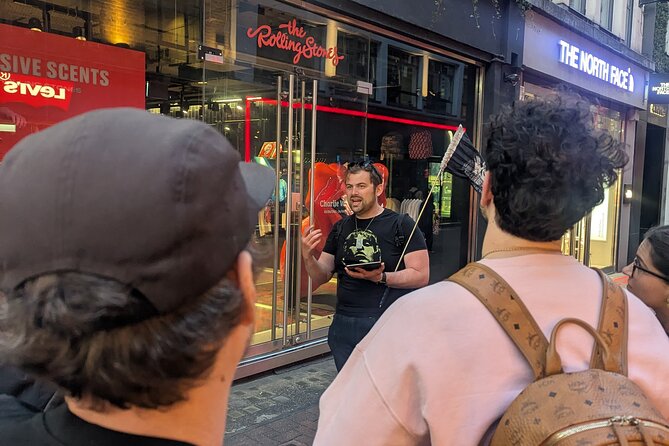
- Small group vibe (max 30 people) that still works for laughs and questions
- A 9:30 am start that helps you see Soho before the day ramps up
- Denmark Street to Savile Row as a clean rock-and-roll timeline
- Studio and stage crossovers, including Ronnie Scott’s rock connections
- Ticket-light sightseeing at each listed stop, so you spend your time on the story
- Mobile ticket for an easy start near public transport
Soho’s Rock Timeline, Walked Straight Through
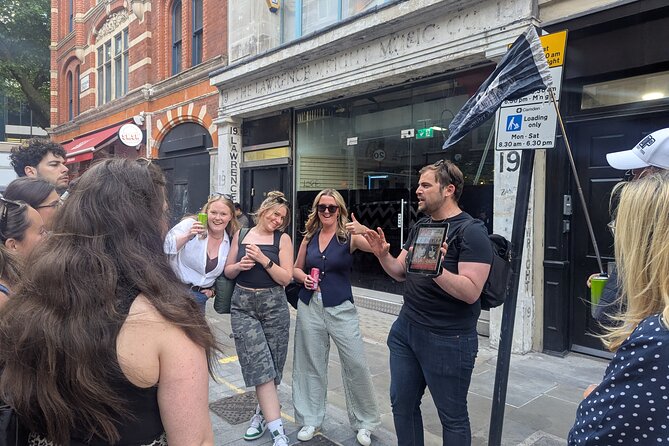
This tour is built around movement. Each stop is short, then you’re on the next street—so you keep momentum without feeling rushed. The result is a tour that works especially well if you’ve already done big museums and you want something more street-level and human.
It also helps that the theme is tight: British rock through Soho’s real working geography. You’re not just hearing names; you’re getting the “why here?” behind the legends, from rehearsal rooms to record haunts.
You can also read our reviews of more tours and experiences in London.


Price and What $24.72 Really Buys You
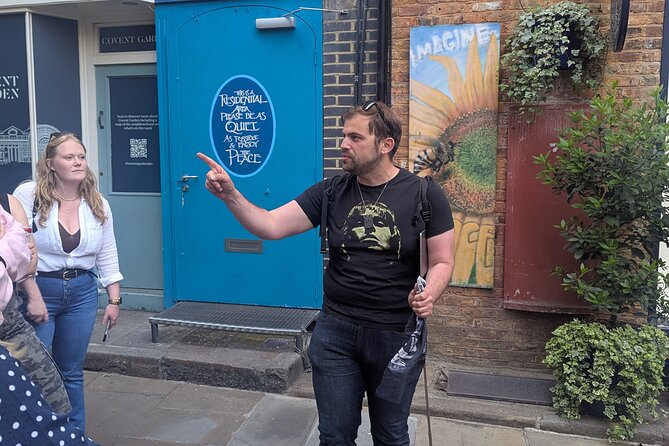
The price is $24.72 per person for a 2–3 hour experience, and that’s not just paying for walking. You’re paying for (1) someone to connect the dots across dozens of music moments and (2) admission/fees that are part of the tour experience as stated.
For value, I like that the tour is structured around about ten focused stops, with time built in for context at each one. And because it’s capped at 30 travelers, you’re less likely to feel like a number.
If you’re traveling during peak season, note that this is commonly booked months ahead (on average, about 183 days). If you care about a specific day, book early rather than hoping last-minute availability lines up.
Meeting Point at Rough Trade Denmark Street: Easy Start, Clear Theme
You’ll begin at Rough Trade Denmark Street (Ground and First floor, 24 Denmark St, London WC2H 8NJ) at 9:30 am. That’s a smart starting point because the tour theme is already “in the air” before you even hear the first story. Denmark Street is famously tied to the idea of songwriting, bands, and record shops clustering in one working pocket.
From there, the walk is designed to stay manageable. The stop times are around 10 minutes each, which keeps the pace steady and helps you see more of Soho without burning out.
Denmark Street: Tin Pan Alley Where Guitars Echo
Denmark Street is the heart of the tour’s origin story. This was London’s original Tin Pan Alley, where the streets and shops practically feel like they’re vibrating with guitar riffs. The tour spotlights how legends didn’t just perform here—they learned, tried things out, and crossed paths in the messy, creative overlap that makes scenes take off.
A couple of the most memorable details you’ll hear are the links to the Sex Pistols, the Kinks rehearsing nearby, and David Bowie laying down demos just doors away. Even from the street, the point lands: rock history often grows in the same places where the industry does the day-to-day work.
Practical note: because this stop is short, arrive ready with questions. If you ask about a band you love, the guide can usually connect it to the surrounding street context fast.
Seven Dials: Hidden Venues and Rebel Creatives
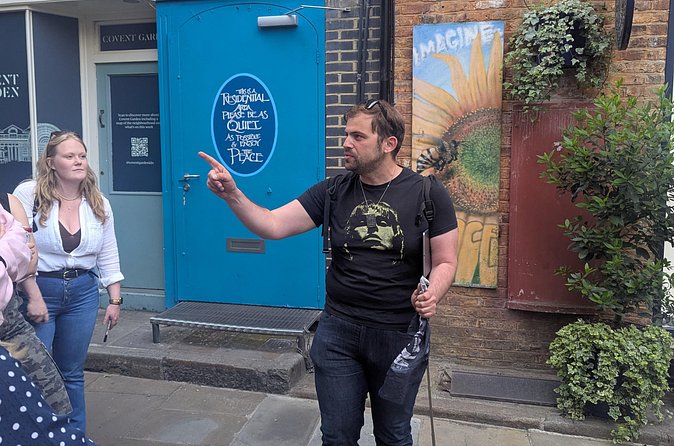
Next you shift to Seven Dials, which the tour frames as a gritty creative playground before it became the kind of name people recognize. The appeal here is that Seven Dials isn’t presented as a single famous landmark—it’s presented as a network of small places and alley connections that let artists bounce ideas around.
You’ll hear how the square worked as a rock-and-roll hub through different waves, from punk poetry to glam grit. The tour’s angle is that Soho’s music story isn’t one straight line; it’s layers stacking over each other like you’re flipping through different sides of records.
If you enjoy walking while learning, this is one of the stops that keeps your brain “switched on” without demanding museum-level attention.






Shaftesbury Avenue: Theatreland With a Rock Soul
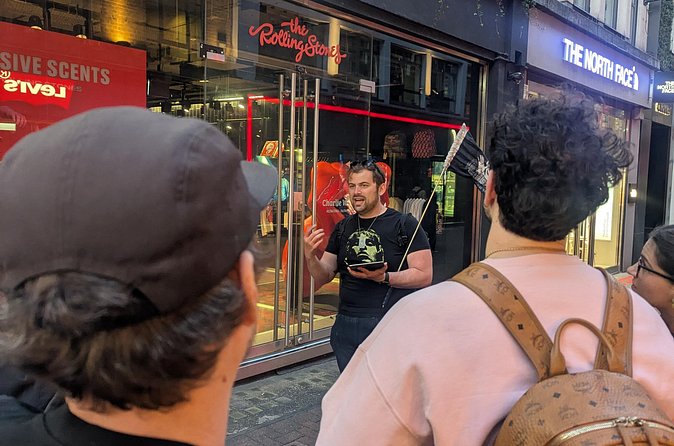
Then it’s Shaftesbury Avenue, where the tour plays with a fun contrast. Yes, it’s known for theatre, but it also connects to how rock stars borrowed stage energy and dramatic flair.
The tour points to Hendrix social connections with playwrights and Bowie’s ability to mix glam with drama. The takeaway is clever: rock isn’t only sound. It’s performance, timing, image, and sometimes a little scandal.
One consideration: Shaftesbury Avenue is a busy London street by nature. You’ll get the stories, but you may want to keep an eye on your footing and stay aware of traffic flow, since this stretch can feel more urban and fast-moving.
Ronnie Scott’s Jazz Club: The Rock Cross-Over You’d Miss
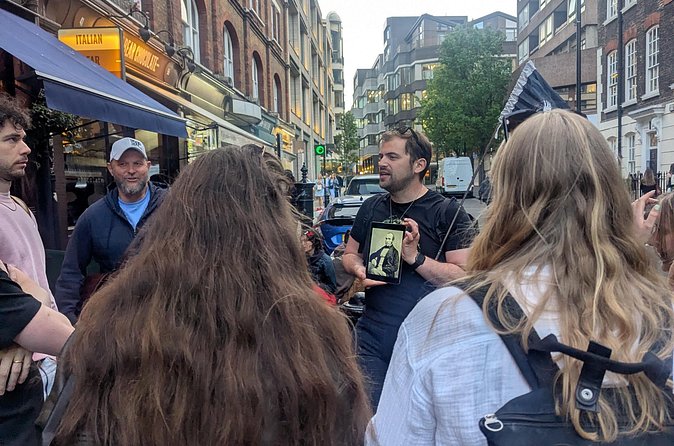
If you only associate Ronnie Scott’s Jazz Club with jazz, the tour challenges that. It highlights that Soho’s music isn’t locked into one genre box, and this club had real rock crossover moments.
You’ll hear about Hendrix playing there, along with Jeff Beck and Sting. The focus isn’t just famous names; it’s the idea of late-night jams and unexpected collaborations that happen when musicians share stages and circles.
This stop is particularly good for you if you like the “how scenes mix” angle. Soho often gets sold as a single vibe, but this is a reminder that it’s a meeting point for different kinds of musicians.
Trident Studios Plaque: Studio Legend Behind Unassuming Walls
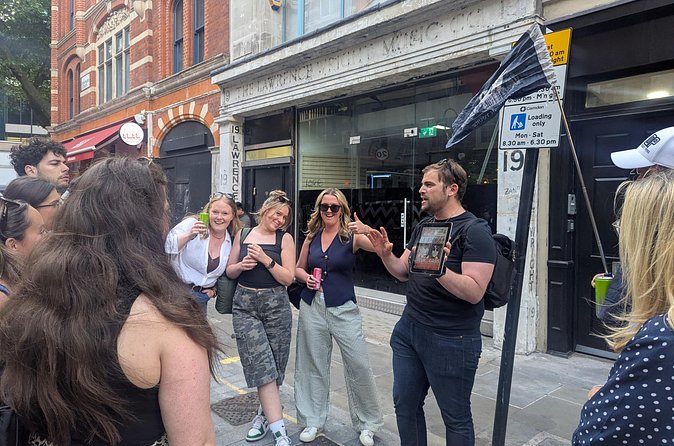
At Trident Studios, the tour treats a plaque like a sacred object. Not because you’ll see machinery or a full museum room, but because the location marks serious recording gravity.
The tour connects Trident to recordings by Queen, The Beatles, and Bowie. What makes this stop valuable is the way it reframes “studio work” as part of rock culture, not a distant behind-the-scenes world. You’re learning how iconic tracks didn’t happen by magic—they happened where the people and technology were.
Because you’re outside looking in (rather than touring a studio floor), set your expectations for a reflective stop. The reward is in the context the guide provides, not in inside rooms.
Berwick Street Market: Record Shops and the Indie Thread
Then you land in Berwick Street Market, which the tour uses to talk about the indie scene and how rock stayed alive after the big early waves. This is where you get a sense of Soho as a continued ecosystem, not a closed chapter.
The tour’s emphasis is on legendary record shops and the indie momentum that fed into eras like Britpop and beyond. If you love the idea of music “continuing to evolve in the same streets,” this stop delivers.
Practical tip: if you want to browse, you may wish you had more time here. The stop is short, so treat it like a taste, then consider returning later on your own if a store sparks your interest.
Broad Street Cholera Pump: Victorian Weirdness With a Punk Wink
One of the most unusual stops is Broad Street Cholera Pump. A Victorian water pump on a rock-and-roll tour sounds like a joke until the guide frames it the right way: rebellion often shows up in the unexpected places, not just in music venues and posters.
The tour ties it to the spirit of disruption and going against the mainstream. It’s also a reminder that Soho’s story includes everyday infrastructure, odd corners, and “left-field” landmarks that make cities feel real.
This stop is fun if you like travel that has humor in it. It breaks up the more obvious music landmarks and gives your brain a new angle on the theme.
Carnaby Street: Mods, Rockers, and Style as Sound
Next: Carnaby Street, presented as a starting point for swinging London’s style shift. The tour focuses on how mods and rockers, plus style rebels of the ’60s, shaped youth culture through fashion and attitude.
It’s not just “what happened here.” It’s how sound and style moved together, changing how people looked and how music felt. You’ll likely leave this stop noticing how rock-and-roll identities get built visually, not only in chords and lyrics.
If you’re into classic London street fashion, Carnaby is one of the best places on the walk to connect the dots between image and music culture.
Ziggy Stardust Plaque: When Bowie Turned a Street Into a Portal
Then you hit the Ziggy Stardust plaque, and the tour makes a point of how Bowie redefined what a rock star could be. The vibe here is part storytelling and part reenactment energy—you’ll likely be encouraged to take in the street moment as if you’re stepping into the era.
The tour also leans into cosmic weirdness and glam rock’s golden age. It’s a theatrical beat in a walking itinerary, and it works because the guide keeps tying the symbolism back to the physical street setting.
This stop is a great match for you if you like pop culture that feels slightly strange—in a good way. It’s where the tour turns from “scene history” into “iconography.”
Savile Row Finish: Rock Saying Goodbye on Its Own Terms
The tour ends on Savile Row (W1S), and it uses the street to close the loop: rock said goodbye to the ’60s here, with no warning and no fuss. The guide’s framing is that this is a fitting, elegant landing for a story that began in gritty working streets.
Savile Row’s connection is more about mood than about big signage. It’s a contrast that helps you absorb what you’ve walked through: Soho changes, subcultures change, and the style of rock changes too.
For your timing, plan to be comfortable after the walk. You’ll finish in an area that’s easy to navigate from, but it’s still London, so give yourself time for a post-tour wander if you want one.
The Guide Factor: Why the Stories Make the Streets Make Sense
The biggest praised element of this tour is the guide’s style. Expect an approach that’s personable, funny, and packed with specific music-history details, without turning into a lecture.
What you’ll probably enjoy most is the balance: the tour doesn’t rush. You get a steady walk and enough time at each stop to ask questions and let the story land. Some people also like that the guide can add relevant extra details beyond the main music references, which makes the experience feel more like a chat with someone who knows the neighborhood.
If you’re the type who likes interaction, this tour’s small-group limit helps. You’re less likely to be stuck passively listening for two straight hours.
Who This Walking Tour Is For (and Who Should Skip It)
This is a strong fit if you:
- Love rock music and want the “where it began” version of the story
- Prefer a walking itinerary with short stops and room for questions
- Want an after-museum plan that’s more fun than stuffy
You might skip it if you:
- Want lots of indoor admissions and guided entry into venues
- Need a fully seated, low-walking experience
- Are hungry and expecting meals included
Practical Tips to Make It Smoother
- Wear shoes that handle London sidewalks and frequent turning corners. The stop-to-stop structure adds up.
- Bring a charged phone for the mobile ticket.
- If you’re starting with coffee or breakfast, do it before you meet. Meals aren’t part of the experience.
- Because it’s near public transportation, you can plan around tube/bus convenience—but the tour itself is walking-led, so keep your day flexible.
Should You Book Soho Soundtrack: A Rock and Roll Tour of London?
I’d book it if you want a focused Soho walk that connects punk, glam, studio legend, and jazz crossovers to real street locations. The value is strong for the time you get, and the short, repeatable stop structure makes it easy to follow even if you’re not a hardcore music scholar.
I wouldn’t book it if you’re chasing inside-the-venue access or a long museum-style experience. This is about street-level history, delivered with humor, and meant to leave you with a different way of seeing Soho.
If that sounds like your kind of London day, this tour is an easy yes.
FAQ
How long is the Soho Soundtrack walking tour?
It runs for about 2 to 3 hours.
Where do I start and where does it end?
You start at Rough Trade Denmark Street (24 Denmark St, London) and end on Savile Row (London W1S).
What time does the tour start?
The start time listed is 9:30 am.
Is the tour in English?
Yes, it’s offered in English.
Is there a lot of walking?
Yes. It’s a walking tour with roughly 10-minute stops at multiple locations, finishing at Savile Row.
What’s included in the ticket price?
The tour includes an admission fee as stated, but it does not include meals or public transportation. Each listed stop notes Admission Ticket Free.