REVIEW · LONDON
The History of London City Center Exclusive Guided Walking Tour
Book on Viator →Operated by Babylon Tours London · Bookable on Viator
London makes more sense on foot. It is a tight, 2.5-hour guided route that links Covent Garden to Westminster with real context for the places you already recognize. I like the way the walk is set up for first-timers: you get landmarks like 10 Downing Street and the Houses of Parliament explained in the same afternoon. I also like the pacing, since you’re outside seeing the city while still getting solid guide storytelling. One possible drawback: it is a packed route with lots of standing and walking, so if you hate crowds or long stretches, you’ll want comfy shoes and a realistic expectation.
You’ll meet your guide in Covent Garden, then head west through key government and royal sites, ending at Westminster Abbey with entry for you to explore on your own. The tour runs rain or shine, uses a mobile ticket, and is offered in English, which keeps it easy even if it is your first trip to London. You can choose small-group or private, depending on how much control over your time you want.
In This Review
- Key things to know before you go
- London City Center, explained on a 2.5-hour walk
- The route: Covent Garden to Westminster Abbey (and why that matters)
- Stop 1: Covent Garden start point, Saxons to street performers
- Stop 2 and 3: Trafalgar Square and Nelson’s Column (more than a photo stop)
- Stop 4: Admiralty Arch, Edward VII and the Victoria memory
- Stop 5 and 6: Whitehall and 10 Downing Street
- Stop 7: St. James’s Palace, the senior royal seat
- Stop 8: Buckingham Palace area and the guide’s connections
- Stop 9: Churchill War Rooms, Cabinet War Rooms and the WWII command center
- Stop 10 and 11: Big Ben and the Houses of Parliament
- Stop 12: Westminster Abbey exterior and your self-guided Abbey time
- Price and value: is $59.28 a good deal for London?
- Small-group vs private: choosing the right feel for your day
- Comfort, shoes, and weather: the small things that make the tour better
- Who should book this London city-center walking tour?
- Should you book?
- FAQ
- Where does the tour start and end?
- How long is the London city center walking tour?
- How much does it cost?
- Is the tour offered in English?
- Will the tour run in bad weather?
- Is the Westminster Abbey interior guided?
- Are tickets for places like the Churchill War Rooms and Big Ben included?
- What should I wear or bring?
- What if I need to cancel?
Key things to know before you go
- Covent Garden start: history goes back to a Saxon settlement, so the tour doesn’t begin with a blank slate
- Government core on one walk: Whitehall, 10 Downing Street, and nearby royal palaces in one continuous route
- Trafalgar Square beyond photos: you’ll learn why the square became a long-running stage for demonstrations
- Big WWII stop without the guesswork: the Churchill War Rooms are framed in a way that makes the exhibits easier to follow
- End at Westminster Abbey: you get entry time, but the Abbey tour portion is self-guided, not a guided walkthrough
- Time is tight: several sights are seen from the outside, and some interiors may be limited by security
London City Center, explained on a 2.5-hour walk
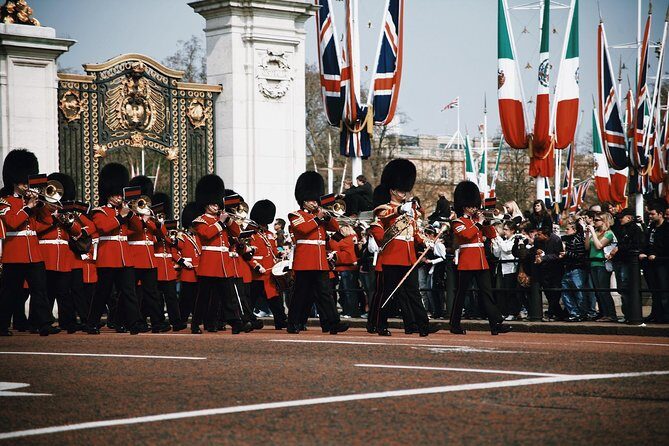
This is the kind of tour I love for London: it gives you a map of meaning. You recognize the big names—Trafalgar Square, Parliament, Big Ben, the royal palaces—but the guide’s job is to connect each place to the people and decisions that shaped the city. In a relatively short time, you end up with a mental timeline you can carry around later when you explore on your own.
The route is designed for clear wayfinding. You start in Covent Garden and finish at Westminster Abbey, so you’re walking in a logical arc across central London rather than zigzagging. That matters, because central London can feel like a maze if you’re trying to do everything alone.
The tour also gives you options based on your travel style. You can go small-group or private, and there’s even mention of a semi-private option where the guide may not be exclusively yours. If you’re traveling with kids, friends, or a partner who wants their questions answered quickly, a smaller group tends to feel more flexible.
Finally, plan for “outside viewing” as the baseline. Some stops are about seeing landmarks where they are, not touring every interior. A few places have ticketed or non-included elements, and security rules can affect access from the inside.
You can also read our reviews of more walking tours in London



The route: Covent Garden to Westminster Abbey (and why that matters)
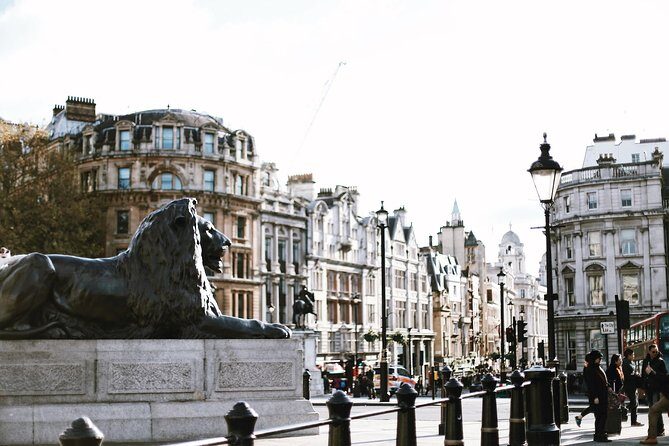
Meeting in Covent Garden puts you on a lively starting block. It’s not just shops and street life; the area’s story is long enough that even the earliest roots—dating back to Saxon times—get mentioned as part of the orientation. If you’re arriving in London and trying to orient yourself fast, beginning here helps.
From there, the walk moves steadily toward Westminster, threading through the political and royal center. You’ll see the way streets, squares, and parks form a corridor between public spaces and power. Even if you’re not a politics person, this part of London is impossible to ignore once you’re standing close enough to feel the scale.
The ending at Westminster Abbey is a smart finish for two reasons. First, it’s visually iconic from the outside, so you get the payoff even if you skip the interior. Second, you leave with entry time for the Abbey on your own, which lets you slow down after the tour’s faster pace.
Stop 1: Covent Garden start point, Saxons to street performers
Covent Garden is a strong way to begin because it blends past and present without pretending the city hasn’t changed. Here, the tour frames the area as far back as the 7th century when it was an early Saxon settlement. That’s a useful anchor. London isn’t one era stacked on another; it’s layers of different uses and different populations.
Practically, it also works as a meeting point. It’s a busy, central hub with plenty around you—shopping, theater, restaurants, and bars—so you’re not left searching for food or a toilet before the walk begins. You also often see street performers, which adds to the street-level feel right from the start.
A small word to the wise: because it’s a popular area, you can expect crowds at the edges. If you’re sensitive to tight sidewalks, arrive a little early and give yourself time to gather calmly.
Stop 2 and 3: Trafalgar Square and Nelson’s Column (more than a photo stop)
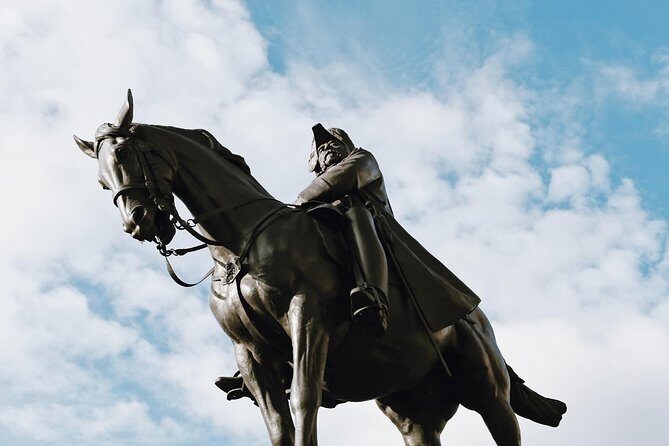
Trafalgar Square is famous, but the guide’s approach can make you notice details you’d otherwise miss. You’ll learn that it commemorates the Battle of Trafalgar, a major British naval victory during the Napoleonic Wars. That context matters because the square isn’t just decorative. It became an ongoing gathering place for protests and demonstrations, a role that continues today.
Then there’s Nelson’s Column—commissioned as a monument to Admiral Horatio Nelson, who died at the Battle of Trafalgar in 1805. Standing near it helps you understand how London uses memorials as public conversation starters: history up on stone, and people gathering underneath.
If you’re coming at a busy time of day, you may find the square crowded. This tour keeps the time here short, but it’s long enough to absorb what the square represents without turning your afternoon into a standstill.
Stop 4: Admiralty Arch, Edward VII and the Victoria memory
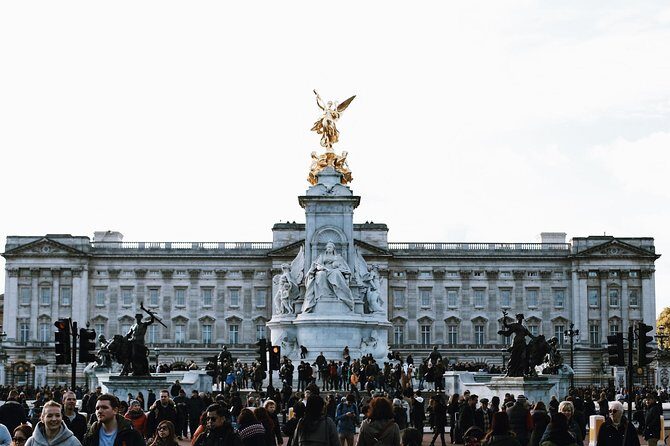
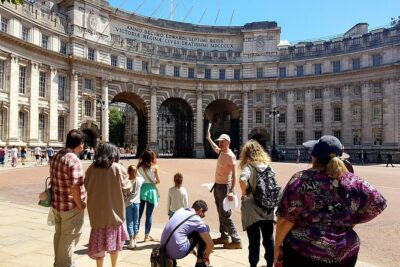
Next comes Admiralty Arch, a landmark that acts like a hinge between the Mall and Trafalgar Square. You’ll hear how it was commissioned by King Edward VII in memory of his mother, Queen Victoria. That family connection is more interesting than it sounds, because it shows how monarchs shaped public architecture as part of their political storytelling.
This is also a good “breather” stop. It’s not an entrance line or a museum queue in this walking format. You get to look, learn what you’re looking at, and keep moving.
You can also read our reviews of more guided tours in London






Stop 5 and 6: Whitehall and 10 Downing Street
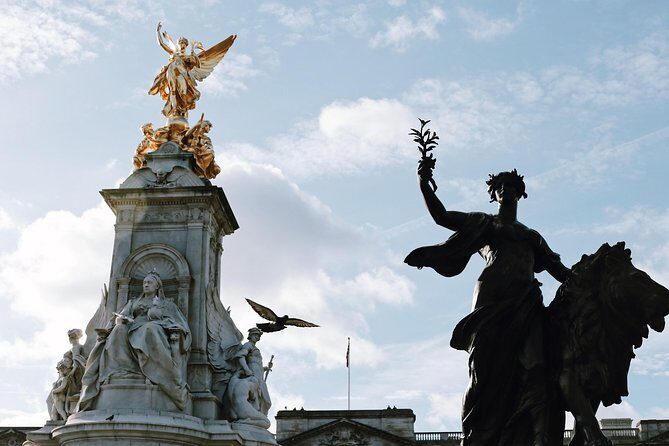
Whitehall is where the tour turns from “major monuments” into “how power works in real space.” You’ll walk along the stretch between Charing Cross and the Houses of Parliament, and you’ll learn that the name also covers nearby streets and government buildings.
The tour ties Whitehall’s long government presence to Henry VIII’s court at Whitehall Palace in the 1530s. That detail helps you picture how the government core took root and stayed rooted, rather than being something London invented recently.
Then you reach 10 Downing Street, framed as a landmark street office area for the Prime Minister. You’ll also hear that the street dates to the 1680s. Standing in that zone can feel surreal, even if you already know the address. It’s one of those places where London’s global reputation is literally on the sidewalk.
A consideration here: because this is an active security area, you won’t treat it like a sightseeing attraction you can wander into. The value is in seeing the setting and hearing what the guide tells you about why it exists.
Stop 7: St. James’s Palace, the senior royal seat
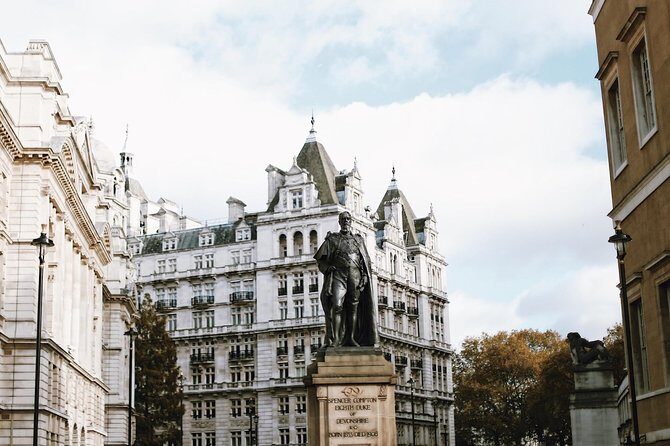
St. James’s Palace gets your attention for one main reason: it’s described as the most senior royal palace in the UK, with more than 300 years as a royal residence. That’s a long time for one address to keep its identity through regime changes, political shifts, and rebranding.
The tour also points out that it has been the setting for important events in royal history. Even if you don’t chase royal trivia, this kind of context helps you understand why other palaces and ceremonial spaces exist where they do.
It’s another outside-looking stop, which is exactly what you want in a walking itinerary. You get the meaning without losing hours to lines.
Stop 8: Buckingham Palace area and the guide’s connections
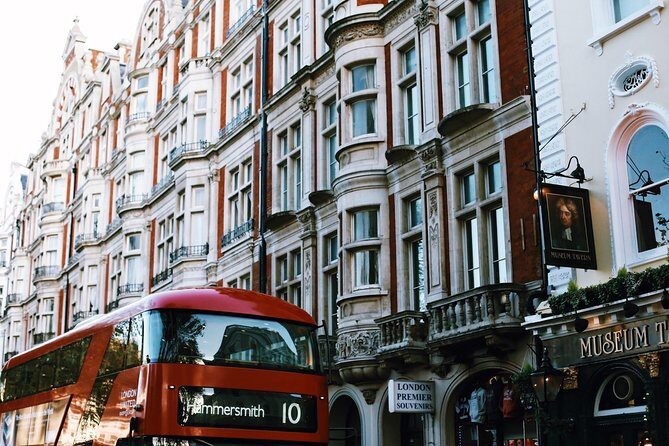
The tour includes a pass by Buckingham Palace, where you’ll connect monarchy to broader leadership stories. You’ll hear references to major figures like Queen Elizabeth II and Winston Churchill, linking royal Britain to the leadership Britain presented to the world.
You might also catch the feel of London’s ceremonial rhythms here, depending on timing. One guide story highlights how well changing the guard can fit if the schedule works out. If you’re hoping for that moment, keep your fingers crossed and stay flexible with your arrival time in this part of the city.
One practical note: interior access is not the focus in this format. Some ticketed elements associated with this area are listed as not included, so treat it as a view-and-context stop rather than an all-access palace visit.
Stop 9: Churchill War Rooms, Cabinet War Rooms and the WWII command center
The Churchill War Rooms stop can be a highlight if you like history you can touch—history that’s not just monuments, but decisions made under pressure. In this tour, the war rooms are framed as part of the Imperial War Museum network.
You’ll learn about two connected components: the Cabinet War Rooms, an underground complex that served as a British government command center during the Second World War, and the Churchill Museum, focused on Winston Churchill’s life. Having those labels in your head before you go in (or before you decide to go in at all) makes the exhibits easier to follow.
Since admission is not included in the walking portion, you’ll likely need to plan any actual museum time based on your ticket choices. Even if you only look at the exterior as part of the walk, the guide’s setup can still make it feel coherent rather than random WWII branding.
Stop 10 and 11: Big Ben and the Houses of Parliament
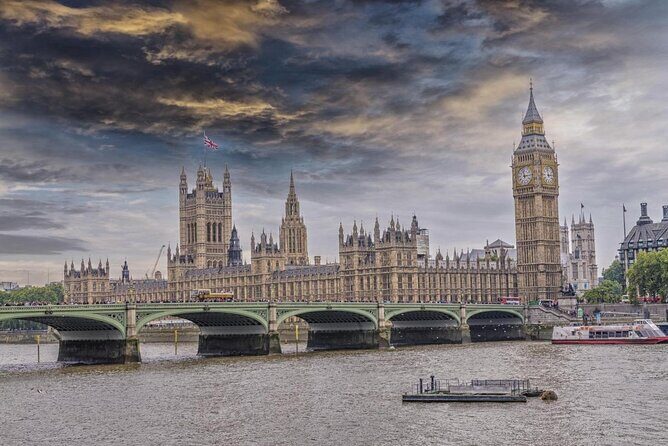
Big Ben is presented as the clock tower at the end of the Palace of Westminster. That’s a useful framing, because a lot of people think of Big Ben as one thing, but here it’s tied back to the larger complex. Standing nearby gives you scale and lines of sight that photos don’t fully capture.
Then you head to the Houses of Parliament, described as a Gothic-style building with a history spanning over 900 years. You’ll also hear that it’s where the House of Commons and the House of Lords meet. Again, it’s not about learning every date—it’s about understanding the function of the place you’re looking at.
This is one of the spots where security can affect what you can do. The tour is built around viewing what you can see, so don’t expect a casual wander-in moment unless the site rules allow it on the day.
Stop 12: Westminster Abbey exterior and your self-guided Abbey time
The tour ends in front of Westminster Abbey and you get entry time at the conclusion. The key point is that the interior experience is not a guided tour; you explore on your own. That works well after a walking guide has already given you the framing.
The exterior stop also matters because it signals closure. You’ve covered the political center and royal context, and then the Abbey feels like the next layer: Britain’s ceremonial and spiritual story in a single location.
A practical tip: because you’re finishing at the Abbey, your pace matters. Keep some energy for the final stretch, especially if you’re planning to spend time inside.
Price and value: is $59.28 a good deal for London?
At $59.28 per person for about 2 hours 30 minutes, the value comes from what’s included: a guided walking route built around major central London landmarks. You’re not just buying access to sights; you’re buying a guide who strings the stops together with context.
The tour also runs rain or shine, which adds value in London where your best plans sometimes get interrupted by weather. Plus, you get a mobile ticket, which keeps logistics simple once you’re in the city.
What you should weigh is this: you’ll see many famous places from the outside, and some ticketed experiences are listed as not included. If you’re the type who needs every stop to become an interior visit, you may spend extra on museum tickets or palace entries based on your interests.
Where it feels most worth it is for first-timers and history-curious visitors. You get your bearings fast, and the guide interpretation can help you choose what to revisit later.
Small-group vs private: choosing the right feel for your day
The tour gives you options. Small-group is a good match if you like meeting fellow travelers but still want someone to keep things organized and on time. A private option is better if you want quieter pacing, more questions, or a group that needs flexibility.
One detail worth noting: there’s an option where the guide may not be exclusively yours. If you care about a strictly private experience, double-check which version you select so your expectations match what you’re buying.
This matters because the tour is short. If you want time for conversations, a smaller or private format can help you get more out of the guide’s explanations.
Comfort, shoes, and weather: the small things that make the tour better
This is a walking tour with moderate physical fitness requirements. That translates to: plan for steady movement, not short strolls. Wear shoes you trust on uneven sidewalks, and don’t pack large bags or suitcases.
The tour also explicitly operates in all weather conditions. Bring what you need so you’re not distracted: a bottle of water and an umbrella are practical basics, and a hat helps in warmer months.
One more logistics detail that’s easy to forget: you’re asked to provide a mobile phone number with country code. It’s the kind of thing that makes last-minute contact or coordination easier.
Finally, national celebrations can alter the route. You’ll still be able to see the highlights, but the alternative routing means no refunds or discounts if route changes are needed. If you’re traveling around a holiday period, this kind of flexibility is useful—even if it’s not the same route you imagined.
Who should book this London city-center walking tour?
This is a strong fit if you want a first-week London win: major sights, connected explanations, and a clean finish at Westminster Abbey. It’s also ideal for history buffs who like politics, monarchy, and the way London’s public spaces evolved for centuries.
You’ll probably like it if:
- you’re short on time and want the central highlights with context
- you prefer walking and outdoor viewing over museum-heavy days
- you want a guide to point out what matters so you can explore smarter later
You might skip it (or choose a different style) if:
- you want lots of interior access at each stop
- you hate crowds and can’t handle busy squares
- your group has very limited walking stamina
Should you book?
Yes, if you want a focused, efficient way to understand central London in one afternoon. The route connects the big names—Trafalgar Square, Whitehall, 10 Downing Street, Buckingham Palace area, Big Ben, Parliament, and the Abbey—so you leave with a clearer picture of how London’s political and royal worlds fit together.
Book it if you value a good guide over a long list of entrances. The tour is designed to keep moving, teach as you go, and end with Abbey entry time for your own pace. If that matches your style, it’s an easy choice for a first trip or a time-crunched itinerary. If you’re seeking hands-on museum time at every stop, plan extra ticket time elsewhere and treat this as your grounding day.
FAQ
Where does the tour start and end?
The tour starts in Covent Garden in London and ends at Westminster Abbey.
How long is the London city center walking tour?
It runs for about 2 hours 30 minutes.
How much does it cost?
The price is $59.28 per person.
Is the tour offered in English?
Yes, the tour is offered in English.
Will the tour run in bad weather?
Yes. It operates rain or shine, so dress for the conditions.
Is the Westminster Abbey interior guided?
No. You get entry for the Abbey, but the interior visit is unguided, and a guided tour of the Abbey is not included.
Are tickets for places like the Churchill War Rooms and Big Ben included?
The tour lists some sites as not included for admission, including the Churchill War Rooms, Big Ben, and Buckingham Palace area viewing components. The tour is mainly a walking and exterior viewing experience, with ticketed parts varying by stop.
What should I wear or bring?
You should wear comfortable shoes and plan for the weather. It’s recommended to bring a bottle of water, an umbrella in case of rain, and a hat during summer. Large bags or suitcases are not allowed.
What if I need to cancel?
You can cancel for a full refund if you cancel at least 24 hours before the experience start time. If you cancel less than 24 hours before, the amount paid is not refunded.